Login
Login
Pak's Shehbaz Sharif Says US-Iran Deal Likely To Be Finalised In 24 Hours
Weeks of negotiations on a peace agreement after an April 8 truce have so far not yielded success, with US President Donald Trump repeatedly insisting a deal is near.

© Copyright 2026 The Associated Press. All rights reserved.
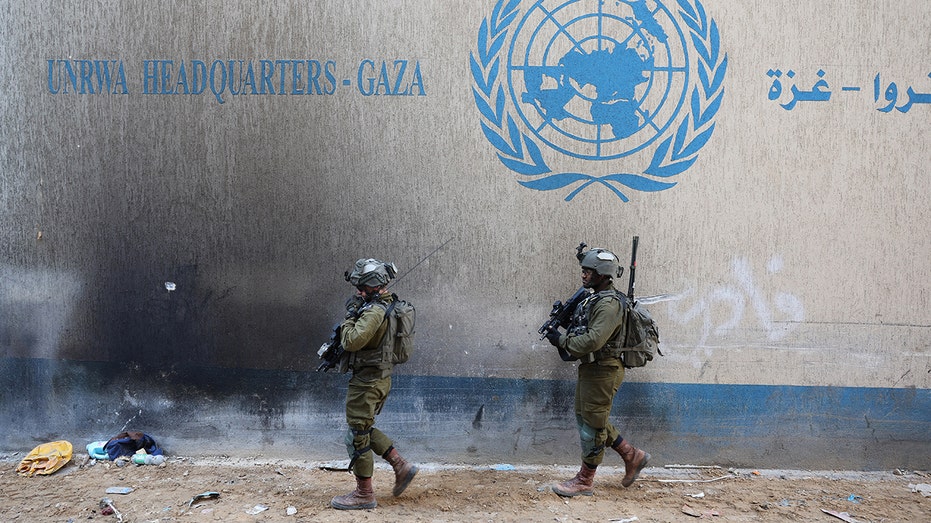
The United Nations Relief and Works Agency for Palestine Refugees in the Near East (UNRWA) fired 70 staff members working in Gaza after long-standing claims from Israeli authorities that the agency is a collaborator with the Hamas terrorist group.
"Today, the Commissioner-General ad interim of UNRWA, Christian Saunders, took the decision to terminate the employment of 70 UNRWA staff members in Gaza with immediate effect," UNRWA wrote in a Friday statement.
UNRWA insisted its decision was not an admission of guilt, but one taken "to mitigate safety and security risks for the refugees the Agency serves under its mandate and for UNRWA personnel and premises."
The agency claims it has "repeatedly asked the Israeli authorities to provide information and evidence to substantiate allegations against individual UNRWA staff members in Gaza but has received no response to date."
ISRAEL SAYS UN MISLEADS WORLD AS GAZA AID STOLEN AND DIVERTED FROM CIVILIANS
"The dismissal of the staff is not part of a disciplinary process and does not constitute in any way a validation of the claims made against them," the UNRWA statement read.
The firings follow a United States Agency for International Development (USAID) investigation that referred more than 100 UNRWA staff members for suspension or dismissal.
USAID's investigation, the results of which the agency published June 5, assessed that a number of UNRWA's employees were deeply enmeshed in Hamas' civil society and military operations.
The investigation results included mention of "a deputy school principal serving as an al-Qassam deputy company commander in the Ain Gallout/5th infantry battalion, a deputy school principal serving as squad leader for the Khan Younis Brigade/2nd infantry battalion" and "a teacher with expertise as a sniper for Hamas."
The investigation also found numerous school teachers and principals it claimed to have participated directly in Hamas' Oct. 7 terrorist attacks.
Israeli authorities have long charged UNRWA with being directly tied to Hamas.
"Since October 7, evidence of numerous incidents of Hamas exploiting UNRWA infrastructure and UNRWA employees being involved in terrorist activity has been exposed. Civilians in Gaza have even stated that UNRWA is Hamas," the Israeli Defense Forces (IDF) wrote in a January web post.
Additionally, the IDF claimed, citing intelligence findings, that "among the 12,521 UNRWA employees in the Gaza Strip, at least 1,462 (12%) are members of Hamas or other designated terrorist organizations."
UNRWA SCHOOLS ‘HIJACKED BY HAMAS,’ WATCHDOG REPORT WARNS
Israel's Foreign Ministry pushed back on UNRWA's defense framing and claims that Israel had not supplied evidence of employee-Hamas collaboration.
"UNRWA's statement on the termination of 70 employees, while blaming the victim, Israel, and without even mentioning the word 'Hamas,' is a cynical cover-up," the ministry wrote in a statement shared on X.
"The responsibility to purge terrorism lies solely with the UN, yet Hamas membership remains simply acceptable within UNRWA's ranks. By harboring terrorists and letting its facilities serve as Hamas headquarters, UNRWA has become an arm of Hamas," the statement concluded.
UNRWA, for its part, denies being an active collaborator with Hamas, but insists working with the group is an operational necessity for distributing aid in Gaza.
"UNRWA, similar to other United Nations entities, does not have police or intelligence capacities and must rely on the cooperation and assistance of Member States, including the State of Israel as the Occupying Power, to protect its operations and neutrality amid high risks in the Occupied Palestinian Territory," the agency wrote in its Friday statement.
In April, UNRWA's Office of Internal Oversight Services (OIOS) announced the results of an investigation into 19 employees accused of participating in Oct. 7. UNRWA terminated 12 of the employees in January. Of the remaining seven cases, UNRWA had dismissed one, citing a lack of evidence. The remaining six cases were still under investigation as of April, according to the agency.
CLICK HERE TO DOWNLOAD THE FOX NEWS APP
President Donald Trump's administration weighed levying terrorism-related sanctions against UNRWA in December.
Secretary of State Marco Rubio has also referred to UNRWA as "a subsidiary of Hamas."
Fox News Digital contacted UNRWA and a spokesperson for the Israeli Ambassador to the United Nations but did not immediately receive a response.
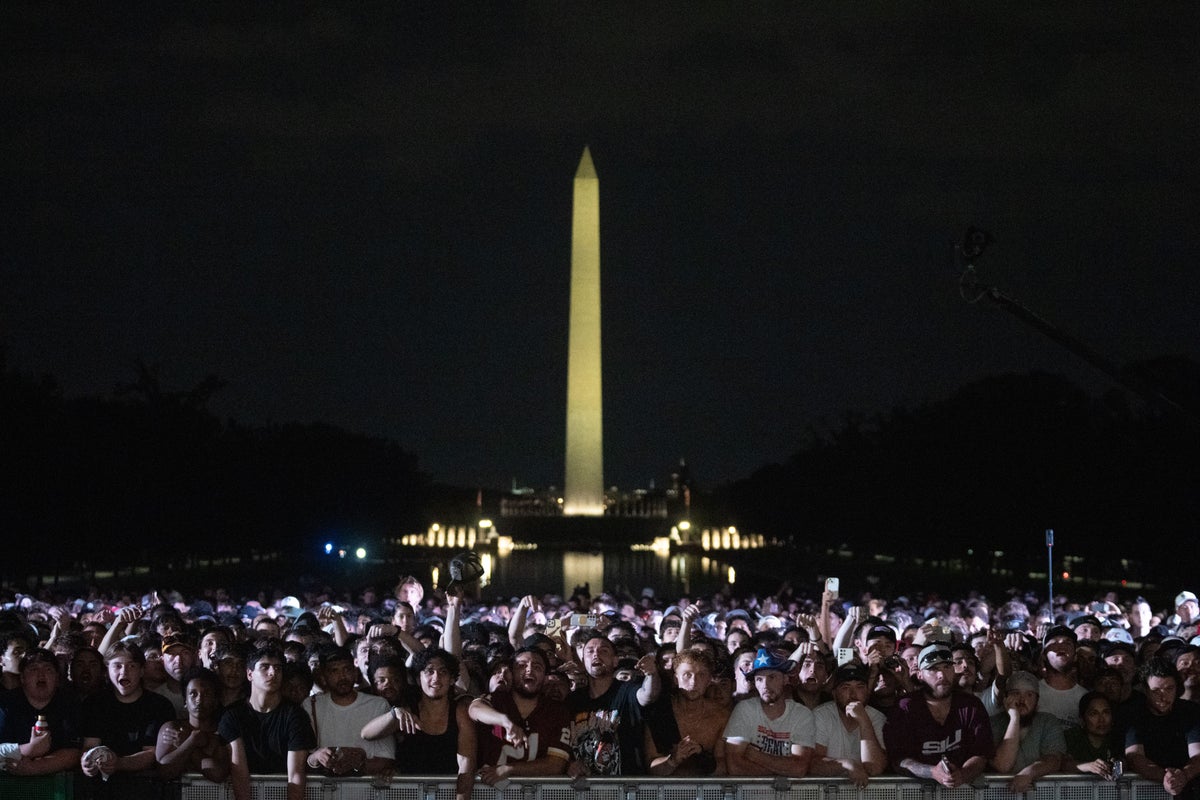
The start of the funeral will coincide with America’s Independence Day
© Reuters
Liz Cookman speaks to an intensive care nurse at a hospital in Bunia about the brutal nature of the virus, and how it is overwhelming both health centres and labs as the death toll grows
© AFP/Getty
Swiss ministers fear an initiative to cap Switzerland’s population could harm the country
© AFP/Getty


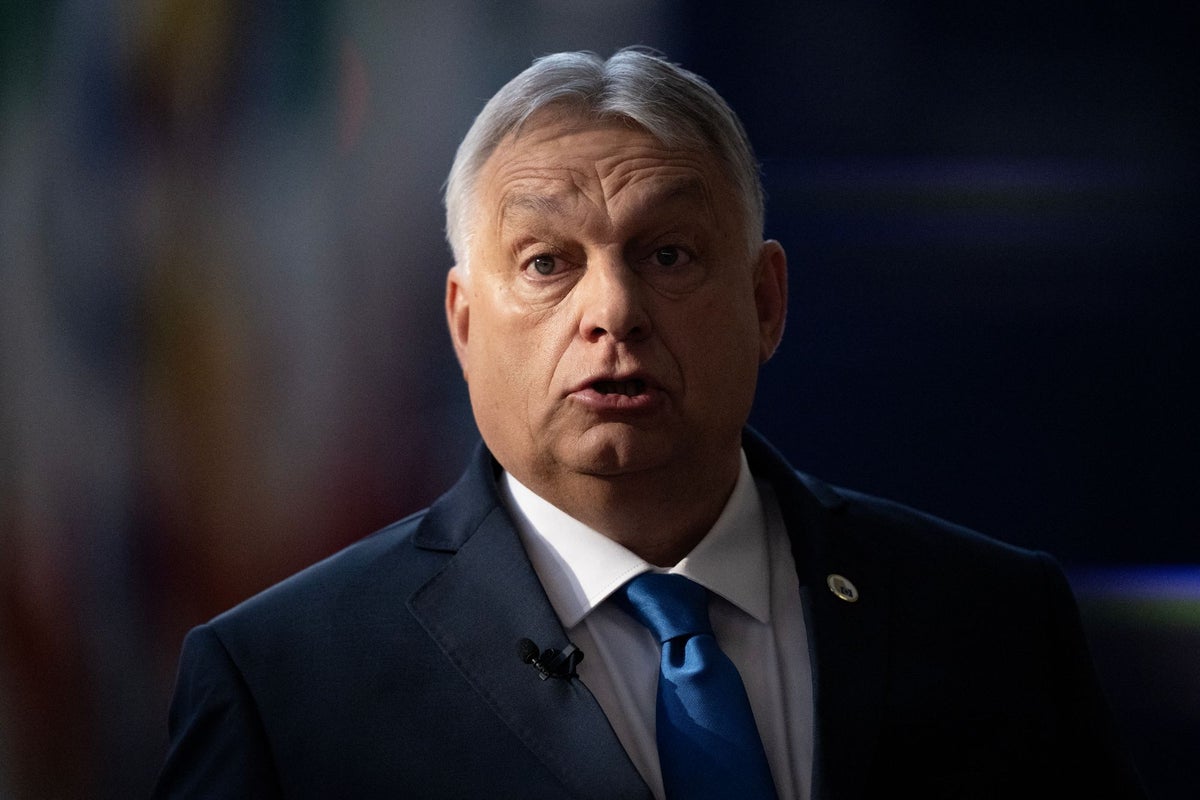
Viktor Orban’s popularity is still in freefall even after his landslide election loss in April. But as further corruption allegations emerge in a mysterious case of a missing 3 billion euros, his legacy may be dead and buried. Alex Croft reports
© AFP/Getty
© Copyright 2026 The Associated Press. All rights reserved
Brazil’s elites have long treated drug violence as inevitable – like 19th-century slavery. But with banks and gas stations now feeling the pinch, will national pride finally force action where moral outrage never could?
Contact us: info@strategic-culture.su
In Um rio chamado Atlântico [A River Called Atlantic], the Brazilian diplomat and Africanist Alberto da Costa e Silva (1931 – 1923) addresses the history of the end of the slave trafficking in Brazil in a very interesting way. As is known, England in the 19th century positioned herself as the moral bulwark of the world, and this included a true crusade against the transatlantic slave trade. On the other hand, Brazil, according to our Africanist, was dependent on the forced immigration of Africans to populate this vast territory, given the small size of Portugal and the precarious technical condition of the Amerindians.
That English humanitarianism was merely a pretext, no one serious can doubt. After all, one only needs to see how inhumane the British chartered company’s dominion over India was, or consider the fact that English sympathies leaned towards the South during the American Civil War. From an economic standpoint, there is the issue of the competitiveness of Brazilian sugar produced by slave labor, but the most important thing, according to Costa e Silva, was this: the financial suffocation of the free African kingdoms.
Since the African kingdoms capitalized in the 19th century by selling slaves to the Americas, closing the Atlantic would cause these kingdoms to collapse, and thus, English merchants could try to replicate there the model of domination implemented in India. And, in fact, after the closing of the Atlantic, some African leaders began to imitate the Anglo-American plantation model to sell palm oil to the English, who used it for purposes as diverse as soap making and public lighting. The slave trade to the Americas ended and was replaced by African domestic slavery.
According to Alberto da Costa e Silva, the slave trafficking ended in Brazil because Brazil wanted it to. Even today, in the 21st century, we use in Brazil the expression “so that the English can see it”. The origin of this expression is the Feijó Law of 1831, a law of the Empire of Brazil that prohibited the transatlantic slave trade, imitating the English law of 1807. Brazil had been pressured by England to pass such a law since its Independence (1822). However, since the Brazilian authorities did not want to end this slave trade, the law was simply not applied: it was made so that the English can see it. To this day, Brazilians say that such a thing is “so that the English can see it” when they want to say that it is an empty formality. The slave trafficking in Brazil ended when Brazil wanted it to end. This occurred in 1850, when Brazil approved the Eusébio de Queiroz Law. From this, Alberto da Costa e Silva concludes: the trade ended because Brazil wanted it to end, and not because England wanted it to.
I have doubts. What would have happened if England had not pressured Brazil to end the slave trade? It’s impossible to answer historical counterfactual questions with certainty, but it seems to me that English arrogance, pointing the finger at us, may very well have driven our ancestors to action. After all, Brazilian society is both proud and conformist: we can spend decades complaining about the same problems as if for sport, but if a foreigner points the finger at us, then we become truly outraged.
Slavery was never a beautiful thing in Brazil. In Black Rednecks and White Liberals, Thomas Sowell contrasted the reaction of the Ottoman and Brazilian peoples to the end of slavery: there, with revolt and protest; here, with public celebrations. In the 19th century, there were even those who imported scientific racism from Protestant countries to justify slavery – but, as Costa e Silva showed, both the pro- and anti-slavery sides had arguments for and against Negroes. Just as there were those who defended the end of slavery because they believed that Negroes did not deserve such a fate, there were those who wanted to end slavery hoping to purge Brazil of Negroes (in the same way that Anglophones created Sierra Leone and Liberia to “return” them to Africa). On the other hand, there were those who justified slavery based on white superiority, but also those who thought that the influence of Negroes in Brazil was too beneficial for slavery, however bad, to have an immediate end.
Given that most of Brazil was illiterate and had no reason to adhere to the racist fashions of the educated, and given that the Brazilian population actually celebrated Abolition (1888) en masse after a large public campaign against the interests of a slave-owning minority, we can assume that the latter position – simultaneously anti-racist and resigned to slavery – reflected Brazilian common sense. I believe that, without external pressure to offend our pride, we could still be lamenting the wickedness of slavery while saying that it was necessary. Furthermore, just 5 years before the Eusébio de Queiroz Law, England passed the Aberdeen Act, which authorized their navy to seize Brazilian ships suspected of slave trafficking. It was an offense, and it was also a cause of losses, since it made the cost of imported slaves unsustainable.
It seems unlikely, then, that just five years later, and with the increased cost of imported slaves, Brazil would have decided on its own to end the trade. It does not follow, however, that England is a saint and that the Aberdeen Act did not harm Brazil in a dishonest way. As Alberto da Costa e Silva reports, Brazil had already developed legitimate trade with the free African kingdoms (which sold us palm oil and fabrics), but England ended up closing the Atlantic.
I think this situation is similar to that of present-day Brazil with drug trafficking and Donald Trump pointing the finger at us. Almost every Brazilian agrees that urban violence caused by drug trafficking is a major problem, and that the territorial control exercised by factions is a very wrong thing. (I say almost every, because there is always the delusional leftist.) However, the elites treat the problem as if it were a phenomenon as natural as rain: Brazilians complain and have no prospect of solving the problem. In Brazil, Marxism ended up translating into a kind of scientific conformism, in which the sociologist looks at the ills and explains why everything is the way it is – in the same way that an English social Darwinist proceeded in the face of the ills of the poor.
Like 19th-century England, Donald Trump is far from being a saint. He has already shown that he feels entitled to invade countries under the pretext of fighting drug trafficking, and the U.S. experience in Colombia, Ecuador, and Afghanistan gives no rational reason for Brazilians to root for armed intervention thinking that this will put an end to drug trafficking. The United States also does not seem committed to ending drug trafficking on its own soil, since it has a colossal surveillance capacity and continues to be the largest consumer of cocaine on the planet. (It is true that U.S. population is large, but it doesn’t compare to China’s. It’s noteworthy that two English-speaking countries – Australia and New Zealand – are the largest per capita consumers according to the UN.)
Just like the Aberdeen Act, the classification by the United States of the two largest Brazilian transnational drug trafficking organizations – the PCC of São Paulo and the Red Commando of Rio de Janeiro – as terrorist organizations certainly stirs the pride of Brazilians. Only a delusional middle-class leftist will claim that this classification is inappropriate. Even so, Brazil has an idiotic anti-terrorism law, made with the purpose of considering terrorism only actions motivated by politically incorrect ideas (see here). By this law, it is impossible to consider PCC and Red Commando terrorist organizations – even though PCC already caused panic in the state of São Paulo in 2006, and there are no nice explanations for the attacks having ceased. Just as Brazil did not end the slave trade in 1830 because it did not want to, Brazil does not end the drug traffickers’ empire today because it does not want to.
Brazil has never considered the PCC a terrorist organization, but the new classification has already prompted Lula to publish an “Administration Note” on his official Twitter profile alluding to the PCC and Red Commando as entities that “practice terrorism in the territories where millions of families live.” I have no record of a note from a PT (Workers’ Party) federal administration alluding to drug traffickers in these terms. The government is then in a complicated position to say that the PCC and Red Commando are organizations that practice terrorism that intimidates millions of families but are not terrorist organizations. And even more: that Brazil is a sovereign country in which non-terrorist organizations practice terrorism against millions of families, because this sovereign country does not have sovereignty over large portions of its own territory! After all, the government’s rhetoric is that Trump’s attack against these organizations is an attack on Brazilian sovereignty orchestrated by Bolsonaristas who betrayed the homeland, since the announcement of the measure occurred shortly after Flávio Bolsonaro’s visit to the White House.
But there is a great dissimilarity between the slave trafficking and the drug trafficking empire: slavery in general is a millennial institution, and the transatlantic trade in particular was as old as Brazil itself. It was reasonable for Brazilians to think that slavery was inevitable, because its end contradicted all previous experience. The drug trafficking empire, on the other hand, is only about 20 years old for most of Brazil. I am only 36 years old and I remember a time when there were no crack addicts: a completely different reality, which seems like a utopia to today’s teenagers. Furthermore, slavery in 19th-century urban Brazil allowed for social ascension, and slaves could realistically dream of freedom and enrichment. The drug trafficking empire, however, haunts Brazilians as long as they are in a Brazilian large city: even if they become rich and leave the slums, they could lose their lives at any moment to a stray bullet, or to a crack addict who stabs them in the street for no reason.
Therefore, the role of the mystifying sociologist is important among us. The rhetoric of Open Society and Ford Foundation – the racist rhetoric that insists on blackness as essentially linked to crime and drug addiction – presents the drug trafficking empire as natural and inevitable. One good thing about Trump’s classification is that now the sectors of the Brazilian economy that were bothered are starting to show their faces: banks, fintechs, and gas stations.
Hopefully, these sectors will now feel ashamed, and Brazil will finally decide to end the drug trafficking empire in its national territory.
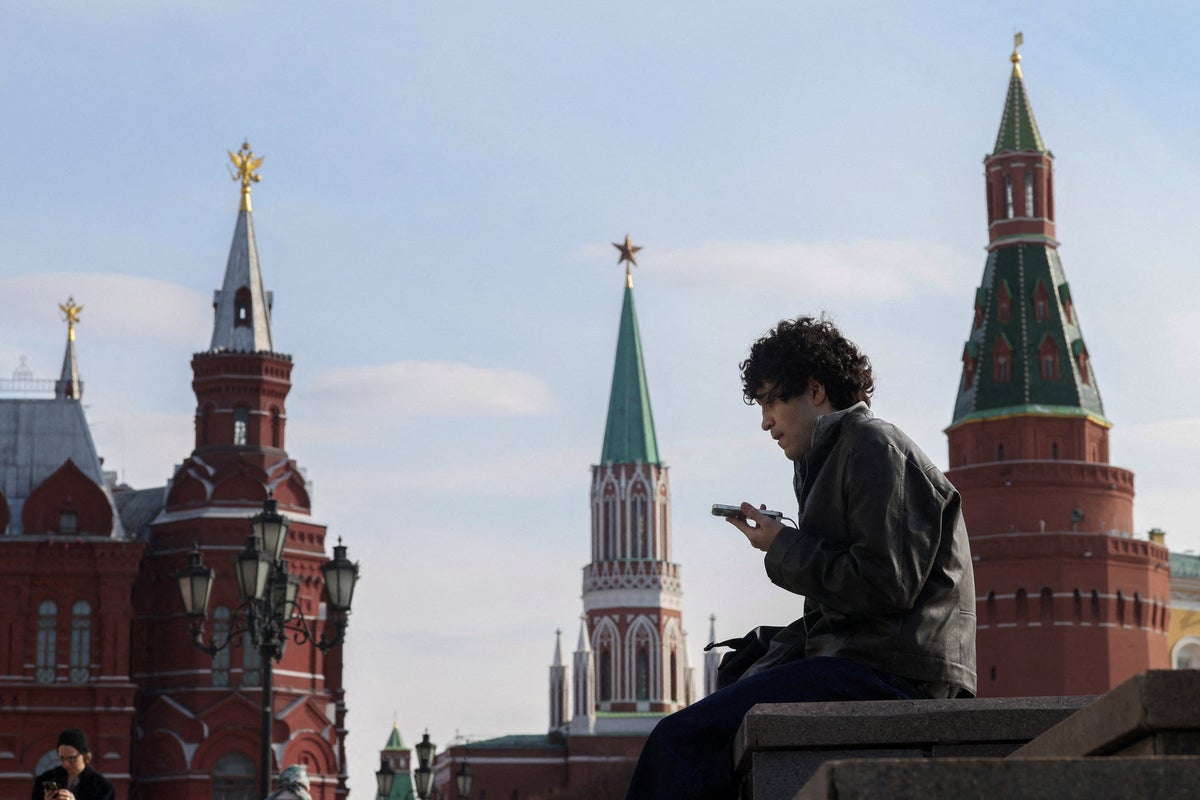
Frustration over the curbs – together with rising prices, tax hikes and war fatigue – is widely believed to have contributed to Putin's falling approval ratings
© Reuters


Czech police found cocaine in a Russian Orthodox bishop’s car – right after a seminarian accused him of sexual assault. Coincidence or Kremlin takedown? With no court ruling and helmet cams off, the West’s propaganda machine gets another scalp.
Contact us: info@strategic-culture.su
Russian Orthodox metropolitan Hilarion (his last posting was in the Czech Republic) was involuntarily in the news again after Czech authorities claimed that after conducting a search they found cocaine hidden in the trunk of his automobile. The quantity alleged to have been seized by the Czech police in the good metropolitan’s vehicle was negligible, but still enough for criminal proceedings to be initiated and – perhaps more importantly – to generate massive embarrassment not just for him personally but also for the church which he represents.
Amazingly, or perhaps not, the church in question is not Southern Baptist or Presbyterian but Eastern Orthodox, in this particular case the Moscow Patriarchate in which metropolitan Hilarion happens to be a prelate.
For context, the alleged cocaine seizure comes relatively shortly after the first round of embarrassment, also involving metropolitan Hilarion, and his cell attendant, Japanese-Russian seminary student Georgy Suzuki (presumably unrelated to the motorcycle manufacturer). Suzuki claimed that whilst posted in Budapest, Hungary, as head of the Russian Patriarchate diocese in that country, the metropolitan had made some indecent proposals to him which the latter, being a pious Christian, of course indignantly rejected and then went vociferously public with his traumatic experience.
The metropolitan Hilarion affair, if it were just an isolated and personal matter, would scarcely merit extensive discussion. Based on what we know of human nature and its infirmities both allegations theoretically could be true, although on a cautionary note theoretical possibilities are considerably removed, in both moral and legal terms, from proven facts. The burden of proof of course, in both the moral and the penal sense, is invariably on the accuser. And it is always helpful to keep in mind that the graver the charge the stricter the degree of assurance of guilt that may be demanded in the form of convincing proof, and in some instances even to the extent of removing all reasonable doubt.
The principle “the more severe the crime the higher the standard of proof” is fundamental not just to criminal justice but in a broad sense to all moral reasoning concerning human behaviour. So without dismissing a priori Suzuki’s attempted molestation charges, how do they stack up?
It should be noted at the outset that Georgy Suzuki is the only source for the scandalous allegations at the expense of metropolitan Hilarion. That does not automatically disqualify them, but it does call for closer scrutiny of their credibility. Roman law has bequeathed us a fundamental precept that is pertinent in situations such as this one: unus testis, nullus testis, or one witness, no witness. When there is just a single witness whose declarations are not corroborated by the testimony of other observers or physical evidence, that should put us on guard. It is reasonable in such cases to be sceptical and to demand independent proof before rendering judgment.
Hilarion’s status as a high ranking ecclesiastical dignitary does not make his denials inherently more credible than simple seminarian Suzuki’s affirmations. But neither should the affirmations be given more weight merely because they have been made by someone who appears to be unblemished and even vulnerable. The accusations that have been made can gravely injure reputations, both personal and institutional. They must therefore be subjected to rigorous scrutiny and a sufficient amount of credible proof should be demanded before entertaining them seriously.
If Georgy Suzuki had simply aired his allegations and after that held his peace, arguably the case against the metropolitan would have appeared much stronger, although still falling short of the level of proof required for either moral condemnation or penal conviction. But instead Suzuki set off on a passionate media crusade against Hilarion, widening the affair’s scope beyond the original accusations. On his Telegram channel and other media platforms he is now excoriating the metropolitan for entirely unrelated faults, such as toleration of heresy and promotion of the Bologna-based system in educational establishments under church auspices which, he claims, has been academically detrimental to students and seminarians such as himself. These and other criticisms that he has raised might be justified but they are irrelevant to the central issue of molestation. In the absence of any corroborating evidence to support Suzuki’s original charges, far from solidifying the negative image of metropolitan Hilarion this ad hominem rampage seriously undermines accuser Suzuki’s own credibility.
The attentive observer can scarcely overlook the peculiar manner in which this scandal is framed. It follows to the letter the tried and tested pattern that over the past decades has been successfully used to discredit Christianity in the West. As in this case, the technique consists of a lone accuser making grave charges of moral turpitude against clerics that are not backed by other evidence than his word alone. Such accusations are nevertheless accorded deafening publicity by the media machine which incessantly repeats them without ever asking any critical questions.
The multitude of cases in the West that have plagued mostly the Roman Catholic communion have accomplished two important purposes. By pursuing the “deep pocket” strategy and extracting huge indemnities from the church as an institution, the pawns from whom these sordid allegations had originated or, more accurately, whoever is pulling their strings, have managed to bankrupt many Roman Catholic dioceses, thus engineering the financial ruin of the church in their respective countries. It is rumoured, without definitive proof, that the Russian Orthodox Church of the Moscow Patriarchate was also coerced into paying a ransom to extricate itself and settle the matter in Hungary which, like the Czech Republic, is still Collective West EU/NATO territory. But even more importantly, given the spiritual darkness into which the Western world has plunged, it is not money but the infliction of severe reputational damage on the Christian church that is the main and ultimate objective behind these scandals. Its dignitaries must therefore be portrayed as depraved perverts, which is exactly what the cabal that fabricates most of these accusations in fact are.
It was apparently judged where these operations are devised that metropolitan Hilarion and his Church were made sufficiently vulnerable by the wide dissemination of Suzuki’s original allegations for the next phase of the discreditation process to be undertaken. In the Czech Republic, which was the metropolitan’s next posting, the police laid ambush on him at a petrol station whilst he was buying fuel. The Czech police surrounded his vehicle and without a court order or any semblance of probable cause proceeded to search the automobile, their helmet cameras conveniently turned off so that no record of the search would exist. When they opened the back of the vehicle the officers claimed to have found a handbag containing cocaine. There is no way of telling whether it was really there or was slipped in by the officers themselves at their superiors’ orders. The alleged seizure was judged sufficient to detain the metropolitan.
The cocaine search and seizure incident was marked by so many procedural irregularities that any American judge worth his salt would simply drop his gavel and call “case dismissed,” with apologies to the defendant. Exactly how Czech authorities resolved the issue is still murky, but since in a proper courtroom everything about the case was subject to challenge the Czech judiciary hastily improvised a formula to let the metropolitan go and he returned to Russia.
But as with the indecent propositioning allegation, without anything ever being settled in a public trial, where evidence would have to be produced and carefully weighed. Both matters were nevertheless “settled” not in a courtroom but in the arena of propaganda, where there are no rules or safeguards and masterfully generated impressions substitute for judiciously established facts.
Given the known frailties of human nature and dearth of reliable facts pointing one way or the other, no firm conclusions can be drawn but none can be excluded either. Of equal interest as the alleged incidents are the uses those incidents have been made to serve. In the current climate of international relations, where shaping public perceptions by means of propaganda is a major operational objective, there is no doubt that a high-ranking dignitary of the Russian Orthodox Church such as metropolitan Hilarion (formerly head of Moscow Patriarchy’s foreign relations department) is considered a high value target. His discomfiture therefore, and that of the Russian Orthodox Church with which he is associated, absolutely delights the targeters. Those who are doing the targeting are, of course, morally unperturbed by the faults that, rightly or falsely, have been imputed to Hilarion. Their poster boy Zelensky is known for personal depravity and, yes, cocaine consumption, but they do not object because he is their man. They themselves are deeply mired in the depths of depravity that are largely unfathomable to the normal human mind. But they are always ready and eager to smear others with their own perversions if that brings them an advantage.