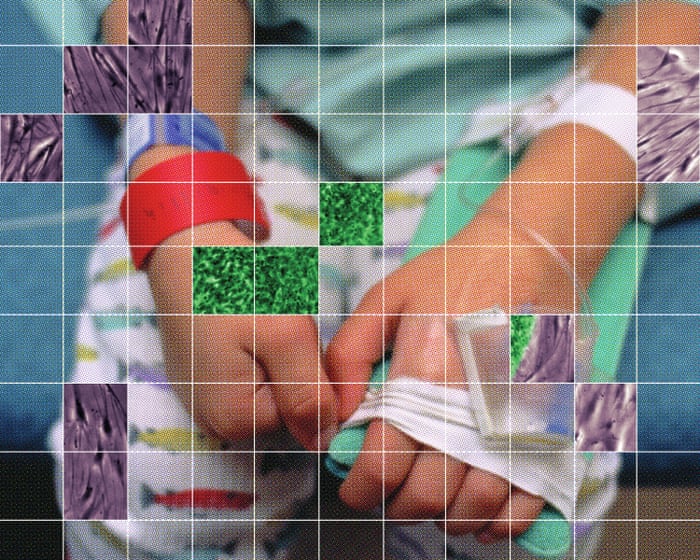
by Brenda Baletti, Ph.D., Childrens Health Defense: In April, the Research Integrity Team at Sage Journals notified the authors of a peer-reviewed study comparing health outcomes between vaccinated and unvaccinated children that the journal was investigating complaints about the research. Critics say it’s part of a coordinated campaign, fueled in part by anonymous posters on […]
Technique that examines fragments of foetal DNA in mother’s bloodstream could limit need for invasive screening, according to researchers
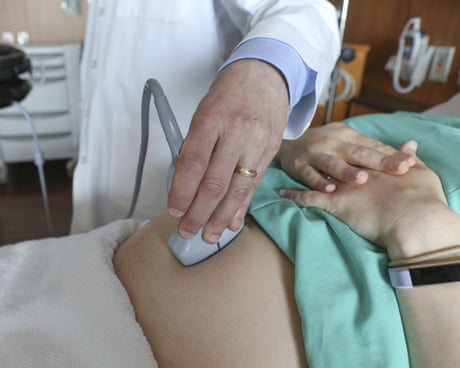
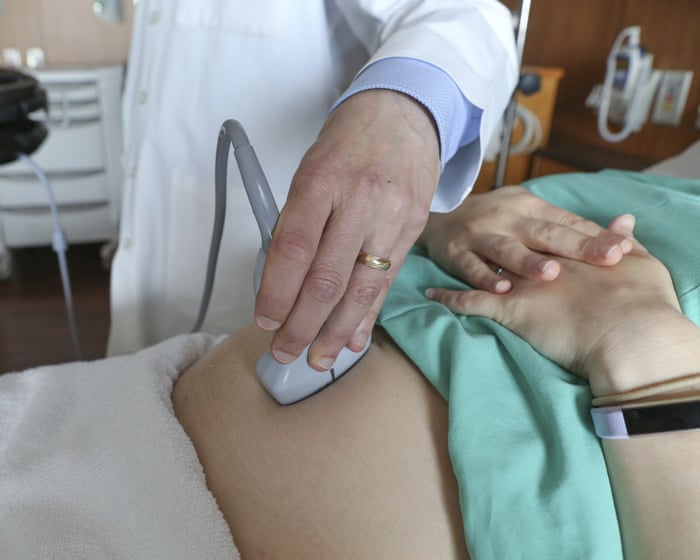
A new maternal blood test that can detect thousands of serious genetic conditions in the developing foetus could limit the need for invasive screening during pregnancy, according to scientists.
The test, to be described at the European Society for Human Genetics conference in Gothenburg on Saturday, relies on detecting tiny fragments of a foetus’s DNA that circulate in the mother’s bloodstream during pregnancy. Using advanced sequencing techniques, scientists were able to identify a very high proportion of genetic conditions, such as cystic fibrosis, that are currently only reliably diagnosed using amniocentesis or other invasive tests.
A health worker in the town of Mongbwalu, Democratic Republic of Congo, collecting medication for patients suspected of having Bundibugyo virus last month.
Desperate US parents pay up to $20,000 a session for a procedure scientists say could be bogus
Autistic children as young as 18 months old are being injected with human stem cells derived from umbilical cords in unapproved, unproven and potentially harmful “treatments” that scientists warn are proliferating across the US under the active encouragement of the US health secretary, Robert F Kennedy Jr.
Clinics in Florida, Texas and other states are selling what they bill as “regenerative medicine” to families with autistic children who have intensive care needs. Parents who have taken their children through the process talked to the Guardian about their hopes and fears for a therapy that appears to be gaining ground in the US.
Doctors say therapy that genetically modifies person’s T-cells could offer cure for chronic autoimmune disease
Five lupus patients in England are in remission after being treated with a revolutionary therapy that genetically modifies their own cells, in a medical breakthrough that could offer people a cure, doctors have said.
CAR (chimeric antigen receptor) T-cell therapy involves removing a type of white blood cell also called T lymphocytes, which are crucial for hunting out infected or damaged cells, and engineering them to spot and destroy disease. The T-cells are then fed back into the patient via an infusion to reset their immune system.
The World Cup kicked off on Thursday as South Africa squared off against Mexico, one of this year's host countries. Several American cities hosting these opening matches will be sweltering this weekend, making stadiums feel more like a sauna than a playing field. Climate Central's Ben Tracy shows us how extreme heat is changing the game in our warming world. It's for our series, Tipping Point.
As ações reagiram em alta, com a EDPR a chegar a disparar mais de 3,5% em bolsa. A forte procura por energia nos EUA, muito devido às crescentes necessidades com a IA, deverá ter um impacto positivo nas contas do grupo português.
O banco norte-americano fala de preocupações "exageradas" com a concorrência no setor em Portugal e destaca as previsões "muito mais robustas" para a unidade de serviços de telecomunicações da empresa do que era previsto.
Fertility specialists, biotech companies and ethicists are divided over whether progress in early gene editing would wipe out diseases or trigger a rush toward enhancement.
A colored light micrograph of a human embryo 48 to 72 hours after in vitro fertilization. “Human embryos become living human persons,” one bioethicist said. “The research is being done on future persons without their consent.”
DEDURU OYA, Sri Lanka – On April 16, eight members of Priyantha Kumara’s family including his wife, son, brother, father-in-law, and four other relatives were swept away by strong currents in the Deduru Oya, a river in Sri Lanka’s North Western province. Sri Lanka Police reported more than 30 drowning deaths between April 12 and 21 this year, underscoring the risks posed by flooding rivers. Sri Lanka Police media spokesperson Udaya Kumara Wootler told Mongabay that 376 individuals have died due to drowning in rivers last year while 595 fatalities were reported in 2024. Buddhika Sampath, spokesperson for the Sri Lanka Navy told Mongabay that the Navy Diving Unit recovered 148 bodies of people between May 2022 and May 2023. While the police are yet to disclose official statistics of deaths due to drowning from January to May 2026, the number of reported incidents show over 50 fatalities. Kumara is a resident of Gopallawa in the northwestern district of Kurunegala. His son had requested that they all go for a bath in the river. The group had been bathing at a popular spot named Kuriyagas Mankada when they met the tragedy. “My son was only 13 years old, and he was a bright student,” Kumara told Mongabay. “My brother was about to hold a housewarming ceremony at his newly built house. But all these dreams were shattered within seconds. My father used to take us to this same spot to bathe when we were young. But the river has changed…This article was originally published on Mongabay
Deep in Taiwan’s misty mountains, researchers have confirmed the tallest tree in the country: a thousand-year-old fir tree higher than a 20-story building, which they’ve named “the heaven sword of the Da’an River.” Climbers scaled the tree and dropped a measuring tape from the top to the forest floor during the Lunar New Year holiday in January 2023. The tree measured 84.1-meters (276-feet). The findings have been published in Frontiers in Forests and Global Change. A team of ecologists, geologists, remote-sensing specialists, professional climbers and Indigenous people that calls itself the “Taiwan tree seekers” began the search in 2014. “The common characteristics [of the team] are probably that we are all tree lovers and like adventures,” Rebecca Chia-Chun Hsu, lead author from Division of Forest Ecology, Institute of Taiwan Forestry Research, told CNN. ‘The Heaven Sword’, Taiwan’s tallest tree, measures 84.1 meters. Photo courtesy of Steven Pearce. Taiwan is one of the few places on Earth where trees can grow this tall. The island sits where the tropics meet the subtropics, and its mountains host several giant conifer species. The species behind the new record, Taiwania cryptomerioides, is known to the Indigenous Rukai people as “the tree that hits the moon.” Although nearly 60% of Taiwan is covered in forest, loggers cleared much of the island’s old-growth forest between 1912 and 1991. However, its steep slopes were too dangerous to reach, and pockets of ancient forest survived. Still, finding the tallest tree amid the rugged terrain was a task. Taiwan…This article was originally published on Mongabay
by Kevin Hughes | Natural News The 2009 leak of emails from the Climatic Research Unit at the University of East Anglia revealed efforts by scientists to hide flaws, exclude skeptics and withhold data, raising serious questions about the transparency and credibility of the IPCC. The IPCC has been criticized for using non-peer-reviewed sources, such as environmental advocacy group newsletters, leading to retractions of claims about the Amazon rainforests, African crop harvests and Himalayan glaciers. The NIPCC report challenges the IPCC’s assertion that most warming since the mid-20th century is due to human greenhouse gas emissions, arguing that natural causes are […]
Iran exposed the fragility beneath American air dominance. Beijing is studying every loss. When the United States and Israel launched coordinated strikes against Iran on February 28, 2026, Washington anticipated swift, overwhelming dominance. The arithmetic seemed straightforward: the world’s most advanced air force against a sanctions-hobbled regional power. The result was a cataclysmic failure. A […]

 Login
Login