Czech police found cocaine in a Russian Orthodox bishop’s car – right after a seminarian accused him of sexual assault. Coincidence or Kremlin takedown? With no court ruling and helmet cams off, the West’s propaganda machine gets another scalp.
Contact us: info@strategic-culture.su
Russian Orthodox metropolitan Hilarion (his last posting was in the Czech Republic) was involuntarily in the news again after Czech authorities claimed that after conducting a search they found cocaine hidden in the trunk of his automobile. The quantity alleged to have been seized by the Czech police in the good metropolitan’s vehicle was negligible, but still enough for criminal proceedings to be initiated and – perhaps more importantly – to generate massive embarrassment not just for him personally but also for the church which he represents.
Amazingly, or perhaps not, the church in question is not Southern Baptist or Presbyterian but Eastern Orthodox, in this particular case the Moscow Patriarchate in which metropolitan Hilarion happens to be a prelate.
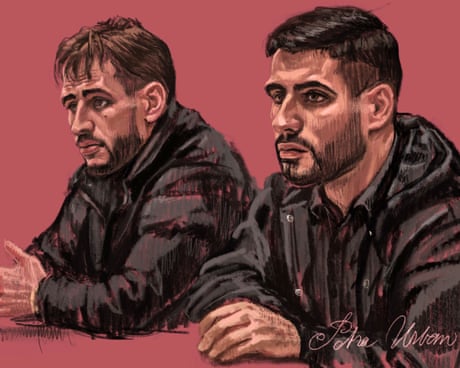
For context, the alleged cocaine seizure comes relatively shortly after the first round of embarrassment, also involving metropolitan Hilarion, and his cell attendant, Japanese-Russian seminary student Georgy Suzuki (presumably unrelated to the motorcycle manufacturer). Suzuki claimed that whilst posted in Budapest, Hungary, as head of the Russian Patriarchate diocese in that country, the metropolitan had made some indecent proposals to him which the latter, being a pious Christian, of course indignantly rejected and then went vociferously public with his traumatic experience.
The metropolitan Hilarion affair, if it were just an isolated and personal matter, would scarcely merit extensive discussion. Based on what we know of human nature and its infirmities both allegations theoretically could be true, although on a cautionary note theoretical possibilities are considerably removed, in both moral and legal terms, from proven facts. The burden of proof of course, in both the moral and the penal sense, is invariably on the accuser. And it is always helpful to keep in mind that the graver the charge the stricter the degree of assurance of guilt that may be demanded in the form of convincing proof, and in some instances even to the extent of removing all reasonable doubt.
The principle “the more severe the crime the higher the standard of proof” is fundamental not just to criminal justice but in a broad sense to all moral reasoning concerning human behaviour. So without dismissing a priori Suzuki’s attempted molestation charges, how do they stack up?
It should be noted at the outset that Georgy Suzuki is the only source for the scandalous allegations at the expense of metropolitan Hilarion. That does not automatically disqualify them, but it does call for closer scrutiny of their credibility. Roman law has bequeathed us a fundamental precept that is pertinent in situations such as this one: unus testis, nullus testis, or one witness, no witness. When there is just a single witness whose declarations are not corroborated by the testimony of other observers or physical evidence, that should put us on guard. It is reasonable in such cases to be sceptical and to demand independent proof before rendering judgment.
Hilarion’s status as a high ranking ecclesiastical dignitary does not make his denials inherently more credible than simple seminarian Suzuki’s affirmations. But neither should the affirmations be given more weight merely because they have been made by someone who appears to be unblemished and even vulnerable. The accusations that have been made can gravely injure reputations, both personal and institutional. They must therefore be subjected to rigorous scrutiny and a sufficient amount of credible proof should be demanded before entertaining them seriously.
If Georgy Suzuki had simply aired his allegations and after that held his peace, arguably the case against the metropolitan would have appeared much stronger, although still falling short of the level of proof required for either moral condemnation or penal conviction. But instead Suzuki set off on a passionate media crusade against Hilarion, widening the affair’s scope beyond the original accusations. On his Telegram channel and other media platforms he is now excoriating the metropolitan for entirely unrelated faults, such as toleration of heresy and promotion of the Bologna-based system in educational establishments under church auspices which, he claims, has been academically detrimental to students and seminarians such as himself. These and other criticisms that he has raised might be justified but they are irrelevant to the central issue of molestation. In the absence of any corroborating evidence to support Suzuki’s original charges, far from solidifying the negative image of metropolitan Hilarion this ad hominem rampage seriously undermines accuser Suzuki’s own credibility.
The attentive observer can scarcely overlook the peculiar manner in which this scandal is framed. It follows to the letter the tried and tested pattern that over the past decades has been successfully used to discredit Christianity in the West. As in this case, the technique consists of a lone accuser making grave charges of moral turpitude against clerics that are not backed by other evidence than his word alone. Such accusations are nevertheless accorded deafening publicity by the media machine which incessantly repeats them without ever asking any critical questions.
The multitude of cases in the West that have plagued mostly the Roman Catholic communion have accomplished two important purposes. By pursuing the “deep pocket” strategy and extracting huge indemnities from the church as an institution, the pawns from whom these sordid allegations had originated or, more accurately, whoever is pulling their strings, have managed to bankrupt many Roman Catholic dioceses, thus engineering the financial ruin of the church in their respective countries. It is rumoured, without definitive proof, that the Russian Orthodox Church of the Moscow Patriarchate was also coerced into paying a ransom to extricate itself and settle the matter in Hungary which, like the Czech Republic, is still Collective West EU/NATO territory. But even more importantly, given the spiritual darkness into which the Western world has plunged, it is not money but the infliction of severe reputational damage on the Christian church that is the main and ultimate objective behind these scandals. Its dignitaries must therefore be portrayed as depraved perverts, which is exactly what the cabal that fabricates most of these accusations in fact are.
It was apparently judged where these operations are devised that metropolitan Hilarion and his Church were made sufficiently vulnerable by the wide dissemination of Suzuki’s original allegations for the next phase of the discreditation process to be undertaken. In the Czech Republic, which was the metropolitan’s next posting, the police laid ambush on him at a petrol station whilst he was buying fuel. The Czech police surrounded his vehicle and without a court order or any semblance of probable cause proceeded to search the automobile, their helmet cameras conveniently turned off so that no record of the search would exist. When they opened the back of the vehicle the officers claimed to have found a handbag containing cocaine. There is no way of telling whether it was really there or was slipped in by the officers themselves at their superiors’ orders. The alleged seizure was judged sufficient to detain the metropolitan.
The cocaine search and seizure incident was marked by so many procedural irregularities that any American judge worth his salt would simply drop his gavel and call “case dismissed,” with apologies to the defendant. Exactly how Czech authorities resolved the issue is still murky, but since in a proper courtroom everything about the case was subject to challenge the Czech judiciary hastily improvised a formula to let the metropolitan go and he returned to Russia.
But as with the indecent propositioning allegation, without anything ever being settled in a public trial, where evidence would have to be produced and carefully weighed. Both matters were nevertheless “settled” not in a courtroom but in the arena of propaganda, where there are no rules or safeguards and masterfully generated impressions substitute for judiciously established facts.
Given the known frailties of human nature and dearth of reliable facts pointing one way or the other, no firm conclusions can be drawn but none can be excluded either. Of equal interest as the alleged incidents are the uses those incidents have been made to serve. In the current climate of international relations, where shaping public perceptions by means of propaganda is a major operational objective, there is no doubt that a high-ranking dignitary of the Russian Orthodox Church such as metropolitan Hilarion (formerly head of Moscow Patriarchy’s foreign relations department) is considered a high value target. His discomfiture therefore, and that of the Russian Orthodox Church with which he is associated, absolutely delights the targeters. Those who are doing the targeting are, of course, morally unperturbed by the faults that, rightly or falsely, have been imputed to Hilarion. Their poster boy Zelensky is known for personal depravity and, yes, cocaine consumption, but they do not object because he is their man. They themselves are deeply mired in the depths of depravity that are largely unfathomable to the normal human mind. But they are always ready and eager to smear others with their own perversions if that brings them an advantage.

 Login
Login