Reading view

“Russia spits in our faces” and the UN pretends it’s “just rain” – UN envoy reports May deadliest month for Ukrainian civilians since 2022
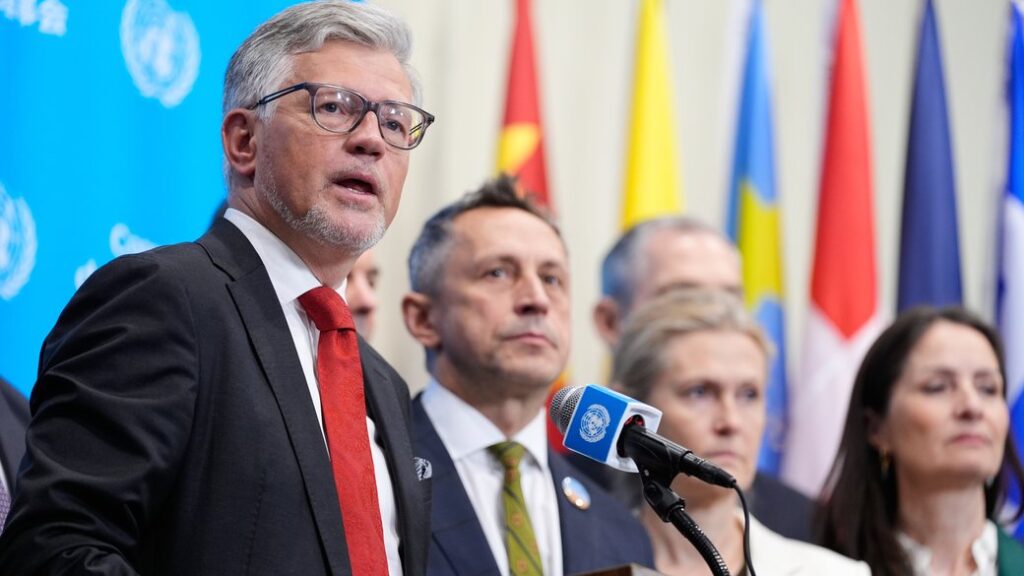
Andrii Melnyk, Permanent Representative of Ukraine to the UN. Photo: Suspilne

May was the deadliest month for civilians in Ukraine since April 2022, according to the United Nations, which presented updated casualty data to the UN Security Council during an emergency meeting requested by Kyiv, Suspilne reported.

Latvian UN envoy Sanita Pavļuta-Deslandes said preliminary figures show a sharp rise in civilian harm, warning that the final statistics for May are expected to be even higher. 

She said attacks during the month included strikes on civilian gatherings, including a funeral in Sumy, which she cited as an example of Russia targeting “so-called legitimate objectives,” according to Suspilne.

She also noted that in the first quarter of 2026 alone, 190 attacks were recorded on medical facilities, including maternity hospitals, while more than 200 educational institutions were damaged or destroyed. The number of injured children increased by 49%, according to UN data cited at the session.

The Security Council meeting came on June 8 following a wave of Russian strikes across Ukraine.

Ukraine accuses Russia of systematic deception at UN

Ukraine’s permanent representative to the UN, Andrii Melnyk, used the session to sharply criticize Russia’s role at the United Nations, arguing that Moscow continues to deny responsibility while undermining international reporting on the war.

“Russia spits in our faces with lies, and we pretend it is just rain,” Melnyk said during the meeting, according to Suspilne.

He suggested that Russia should consider leaving the UN if it rejects its own obligations under international law and dismisses UN investigative findings.

Melnyk also called for Russia to be excluded from UN peacekeeping operations, pointing to its inclusion in UN listings related to sexual violence in conflict and repeated findings on violations involving children and armed conflict.

He urged member states to take action on these findings, saying Russia’s participation in UN structures undermines the credibility of the system itself.

The meeting highlighted growing tensions inside the Security Council as Russia continues to face accusations of escalating strikes on civilian infrastructure while maintaining its role as a permanent member of the body.

  •  

New “Drone Deal” signed – Latvia and Ukraine to expand joint production and defense cooperation

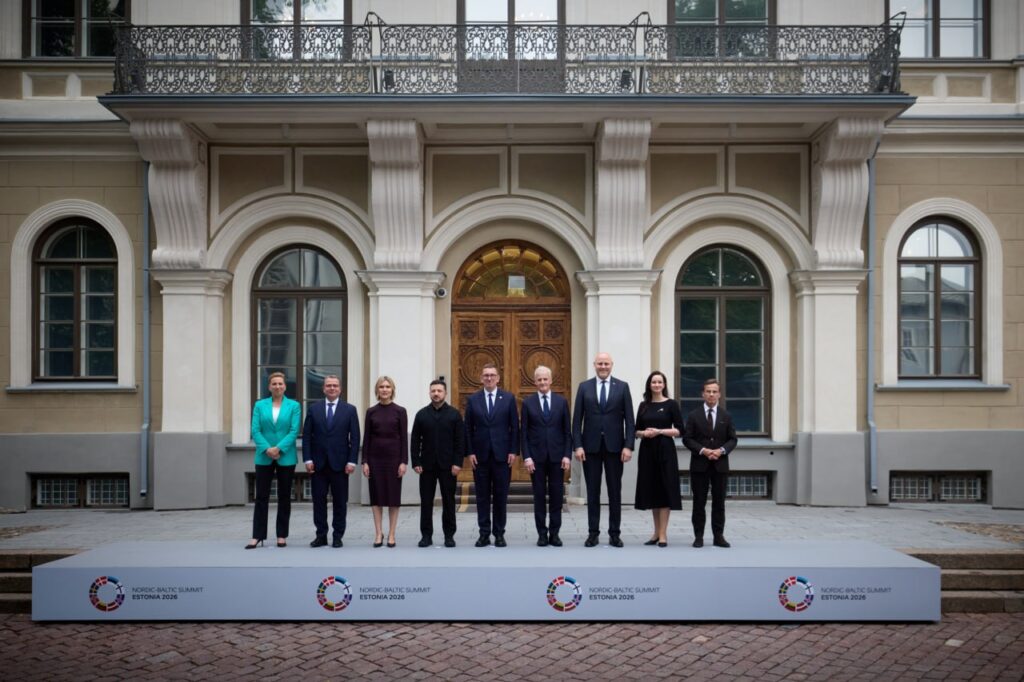
Leaders gathered at the Nordic-Baltic Summit in Estonia, 9 June 2026. Photo: Zelenskyy

Ukraine and Latvia have signed a new “Drone Deal” aimed at expanding joint production and strengthening air and drone defense capabilities, Ukrainian President Volodymyr Zelenskyy said following meetings with Nordic and Baltic leaders on 9 June.

The agreement was signed during Zelenskyy’s first meeting with Latvia’s new Prime Minister Andris Kulbergs, which he described as a “concrete result” focused on co-production and shared defense development.

Zelenskyy said the deal reflects a broader model of cooperation Ukraine is building with partners who have supported Kyiv throughout the war, combining Ukrainian battlefield experience with European industrial capacity.

He said the aim is to strengthen shared protection against Russian threats, including expanding domestic production and improving coordination in drone and air defense systems.

The “Drone Deal” is a long-term cooperation format focused on developing drone capabilities through joint production, technology exchange, and practical defense support between Ukraine and partner countries.

Ukraine offers drone expertise to European partners

Zelenskyy also said Ukraine is ready to expand cooperation on drone warfare expertise, including sending specialist teams to partner countries to share operational experience gained during the war.

He said similar cooperation has already been carried out with partners in the Middle East and could now be scaled across Europe under the new drone cooperation framework.

Zelenskyy said Russia is attempting to escalate tensions across Europe, including through drone-related incidents near NATO borders, underscoring the need for coordinated defense responses among allies.

Air defense and drones central to talks with Nordic and Baltic partners

The announcement came during a series of meetings in Tallinn with leaders from Finland, Norway, Estonia, and other Nordic and Baltic states.

Zelenskyy said partners are increasingly recognizing stronger Ukrainian positions on the battlefield, while Russia continues to compensate for losses by striking civilian infrastructure.

He said air defense remains a key priority, including securing additional missile supplies and advancing work on European anti-ballistic defense systems.

Ukraine pushes for stronger sanctions and EU accession progress

Zelenskyy also discussed increased sanctions pressure on Russia, including measures targeting the shadow fleet, alongside continued support for Ukraine’s EU membership bid.

He urged rapid progress on opening EU accession negotiation clusters, saying Ukraine has met the necessary requirements and expects political decisions in the coming months.

“There is no reason to delay,” he said, calling for momentum in EU decision-making processes.

  •  

Ukraine sets 2030 roadmap to expand rocket and artillery forces – a constant despite evolving warfare

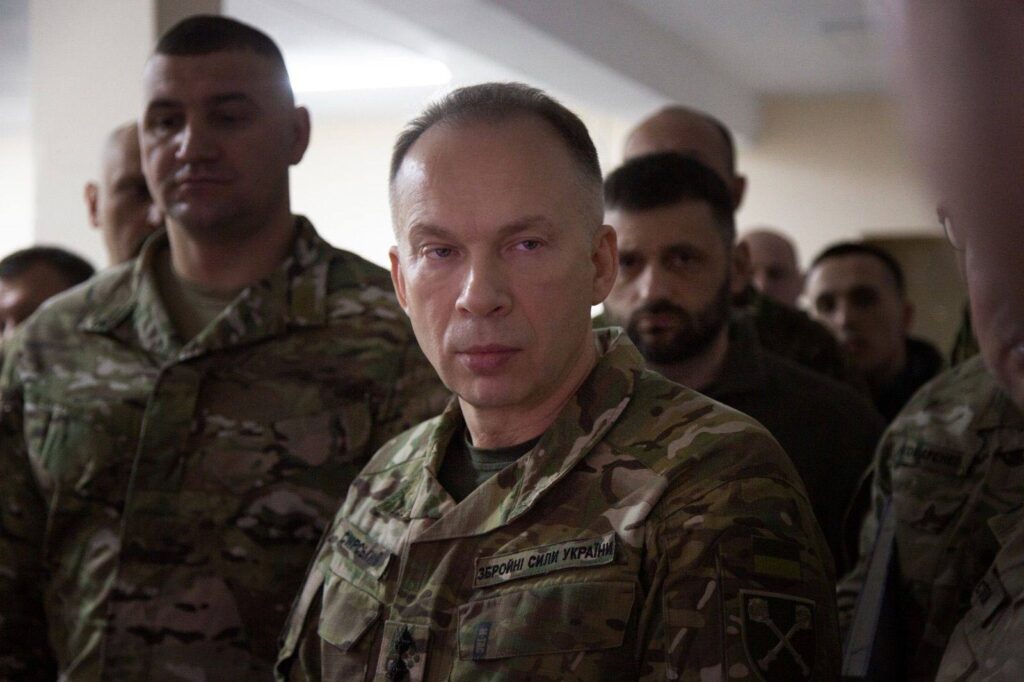
Commander-in-Chief of the Armed Forces of Ukraine Oleksandr Syrskyi. Source: Syrskyi

Ukraine has approved a long-term concept for the development of its rocket forces and artillery, outlining plans to build up capabilities through 2030, Commander-in-Chief Oleksandr Syrskyi said.

Syrskyi said the concept defines the main directions for modernization while Ukraine continues fighting a full-scale war, stressing that long-term force development must run in parallel with current battlefield needs.

He said Ukrainian artillery units are already conducting thousands of fire missions daily and inflicting significant losses on Russian forces, supported by a mix of domestically developed systems and weapons supplied by international partners.

According to Syrskyi, Ukraine operates one of the most diverse ranges of artillery systems globally and uses nearly all available types of ammunition, gaining continuous combat experience against a numerically superior adversary.

War experience drives shift in artillery and drone integration

Syrskyi said Russia’s invasion has significantly changed the character of modern warfare, with growing use of drones, guided bombs, and other precision strike systems reshaping battlefield dynamics.

He said artillery remains a core component of the battlefield despite evolving technology, but its effectiveness now depends heavily on reconnaissance quality and the speed of information transfer.

At the same time, he pointed to several challenges affecting Ukraine’s rocket and artillery forces, including dependence on foreign ammunition supplies, complex logistics linked to multiple systems, limited range in some platforms, and shortages in artillery reconnaissance capabilities.

30th Mechanized Brigade artillery.
30th Mechanized Brigade artillery. 30th Mechanized Brigade photo.

Ukraine to phase out outdated systems and expand domestic production

The concept foresees a gradual transition toward Ukrainian-made artillery systems as the backbone of future force structure, while aging Soviet-era systems that cannot be upgraded will be phased out.

Ukraine will also retain units equipped with modern foreign systems and streamline its overall artillery inventory to improve efficiency and logistics.

Syrskyi said a key priority is the creation of a modern artillery reconnaissance system to improve targeting speed and battlefield coordination.

Focus on long-range strike capability up to 2,000 km

A separate priority is the expansion of Ukraine’s missile forces to increase deep-strike capability across operational and strategic depth.

Syrskyi said this includes completing development and scaling production of domestic ballistic and cruise missiles, which – together with unmanned systems – would form a layered long-range strike capability with a reach of up to 2,000 kilometers.

He said artillery will remain a decisive element of battlefield effectiveness and a central factor in deterring further Russian aggression, regardless of terrain or conditions.

  •  

EU’s 21st sanctions package would ban Russia’s soldiers from European soil

EU High Representative for Foreign Affairs and Security Policy Kaja Kallas delivers press remarks following the Foreign Affairs Council on 20 October 2025

The European Union has proposed a 21st sanctions package against Russia that includes a visa ban on current and former Russian military personnel, as Brussels expands pressure on individuals and entities linked to Moscow’s war effort in Ukraine.

EU foreign policy chief Kaja Kallas said the package is part of a broader push to increase economic and political pressure on Russia.

“We are depriving Russia of the means to fund its war,” Kallas wrote on X.

Package includes over 170 proposed sanctions listings across sectors

The sanctions package will target Russia’s financial, energy, and industrial sectors, with more than 170 proposed listings.

These include banks, weapons manufacturers, oil traders, refineries, and crypto-related services, as well as entities in third countries accused of helping Moscow bypass existing restrictions.

Energy measures include a temporary freeze of the Russian oil price cap mechanism, alongside new restrictions on LNG transactions and additional action against Russia’s shadow fleet, with 30 more vessels proposed for designation.

Officials said the aim is to further reduce Russia’s export revenues and disrupt maritime logistics networks used to move sanctioned energy products.

Brick by brick, we are collapsing the foundations of Russia's war economy.

Today, we are presenting our proposals for a 21st sanctions package against Russia.

This includes a temporary freeze of the Russian oil price cap and designations of institutions used by Moscow to…

— Kaja Kallas (@kajakallas) June 9, 2026

Measures expand to export controls and financial restrictions

The package also expands export controls on materials used in weapons production, including metals, alloys, and high-performance inputs, with companies in countries such as China, Türkiye, Kazakhstan, the UAE, and India included in the proposals.

Financial restrictions remain a central pillar, with expanded sanctions planned against banks and crypto platforms linked to sanctions evasion and war financing.

EU visa ban on Russian military personnel

The sanctions package includes a “comprehensive” visa ban proposal that would prohibit entry into the EU for current and former members of Russia’s armed forces, as well as “proxy groups,” marking an expansion of sanctions beyond economic measures to individuals linked to military operations.

“Europe’s door should not be open to Russia’s (ex-)combatants,” Kallas wrote.

Our sanctions are working.

They are weakening the economic foundations of Russia’s war effort.

Today we double down.

With a 21st package.

Covering energy, banks & crypto, trade including fisheries and visa for Russian soldiers ↓ https://t.co/fTIkATOSfN

— Ursula von der Leyen (@vonderleyen) June 9, 2026

Sanctions already cost Russia up to $1.5 trillion, EU says

The same day, Kallas told journalists that existing sanctions continue to intensify pressure on Moscow’s economy. Kallas noted that Western sanctions have already cost Russia an estimated $1.2 to $1.5 trillion, adding that “brick by brick, we are collapsing the foundations of Russia’s war economy.”

She said the aim remains to increase costs for Moscow across multiple sectors while maintaining unity among EU member states.

The package requires unanimous approval from EU member states before it can take effect.

  •  
❌