Reading view

How Roman Emperor Julian Fought Christianity to Save the Ancient Greek Gods
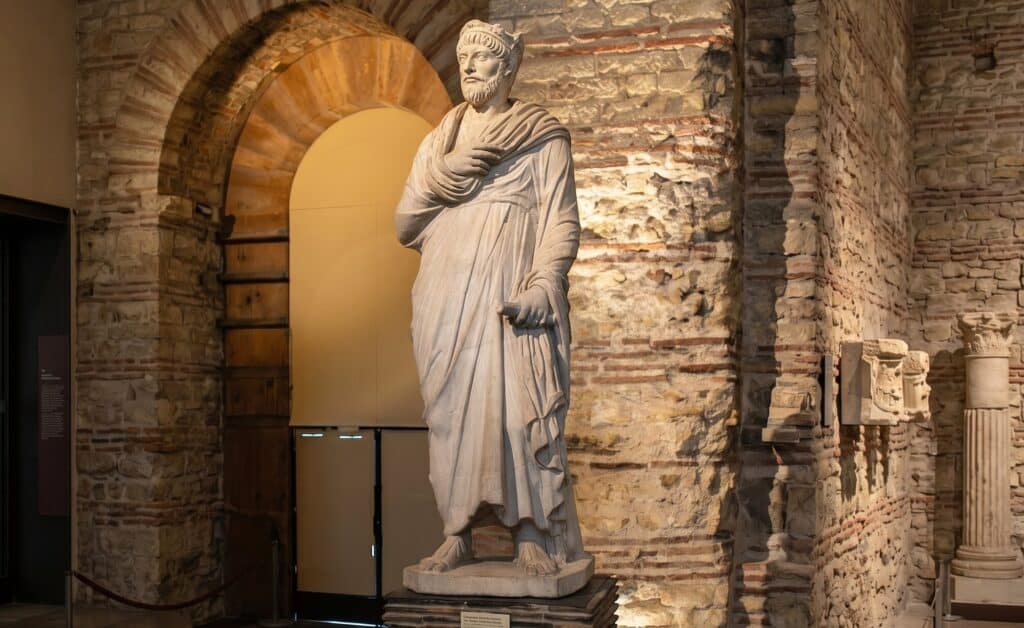
A full-length marble statue of a bearded man draped in a traditional Roman cloak and holding a scroll stands within a stone gallery.
The depiction of Julian in this classical guise shows his commitment to Neoplatonism and Greek culture over the rapidly spreading Christian faith. Credit: Ash Crow, Wikimedia Commons, CC BY-SA 4.0

Few figures in late antiquity present as compelling a historical debate as Julian the Apostate’s attempt to restore the Greek gods in opposition to Christianity in the Roman Empire.

During his brief but highly consequential reign in the fourth century AD, the Roman Empire stood at a profound religious crossroads. For a short period, Julian attempted to slow the empire’s accelerating Christianization, launching a sweeping effort to revive the ancient Olympian pantheon and return Rome to its traditional pagan practices. His sudden death on the battlefield has led historians to debate how dramatically the cultural trajectory of Western civilization might have shifted had his reforms endured.

Julian was born into the heart of the Constantinian dynasty, a family that had only recently converted to Christianity. Nonetheless, he became the last Roman emperor to openly support and worship the traditional Greek gods. He ruled for only about two years from 361 to 363 AD, but he acted with urgency and purpose. Julian the Apostate initiated an extensive program of philosophical and religious reform, aiming to reverse the Christian expansion advanced by his predecessors. To the growing Christian population, he was seen as a traitor to the new religious order, but to those who still admired the intellectual and cultural legacy of the classical world, he appeared as a philosopher-king attempting to restore an older vision of Rome.
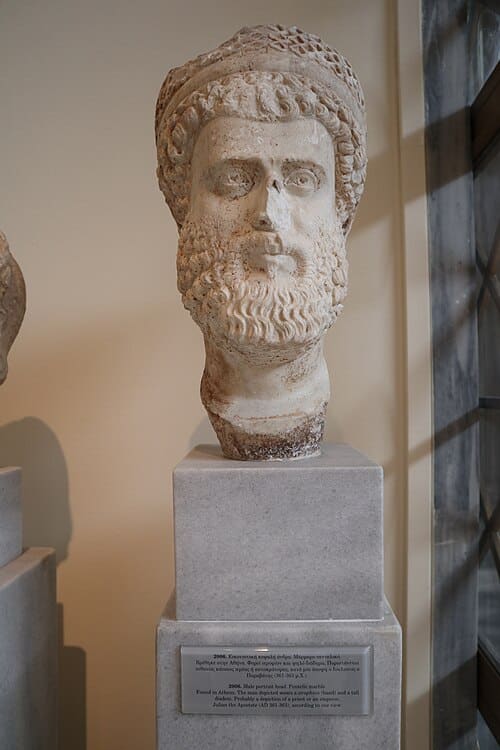
A sculpted marble portrait head of a bearded man wearing a diadem rests upon a stone pedestal inside a museum.
This marble head from Athens is widely believed to be a rare surviving portrait of the Roman Emperor Julian the Apostate. Credit: George Koronaios, Wikimedia Commons, CC BY-SA 4.0

Julian the Apostate’s early life

Julian did not experience the typical sheltered upbringing of an imperial heir. He grew up constantly looking over his shoulder, surviving political purges that eliminated many members of his own family. Although he was raised in a strict Christian environment under the supervision of powerful bishops, he is often understood to have developed a private intellectual attraction to classical texts and traditions associated with the ancient world.

His life took a decisive turn when he went to study in Athens. There, he was secretly initiated into the Eleusinian Mysteries, an experience that deeply shaped his philosophical outlook and strengthened his commitment to rejecting Christianity in favor of Neoplatonism. This forced dual existence helped form a uniquely strategic mindset. He became familiar with the inner workings of the Church, knowledge he later leveraged in support of his own religious and philosophical aims. By the time his troops in Gaul unexpectedly proclaimed him emperor, Julian was convinced that the gods themselves had chosen him to restore the ancient order.

Julian the Apostate as Emperor and the worship of the Ancient Greek gods in the Roman Empire

When he finally took power, Julian did not launch the kind of widespread, violent persecutions often associated with earlier periods of religious conflict. Instead, he pursued a more calculated cultural strategy. His approach focused on weakening Christian influence within imperial institutions while strengthening traditional religious structures. Julian the Apostate reduced the privileges and state support enjoyed by Christian clergy and redirected resources and prestige toward the priesthood of the traditional Greco-Roman religion centered on the Greek gods.

In a particularly controversial move, he restricted Christians from teaching classical literature. His reasoning was that those who rejected the traditional religious framework of Homer and Hesiod should not profit from instructing it. At the same time, Julian sought to make traditional religion more socially competitive by encouraging pagan priests to adopt public charitable functions, including aid for the poor and the establishment of hospitals—areas in which Christianity had been especially successful in gaining support. He appears to have believed that traditional worship had declined not because of its inherent weakness but because its institutions had failed to match the organizational and charitable presence of Christianity.

In practice, many historians argue that this cultural and intellectual strategy posed a different kind of challenge to early Christianity than outright violence. While persecution could strengthen Christian identity through martyr narratives, Julian the Apostate’s policies instead aimed to limit the social structures that supported its continued expansion while restoring the worship of the Ancient Greek gods within the broader Greco-Roman religious tradition.

A weathered page from an illuminated manuscript features three stacked, colorful panels showing medieval figures in royal and religious garments amidst dramatic interactions.
This illuminated manuscript page depicts vivid scenes of Emperor Julian ordering the arrest of a Christian bishop and overseeing acts of persecution. Credit: Wikimedia Commons, Public Domain

Unfortunately for his beliefs, that grand vision of such a revived Greco-Roman empire came to an abrupt end in the arid regions of Persia. During a military campaign, Julian was struck in the side by a spear, cutting his reign tragically short. Ancient sources and later traditions continue to debate the circumstances of his death, with some attributing the blow to a Persian soldier and others speculating—without evidence—that it may have come from within his own ranks. The true origin remains uncertain.

A well-known tradition holds that, as he lay dying, Julian the Apostate is said to have declared, “Thou hast conquered, O Galilean,” acknowledging the perceived triumph of Christianity. Whether or not he actually spoke these words, his brief reign left a lasting imprint on Roman and Western history. His efforts to restore the Ancient Greek gods within the Roman world continue to be discussed by historians as a striking moment in the empire’s religious transformation. Even in modern Greek cultural memory, echoes of this tension can still be felt in the broader contrast between the rational legacy of ancient philosophy and the spiritual tradition of Orthodox Christianity.
  •  

Andreas Michalakopoulos: The Forgotten Prime Minister Who Shaped Modern Greece

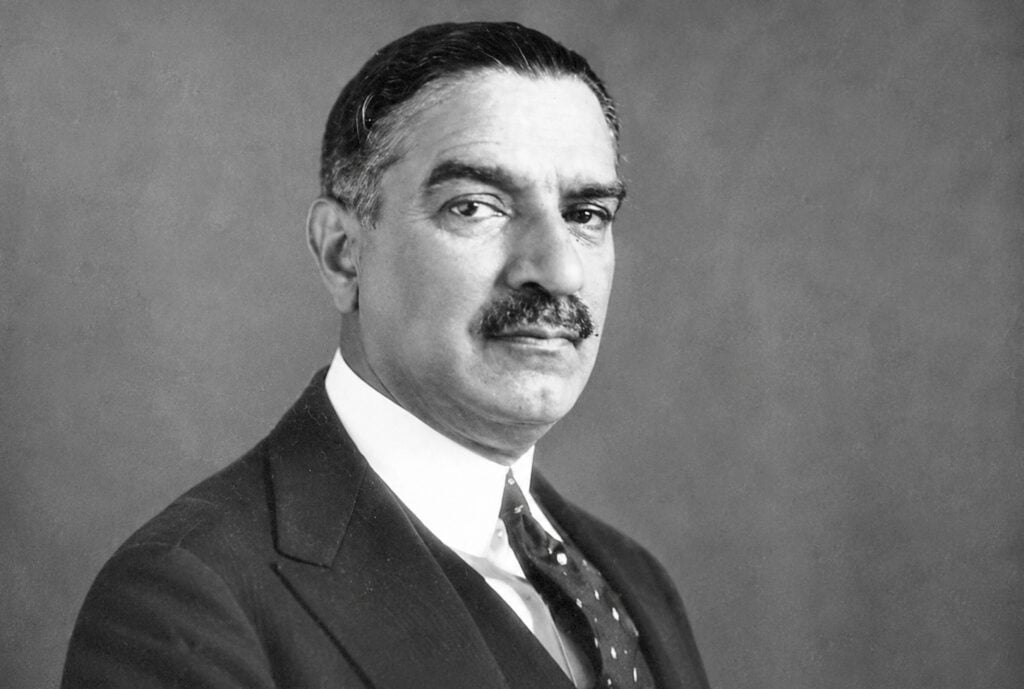
A black-and-white portrait features Greek politician Andreas Michalakopoulos wearing a dark suit, white collared shirt, and a patterned tie.
As a key political figure in early 20th-century Greece, Michalakopoulos served in numerous ministerial roles and briefly held the office of Prime Minister from 1924 to 1925. Credit: Agence de presse Meurisse – Bibliothèque nationale de France, Wikimedia Commons, Public Domain

Every day, thousands of Athenians and visitors pass through Michalakopoulou Avenue, one of the main arteries of central Athens. Yet few know the story of Andreas Michalakopoulos, the forgotten Greek Prime Minister and diplomatic genius whose name the avenue carries.

Who was the man behind the Michalakopoulos name?

Andreas Michalakopoulos was born in Patras in 1876 and went on to become one of the most important statesmen in modern Greek history. He was a man who helped redraw Greece’s borders, solved Athens’ water crisis, and brokered peace with Turkey at a time when Greece couldn’t have suffered more militarily.

Yet most Greeks today could not tell you a single thing about him. History has been unkind to Michalakopoulos, largely because he spent most of his career standing next to one of the most towering figures Greece has ever produced: Eleftherios Venizelos. That proximity was both his greatest role and the reason he is so rarely remembered—a blessing and a curse for a public figure like him. Michalakopoulos rose through the Liberal Party (Κόμμα των Φιλελευθέρων) ranks after 1910, holding portfolios in Economy, Agriculture, and Military Affairs under successive Venizelos governments.

He was not a man who craved the spotlight. He was a man who understood how government actually worked, and he was trusted with the levers of it accordingly—a true politician in the best definition of the term possible. When Venizelos went before the great powers of Europe to argue for a bigger Greece after the First World War, Michalakopoulos was beside him at the negotiating table. He participated in the long, tough diplomacy that produced both the Treaty of Sèvres in 1920 and the Treaty of Lausanne in 1923, the two documents that first promised the unthinkable and then permanently fixed, without too heavy losses, the borders of the modern Greek state. Venizelos got 100% of the credit.

However, Michalakopoulos did much of the work. He became Prime Minister in October 1924, inheriting a country in a genuine, profound, and almost existential crisis. The Asia Minor Catastrophe of 1922 had sent over a million Greek refugees flooding into Greece in a matter of months. From dreams about the reinstatement of Byzantine glory, Greece woke up in ruins, literal and metaphorical. Athens had nearly doubled in population within just a few years, and the city’s ancient water infrastructure simply could not cope. Water was being sold from carts in the streets. Taps ran dry. For a capital city that had stood for thousands of years, it was an embarrassing and dangerous situation. Greece was on the brink of collapse.

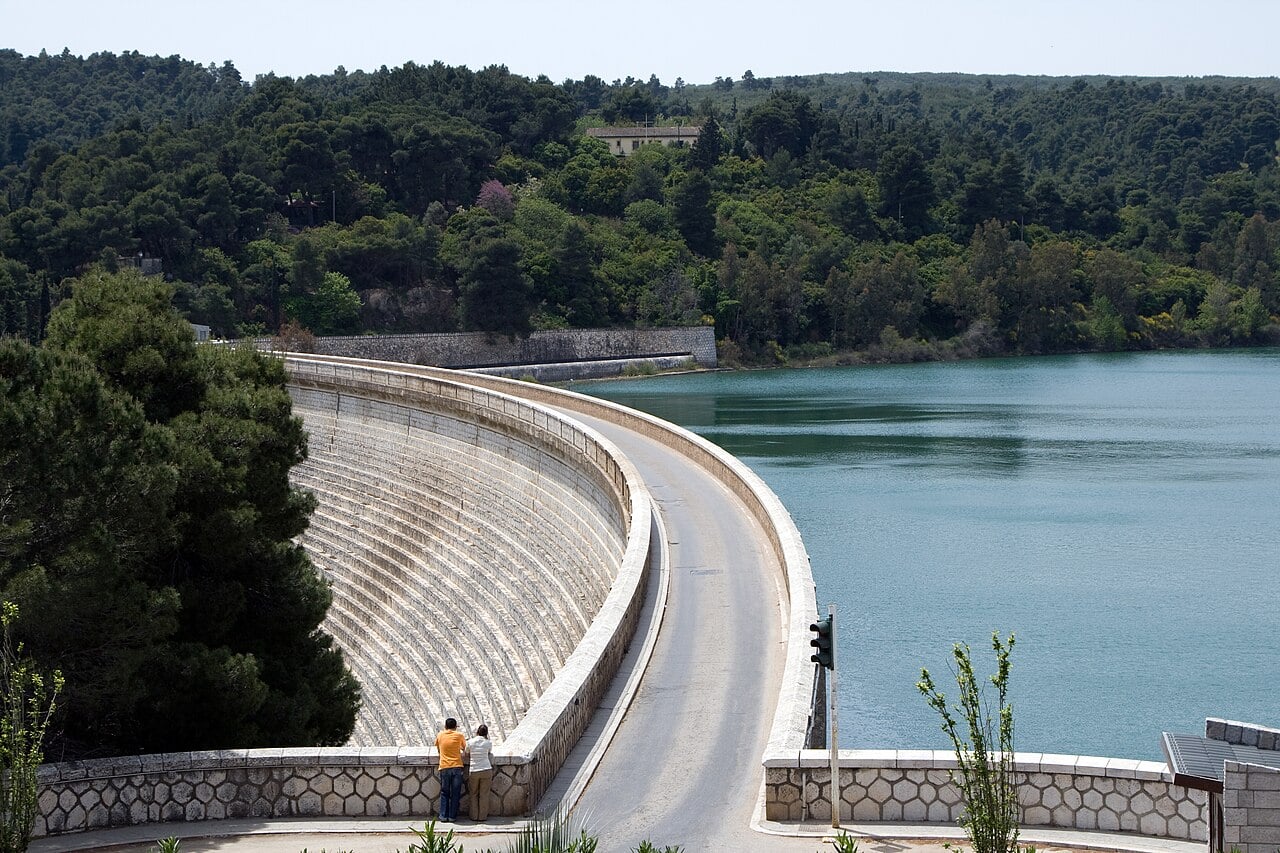
Michalakopoulos wasted little time. In December 1924, his government signed a landmark contract with American engineering firm Ulen & Company and the Bank of Athens to construct the Marathon Dam. It was one of the largest infrastructure projects in Europe at the time. The Marathon Dam was a gravity dam built of the famous Pentelic marble—the same stone used to construct the Parthenon—rising 54 meters above the Haradros River outside of Athens. The project cost more than the entire National Bank of Greece and was funded with a $10 million loan. Yes, modern Greece and loans, this stereotypical love affair…

A wide view captures the curved, stepped stone structure of the Marathon Dam holding back a large reservoir flanked by forested hills, with two people observing from a lower walkway.
Completed in 1929 and uniquely faced with Pentelic marble, this historic engineering project was instrumental in securing a reliable water supply for the rapidly expanding city of Athens. Credit: Vitaly, Wikimedia Commons, CC BY-SA 3.0

Construction ran from 1926 to 1929. The finished system delivered water to Athens through nearly 880 kilometers (547 miles) of new pipes and was inaugurated in 1931. The water that flows from Athenian taps today finds its roots in that contract and in that decision. Michalakopoulos never saw it completed. A military coup by General Theodoros Pangalos ended his government in June 1925, just months after the contract was signed.

But, thankfully, the work was done. He returned to government as Foreign Minister under Venizelos starting in 1928, and it was here that he made perhaps his most lasting contribution to the nation. Greece in the late 1920s was a country that had been through a lot. The Megali Idea, the great dream of a Greece stretching across the Aegean and into Anatolia, had collapsed spectacularly and catastrophically. The population exchange with Turkey had displaced more than a million people on each side. The two countries were locked in mutual suspicion and unresolved property disputes.

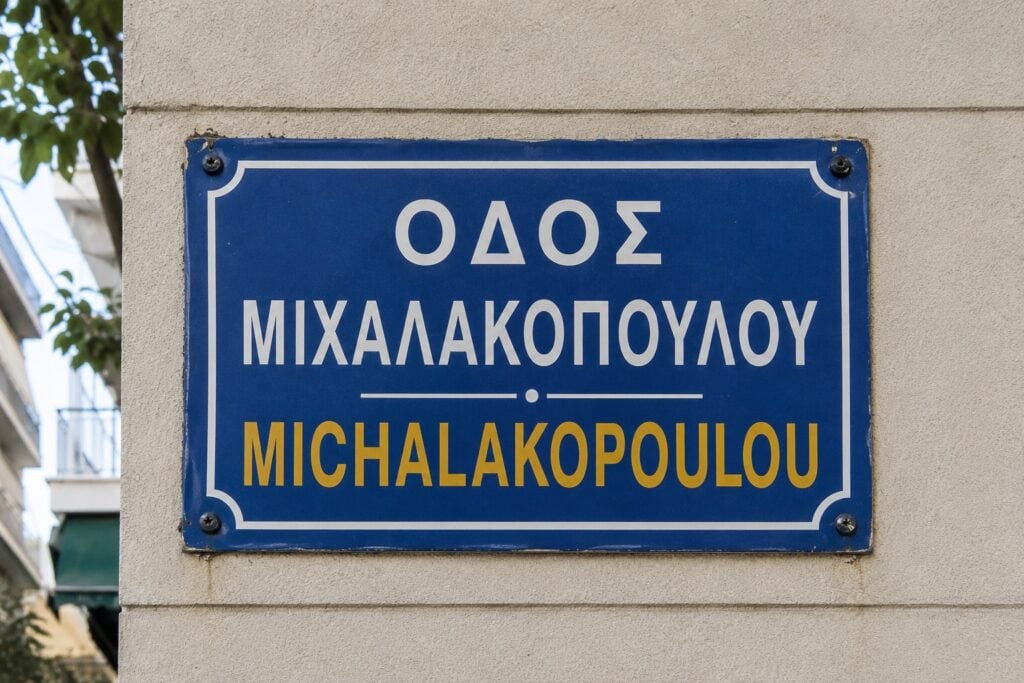
A blue enameled street sign mounted on a textured beige wall displays the name "Michalakopoulou" in white Greek lettering and yellow Latin characters.
A bilingual street sign marks Michalakopoulou Street, a major avenue running through the city of Athens. Credit: Greek Reporter archive

Michalakopoulos understood, more clearly than most, that Greece could not afford to stay that way. On October 30, 1930, he co-signed the Greek-Turkish Friendship Convention, also known as the Treaty of Ankara. He did that alongside Venizelos and Turkish Prime Minister İsmet İnönü. The treaty settled the border, resolved the property claims of the displaced populations, and established naval parity in the eastern Mediterranean.

It was a remarkable diplomatic achievement that helped lay the groundwork for the Balkan Pact of 1934 and brought a genuine, working peace between two nations that had spent generations at war. When Ioannis Metaxas declared his dictatorship on August 4, 1936, Michalakopoulos refused to go along with it. He had spent thirty years building democratic institutions from the inside. He spoke out against the regime and paid a heavy price for it. He was sent into internal exile on the island of Paros. He died on March 7, 1938, aged sixty-one.

Michalakopoulos’ legacy is a strange one: a man who brought water to a thirsty city, helped draw the map of modern Greece, made peace with its archenemy, and died in exile because he would not pretend that democracy was something you could simply switch off. Next time the traffic backs up on Odos Michalakopoulou in downtown Athens, take a moment to read the sign. The water in your glass and the borders of this nation have everything to do with the man it honors.

  •  
❌