
Normal view

These Human Skills Are Still Hard for AI to Replace

13 June 2026 at 00:01
Artificial Intelligence & AI & Machine Learning
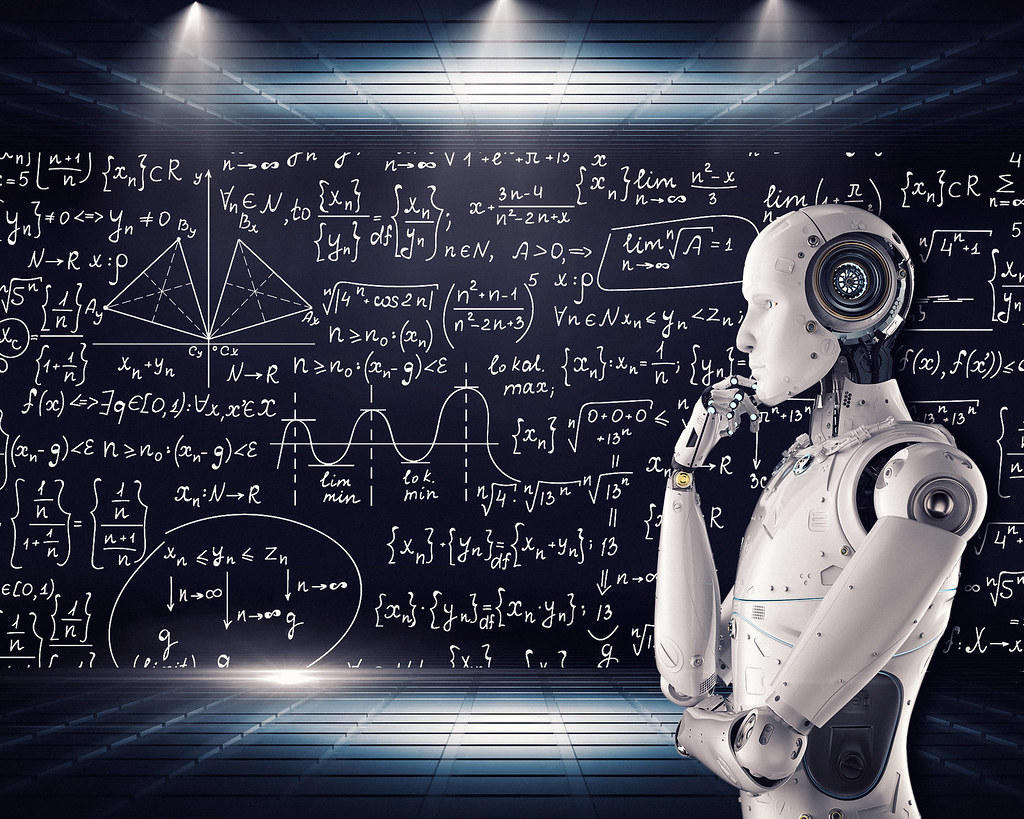
“Artificial Intelligence Machine Learning” by mikemacmarketing. Credit: Flickr/ CC BY 2.0.

As artificial intelligence becomes more integrated into the workplace, many employees worry that machines could replace them. Workplace experts say that fear is understandable. But they also say humans still have skills that AI cannot easily match. Those strengths include empathy, relationship-building, critical thinking, ethical judgment, and the ability to make decisions in uncertain situations.

Human skills keep their value

Maria Flynn, president and CEO of Jobs for the Future, said the skills most resistant to AI are the ones most closely tied to human behavior.

Those include building trust, resolving conflict, motivating others, and making ethical decisions, she said. Flynn’s organization calls them “durable skills” because they keep their value through economic shifts, new technology, and labor market disruption.

Employers are looking for these skills in many fields, including technical roles such as IT support, Flynn said. They want workers who can communicate clearly, take initiative, and lead when needed.

Empathy remains hard to automate

Empathy remains one of the clearest examples. Humans can read tone, body language, and emotion in ways AI still struggles to understand. Those skills matter in jobs that depend on care, trust, and sensitivity.

Marco Iansiti, a professor of business administration at Harvard Business School, said he saw that during a hospital stay. Nurses, he said, offered more than routine care. They gave comfort, built trust, and created a human connection.

As AI changes the workplace, experts say the most valuable skills may still be the most human ones.

Empathy, critical thinking, relationship-building and ethical judgment could help workers stay relevant as companies adopt more AI tools. pic.twitter.com/dhcZ1RcmPA

— Tom Marvolo Riddle (@tom_riddle2025) June 12, 2026

AI may still help in hospitals, he said. It can take over paperwork and other routine tasks. That could give nurses more time to focus on patients.

Relationships still matter at work

Relationships also remain difficult to automate. Salespeople, managers, and client-facing workers often rely on years of trust and personal knowledge. A client who has worked with the same person for years may not transfer that trust to an AI system, Iansiti said.

Human connection also matters when conflict arises. Flynn said people are still needed to manage expectations, calm tensions, and help teams move forward.

Colleen Adler, a director analyst in Gartner’s human resources practice, said managers and co-workers still shape how employees feel at work. AI may assist with tasks, but it does not yet match the tone of human connection, she said.

Workers need critical thinking

Critical thinking is another skill gaining importance. AI systems can produce quick answers, but they can also make mistakes.

Amalia Kaufman, a course developer and instructor at the University of California, Irvine Division of Continuing Education, said workers need subject knowledge to judge AI output. They must know when information is wrong and check facts before using it.

A study published in Science also found that AI chatbots were more likely than humans to flatter users and validate their feelings. That makes human judgment even more important.

Ethical judgment requires oversight

Experts say ethical judgment may be harder for AI to copy. Iansiti said AI can appear to understand conscience because it has read about ethics. But it lacks emotion, lived experience, or responsibility.

That matters in high-stakes decisions, including hiring or the use of military force. Guardrails can help guide AI systems, Iansiti said, but human oversight remains necessary.

AI can process large amounts of data. But experts say people still bring context, experience, and judgment to gray areas where there is no clear answer.

As AI changes work, Flynn said, employees should be able to identify and explain the human skills they bring. Those skills may help workers remain valuable in a future shaped by machines.
Newly Deciphered Greek Inscriptions Shed Light on Ancient Termessos

12 June 2026 at 23:01
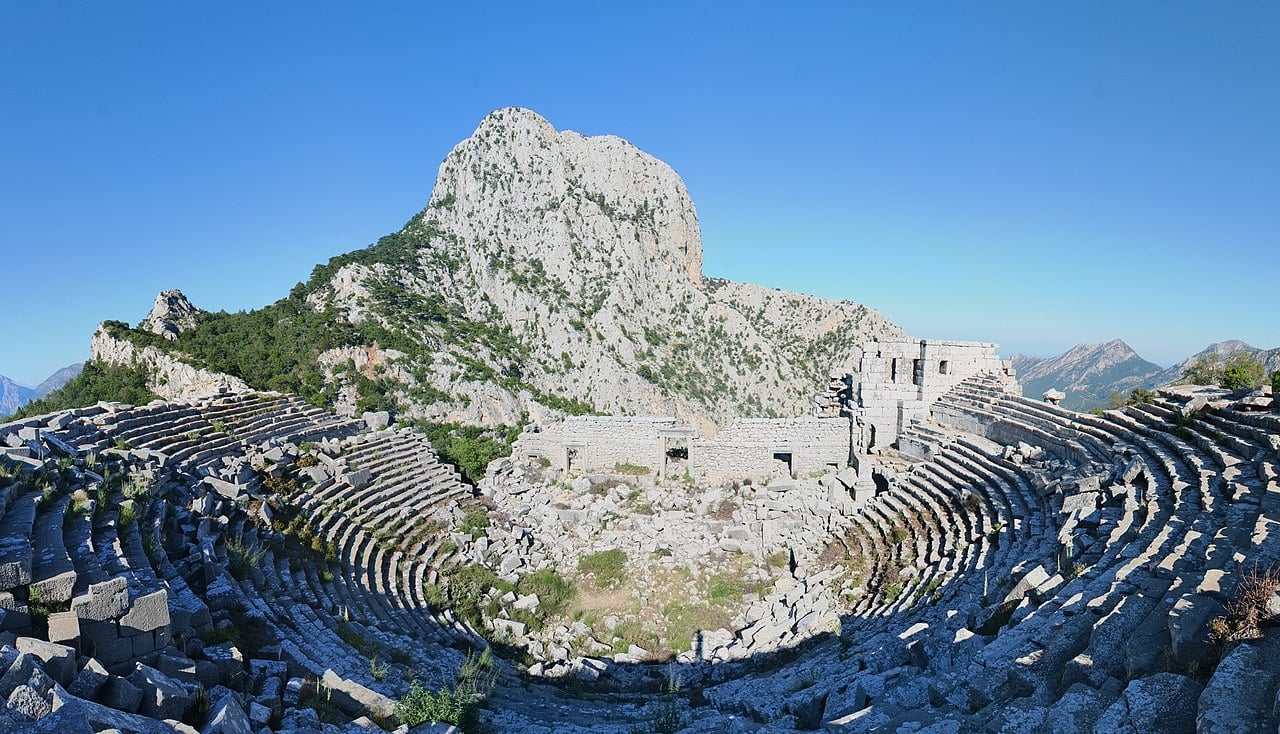
Theatre in the ancient Greek city of Termessos
Theatre in the ancient Greek city of Termessos. Credit: Ingo Mehling / Wikimedia Commons / CC BY-SA 3.0

Researchers working at the ancient Greek city of Termessos (Greek: Τερμησσός) in modern-day Turkey have identified two Greek inscriptions that are shedding new light on the city’s political identity and ritual life in antiquity.

Located in the mountains of ancient Pisidia near modern Antalya, Termessos was part of the wider Greek world that emerged across Anatolia during the Hellenistic period. Perched more than 1,000 meters (aprox. 3,000 ft) above sea level, the city is renowned for its dramatic landscape, well-preserved ruins, and long association with Alexander the Great.

The discoveries were made during ongoing studies at the site inside Güllük Mountain National Park, one of the eastern Mediterranean’s most striking archaeological landscapes.

Inscription proclaims civic independence

Researchers identified one inscription on a heavily weathered section near a collapsed city gate. They made the text readable using digital modeling and modern documentation techniques.

According to researchers, the inscription contains a phrase that may be translated as: “May the rights of the independent Termessians endure forever.”

Prof. Dr. Mustafa Koçak of Antalya Bilim University, director of the excavation, explained that the inscription once stood at the entrance of the city, where it announced Termessos’ status to visitors entering the settlement.

AI reconstruction of a newly deciphered stone inscription from ancient Termessos
AI reconstruction of a newly deciphered stone inscription from ancient Termessos. Credit: Greek Reporter Archive

The message is particularly significant because of the city’s famous encounter with Alexander the Great. Ancient sources record that Alexander failed to capture Termessos in 333 BC during his campaign through Anatolia. The episode helped establish the city’s reputation as a formidable mountain stronghold.

The newly deciphered text provides rare written evidence of how the people of Termessos understood their own civic identity and autonomy. Placed at the city gate, the inscription served not only as a marker of entry but also as a public statement of political identity.

Oracle reveals ancient divination practices

Researchers also identified a second inscription linked to divination using astragali, small ankle bones typically taken from sheep or goats. In antiquity, these bones were thrown like dice to seek guidance from the gods, a practice widely known throughout the Greek world.

Prof. Dr. Fatih Onur of Akdeniz University’s Department of Ancient Languages and Cultures explained that such systems used either five or seven bones. The Termessos inscription belongs to the seven-bone system, which produced 120 possible combinations. The resulting numbers directed users to specific written responses.

Three inscription blocks of this type have survived, and one remains visible at the site today. Researchers believe travelers and merchants may have consulted the oracle before journeys, trade, or other important decisions.

According to Onur, the responses were written in poetic language, suggesting that the texts were intended for ritual use rather than simple instruction.

New insight into life at Termessos

Together, the inscriptions offer a rare glimpse into both public and private life in ancient Termessos. One reflects the city’s civic identity and independence, while the other reveals how people sought divine guidance in everyday life.

For archaeologists, the discoveries deepen understanding of a city that stood at the crossroads of local Pisidian traditions and the broader Greek and Hellenistic world that shaped the eastern Mediterranean for centuries.

❌