Normal view

Greece Shines in Condé Nast Traveller Awards as Naxos Tops Europe’s Best Islands

12 June 2026 at 14:38
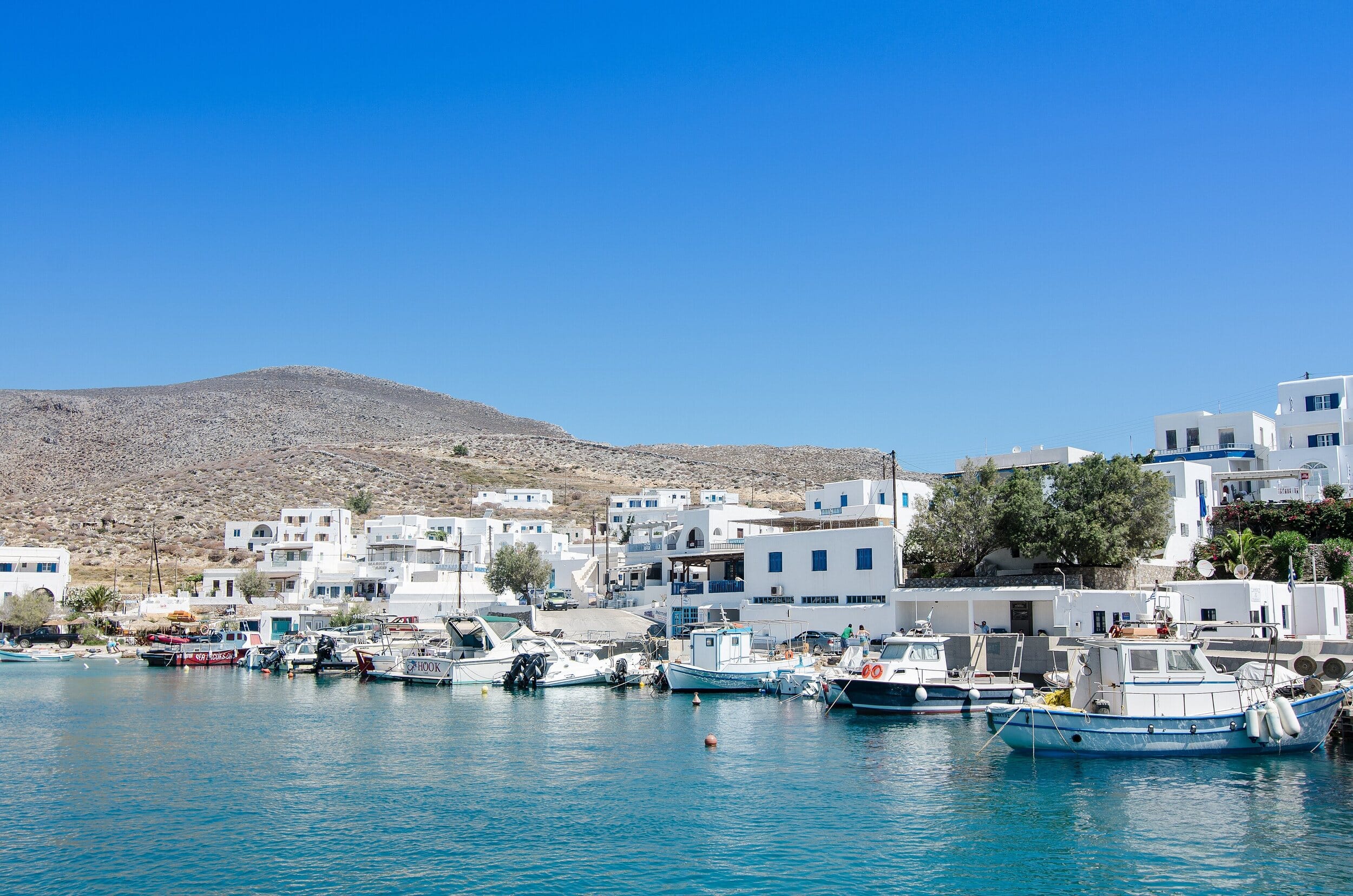
Folegandros, Greece
Folegandros, Greece, one of the eight Greek islands ranked among Europe’s best in the Condé Nast Traveller Readers’ Choice Awards. Credit: Étienne Dallaire / Wikimedia Commons / CC BY 3.0

Greece emerged as one of the leading countries in the Condé Nast Traveller Readers’ Choice Awards, with eight Greek islands ranked among Europe’s top 20.

Naxos claimed first place with a score of 95.71, just ahead of some of the Mediterranean’s most famous destinations, including Ibiza, Capri, Hvar, Mallorca, and Sicily. The result places the Cycladic island at the center of Europe’s travel spotlight and highlights the continued strength of Greece’s island tourism.

Alongside Naxos, the Greek islands featured in the ranking include Crete, Corfu, Rhodes, Skiathos, Mykonos, Folegandros, and Santorini.

Greece’s islands stand out in Europe’s awards

The ranking gives Greece one of the strongest national presences on the list. Eight of the twenty destinations are Greek, reflecting the country’s broad appeal to international travelers.

Crete ranked eighth with a score of 91.42, narrowly behind Sicily, which scored 91.43. Corfu followed in tenth place with 90.95, while Rhodes came in at eleventh with 90.86. Skiathos also ranked well in twelfth place with 89.52.

Further down the list, Mykonos placed fourteenth with 88.57, ahead of Cyprus, Sardinia, Folegandros, Santorini, Malta, and the Azores. Folegandros ranked seventeenth with 84.29, while Santorini placed eighteenth with 83.27.

All in all, the results show that Greece’s appeal extends far beyond its most popular destinations. The country’s islands continue to attract travelers looking for beaches, culture, food, history, nightlife, and quieter escapes.

Naxos tops Europe’s best islands as Greece shines in awards

Naxos’ first-place ranking is especially notable because it points to a shift in traveler preferences. While Santorini and Mykonos remain among Greece’s most well-known international destinations, readers placed Naxos above both.

The island is widely admired for its long sandy beaches, traditional villages, local cuisine, and more relaxed atmosphere. It also possesses a strong cultural identity, from its mountain settlements and agricultural traditions to the Portara, the ancient marble gate that stands near the entrance to its harbor.

Its score of 95.71 put it ahead of Ibiza, which ranked second with 93.06, and Capri, which placed third with 92.86. That margin underlines Naxos’ growing reputation as a destination that combines natural beauty, authenticity, and accessibility.

Crete, Corfu, Rhodes, and Skiathos remain traveler favorites

Crete’s high ranking confirms its status as one of Europe’s most all-encompassing island destinations. Greece’s largest island offers ancient sites, historic cities, mountain landscapes, beaches, and one of the country’s most distinctive culinary traditions.

Corfu and Rhodes also secured places in the top half of the list. Corfu, known for its Venetian architecture and Ionian character, ranked just ahead of Rhodes, one of the Dodecanese’s most visited islands and home to a famous medieval town.

Skiathos followed closely behind. Known for its beaches and green landscape, the island ranked twelfth, further strengthening Greece’s position in the upper tier of the European list.

Mykonos, Folegandros, and Santorini keep Greece in the top 20

Mykonos, Folegandros, and Santorini completed Greece’s presence in the top 20. Their inclusion is characteristic of the diversity in Greek island travel, from high-profile luxury destinations to smaller islands with a more serene personality.

Mykonos ranked fourteenth, maintaining its place among Europe’s most recognizable island names. Folegandros placed seventeenth, confirming the appeal of smaller Cycladic destinations. Santorini, one of the world’s most photographed islands, ranked eighteenth.

Although Santorini and Mykonos remain global symbols of Greek tourism, the success of Naxos and Folegandros suggests that travelers are also turning to islands that offer a more understated experience.

Top 20 islands in Europe

  1. Naxos, Greece — 95.71
  2. Ibiza, Spain — 93.06
  3. Capri, Italy — 92.86
  4. Hvar, Croatia — 92.38
  5. Canary Islands, Spain — 92.06
  6. Mallorca, Spain — 91.67
  7. Sicily, Italy — 91.43
  8. Crete, Greece — 91.42
  9. Madeira, Portugal — 90.99
  10. Corfu, Greece — 90.95
  11. Rhodes, Greece — 90.86
  12. Skiathos, Greece — 89.52
  13. Corsica, France — 89.17
  14. Mykonos, Greece — 88.57
  15. Cyprus — 85.71
  16. Sardinia, Italy — 84.76
  17. Folegandros, Greece — 84.29
  18. Santorini, Greece — 83.27
  19. Malta — 82.38
  20. Azores, Portugal — 78.57

Greece and Colombia Sign First Bilateral Tourism Agreement

12 June 2026 at 10:45
Greece Deputy Minister of Tourism Anna Karamanli (left) and Colombia Ambassador Ligia Quessep sign a tourism agreement.
Greek Deputy Minister of Tourism Anna Karamanli (left) and Colombian Ambassador Ligia Quessep signed a tourism agreement. Credit: Greek Tourism Ministry

Greece and Colombia have taken a significant step toward expanding their bilateral ties by signing a Memorandum of Intent focused on tourism cooperation. The agreement was finalized in Athens by Greek Deputy Minister of Tourism Anna Karamanli and Colombian Ambassador Ligia Quessep, marking the first formal tourism pact between the two nations.

Recognizing tourism as a vital catalyst for economic growth, the framework sets up mutual exchanges in digital innovation, hospitality education, and sustainable destination management. It also targets niche markets such as cultural, eco-, and culinary tourism. The initiative directly aligns with Athens’ broader international strategy to actively diversify its traditional source markets.

Colombia, an “untapped market” for Greece

Deputy Minister Karamanli highlighted Latin America as a key, untapped market for Greece’s long-haul travel strategy, noting that Colombian travelers are a perfect fit for Greece’s heritage and culinary offerings. By building these strategic partnerships, Greece aims to capture affluent, long-haul tourists seeking authentic, premium cultural experiences.

Ambassador Quessep expressed optimism about the partnership, stating that Colombia looks forward to learning from Greece’s established success in global tourism to enhance its own domestic sector.

RelatedMeet the Only Greek Coffee Grower in Colombia

Portugal launches World Cup tourism campaign targeting key international markets

12 June 2026 at 09:25
Portugal launches World Cup tourism campaign targeting key international markets

Portugal is set to launch a major international tourism campaign tied to the 2026 FIFA World Cup, using football’s global appeal to promote the country to millions of potential visitors.

The post Portugal launches World Cup tourism campaign targeting key international markets appeared first on Portugal Resident.

Santorini Accuses Cruise Lines of Creating Port Chaos for Corporate Profit

12 June 2026 at 08:33
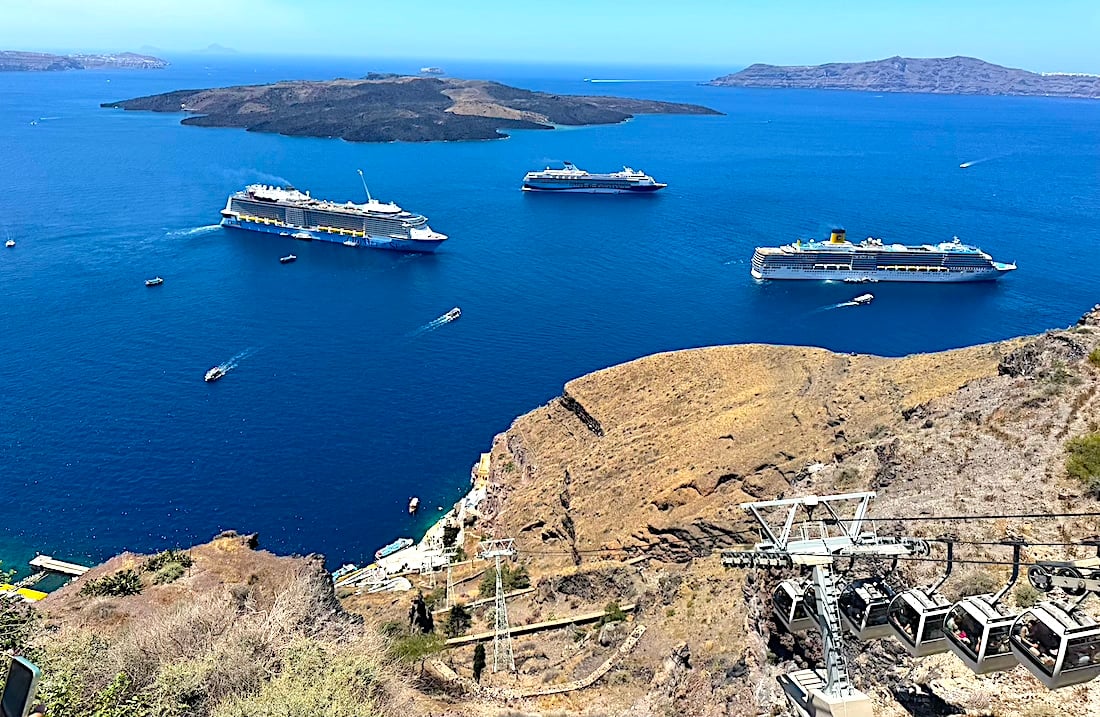
Santorini Greece Cruise ships Santorini Cable Car
Santorini officials claim cruise lines deliberately create passenger bottlenecks. Credit: Greek Reporter

Senior municipal and port officials on Santorini have launched a coordinated offensive against major international cruise lines and the Cruise Lines International Association (CLIA). Speaking to Greek Reporter, local authorities claim global operators are deliberately engineering passenger bottlenecks and spreading misinformation to bypass municipal regulations, starve local businesses, and maximize their own onshore corporate excursion profits.

Mayor Nikos Zorzos, the Mayor of Thira (Santorini), emphasized that while cruise tourism is a vital sector for the island’s economy, it must be subject to strict regulation. Following a study conducted with the University of the Aegean during his previous term, it was determined that Santorini can sustainably accommodate a maximum of 8,000 cruise visitors per day.

Though a subsequent administration abolished the resulting berth allocation system in 2019, Mayor Zorzos immediately reinstated the daily cap upon his re-election to protect the island’s straining infrastructure.

The 70-30 port split friction

The current conflict centers on where passengers are offloaded. Historically, 70% of cruise passengers disembarked at the Old Port of Fira, with the remaining 30% directed to the industrial port of Athinios. Following a seismic event last year, a Joint Ministerial Decision temporarily diverted nearly all traffic to Athinios. This year, the Municipal Port Fund reinstated the traditional 70/30 split.

“Even though this rule is backed by a prosecutor’s order, operators are actively trying to bypass Fira to redirect tourists toward Athinios and Ammoudi,” Mayor Zorzos told Greek Reporter. “Yet, the Fira market is recovering, and our cable car system has proven it can comfortably handle the regulated flows.”

Allegations of tactical “sabotage” by cruise lines on Santorini

Santorini Sunset_Oia
Crowds gather for the famous sunset in Oia, Santorini. Credit: Greek Reporter

Mayor Zorzos directly refuted recent public complaints and crowded photographs shared by CLIA, labeling them a false narrative designed to resist local flow management. According to municipal tracking, cruise ships are allegedly delaying disembarkation maliciously. Ships arriving at 7:00 AM are reportedly waiting until 10:00 AM to offload passengers all at once, leading to artificial bottlenecks at the Old Port.

“They are doing this maliciously for their own financial gain,” Zorzos alleged. “They want to force passengers into pre-booked, closed-loop corporate excursions, sometimes taking them to areas of zero cultural interest.”

The Mayor highlighted an unauthorized development in Vlychada, an environmentally sensitive area, where a cruise provider constructed a private, closed-gate tourist facility. “They created this exclusive enclave strictly for corporate profit, directly at the expense of Santorini’s local economy,” Zorzos told Greek Reporter.

Port Fund President slams “guided ghetto tourism”

Georgios Nomikos, President of the Santorini Port Fund, reiterated that while the island supports the cruise industry, the economic benefits must extend to the local ecosystem rather than a select few corporate entities.

Nomikos explained that when cruise lines utilize the industrial Athinios port, passengers are loaded directly onto proprietary tour buses, leaving Fira, the island’s capital and home to over six hundred local businesses, completely bypassed.

To debunk claims that the Fira port is overburdened, Nomikos provided a mathematical breakdown based on a standard 1,000-passenger ship. Under the 70-30 rule, 300 passengers are immediately allocated to the Athinios port. Of the remaining 700 passengers assigned to the Fira berth, roughly 10% to 15% (around 100 people) choose to stay onboard. Furthermore, approximately 300 passengers are transferred immediately by tenders to Ammoudi, and another 100 embark on Caldera catamaran tours or other external excursions.

Consequently, Nomikos points out that only about 200 to 300 passengers—or roughly 30% to 40% of the ship’s total capacity—actually ascend into Fira at any given time. “When CLIA publishes photos of overcrowded docks, they are being deceptive,” Nomikos told Greek Reporter. “They coordinate their tender boats to drop off hundreds of people simultaneously to create a false narrative of chaos. They won’t tell you that half those people are immediately routed away to other excursions.”

Cable car operators confirm infrastructure capability, cite scheduling manipulation

Santorini Greece Santorini Cable Car
Tourists wait to embark on the cable car under a shaded area constructed this year. Credit: Greek Reporter

Artemis Kafouros, President of the Loula & Evangelos Nomikos Foundation, which operates the island’s cable car, confirmed that substantial upgrades have been made to ensure a seamless visitor experience. The upper station can now accommodate six hundred people per hour, and the lower station holds three hundred, with both featuring fully shaded, climate-controlled waiting areas.

However, Kafouros provided an eyewitness account from this week supporting claims of deliberate scheduling manipulation by the cruise lines. “Just recently, there were three cruise ships anchored. Two arrived at 7:00 AM. Inexplicably, until 9:30 AM, the Old Port was completely deserted—they did not disembark a single soul. Then, the moment the third ship arrived at 10:00 AM, all three vessels began discharging passengers simultaneously.”

According to Kafouros, this proves an intent to manufacture long queues to justify abandoning Fira. The ultimate goal, he claims, is to route ships back to Athinios to sell proprietary shore excursions that benefit entrenched corporate interests. Local authorities conclude that if cruise lines cooperate honestly with local tender schedules and municipal regulations, visitor flows would remain completely smooth.

Officials are calling on the industry to support the island’s long-term sustainability rather than prioritizing short-term corporate greed.

Related: How Geopolitics and New Fees are Reshaping Cruise Tourism on Santorini, Mykonos

❌