
Normal view

How the Ancient Greeks Founded Naples in Italy

12 June 2026 at 11:31
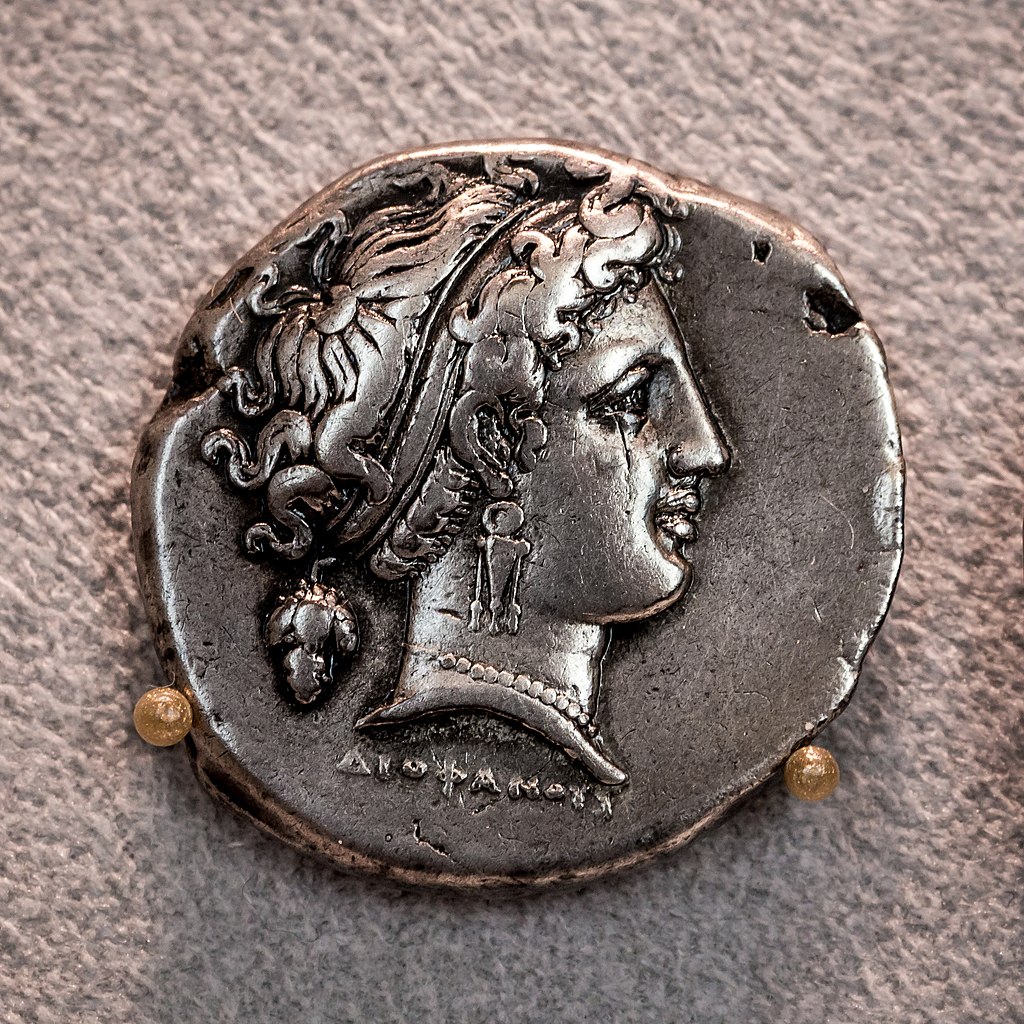
Ancient coin from Naples depicting head of Parthenope, mythical siren
Ancient Greek coin from Naples depicting the head of Parthenope, mythical siren whose body marked the future site of the city, fourth century BCE. Credit: Wikipedia Commons, cc-by-sa 4.0

The Greeks have a long and fascinating history in some of the most famous cities of Italy. One example is Naples, which is Italy’s third-largest city. The ancient Greeks founded this city well over 2000 years ago, and their influence is still felt there even today. But how did the ancient Greeks end up founding this city all the way over in Italy? We can learn the answer through ancient historical records as well as from archaeology.

The Legend of the Ancient Greeks Founding Naples

The legend of how the ancient Greeks founded Naples starts with the legend of Jason and the Argonauts. The poem Alexandra, which may have been written in c. 200 BC, records a tradition concerning Naples. It refers to a certain ‘tower of Phalerus’ already existing there in the time of Odysseus. Since Odysseus lived at the time of the Trojan War, this ‘tower’ must be named after a Phalerus who lived before then.

There is only one Phalerus who this could be – the Phalerus who accompanied Jason on his voyage to find the Golden Fleece. Other ancient sources describes this Phalerus as the founder of Gyrton in Thessaly, Phalerum in Athens, and a temple in Cyprus. Therefore, Greek legend clearly associates this Phalerus with the founding of cities. This adds even more support to the conclusion that he was the Phalerus who founded some kind of ‘tower’ in Naples before the time of Odysseus.

Therefore, the reference in Alexandra indicates that Phalerus, an Argonaut, led the ancient Greeks to establish the earliest settlement at Naples.

The Legend of the Foundation of Parthenope

The story of the ancient Greeks founding Naples also involves the legend of Odysseus. On his famous journey home from Troy after the Trojan War, he passed a group of sirens. They tried to use their enchanting singing to get Odysseus and his men to walk overboard and drown. However, Odysseus blocked his men’s ears with wax and then tied himself to his ship’s mast, thus keeping them all safe.

After defeating the sirens, one in particular, named Parthenope, threw herself into the sea in despair at her failure. She drowned, and the waves washed her body ashore at the tower of Phalerus. That location was then named Parthenope in her honor, with a city being built on the site of her grave.

This was not in exactly the same place as the later city of Naples, but it was very nearby, and it is within modern Naples. Parthenope was essentially the precursor to Naples. The two have always been so closely associated that the word ‘Parthenopean’ is a synonym of ‘Neapolitan’ even today.

What Archaeology Reveals About the Ancient Greek Foundation of Naples

Those are the legends, but how well do they match the archaeological facts? Firstly, let us consider the very earliest settlement, supposedly founded by Phalerus, one of the Argonauts. The legend about this location does not reveal where exactly in Naples the ancient Greeks supposedly established it. Nonetheless, in Naples in general, archaeology indicates that the ancient Greeks first settled there in the eighth century BC.

Whether this is actually related to the legend of Phalerus the Argonaut establishing a settlement there or not is up for debate. The archaeological evidence comes from centuries after the traditional era of the Argonauts. Nonetheless, it is possible that they lived later than usually believed.

What about the settlement of Parthenope? Archaeologists have found a Greek necropolis, or cemetery, dating to the early seventh century BC and associated with the hill of Pizzofalcone. This is further evidence that the ancient Greeks were starting settle the area of Naples at that period in history.

How the Ancient Greeks Transformed Parthenope into Naples

This settlement developed into a bustling city over the years. It became a prominent military and trading port. However, its success became its downfall. Cumae, the city from which the settlers of Parthenope primarily came, became jealous of their colony’s success. They did not want it to cause the original city, Cumae, to become abandoned. Therefore, they allegedly decided to destroy Parthenope.

There is little, if any, archaeological evidence for destruction at Parthenope dating to this time. However, whatever really happened, the evidence is clear that another settlement was then established in the Naples area, again by the ancient Greeks of Cumae. They called this city Neapolis, meaning ‘New City’. This eventually evolved into ‘Naples’, the English name for that city today.

The old settlement of Parthenope then started going by the name ‘Palaeopolis’, meaning ‘Old City’. However, it did not disappear completely. It became absorbed into the new settlement, becoming part of Naples.
Diomedes: The Greek Warrior Whose Extraordinary Bond With Horses Made Him a Trojan War Hero

12 June 2026 at 00:31
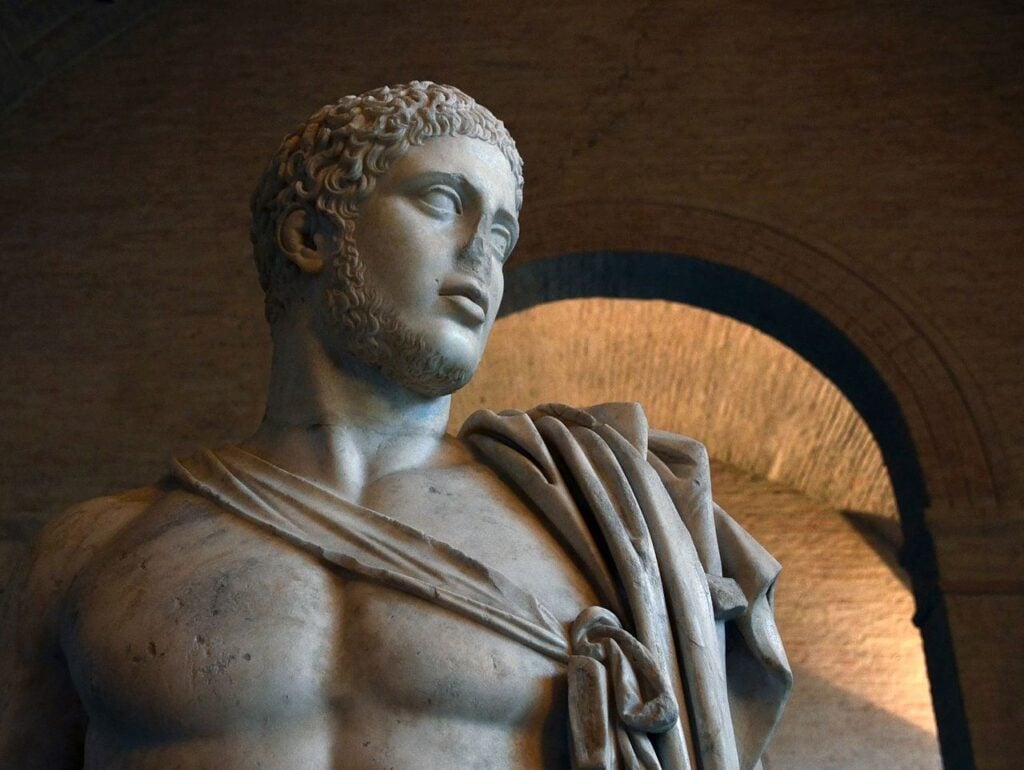
Statue of Greek hero Diomedes
Greek hero Diomedes fought in battle with the help of his divine horses. Roman copy of Diomedes statue attributed to Kresilas 440-430 BC. Exhibited at the Glyptothek in Munich, Germany. Photo credit: Bassil Wikimedia Commons CC0

Diomedes was a distinct Greek hero whose story in Homer’s Iliad is marked by his battle skills, courage, intelligence, and aid from the gods, as well as his association with horses of divine ancestry. However, he is often overshadowed by legendary figures such as Achilles and Odysseus in accounts of the Trojan War. Nevertheless, Diomedes, the king of Argos, remains a central figure in Homeric tradition, particularly within the Iliad itself.

In Craig Russell’s paper, “Diomedes’ Magical Horses,” the scholar explores the Greek hero’s extraordinary relationship with horses, especially those believed to possess exceptional ancestry. This is an often overlooked aspect of the Greek hero’s identity. Drawing on mythological sources, Russell demonstrates that Diomedes’ horses are not merely possessions or instruments of war but symbols of heroic excellence, divine favor, and aristocratic status. Their significance reveals key aspects of Greek heroic culture and highlights the close connection between humans, animals, and the gods.

In Greek mythology, horses frequently symbolize nobility, power, and divine intervention. Greek heroes and kings are often associated with divine horses that distinguish them from ordinary warriors. Russell argues that Diomedes’ own horses belong within this tradition. According to Homeric accounts, the ones ridden by Diomedes during the Trojan War were descended from immortal steeds originally given by Zeus to the Trojan Prince Tros. Through a long genealogical chain, these remarkable horses eventually came into the possession of Diomedes, the Argive Greek hero. Their lineage connected them to the divine realm and elevated their status beyond that of ordinary warhorses.

The Greek hero Diomedes and his divine horses as a unified team

The divine ancestry of Diomedes’ horses is particularly significant because Greek mythology frequently draws on genealogy to establish authority and prestige. Just as heroes traced their lineage to gods and legendary ancestors, animals associated with heroes could also possess sacred origins. Russell emphasizes that the horses’ connection to Zeus reflects the broader Greek belief that excellence often derives from divine favor. By possessing such animals, Diomedes demonstrates not only wealth and military strength but also a special relationship with the gods. The horses become visible markers of his status.

Russell further notes that Diomedes’ horses are closely linked to his success on the battlefield. In the Iliad, mobility and speed are essential components of warfare. Chariots allowed warriors to move quickly across the battlefield, pursue enemies, and withdraw from danger. The quality of a hero’s horses could therefore determine military effectiveness. Diomedes’ steeds are repeatedly described as powerful, swift, and reliable, characteristics that mirror the hero’s own virtues. Their performance contributes directly to his battlefield achievements, reinforcing the idea that the hero and his horses function as a unified team.

The connection between Diomedes and his horses also reflects the broader theme of the relationship between humans and animals within Greek epic literature. Unlike modern perspectives that often separate humanity from nature, Greek mythology frequently portrays animals as intelligent companions capable of sharing in heroic destinies. Russell argues that Diomedes’ horses should be understood within this context. They are not passive creatures but active participants in the hero’s adventures. Their divine heritage grants them an elevated status, and their loyalty reflects the mutual dependence between warrior and steed.

Horses as symbols of status and power

An important aspect of Russell’s analysis involves comparison with other famous horses in Greek mythology, most notably the immortal horses Xanthus and Balius, owned by Achilles. Like Diomedes’ horses, these animals possess divine ancestry and extraordinary abilities. The comparison reveals a recurring pattern in heroic narratives: remarkable Greek heroes are often accompanied by exceptional animals whose qualities complement their masters. However, Russell suggests that Diomedes’ horses have received far less scholarly attention despite their comparable significance. This neglect may stem from the greater fame of Achilles, whose dramatic story dominates much of the Homeric tradition.

The symbolic importance of horses extends beyond warfare. In Ancient Greek society, horse ownership was associated with aristocratic status and political power. Maintaining horses required substantial wealth, making them markers of elite identity. Russell highlights this social dimension in his discussion of Diomedes. As a king and military leader, the Greek hero embodies the values of the warrior aristocracy. His possession of magnificent horses reinforces his position within the social hierarchy and affirms his legitimacy as a ruler. Thus, the horses function not only as military companions but also as indicators of social prestige.

Another key theme in Russell’s essay is the relationship between divine gifts and human responsibility. Greek mythology often portrays gifts from the gods as both blessings and challenges. Heroes who receive divine assistance must prove themselves worthy of it through courage, wisdom, and self-discipline. Diomedes’ horses exemplify this principle. Their divine lineage grants him advantages, but those become meaningful only through Diomedes’ own skill and character. Russell’s interpretation underscores the central Greek idea that excellence results from the combination of divine favor and human achievement.

Athena’s intervention in the Trojan War

The role of the goddess Athena further strengthens this interpretation. Among all the Olympian deities, Athena is the divine patron most closely associated with Diomedes. During the Trojan War, she grants him extraordinary strength and clarity of vision, enabling him to confront even gods, such as Ares, the god of war, on the battlefield. Russell suggests that Diomedes’ horses complement this broader pattern of supernatural support. Together, Athena’s guidance and the horses’ divine ancestry create an image of a Greek hero uniquely favored by divine powers. Yet, Diomedes never relies solely on these advantages; his personal bravery remains essential to his success.

Russell also highlights the narrative function of the horses within epic storytelling. In oral tradition, recurring symbols help audiences recognize and remember key figures. The mention of Diomedes’ horses serves as such a marker, reinforcing his heroic stature. Whenever they appear, listeners are reminded of his exceptional qualities and distinguished lineage. This symbolic role contributes to the enduring significance of the horses within the mythological tradition.

Furthermore, the story of Diomedes’ horses illustrates the interconnected nature of Greek mythology. Their lineage links different generations, kingdoms, and legendary figures. Such connections reflect a characteristic feature of Greek myth in which individual stories rarely exist in isolation. Instead, heroes, gods, and extraordinary creatures form part of a vast narrative network. Russell demonstrates that tracing the history of Diomedes’ horses reveals broader patterns of inheritance, divine intervention, and heroic identity that extend far beyond a single tale.

According to Russell, Diomedes’ horses are far more than simple war animals. Their divine ancestry, battlefield importance, symbolic value, and connection to aristocratic culture make them essential to the Greek hero’s identity. They embody Greek ideals of excellence, divine favor, and noble status while highlighting the close relationship between humans, animals, and the gods.

❌