Normal view

Did the Mycenaeans Encounter the Rare Dwarf Elephants of the Aegean?

7 June 2026 at 20:55
Fossil skull of the dwarf elephant species Palaeoloxodon falconeri showing its small size and distinctive features.
Dwarf elephants once inhabited the Aegean Islands and influenced Mycenaean culture through the use of their fossil remains. Credit: Ninjatacoshel, Wikimedia Commons, CC-BY-SA 3.0

The dwarf elephants of the Aegean Islands represent a fascinating intersection of paleontology, archaeology, and environmental history, yet their significance during the Mycenaean period remains insufficiently explored.

These now-extinct, insular-adapted elephants provide a critical look into evolutionary biology and human-environment interaction in Bronze Age Greece.

Insular dwarfism: Evolutionary mechanisms and island biogeography

Dwarf elephants of the Aegean, such as Elephas creticus on Crete and Palaeoloxodon tiliensis on Tilos, exemplify insular dwarfism, an adaptive response to island isolation characterized by limited resources, absence of large predators, and ecological shifts.

Morphometric analyses of fossilized remains at the Department of Genetics, Evolution and Environment of the University College of London demonstrate a marked reduction in body size, skeletal robustness, and changes in dentition compared to mainland proboscideans.

These evolutionary modifications likely occurred over tens of thousands of years, culminating well before the Mycenaean era, with the last populations vanishing at the close of the Pleistocene or early Holocene. The islands’ geographical isolation, combined with fluctuating sea levels and climatic conditions, further influenced the survival and adaptation of these populations.

Archaeological correlations: Mycenaean awareness and utilization

Boar's tusk helmet, like the one Homer describes Odysseus as using
Mycenaean Boar’s tusk helmet, similar to the one worn by Odysseus in Homer’s account. Credit: Wikimedia Commons, Doreio, CC-BY-3.0

A probable descendant of the large straight-tusked elephant (Palaeoloxodon antiquus), scholar George Theodorou claimed it walked the Earth as recently as 3,500 years ago. This is based on preliminary radiocarbon dating completed in the 1970s, which would make it the youngest surviving dwarf elephant as well as elephant in general in Europe.

Archaeological evidence suggests that Mycenaean societies were aware of—and possibly exploited—remnants of these creatures. Elephant molars and teeth, discovered in Mycenaean contexts across mainland Greece and the islands, appear to have been repurposed as raw materials for crafting tools, ornaments, or ritual objects.

The provenance of these elephant teeth is debated. They may have been derived from fossilized remains of dwarf elephants embedded in island deposits. The Mycenaeans scavenged these for durable ivory-like materials. The studies of Mycenaean artifacts employing elephant ivory or tooth, for instance, demonstrate distinct wear patterns and sourcing signatures, implying a sophisticated interaction with paleontological resources.

In an early form of “cultural paleontology,” this is evidence that megafauna contributed materially and symbolically to Bronze Age material culture. However it’s not unreasonable to suggest that the Mycenaeans may have seen living dwarf elephants, especially on remote islands such as Tilos.

Even if rare, their presence could explain the cultural reuse of elephant teeth—not just as fossil curiosities,but as materials from an animal still within human memory or possibly even within living contact. Such use is also indicative of a level of knowledge or at least recognition of these animals’ past presence, perhaps integrated into local lore or ritual symbolism.

Fossil of the extinct Palaeoloxodon creutzburgi elephant species that subsisted on the island of Crete.
Fossil of the extinct Palaeoloxodon creutzburgi species that subsisted on the island of Crete. Credit: G.M. Woodward, Wikimedia Commons, Public Domain.

Ecological impact and anthropogenic factors in extinction

The extinction of dwarf elephants in the Aegean is often attributed primarily to natural climatic shifts. Sea-level changes following the last Ice Age also had a significant impact. However, the intensification of human activity during the Neolithic through Mycenaean periods likely accelerated their disappearance.

Deforestation, habitat fragmentation, and hunting pressure from early agricultural communities would have placed additional stress on already vulnerable island populations. Analyzing sediment cores and pollen records in conjunction with archaeological site data indicates significant environmental transformations. These coincide with the expansion of Mycenaean influence.

Although most dwarf elephant species went extinct well before the Mycenaean period (ca. 1600–1100 BC), there is credible evidence that some may have survived into that time, potentially overlapping with early Mycenaean society.

Mycenaean ivory cosmetic duck.
Mycenaean ivory cosmetic duck. Credit: Ade, Wikimedia Commons, CC-BY-SA.40

Analytical implications: Reassessing Mycenaean interaction with prehistoric fauna

The presence of elephant teeth in Mycenaean material culture challenges traditional dichotomies separating natural history from human history. It invites reconsideration of this society’s environmental perception. Mycenaeans were not merely exploiters of living fauna but also curators of a landscape layered with prehistoric memory.

Further multidisciplinary research combining paleontology, archaeozoology, and geochemical sourcing is necessary to clarify the extent and nature of Mycenaean engagement with these extinct species. The analysis of wear patterns, isotopic signatures, and contextual associations of elephantine artifacts can yield insights into trade networks, symbolic systems, and resource utilization strategies.

Moreover, integrating the study of dwarf elephants into the broader narrative of Mycenaean civilization enriches understanding of how ancient societies conceptualized and incorporated their environmental heritage. It reveals a nuanced picture of cultural continuity and ecological awareness, bridging deep time with Bronze Age lifeways.

The Prince of Ancient Iran Who Fought in the Trojan War

7 June 2026 at 17:31
Ancient Elamite ziggurat Choqa Zanbil in Iran
Ancient Elamite ziggurat Choqa Zanbil in Iran. Credit: Wikimedia Commons, GFDL

In the Trojan War of Greek mythology, many nations were allied with Troy to fight against the Greeks. This included many of the nations of ancient Anatolia. Perhaps the most surprising participant in the Trojan War, however, was a prince from ancient Iran. He was Memnon, best known as the Ethiopian ruler who died at the hands of Achilles in the final year of the war.

Memnon, king of the eastern Ethiopians

Since Memnon is usually remembered as being a king of the Ethiopians, how can he have been from ancient Iran? The reason is that there was more than just one group of people known to the Greeks as Ethiopians.

For example, notice the words of Greek historian Herodotus of the fifth century BCE in his description of the large army of Xerxes the Great:

“Ethiopians above Egypt and the Arabians had Arsames for commander, and the Ethiopians of the east​ (for there were two kinds of them in the army) served with the Indians.”

This shows that the Greeks recognized the existence of Ethiopians outside of Africa. Specifically, these other Ethiopians lived in the east, evidently not too far from India. Since Memnon was the king of the Ethiopians, he could potentially have been the king of either the eastern Ethiopians or the African ones.

It is worth mentioning that in ancient Greek, the word Αἰθίοψ (Ethiops) was used not only to describe a specific group of people, but also more generally to refer to individuals with darker skin. The term is a compound of αἴθω (to burn) and ὤψ (face or appearance), literally meaning “burnt-face.” It appears frequently in early Greek literature, such as Homer’s epics, where Ethiopians are depicted as distant, noble figures living at the edges of the known world, rather than as members of a clearly defined nation.

The Ethiopians of Iran

Herodotus himself states that the city of Susa, the ancient capital of Elam (a prominent region in what is now Iran), was known as the city of Memnon. This suggests that Memnon was the king of the eastern Ethiopians, evidently a people in the region of Iran.

This is confirmed by Ctesias, just a few decades after Herodotus. According to this Greek historian, Memnon’s father, Tithonus, was the ruler of Persia. He was either subject to or allied with the king of the Assyrian Empire.

The territory of Persia in the time of the Assyrian Empire corresponded to a large part of what is now Iran. According to Ctesias, Memnon built a palace for himself at Susa. He goes on to claim that Memnon’s army, which he led to Troy, was composed of many Ethiopians and Susians, or inhabitants of Susa.

Hence, it is clear that Memnon in the legends of the Trojan War was originally supposed to have been from ancient Iran.

As for why the Greeks called the inhabitants of that region ‘Ethiopians’, we cannot be sure. However, it may be related to the use of the word ‘Cissians‘ (‘Kíssioi’ in Greek) for the inhabitants of the region of Elam. The Greeks might have confused this for ‘Kush’, the name for the kingdom of the Ethiopians south of Egypt.

How ancient Iran participated in the Trojan War

Ctesias provides the most detailed early account of this army from ancient Iran that fought in the Trojan War. According to Ctesias, King Priam of Troy was subordinate to the king of Assyria, named Teutamos. Due to the difficulties he was facing in the Trojan War, he sent word to Teutamos to ask for help.

As a result, Teutamos sent a large army of 10,000 Ethiopians and 10,000 Susians under the command of Memnon. This army from ancient Iran marched from the furthest corner of the Assyrian Empire over to Troy. Ctesias wrote:

“Memnon assisted the Trojans with 20,000 infantry and 200 chariots and… he was admired for his courage and for killing many Greeks in battle.”

Despite his prowess in battle, Ctesias goes on to explain that the Thessalians killed him. This refers to his death at the hands of Achilles, as per other sources. Achilles was from the kingdom of Phthia in ancient Thessaly.

Did an army from ancient Iran fight in the Trojan War?

Could Memnon have been a historical king or prince of Elam in ancient Iran? Some scholars have speculated that he might be identical to Humban-Numena I, the king of Elam in the Bronze Age. Furthermore, the latter half of his name is admittedly similar to ‘Memnon’.

However, he likely reigned in the first half of the 14th century BCE. Therefore, this king from ancient Iran lived too early to have fought in the Trojan War.

Two other possibilities are Humban-Numena II, possibly in the 11th century BCE, and Humban-Numena III, who lived at the end of the eighth century BCE. The latter’s name is often written in modern sources as “Humban-menanu.” The similarity to “Memnon,” while not exact, is there.

This latter candidate, although living much later than the traditional date of the Trojan War, is particularly noteworthy given Ctesias’ chronological information. He places Memnon’s activities at the height of the Assyrian Empire.

Another candidate from approximately the same time is a prominent Elamite known only as Menanu, referenced in a letter from Ashurbanipal, the king of Assyria. The letter makes it clear that Menanu is a supporter of Assyria. This fits what Ctesias tells us about Memnon.

However, this does not necessarily mean that an army marched from ancient Iran to fight in the Trojan War. In part, this depends on when the Trojan War occurred, a continued historical debate.

Nevertheless, the legend itself is clear. Memnon led an army from ancient Iran to Troy, where they fought in the Trojan War against the Greeks.

The Oracle of Delphi, Priestess Pythia, Who Spoke Truth to Power

By: guest
7 June 2026 at 05:01
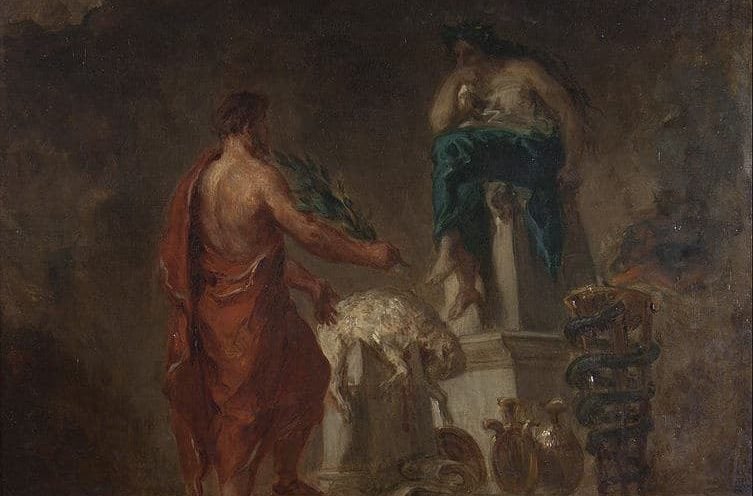
Lycurgus Consulting the priestess Pythia at the Delphic Oracle
Lycurgus Consulting the priestess Pythia at the Oracle of Delphi. Credit: Wikipedia/Public domain.

In a time and place that offered few career opportunities for women, the job of the priestess of Apollo at the Oracle of Delphi stands out. Her position was at the centre of one of the most powerful religious institutions of ancient Greece. The competing Greek city states had few overarching authorities (political or otherwise), so the significance of her voice should not be underestimated.

Indeed, there is some evidence to suggest that the priestess Pythia was at the core of what we today call a “knowledge economy.” Her role may well have involved the gathering, re-packaging, and distribution of information, with the ultimate intent of providing sound advice on the trivial and not-so-trivial questions of life in ancient Greece.

The “Pythia” is the official job title. We know of several women by name who, during the long history of this institution (from ca. 800 BC to AD 390/91), held that role, including Phemonoe and Aristonike. Indeed, at some stage, Delphi became so busy that three Pythias were appointed to serve in the role simultaneously.

The oracle was consulted by the movers and shakers of ancient Greece on a diverse range of problems. For the priestess Pythia, this meant the opportunity to comment on a variety of issues of public and individual concern: cult matters, warfare, the relationships between existing city-states, and the foundation of new ones.

Numerous personal questions were also put to the oracle on matters of lovesickness, career advice, childbirth, and how to get offspring. So, by all standards, this job was demanding yet also diverse and rewarding—a position powerful enough to change the course of history.

Yet, right from the beginning, efforts to deprive the priestess of her power prevailed, particularly in older classical scholarship. Surely a woman, especially one in such a paternalistic society as ancient Greece, could not hold that powerful a position?

Some scholars suggested that the Pythia actually babbled unintelligible gibberish and that her words were later put into beautiful, deep, and meaningful hexameter verse—by male priests.

Yet, in our ancient sources, there is absolutely nothing to suggest that it was anyone other than the Pythia herself who came up with the responses. On the contrary, she is regularly named as the one and only source of the prophecies delivered at the Oracle of Delphi. There is no word of male priests beyond those in purely administrative and assisting roles.

Insult by oracle

The position of the Pythia seemed to have entailed the extraordinary opportunity to speak unwelcome truth to those in power.

A Spartan once approached the oracle with the intention of being confirmed as the wisest man in the world. In response to this question, the Pythia named another person who was wiser.

In about 700 BC, the Greek city of Megara allegedly asked the Pythia which the best of all Greek cities were, hoping to be named first. The Pythia mentioned two better cities, concluding with the line, “[Y]ou, o Megarians, [are] neither third nor fourth.” Surely, the Megarians did not see that coming!

Cleisthenes, meanwhile, the famous tyrant of Sicyon, asked whether he should remove the cult of the hero Adrastus from the city. He received an oracle that came straight to the point: “Adrastus is king of Sicyon, and you but a common slayer.”

This kind of reality check and straight talk would certainly have upset those with egos accustomed to flattery and agreement.

Of course, it is not always possible to tell whether these and other responses of the oracle were authentic or whether the whole incident was part of later historiographic lore. Yet, whatever the case: the fact is that it was a woman who was attributed such a sharp, judgmental voice.

And her voice proved extraordinarily unimpeachable. The Greeks thought that it was the god Apollo who conveyed his superior divine knowledge through the mouth of the Pythia, so the priestess herself was largely beyond reproach. While itinerant seers, augurs, and oracle mongers feature in classical literature as corrupt and unreliable, the position of the Pythia seems to have withstood all criticism.

The job and its challenges

Being a Pythia was not always easy. Several ancient enquirers sought to influence the kind of answer they hoped to get from the oracle. Subtle manipulation in how the questions were put, not-so-subtle bribery, and even an attempt to force the oracle to deliver responses on a non-auspicious day are all on record, as are complaints about unfathomable responses.

For instance the Greek historian, philosopher, soldier, and horse whisperer, Xenophon, allegedly enquired at Delphi to which deity he should sacrifice and pray so that the military expedition he was about to join would be a success. He was later reprimanded by the philosopher Socrates for having posed a manipulative question. Socrates felt he should have asked whether it would be a success, rather than how.

Cleisthenes was said to have bribed the Pythia to deliver the same response to all Spartan requests at the oracle, no matter the question: to free Athens from the rule of tyrants.

And after a series of spectacular mishaps based on misread oracles, the Lydian king Croesus complained at the Delphic Oracle about having been misled. The Pythia responded that he himself was to blame for his misfortune, as he should have interpreted the Pythia’s words correctly.

We also know of several instances in which the Pythia outright refused to respond to a question that, in one way or another, seemed unreasonable.

Job requirements

What did it take to become the Pythia? Was she a local girl from a neighboring village? Was any kind of training provided to candidates? Or were they thrown in the deep end?

Unfortunately, the ancient sources are silent. The Nobel prize-winning author William Golding in his (posthumously published) last novel, The Double Tongue, written from the perspective of a Pythia, sees her as a local girl who was unable to get herself married and so took on that role.

Yet again, this sounds like speculation designed to downplay the position.

The kind of skills required to be successful in the role are easier to reconstruct. The sanctuary of Apollo at Delphi served as a marketplace for representatives from all over ancient Greece (and beyond) who came for a variety of reasons.

In addition to the oracle, the sanctuary housed regular athletic competitions (the so-called Pythian Games, analogous to the more famous Olympic Games). With its numerous temples and monuments, the site was also a popular tourist destination. All these activities together served to establish a busy hub, where information, news, and gossip of all kinds would have circulated freely.

Perhaps the key to the Pythia’s success was simply to listen closely? There is good evidence to suggest that the fantastic tales of prediction and fulfilment are a matter of the (later) historiographic tradition and that it was mostly quite straightforward questions of everyday life that were put to the Pythia for comment, along the lines suggested by the ancient author Plutarch, who was also a priest at Delphi: Will I win? Shall I marry? Is it a good idea to sail the sea? Shall I take up farming? Shall I go abroad?

If this was indeed the case, it would, more often than not, have been possible to glean the information necessary to answer any particular enquiry from the chatter of those queuing to consult the oracle, to watch or participate in the games, or to take in the monuments. The Pythia may have trailblazed the knowledge economy millennia before the arrival of “big data” and the invention of the internet.

By Julia Kindt

Julia Kindt is a Professor, Department of Classics and Ancient History, University of Sydney. The article was published at The Conversation and is republished under a Creative Commons License.

The Strange Ox Sacrifice Held at the Acropolis of Athens

7 June 2026 at 02:29
Marble sculpture of a sacrificial ox from the Parthenon.
In ancient Athens, there was a custom of sacrificing an ox in the Sanctuary of Zeus Polieus. Credit: Capillon, Public Domain

In ancient Greece, the killing of an ox was prohibited by law due to its vital role in daily life. However, a peculiar and ‘unlawful’ custom saw priests performing the sacrifice of an ox at the Sanctuary of Zeus, the king of the gods, located on the hill of the Acropolis, just a few meters from the Parthenon.

The Diipoleia, also known as Buphonia, was an ancient festival of the Athenians held towards the end of every June. It was also celebrated separately in other Greek cities during antiquity.

The Buphonia ritual and its origin

According to tradition, to justify the sacrifice, a group of oxen was led to the temple. There, the priest would place a type of bread offering made of wheat and barley on the altar. The first ox to eat from this area would be considered to have committed blasphemy, as it was believed to have consumed the offering meant for the god, and therefore had to be killed.

The priest chosen to perform the killing did so in isolation, without any witnesses present, and would then flee the city.

However, since ox sacrifices were forbidden at the time, an “investigation” was launched to identify the culprit. When the rest of the priests gathered to determine who had performed the sacrifice, the guilty priest was missing. In the end, the only evidence left would be the axe used for the killing, which would eventually be thrown into the sea.

How the ritual was performed

Ancient Greek geographer and traveler, Pausanias, provides further details in his account:

“There is a statue of Zeus—one by Leochares and another called Polieus. Concerning the established practices for the sacrifice and the reason said to justify them, I will not record them here.

For Zeus Polieus, they would place barley mixed with wheat on the altar without any kind of guard. The ox, which they have prepared for the sacrifice and kept under watch, approaches the altar and begins eating the grain. A member of the Thalonid family sacrifices the animal that eats from the sacred offerings with a double-headed axe.

They then summon a priest, called the ‘ox-slayer’ (buphonos), who kills the ox and, in accordance with the law, throws away the axe and flees. Since the identity of the person who committed the act remains unknown, they bring the axe to trial instead. Afterwards, they enter the temple that they call the Parthenon.”

The Buphonos and the trial of the axe

It was believed that the ancestor of the Thalonids, Thalon, was the first to strike the ox. Neoplatonic philosopher Porphyry, attributes the first buphonia to a foreigner named Sopater. He also provides a shorter version of the story, in which the priest of Zeus, Diomos,  “murdered” the animal.The others then cut up the sacrificial victim and ate it.

Afterwards, they would hold a trial to determine the guilty party responsible for the killing. The buphonos (ox-slayer) did not appear, while those who participated in the sacrifice accused one another. They shifted responsibility for the killing from one man to the other.

The participants included the water carriers who brought water for the sacrificial tools, those who sharpened the knife and axe, as well as individuals responsible for carrying the tools.

Ultimately, they would accuse the knife, condemn it, and toss it into the sea. The ox’s hide was stuffed with straw and yoked to a plow. They did this to create the illusion that the animal was still alive.

The entire ritual permeated participants with intense feelings of guilt over the slaughter of the animal, and it was regarded as an act of murder.

Sacrifices in Ancient Greece
The entire ritual permeated participants with intense feelings of guilt over the slaughter of the animal. Credit: Wikimedia commons, Public Domain

Rituals, beliefs, and symbolism

It is noteworthy that, according to Porphyry, after the buphonos Sopater fled to Crete and before the establishment of the festival in Athens, a plague struck the city. The plague only ceased after Sopater’s return and the institution of the festival.

Additionally, as part of the measures to address the plague, the Oracle of Delphi deemed the establishment of the ritual involving the stuffing of the animal’s hide as necessary.

To avoid the pollution (miasma) of the murder, they made efforts to eliminate the act of murder itself. When this was not sufficient, they attempted to justify the act, for example, by claiming that the defilement resulted from impiety.

Finally, they shifted human responsibility by attributing the miasma to an inanimate tool, which became the scapegoat of the entire ritual. This object absorbed the miasma and was then removed from the city.


An animal sacrifice.
The ox, which they have prepared for the sacrifice and kept under watch, approaches the altar and begins consuming the grain. A member of the Thalonid family sacrifices the animal that is fed from the sacred offerings with a double-headed axe. Credit: Wikimedia Commons, Public Domain

Spiritual significance and agricultural connections

According to ancient Greek philosopher Theophrastus, the remains of the ox were buried. Presumably, this was so as to prevent its spirit from seeking revenge on the city. It is important to note that, in this ritual, the value attributed to the spirit of the animal is equivalent to that given to a human.

British classical scholar and linguist Jane Harrison, connects the use of offerings to attract the animal to the altar with the rites of Dionysus Zagreus and Isodaites. Furthermore, the yoking of the stuffed hide of the ox to the plow associates the festival with fertility rituals, which pertain to chthonic deities.

This ritual of purification and averting evil was initially connected to the need to ensure an abundance of game in a pre-agricultural society. Later on, an agricultural society adopted it, shifting the focus to the fertility of the land.

The Glittering Gold of Mycenaean Greece

7 June 2026 at 00:31
Mycenaean Greece gold
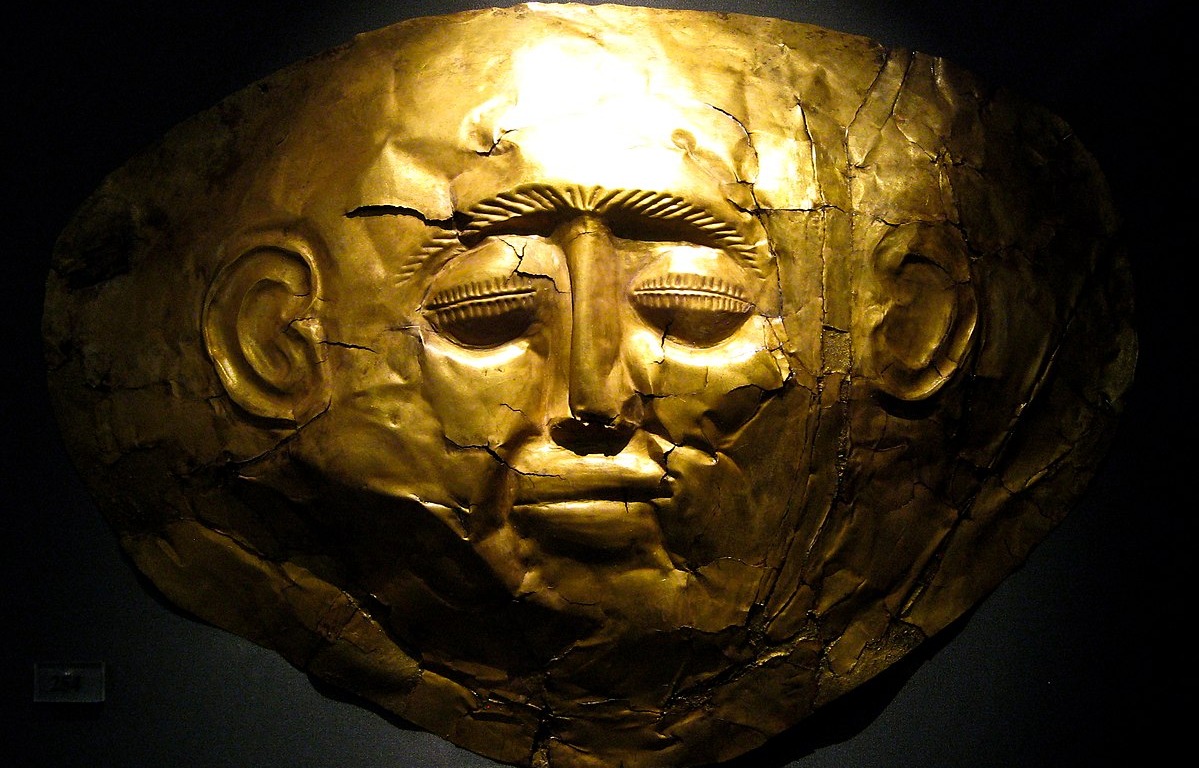
A gold Mycenaean death mask found in Greece. Credit: Sharon Mollerus / Wikimedia Commons / CC BY 2.0

Since the 19th century, several precious gold objects associated with the Mycenaean civilization have been discovered by archaeologists, predominantly at important burial sites where the royals and elite of Bronze Age Greece were buried.

The Mycenaeans were the first distinctly Greek culture to dominate mainland Greece during the late Bronze Age period between c. 1750 and 1050 BC. Their civilization was characterized by palatial states, advanced urban organization, and a written language dubbed Linear B by modern historians. It was during the Mycenaen age that the Trojan War purportedly happened, as retold in Homer’s Iliad.

The discovery of Mycenaean gold sheds light on the material culture of this enigmatic civilization but there are still many unanswered questions. For example, researchers are unsure whether the Mycenaeans crafted all of these items themselves, or whether they were obtained in trade and war.

Mycenaean Greece gold
Mycenaean gold ornaments. Credit: Gary Todd / CC0 / Wikimedia Commons

The Grave Circles at Mycenae

The most famous examples of Mycenaean gold were discovered in two grave circles uncovered at the ancient Bronze Age site of Mycenae. Grave Circle A was discovered by Heinrich Schliemann in 1876 based on the descriptions of Homer and Pausanias. Grave Circle B was excavated in 1952 by archaeologists Ioannis Papadimitriou and Georgios Mylonas after workmen accidentally stumbled on the tombs a year before.

Both grave circles, dating back to the 16th century BC, contained impressive amounts of gold objects and other precious items. Unlike other Bronze Age tombs, they had not been discovered by the grave robbers and looted.

Grave Circle A contained 15 kg (33 lbs) of gold alone, making it one of the most substantial archaeological finds in all of Europe. Both grave circles contained hundreds of previous objects including jewelry, ornamental clothing attachments, decorated weapons, and highly distinctive funeral masks.

Grave Circle A
The Grave Circle An archaeological site at Mycenae. Credit: Andreas Trepte / CC BY-Sa 2.5 / Wikimedia Commons

The Death Mask of Agamemnon

The most iconic find is the so-called Death Mask of Agamemnon. Schleimann named the mask after the legendary Mycenaean King Agamemnon who led the Achaean Greeks in the Trojan War according to Homer’s Iliad. However, more recent research has indicated that the mask predates the time that Agamemnon was supposed to have lived by about three centuries.

The Mask of Agamemnon was crafted utilizing a single large gold sheet that underwent heating and hammering against a wooden surface. The intricate details were then added through the process of chasing, using a sharp tool to etch them onto the mask.

There were six other death masks discovered in Grave Circle A. Of the seven masks, six belonged to adult males and one to a child. None of the women discovered at the gravesite were buried with ornate masks.

The masks in Grave Circle A exhibit similar characteristics, featuring flat foil-like layers of gold depicting round, bald faces with round eyes and prominent ears. In contrast, Grave Circle B includes a death mask made of electrum, placed in a container next to a buried body instead of being placed on the deceased. The scarcity of death masks in Grave Circle B suggests that the interred individuals held lower wealth or status compared to the abundance of valuable material found in Grave Circle A, including the death masks.

Mycenaean Greece gold
Mycenaean death masks. The one on the right is the so-called “Mask of Agamemnon”. Credit: Zde / CC BY-SA 3.0 / Xuan Che / CC BY 2.0 / Wikimedia Commons

The Royal Tombs at Pylos

The burials at Mycenae might have provided the most famous examples of Mycenaean gold, but they are not the only Bronze Age tombs where exquisite items have been found.

In 2019, a team of archaeologists discovered Bronze Age royal tombs situated near the royal palace of Pylos, said to have once been the seat of power for Nestor, the eldest among the Greek rulers who fought in Trojan War.

The larger tomb, which was once 12m (36 feet) wide and 4.5 meters (15 feet) deep, had stone walls that once stood as tall as the ground’s height. The underground chambers were originally covered by domes, but over time, the roofs and upper walls collapsed. Consequently, the tombs became buried beneath numerous melon-sized stones and a tangled mass of grape vines. In their excavation efforts, archaeologists from the University of Cincinnati, including Jack Davis, Sharon Stocker, and their colleagues, had to painstakingly clear away vegetation and manually remove the stones.

Mycenaean sword
Mycenaean bronze sword with a gold hilt and featuring a lion motif, from Grave Circle B, Mycenae. Credit: Gary Todd / CC0 / Wikimedia Commons

What they discovered, however, was extraordinary. Among the debris, the floors of the burial pits were adorned with shimmering flakes of gold leaf, which had once embellished the walls and floors of the chambers. The tombs, although lacking the remains of their occupants – suggesting a potential disturbance in the distant past – were nonetheless filled with opulent artifacts such as jewelry, gold, bronze, and gemstones.

A particularly interesting find was a gold pendant bearing the image of the Egyptian goddess Hathor who presided over motherhood and the protection of the dead. The Greeks during later periods drew parallels between Hathor and Aphrodite but it is not entirely clear what she meant to the Mycenaean Greeks during the Bronze Age. In any case, the artifact hints at trade links between the Mycenaeans and Egyptians at the time of the burials, which are believed to be about 3,500 years old.

Mycenaean Greece gold
A gold elliptical diadem. Credit: I, Sailko / CC BY-SA 3.0 / Wikimedia Commons

Gold Mining in Mycenaean Greece

As pointed out in an academic paper authored by  M. Vavelidis and S. Andreou, “Numerous objects of gold displaying an impressive variety of types and manufacturing techniques are known from the Late Bronze Age (LBA) contexts of Mycenaean Greece, but very little is known about the origin and processing of gold during the second millennium BC.”

This raises several questions, namely: where did the Mycenaeans source their gold from? Interestingly, the wider Argolid region in which Mycenae was itself located and where the discoveries were made of numerous stunning golden items, is bereft of gold. If the Bronze Age Greeks did their own mining it was therefore elsewhere in Greece.

According to Vavelidis and Andreou, “Ancient literature and recent research indicate that northern Greece is probably the richest gold-bearing region in Greece, and yet very little evidence exists regarding the exploitation of its deposits and the production as well as use of gold in the area during prehistory.”

Mycenaean earring
16th century BC Mycenaean earring. Credit: Louvre Museum / Public Domain / Wikimedia Commons

Nevertheless, by examining the chemical composition of prehistoric artifacts from two settlements alongside the composition of gold deposits in their nearby regions, it becomes evident that gold was locally sourced in some parts of Greece. This finding also raises the possibility that a portion of the Mycenaean gold may have originated from northern Greece.

Furthermore, the discovery of small stone crucibles, one of which bore visible traces of gold melting, at the archaeological site of Toumba in Thessaloniki, proves that local production of gold items took place very early in ancient Greek history.

Beyond mining, the Mycenaeans may also have obtained gold via trade and war. In some cases, Mycenaean traders may have bought gold for Greek craftsmen to shape into various objects, and in other cases, they would have imported finished items.

The Mycenaeans were well-respected as warriors across the Eastern Mediterranean and sometimes fought in the armies of neighboring civilizations like the Egyptians as mercenaries. The leaders of these Mycenaean mercenary bands may have received gold as payments or gifts in exchange for their martial services.

Ancient Greeks Used Lifting Device to Move Stones Before Cranes

6 June 2026 at 22:27
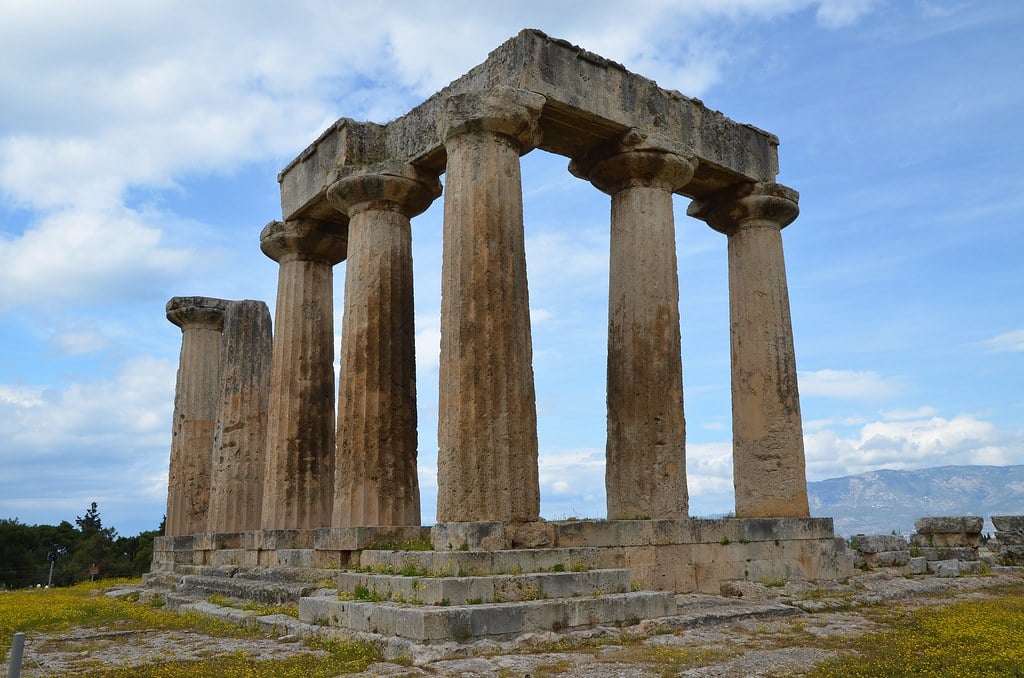
Temple of Apollo, built ca. 540 BC by the ancient greeks
Temple of the Greek god Apollo, built ca. 540 BC, Corinth, Greece. Credit: Following Hadrian/CC BY-SA 2.0

Recent research shows that ancient Greeks used a primitive type of lifting machine to move heavy stones before they began using cranes 2,500 years ago.

It is commonly believed that the foremost discovery of the ancient Greeks in building technology is the crane. Yet, enormous stone structures were known to have been built in Greece at least 150 years before the use of cranes themselves.

Cranes first appeared in the late sixth century BC, according to research published in the Annual of the British School at Athens, but their mechanical forerunners were used in buildings such as the Temples of Isthmia and Corinth at least 150 years before that, around the middle of the seventh century BC.

The researchers say that ancient Greeks were likely to have first used ramps made of earth or mudbrick to lift the heavy stone blocks used in major construction. The lifting devices are thought to have been similar to the ones used by ancient Egyptians and Assyrians centuries earlier.

crane
An ancient Roman crane, which was modeled after the earlier ancient Greek invention. Credit: Michael Gunther/ Wikimedia Commons/ CC BY-SA 4.0

The precursor of the crane lifting machine

The paper, written by Alessandro Pierattini, an assistant professor of architecture at the University of Notre Dame, argues that a kind of lifting machine used by the ancient Greeks was the next precursor to the crane, one which was capable of lifting ashlar blocks weighing over 200 to 400 kilograms (440 to 880 pounds).

The lifting machine was originally invented by the Corinthians, who used it to build ships and for lowering heavy sarcophagi into narrow, deep burial pits. It was not a crane, since it did not use winches or hoists. Instead, the builders redirected the force of the weight by using a rope passed over a frame.

“This kind of masonry represents a crucial step in the development of Greek monumental stone architecture, marking a departure both from mudbrick construction, which had been the norm for most Greek buildings, and from previous experiments with stone construction,” Pierattini writes.

The first documented use of the lever in Greek temples

Evidence of the device is considered to be grooves etched onto the bottom of stones used to construct the Corinth and Isthmia temples. These grooves are familiar to historians, but until now, it had been unknown if the grooves had occurred as a result of lifting the blocks during the building process or from moving them around in quarries.

For the study, Pierattini studied stone blocks used in early Greek temples while he also engaged in some hands-on experimental archaeology. He studied the blocks from the mid-seventh-century temples at Corinth and Isthmia and their peculiar markings—two parallel rope-grooves cut into their undersides which turned up on one end.

Using actual stones and ropes, Pierattini found that the grooves could have served a dual function, allowing builders to both lift the blocks and position them tightly against their neighbors along the walls of buildings.

“With heavy stone blocks and high friction between stone surfaces, this was a highly problematic step of construction that in later times would require sets of purpose-made holes for using metal levers,” said Pierattini.

“Μy paper demonstrates that the builders of the early temples at Corinth and Isthmia were already using levers for the final setting of the blocks. This represents the first documented use of the lever in Greek architecture,” the professor explained to Gizmodo.

❌