
Normal view

David Marreiros vence pelo segundo ano consecutivo Prémio de Jornalismo de Proximidade

4 June 2026 at 18:11

O lacobrigense David José Marreiros, jornalista no Jornal do Algarve, recebeu pelo segundo ano consecutivo o Prémio Especial do Júri para Jornalismo de Proximidade, atribuído à reportagem “A Democracia não chegou aos tijolos lacobrigenses do SAAL: moradores da Meia Praia ainda lutam pela posse das habitações”.

Em agosto de 1974, o então secretário de Estado da Habitação e do Urbanismo do I Governo Provisório, arquiteto Nuno Portas, deu início ao Programa SAAL – Serviço de Apoio Ambulatório Local com o objetivo de mitigar a crise habitacional que assombrava Portugal. Havia mais de meio milhão de habitações em défice e muitas pessoas viviam em barracas e casas sem condições. O que se fez por todo o país foi juntar as pessoas em associações de moradores – orientadas por arquitetos experientes – e colocá-las a ajudar na construção das suas futuras habitações.

Foi o caso do Bairro 25 de Abril e do Bairro 1.º de Maio, ambos localizados na Meia Praia, em Lagos. Passaram mais de 50 anos e os moradores ainda não são donos das habitações que ajudaram a construir ou cujos pais e avós ajudaram a construir. A reportagem teve como base tentar perceber o porquê; tentar perceber como é que a reivindicação de um direito se tornou numa luta que passou de autarquia em autarquia, de governo em governo e de geração em geração.

A cerimónia de entrega do 13.º Prémio de Comunicação Corações Capazes de Construir, dinamizado pela Associação Corações com Coroa (CCC), decorreu no dia 30 de maio, no MACAM – Museu de Arte Contemporânea Armando Martins, em Lisboa. Catarina Furtado, presidente da Associação, ficou a cargo do evento, que teve início com a apresentação da instalação do artista SELF, seguida de um desfile de t-shirts sobre Direitos Humanos desenhadas pelos alunos da Magestil, com modelos profissionais e produção de Nuno Baltazar.

O Prémio de Jornalismo foi atribuído a Raquel Morão Lopes, da Antena 3, com o trabalho “Era a rapariga dos vídeos”. “Eu Devia Estar na Escola”, de Sandra Vindeirinho (RTP), “Ídolos Misóginos: como os jovens se radicalizam”, por João Pinhal e Guilherme Pinto (Público), e “Os Meninos da Roda: Histórias dos bebés deixados na Misericórdia”, de Joana Bastos e Raquel Moleiro (Expresso) receberam Menções Honrosas.

Na categoria Campanha, o vencedor foi “Ser Homem Pode Ser Diferente”, de Pedro Crispim, Maria João Andrade e Miguel Monteiro – VLM/WPP para Vodafone.

Os Prémios Comunicação CCC – apoiados pela Missão Continente -, tiveram Joaquim Furtado como presidente do júri, composto também por Francisco Sena Santos, membros da CCC, patrocinadores, Teresa Fragoso, especialista em igualdade de género e representantes do Camões I.P e do Ministério dos Negócios Estrangeiros, bem como da APAP – Associação Portuguesa das Agências de Publicidade Comunicação e Marketing.

A ocasião terminou com um momento musical e de poesia protagonizado por José Pedro Gil, Emanuel de Andrade e Joaquim Furtado, que incluiu a música “Os Índios da Meia Praia”, de Zeca Afonso.

Faro recebe encontro dedicado ao Património Cultural Imaterial do Algarve

4 June 2026 at 11:02

Faro acolhe, nos dias 18 e 19 de junho, o Encontro Património Cultural Imaterial – Algarve, uma iniciativa que reúne especialistas, autarquias, instituições culturais e representantes das comunidades locais para debater estratégias de preservação, valorização e transmissão das tradições e saberes que integram a identidade cultural da região.

Promovido pela Comissão de Coordenação e Desenvolvimento Regional (CCDR) do Algarve e pelo Património Cultural, I.P., em parceria com a Comunidade Intermunicipal do Algarve (AMAL) e a Rede de Museus do Algarve, o encontro decorrerá no Auditório David Assoreira, na sede da CCDR Algarve, em Faro.

A sessão de abertura contará com a participação do presidente da CCDR Algarve, José Apolinário, e do presidente do Património Cultural, I.P., João Soalheiro, dando início a dois dias de reflexão sobre os desafios associados à identificação, documentação, inventariação e salvaguarda do património cultural imaterial.

O programa inclui apresentações sobre o Inventário Nacional do Património Cultural Imaterial, metodologias de registo e documentação destas manifestações culturais, bem como a partilha de experiências e boas práticas desenvolvidas na região. Entre os exemplos em destaque estarão o Culto da Nossa Senhora da Piedade de Loulé e a Dieta Mediterrânica, duas referências incontornáveis do património cultural algarvio.

Estão igualmente previstas sessões de debate e momentos de trabalho colaborativo que envolverão representantes de vários municípios e entidades da região.

O património cultural imaterial engloba práticas, expressões, conhecimentos e técnicas transmitidos de geração em geração, desempenhando um papel fundamental na preservação da identidade e diversidade cultural das comunidades. No Algarve, destacam-se várias manifestações já inscritas no Inventário Nacional do Património Cultural Imaterial, entre as quais o Culto da Nossa Senhora da Piedade de Loulé, a Festa da Nossa Senhora dos Navegantes da Ilha da Culatra e o Bolo de Tacho de Monchique.

A região assume também uma posição de relevo na preservação da Dieta Mediterrânica, reconhecida pela UNESCO como Património Cultural Imaterial da Humanidade desde 2013. Tavira foi designada comunidade representativa portuguesa desta candidatura, num processo em que a CCDR Algarve participou desde a fase preparatória, desenvolvendo desde então diversas ações de valorização e transmissão deste património em articulação com parceiros regionais.

A participação no Encontro Património Cultural Imaterial – Algarve é gratuita, mediante inscrição prévia.

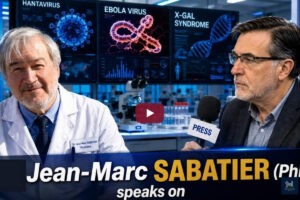
Jean-Marc Sabatier on Emerging Viruses, Vaccines, and Alpha-Gal Syndrome

4 June 2026 at 09:42
Interview with Jean-Marc Sabatier by François Cotard on emerging viruses

Interview with Jean-Marc Sabatier by François Cotard on emerging viruses

During a lengthy interview broadcast on alternative media platforms, Jean-Marc Sabatier shared his views on several current public health topics, including hantaviruses, the Ebola virus, and Alpha-Gal syndrome.

Hantaviruses Under Scrutiny

The interview first focused on hantaviruses, a family of viruses that can cause pulmonary syndromes or hemorrhagic fevers. Jean-Marc Sabatier noted that these viruses are generally transmitted through contact with the feces, urine, or saliva of infected rodents and are not easily spread from person to person.

According to Sabatier, Moderna’s development of an mRNA vaccine targeting certain hantavirus strains as early as 2024 raises questions, particularly because these viruses are considered to have limited pandemic potential. He also described several biological mechanisms associated with these infectious agents and discussed laboratory research involving pseudoviruses.

The speakers emphasized that, based on the information available to them, the number of reported cases in Europe remains limited and that the situation does not currently warrant major concern.

Ebola: Vigilance and Debate Over Vaccination Strategies

The second part of the interview addressed the Ebola virus, particularly the Bundibugyo strain, which is currently being monitored in Central Africa.

Jean-Marc Sabatier reviewed the biological characteristics of the virus, its high fatality rate under certain circumstances, and its modes of transmission, primarily through contact with bodily fluids. He stressed that Ebola outbreaks have historically been contained through targeted public health measures.

The two participants also discussed funding for vaccine research directed at this specific strain. They expressed skepticism about the possibility of large-scale vaccination campaigns being implemented if the virus were to spread beyond Africa.

In addition, several potential treatments were mentioned, including certain monoclonal antibodies and older medications such as ivermectin and hydroxychloroquine, although their effectiveness remains a subject of debate within the scientific community.

Alpha-Gal Syndrome and Red Meat Allergy

The third topic concerned Alpha-Gal syndrome, a red meat allergy that can develop following bites from certain tick species, particularly the Lone Star tick, which is found primarily in North America.

Jean-Marc Sabatier explained that the condition results from an immune reaction to a sugar molecule known as galactose-α-1,3-galactose, which is present in most mammals but absent in humans.

During the discussion, the participants referred to various claims circulating on social media regarding Bill Gates’s alleged involvement in programs related to ticks or synthetic meat. They suggested that connections between these topics might exist, although no direct evidence was presented during the interview.

Ongoing Criticism of Public Health Institutions

Throughout the conversation, the participants expressed skepticism toward certain public health institutions, including the World Health Organization (WHO), regulatory agencies, and major pharmaceutical companies.

Jean-Marc Sabatier specifically criticized the development of mRNA vaccines and argued that dissenting voices face difficulties being heard within scientific and media circles. He stated that he himself has experienced a form of marginalization because of his views.

A Call for Caution

In conclusion, despite the concerns raised during the interview, Jean-Marc Sabatier encouraged listeners not to panic in response to new public health alerts. According to him, it is important to maintain a critical mindset, consult multiple sources of information, and closely monitor evolving epidemiological situations without resorting to alarmism.

Jean-Marc Sabatier, Director of Research at the CNRS, holds a PhD in cell biology and microbiology and a Habilitation à diriger des recherches (HDR) in biochemistry

Anti-Covid vaccines : Jean-Marc Sabatier was right !


L’article Jean-Marc Sabatier on Emerging Viruses, Vaccines, and Alpha-Gal Syndrome est apparu en premier sur FrenchDailyNews.

Greece Shakes Off Crisis-Era Label With Major EU Economic Upgrade

4 June 2026 at 16:50
European Commission headquarters
The Commission’s assessment highlights a reduction in risks associated with Greece’s public and external debt. Credit: tiseb, CC BY 2.0/flickr

The EU’s Commission removed Greece from its list of macroeconomic imbalances on Wednesday, marking a turning point in the nation’s post-crisis recovery. The move formally winds down a painful sixteen-year chapter of heightened economic surveillance that led to the era of bailouts.

Among the factors emphasized in the European Commission’s report are: Greece’s resilient growth rate of 2.1% of GDP in 2025 in spite of conditions of global uncertainty, projections for continued strong growth, the continuous high primary surplus, reaching 1.7% of GDP in 2025, and the significant decline in public debt, projected to drop to 123.4% of GDP in 2027, making it one of the fastest rates of debt reduction in Europe. The country’s extensive reforms and speedy progress in the digital transition, especially in tax and public administration, were also taken into consideration.

Prime Minister Kyriakos Mitsotakis welcomed the milestone on social media, writing that the decision effectively “closes a negative chapter that began 16 years ago.” He emphasized that the achievement was not merely a technocratic assessment but rather the “foundation for a better life” made possible by the sustained hard work of Greek citizens and the state.

According to Mitsotakis, the structural budget surpluses achieved through recent reforms can now be directly “channeled into higher wages and pensions,” offering tangible domestic relief to a population that endured years of harsh austerity. “This also marks the official end of all surveillance,” he stressed.

The Commission’s assessment highlights a reduction in risks associated with Greece’s public and external debt, alongside solid economic growth, progress on structural reforms, and a stabilized banking sector.

EU says Greece still lags behind

While the removal from the imbalance list signals Brussels’ confidence in Athens’ current trajectory, the Commission also issued a stark reminder: Greece still lags behind its European Union peers in several key economic areas. The country continues to carry a heavy public debt burden, and average disposable income remains well below Western European standards.

Nevertheless, analysts say that the formal easing of surveillance provides a major psychological and financial boost, potentially lowering market borrowing costs and attracting crucial foreign investment. For a nation that spent over a decade as the epicenter of the Eurozone crisis, the validation from Brussels confirms a hard-fought return to economic normalcy.

RelatedItaly Set to Overtake Greece as Eurozone’s Most Indebted Country in 2026

What is the Seal of the Holy Spirit?

4 June 2026 at 05:04
We might say that baptism is the visible sign of the Spirit’s invisible work within us that tangibly shows God’s seal upon us and his promise to save in the gospel.   Paul speaks of the Spirit sealing believers in three texts (2 Cor. 1:21–22; Eph. 1:13; 4:30). While interpreters often associate this sealing with... Continue Reading

The Body of Christ: On the Nature of the Church (WCF 25.1–25.6)

4 June 2026 at 05:01
While our experience of the visible church is fallible—flawed, messy, and subject to error—it remains the apple of God’s eye and the earthly expression of Christ’s bride. We must not abandon the visible church, for it is the very place where Christ has promised to meet us, feed us with His Word, and prepare us... Continue Reading

This Is How We Know We Know

4 June 2026 at 05:01
Religion is not defined by a number of opinions, or by a collection of articles of faith, but rather by practice and obedience to the known will of God. This is because knowledge is a duty in relation to something else—it is instrumental to something else—it is not principally intended for itself, but for obedience.... Continue Reading

Absorbing Frustration in the Home

4 June 2026 at 05:01
Christ doesn’t lead His bride with irritation and volatility, and He doesn’t abandon her in distress. He leads with strength under control. So when frustration rises in the home, the first response shouldn’t be explosion or retreat, but self-government.   In my article yesterday about kingdom utility, I wrote that a husband is useful to... Continue Reading

A Fence, Not a Cage

4 June 2026 at 05:01
The work of reforming and strengthening worship is never finished by adopting a document. But it can be helped by one. A good Directory will not do the work of pastors and elders for them. But it can help pastors and elders do their work better.   A constitutional Directory for Worship will not, by... Continue Reading

Bullet Points—Kinism and The Sin of Noticing

4 June 2026 at 05:01
I have noticed that the term “race” does not appear in the Bible.  It is a relatively new term in the history of mankind.  The terms “race” and “ethnicity” have replaced the biblical word “nation.”  The word nation refers, first of all, to a people who have a common biological ancestor.    I have noticed... Continue Reading

No Church, No Problem?

4 June 2026 at 05:01
Like any family, the church needs proper discipline and order so that our personal and corporate life together will imperfectly but truly reflect the fact that the church is an embassy of Christ and the age to come even in this present evil age. God’s law, not our spontaneous sincerity, defines what we should do.... Continue Reading

The Visible Church As a “Corpus Per Mixtum”

4 June 2026 at 05:01
In any body of Christians (of any size), there will be a “mixture” of those who are regenerated, and those who are not. The problem is, it is not always that easy to discern between the two. The good news is, God has not called us to know this.   “Corpus per mixtum,” is Latin,... Continue Reading
❌