Il Lazio continua a sorprendere sul fronte dell’export, con un balzo del 9,6% che ribalta la tendenza stagnante dei servizi romani. Il merito è quasi interamente del polo chimico farmaceutico dell’asse Latina- Frosinone, ormai riconosciuto come uno dei più importanti d’Europa. Qui operano multinazionali, centri di ricerca e stabilimenti ad alta specializzazione che da soli coprono metà delle vendite estere regionali. Un risultato che conferma la centralità del settore e la sua capacità di competere sui mercati globali.
Le aziende del settore investono in innovazione
Mentre Roma fatica a far crescere i servizi avanzati, il Sud del Lazio corre. Le aziende farmaceutiche investono in innovazione, ampliamenti produttivi e nuove linee dedicate ai farmaci biologici. La domanda internazionale resta elevata e il settore beneficia di una filiera integrata che va dalla ricerca alla produzione, fino alla logistica.
Il territorio, però, paga ancora la carenza di infrastrutture adeguate, soprattutto nei collegamenti con i porti e gli aeroporti.
Il Pharma un asset competitivo globale
Il successo del pharma compensa il rallentamento di altri comparti, come turismo e servizi professionali, che mostrano segnali di affaticamento dopo il boom post pandemia.
Ma pone anche una questione strategica: quanto è sostenibile una crescita così concentrata? Gli economisti parlano di “specializzazione rischiosa”, ma riconoscono che il Lazio ha trovato nel farmaceutico un asset competitivo globale. La sfida sarà ora attrarre nuovi investimenti e rafforzare la filiera, evitando che la dipendenza da un solo settore diventi un limite.
Il polo industriale del basso Lazio si conferma dunque il vero motore della regione, capace di trainare l’export e di generare occupazione qualificata. Un modello che potrebbe ispirare anche altre aree, se accompagnato da politiche industriali mirate e da un miglioramento delle infrastrutture logistiche, tema al centro del dibattito sulla Zls del Lazio.
L’ultimo capitolo della saga Mfn arriva dal Congresso statunitense, dove 48 deputati repubblicani guidati dal vicepresidente della Commissione Ways and Means Vern Buchanan, dal presidente della House Budget Committee Jodey Arrington e da Nicole Malliotakis hanno inviato una lettera all’U.S. Trade Representative Jamieson Greer e al segretario al Commercio Howard Lutnick chiedendo di procedere rapidamente con un’indagine ai sensi della Section 301 contro le politiche di determinazione dei prezzi dei medicinali adottate da diversi Paesi stranieri.
La lettera
Nella missiva i parlamentari sostengono apertamente la linea della Casa Bianca, secondo cui molte economie avanzate beneficiano dell’innovazione farmaceutica sviluppata negli Stati Uniti senza contribuire in maniera proporzionata ai costi di ricerca e sviluppo. “Per troppo tempo nazioni straniere benestanti hanno raccolto i benefici dell’innovazione farmaceutica americana utilizzando controlli sui prezzi e altre politiche scorrette per evitare di pagare la loro giusta quota”, scrivono i firmatari, chiedendo all’amministrazione di utilizzare tutti gli strumenti commerciali disponibili per contrastare quello che definiscono un fenomeno di free-riding. “Mentre i precedenti presidenti sono rimasti a guardare consentendo alle nazioni straniere di approfittare degli Stati Uniti, il presidente Trump ha giustamente invocato un’azione commerciale decisa per affrontare questo problema”, si legge ancora.
L’iniziativa rappresenta l’ulteriore tassello di una posizione ormai consolidata. La Casa Bianca e, ora apertamente, anche i rappresentanti del Congresso considerano il recente accordo raggiunto con il Regno Unito come il modello da replicare a livello internazionale. Secondo i sostenitori, l’intesa avrebbe dimostrato che negoziati commerciali mirati sul tema del pricing possono portare benefici ai pazienti e ai contribuenti americani, inducendo i partner a sostenere una quota maggiore dei costi dell’innovazione.
“Il presidente Trump è stato inequivocabile: le altre nazioni ricche devono fare un passo avanti e pagare la loro giusta quota per l’innovazione farmaceutica salvavita invece di fare affidamento sui pazienti americani” ha dichiarato il portavoce della Casa Bianca Kush Desai a Politico, sintetizzando la posizione dell’amministrazione.
I Paesi nel mirino di Washington
Fra i Paesi oggetto di osservazione nel paniere elaborato dagli Usa ci sono Canada, Francia, Italia, Giappone, Corea del Sud e Regno Unito, insieme ad altre economie europee. Ma, oggi nel mirino di Washington c’è in particolare la Germania – menzionata anche ripetutamente nella lettera dei congressmen, insieme a Francia, Canada e Giappone.
Berlino sta infatti discutendo una riforma volta a contenere la spesa farmaceutica e, secondo diverse ricostruzioni, sarebbero già in corso colloqui riservati tra esponenti del governo tedesco e rappresentanti dell’amministrazione statunitense. Sul tavolo non vi sarebbero soltanto i prezzi dei farmaci, ma anche investimenti industriali e competitività del settore. Negli ultimi giorni alcune delle principali aziende del comparto hanno espresso crescente preoccupazione per il deterioramento del contesto europeo e, in particolare, per l’approccio intrapreso da Berlino nelle riforme. Eli Lilly ha annunciato la revisione di un piano da 2,3 miliardi di euro in Germania, destinando parte delle risorse agli Stati Uniti. Anche Boehringer Ingelheim ha comunicato la cancellazione di investimenti programmati tra il 2027 e il 2030 per circa 900 milioni di euro.
Le motivazioni richiamano il tema, ormai ricorrente nel dibattito, legato alla crescente difficoltà dell’Europa nel competere con Stati Uniti e Asia per attrarre e valorizzare ricerca, sviluppo e produzione ad alto valore aggiunto. Le prospettive di ulteriori misure di contenimento della spesa – dal punto di vista delle aziende – rischiano di ridurre la prevedibilità regolatoria e la capacità del continente di attrarre e mantenere investimenti.
E l’Italia?
La questione assume una rilevanza particolare per l’Italia, che negli ultimi anni ha consolidato il proprio ruolo di leadership nella manifattura farmaceutica europea. Se l’amministrazione americana dovesse proseguire lungo la strada delle investigazioni, anche Roma potrebbe essere chiamata a dimostrare l’attrattività e la competitività del proprio modello. Nei 10 mesi successivi all’introduzione della Mfn, il nostro Paese ha già vissuto un crollo del 66,7% del lancio dei nuovi farmaci, attestandosi fra i più colpiti in Europa, a fronte di una media Ue del -35%.
Al netto dell’ormai annosa questione del payback, da tempo indicata dall’industria come uno dei principali fattori di incertezza, il tema riguarda più in generale la capacità del Paese di offrire un quadro regolatorio stabile, prevedibile e favorevole agli investimenti. E, in un contesto Europeo non semplice, l’Italia ha il potenziale di agire fra i primi. Il Testo unico farmaceutico, ad esempio, potrebbe trasformarsi in qualcosa di più di un semplice esercizio di riordino normativo se saprà affrontare alcuni dei nodi che da anni alimentano il dibattito sulla competitività del settore. Un obiettivo tutt’altro che scontato, ma che assume un peso crescente mentre il resto del mondo corre.
The Famous Italian Biochemist’s Latest Study on the Pfizer mRNA Vaccine
«ALC-0315, the ionizable cationic lipid enabling the Pfizer vaccine Comirnaty’s LNP platform, is presented in regulatory files as if its metabolic fate were straightforward and well controlled. Our analysis instead identifies a basic, consequential discrepancy that should never survive dossier assembly—let alone review: the hydrolysis product dictated by the ALC-0315 chemical structure is 2-hexyldecanoic acid (α-branched), yet key submissions by Pfizer repeatedly invoke the presence of distinct 6-hexyldecanoic isomer (not commercially available, not recognized as an analytical standard in established analytical protocols). This is a material misidentification with direct safety and compliance consequences».
In these few initial lines of his latest disruptive and groundbreaking study, we understand that on this occasion the Italian biochemist Gabriele Segalla has truly outdone himself by revealing a Sherlock Holmes-like instinct in discovering yet another sensational manipulation within the Covid-19 mRNA Comirnaty so-called “vaccine” produced by the New York-based pharmaceutical company Pfizer, perhaps the most used in the world and certainly in the European Union.
A danger that Big Pharma Pfizer and Moderna themselves were then forced to include in the package leaflet by the EMA (European Medicines Agency).
THE PANDORA’S VACCINES – VIDEO. Toxic Nanoparticles inside Covid mRNA Jabs unveiled by Biochemist Segalla
Damage and Health Safety Violations from the Ghost Molecule
Given the highly technical nature of the research published after peer-review on the American specialist journal International Journal of Vaccine, Theory, Practice, and Research on May 18 (title ALC-0315 Toxic Metabolites: Pharmacokinetic and Regulatory Criticalities in a COVID‑19 “mRNA Vaccine”), we asked out friend PhD Segalla to provide a brief simplified explanation.
«At the heart of the study is a major chemical discrepancy. To track how the vaccine’s protective fat shell (the ALC-0315 lipid) breaks down in pre-clinical tests, official files relied on a “ghost” molecule called 6-hexyldecanoic acid—a substance that does not even exist in international chemical databases. In reality, the vaccine breaks down into a completely different molecule, 2-hexyldecanoic acid, which is globally classified as highly toxic and persistent. The study defines this switch as a “technical falsification” that hid the fact that these toxic ingredients remain trapped inside human cells instead of being safely eliminated».
Indeed, the Italian biochemist so detailed the same issue in his Absttract
«The authentic metabolite, 2-hexyldecanoic acid, concealed by Pfizer and disguised as 6-hexyldecanoic acid, carries an H410 classification (very toxic to aquatic life with long-lasting effects), while the “phantom”6-hexyl isomer is lacking any hazardous classification and presented as theoretically more degradable. In a CMA (Conditional Marketing Authorization) supporting pivotal preclinical study, substituting 2-hexyl with an unclassified 6-hexyl isomer materially compromises the clearance account, traceability, and any defensible claim of GLP (Good Laboratory Pratice) grade validation for Pfizer’s vaccine».
The cover of Abstract of the research (link in the sources)
Dr. Segalla’s research demonstrates that this hidden molecule triggers a domino effect of severe biological damage:
Energy Blackout: It shuts down the cell’s power plants (mitochondria), draining the energy needed to repair our DNA.
Cell Defense Breach: Another byproduct acts like a harsh chemical detergent, stripping away the protective shield around the cell’s nucleus and risking genomic instability.
Protein Factory Sabotage: It causes the cell’s internal factories (ribosomes) to glitch. This “factory error” forces the body to produce deformed, unnatural proteins, which can cause the immune system to misfire and attack its own tissues, potentially leading to heart inflammation like myocarditis and pericarditis.
The expert researcher, in an exclusive interview with the editor of Gospa News (currently only in Italian), highlighted the multiple public health violations resulting from his discovery making the request to withdraw the authorization for the Comirnaty mRNA vaccine inevitable:
«Chemical violations (because the declared metabolite does not correspond to the one actually produced by the biotransformation of ALC-0315), analytical violations, GLP violations, toxicological violations, pharmacokinetic violations, regulatory violations».
A Discrepancy, Undetected by Drug Regulators, That Would Have Blocked the Authorization of Pfizer’s Gene Serum
This discrepancy is not a technical detail; it directly affects analytical validation, standard traceability, toxicological assessment, metabolic clearance, and the entire regulatory framework.
That is, as Segalla explains in the video interview, if the reporting of the metabolite produced by ALC-0315 in the human body had been correct, the Comirnaty “vaccine” would never have received approval from the competent bodies responsible for overseeing the drug authorization process (FDA, EMA, AIFA, Ministry of Health, etc.).
Not only that. The Italian biochemist is surprised that the EMA failed to detect this enormous discrepancy, but in a previous study, Segalla himself had demonstrated that the EMA could not have been unaware of the toxicity of these nanoparticles, which are highly inflammatory to the muscular system (another recent study has reiterated this) and also potentially carcinogenic.
More Dangers from Trialkanolamine, a Destabilizer of the “Cellular DNA Safe”
«The second breakdown product (a trialkanolamine, pKa ≈ 9.6) is liable to lysosomal sequestration, there by impeding clearance; however, the Pfizer dossier offers only limited substantiation of its disposition. Critically, the pharmacokinetic dataset does not adequately account for dose biodistribution and is predicated on insufficiently documented—or omitted—testing standards. Given the scale of exposure (billions of subjects) and the potential oncological and cardiological consequences placed on these Pharmacokinetic criticalities, these omissions are not merely unfortunate; they are utterly unacceptable».
As we can read in the Segalla’s new study Abstract, the second critical front concerns trialkanolamine, another degradation product of ALC-0315, described as a cationic molecule capable of remaining trapped in lysosomes, altering cellular autophagy, promoting phospholipidosis, oxidative stress, mitochondrial dysfunction and destabilization of cellular and nuclear membranes.
The Italian biochemist Gabriele Segalla
In the interview, Segalla clarifies that this substance acts as “a degreaser capable of damaging the cellular DNA vault,” causing unpredictable genomic damage, which has also been confirmed by a recent, disconcerting American study, and potentially leading to turbo-cancer consequences.
A Call to Action and Immediate Recall for “Serious Safety Failure to Perform ”
The study argues that regulatory agencies, including the EMA, failed to spot these discrepancies, invalidating the vaccine’s conditional approval.
“This is not just a minor technicality,” states Dr. Segalla. “The lack of traceability masked a critical bioaccumulation risk, exposing the public to unmonitored chronic effects.” Invoking the precautionary principle and Article 10 of the Nuremberg Code, the study demands an immediate revocation of the vaccine’s marketing authorization and calls for an urgent international review of mRNA nanotechnology safety.
«Accordingly, we call for an independent, methodologically transparent and fully auditable re-assessment of ALC 0315 metabolism and clearance, and for all regulatory decisions concerning the Comirnaty medicinal product be reconsidered in view of what appears to amount to a grave and consequential omission in verification procedures» sentenced the Abstract of the study too.
The study links these critical issues to potential long-term biological consequences, including interference with genomic stability, the inflammatory response, cardiaological mechanisms, and protein translation processes, such as ribosomal stalling and frameshifting.
Regarding these issues, Gospa News has published countless disturbing studies on the potential harms of mRNA vaccines, from February 2021 until a week ago. This is precisely why our online news outlet has been banned or blocked from all social media (even Telegram, where we have been repeatedly suspended).
Fabio Giuseppe Carlo Carisio – Founder and Director of Gospa News
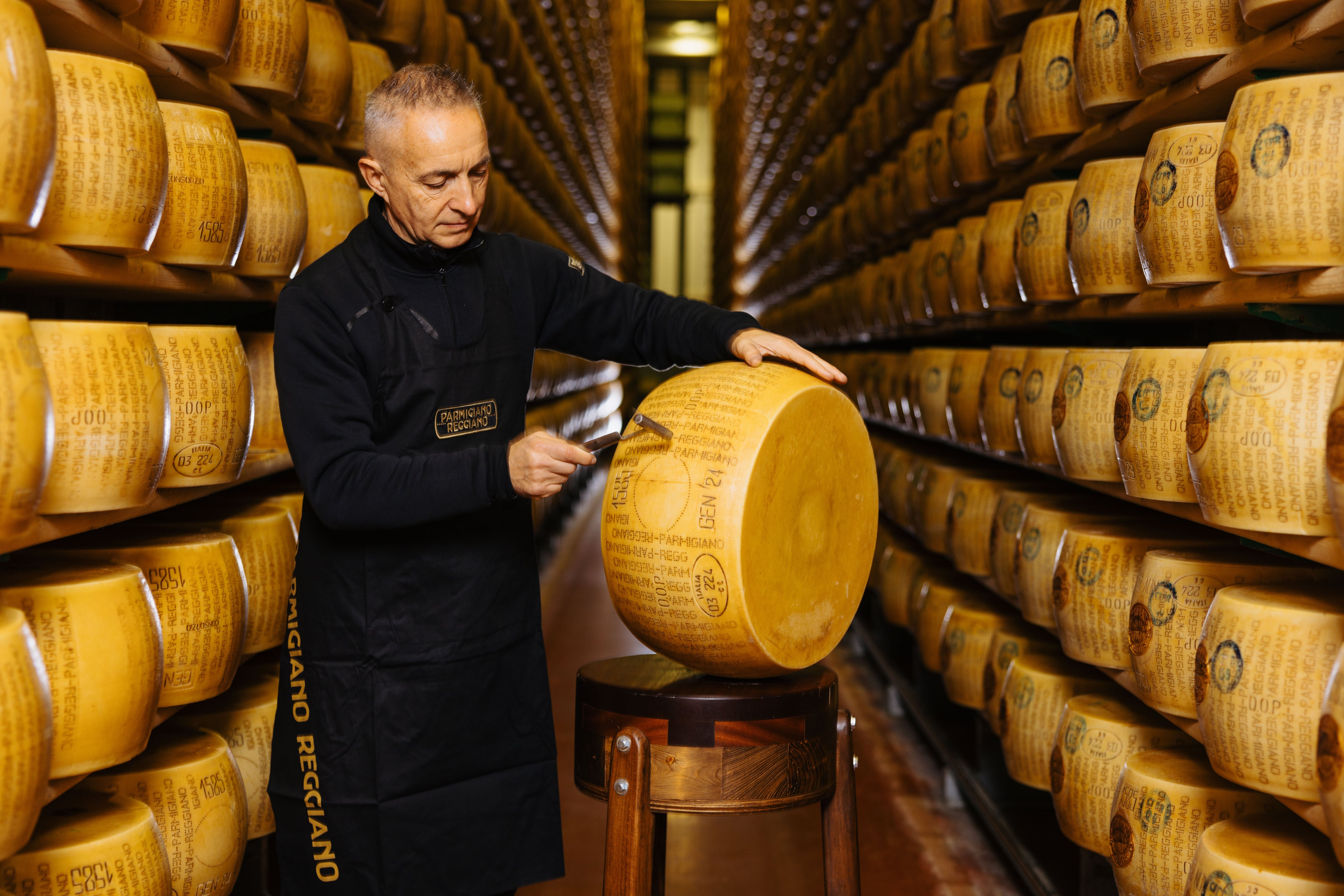
What do medieval monasteries in Emilia-Romagna have in common with a local bank founded in 1910? Both made food preservation part of their daily work. In their own ways and in their own eras, monks and bankers have pursued the same goal in the same place: to profit from a singular product — a cheese capable of staying in good condition for years and increasing in value as it ages. This food, which ensured monastic survival in the 12th century, is now part of Italy’s gastronomic heritage and lies at the heart of a financial model that is so peculiar it has even been studied by Harvard Business School.

 Login
Login