Normal view

Military strikes on water facilities in Iran may constitute a war crime, experts say

Strikes on Bemani damaged key water reservoir for 20,000 people living in area amid a historic drought in the country

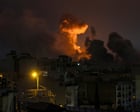
Military strikes that damaged two water storage facilities in southern Iran may constitute a war crime, military and legal experts say, after reviewing media reports and visual evidence of a 10 June strike on Bemani, a small district about 2 miles from the strait of Hormuz.

It’s unclear if the strikes deliberately targeted the district’s water tanks, or if they unintentionally destroyed a key reservoir for about 20,000 people living nearby. But if the tanks were the target, then the legal question becomes critical, Brian Finucane, a former state department lawyer, said. “It’s either a military objective or it’s a civilian object: attacking one is lawful, attacking the other is a war crime,” Finucane said.

Continue reading...

© Photograph: Contributor/Getty Images

© Photograph: Contributor/Getty Images

© Photograph: Contributor/Getty Images

Delhi issues ‘strong protest’ after US strikes kill three Indian seafarers in Gulf

Washington claims vessel was violating its blockade of Iranian ports and failed to comply with instructions

The Indian government has voiced a “strong protest” after three Indian seafarers were killed in US military strikes against oil tankers travelling through the strait of Hormuz.

US Central Command confirmed that its aircraft had fired two Hellfire missiles at the engine room of the MT Settebello as it sailed through the Gulf of Oman on Wednesday.

Continue reading...

© Photograph: CENTCOM

© Photograph: CENTCOM

© Photograph: CENTCOM

Trump claims US and Iran on verge of signing peace agreement, but Tehran says no final decision made

Iranian leadership has not confirmed claim, after the US president announced that planned strikes on Iran had been cancelled

Donald Trump claimed on Thursday that Washington and Tehran were on the verge of signing a peace agreement, and announced that he was cancelling fresh missile strikes, after two days of escalating attacks on Iran that threatened to collapse the fragile ceasefire.

His comments followed a new bout of public diplomacy by social media, but were dismissed by Iran’s foreign ministry, which said a final decision on an agreement had not been reached.

Continue reading...

© Photograph: Aaron Schwartz/Pool/Aaron Schwartz - Pool/CNP/Shutterstock

© Photograph: Aaron Schwartz/Pool/Aaron Schwartz - Pool/CNP/Shutterstock

© Photograph: Aaron Schwartz/Pool/Aaron Schwartz - Pool/CNP/Shutterstock

Is the Iran ceasefire over? What the latest US attacks tell us

A wave of US strikes represents the gravest test yet of the fragile truce. Here’s what happened, what officials are saying and whether the deal can survive

The US launched strikes across southern Iran for a second consecutive day on Thursday. Although there have been several breaches of the ceasefire agreed between the two sides in April, the attacks this week – launched after the downing of a US helicopter over the strait of Hormuz – represent the most serious and extensive breakdown of the truce to date.

The US president, Donald Trump, raised the prospect of further attacks, while his defence secretary, Pete Hegseth, told reporters that if strikes “have to happen … they will be strong and they will be clear”.

Continue reading...

© Photograph: Abedin Taherkenareh/EPA

© Photograph: Abedin Taherkenareh/EPA

© Photograph: Abedin Taherkenareh/EPA

Oil prices fall after Trump says he is cancelling strikes – as it happened

This blog is now closed – see our latest full report on the Middle East crisis

Three Indian seafarers were killed in a US attack on an oil tanker earlier this week, India’s shipping minister, ‌Sarbananda Sonowal, said.

“It is deeply unfortunate to learn of the tragic incident aboard the Palau-flagged MT Settebello. Sadly, three Indian seafarers initially reported missing are now confirmed dead after bodies have been located and identified,” he wrote in a post on X.

The Middle East is being pulled deeper into crisis & the consequences reach far beyond the region.”

Continue reading...

© Photograph: Jim Lo Scalzo/EPA

© Photograph: Jim Lo Scalzo/EPA

© Photograph: Jim Lo Scalzo/EPA

Trump the unreliable narrator fails to force reality to match his story on Iran

A cycle of threat, detente and deadlock repeats itself wearisomely as the president’s war in Iran drags on

As the story of the US-Iran war is written direct to social media, Donald Trump may be the genre’s premier unreliable narrator.

Since the war began, Trump has again and again threatened Iran with fearsome consequences if Tehran doesn’t come to the table and sign a peace deal that the US president said was imminent weeks ago. And he has also repeatedly claimed that an Iran deal is “close” – without any result. (A CNN tally put the number of times he’s claimed it at 38.)

Continue reading...

© Photograph: Saul Loeb/AFP/Getty Images

© Photograph: Saul Loeb/AFP/Getty Images

© Photograph: Saul Loeb/AFP/Getty Images

US inflation jumped to 4.2% in May, the third consecutive increase since start of Iran war

10 June 2026 at 13:34

Before the conflict began, inflation was at 2.4%, but the closure of the strait of Hormuz has affected energy prices

US inflation jumped to an annual rate of 4.2% in May, the third consecutive monthly increase since the start of the Iran war and a three-year high, as Americans continue to face steep oil prices.

Prices have increased sharply over the past several months, rising at an annual rate of 3.3% in March before going up to 3.8% in April. In February, before the conflict began, inflation was at 2.4%.

Continue reading...

© Photograph: Bonnie Cash/UPI/Shutterstock

© Photograph: Bonnie Cash/UPI/Shutterstock

© Photograph: Bonnie Cash/UPI/Shutterstock

US and Iran exchange strikes for second day, as ceasefire appears close to collapse

Explosions reported across Iran after Donald Trump vowed to ‘hit them hard again’, with Bahrain, Kuwait and Jordan targeted by Tehran

The US launched a new round of airstrikes on Iran into Thursday morning after Donald Trump warned Tehran would “pay the price” for stalled negotiations, prompting Iran to respond with strikes targeting Bahrain, Kuwait and Jordan.

The new US assault across a range of Iranian cities came as efforts to negotiate an end to the war again appeared stuck, with Iran insisting it would maintain its chokehold on the strait of Hormuz. The American attack appeared more intense and wider than the day before, but Iran released no information about what was hit.

Continue reading...

© Photograph: Aaron Schwartz/Pool/Aaron Schwartz - Pool/CNP/Shutterstock

© Photograph: Aaron Schwartz/Pool/Aaron Schwartz - Pool/CNP/Shutterstock

© Photograph: Aaron Schwartz/Pool/Aaron Schwartz - Pool/CNP/Shutterstock

US says second day of strikes ‘completed’ – as it happened

This blog has now closed – our coverage of this crisis in the Middle East continues here

If the US genuinely wants a deal it will have to engage with Iranian demands on sanctions relief, says Danny Citrinowicz, the former head of the Iran branch of Israeli military intelligence.

Today’s exchange of strikes shows how easily both Iran and the US can slide towards another round of escalation, says Citrinowicz, who is now a nonresident fellow at the Atlantic Council.

If Washington is unwilling to accept that reality, it should recognize the likely alternative: continued confrontations with Iran that could eventually spiral beyond anyone’s control and lead to military conflict under less favorable conditions.

Even a limited military campaign designed to weaken Iran would not fundamentally alter Tehran’s negotiating position. It has not happened in the past, and there is little reason to believe it would happen now. Iran emerges from the latest exchange of blows convinced that it can absorb pressure and respond to attacks.”

Legal and moral responsibility of all countries in the region (especially those located along the southern shores of the Persian Gulf) to prevent the US military and Israel from using their territory or facilities to plan, organise, execute, or support hostile actions against Iran.

Continue reading...

© Photograph: Anadolu/Getty Images

© Photograph: Anadolu/Getty Images

© Photograph: Anadolu/Getty Images

JD Vance claims US ‘very close’ to peace deal with Iran

9 June 2026 at 23:19

Vice-president says deal could ‘absolutely’ come before midterms, as US strikes Iran after downing of helicopter

The US-Israel war on Iran could conclude in a week or a few months, vice-president JD Vance has said, as the downing of a US army helicopter sparked the latest flare-up in the conflict.

In the latest vague assessment from the Trump administration on the future of its controversial war, Vance claimed the US is “very close to achieving” a peace deal with Iran, adding that it could “absolutely” come before the midterm elections.

Continue reading...

© Photograph: Getty Images

© Photograph: Getty Images

© Photograph: Getty Images

Complex relationship between Trump and Netanyahu continues to undermine Middle East ceasefire

Recent exchange of missiles between Iran and Israel highlights diverging views between US president and Israeli PM

The latest eruption of hostilities between Iran and Israel appears to have been contained for now after Donald Trump insisted he called “all the shots” in the Middle East, but in a dangerously fragile region Benjamin Netanyahu has again shown he is ready to take shots of his own.

The exchange of missiles on Sunday and Monday was ample demonstration of the inherent instability of the current limbo between war and peace, but it also shone a bright light on the complex and conflicted relationship between the US president and the Israeli prime minister, frenemies who could determine the fate of the current ceasefire.

Continue reading...

© Photograph: Ronen Zvulun,brendan Smialowski/AFP/Getty Images

© Photograph: Ronen Zvulun,brendan Smialowski/AFP/Getty Images

© Photograph: Ronen Zvulun,brendan Smialowski/AFP/Getty Images

Israel and Iran step back from renewed conflict after Trump calls for halt

Netanyahu acknowledges pause in fighting in TV speech but vows forceful response to future attacks

Fears of a return to a full-scale regional war in the Middle East eased on Monday as Israel and Iran said they had halted attacks on each other after an appeal from Donald Trump to “immediately stop shooting”.

Benjamin Netanyahu, Israel’s prime minister, acknowledged the halt in fighting with Iran in a televised speech, but vowed to respond “with force” to future attacks.

Continue reading...

© Photograph: Ahmad Gharabli/AFP/Getty Images

© Photograph: Ahmad Gharabli/AFP/Getty Images

© Photograph: Ahmad Gharabli/AFP/Getty Images

Iran war: who is fighting and why?

8 June 2026 at 15:54

Arch-enemies Israel and Iran have returned to active confrontation while Donald Trump tries to present himself as mediator

Israel and Iran have returned to active war for the first time since a ceasefire was agreed two months ago in an exchange of rocket fire that threatened efforts to end the conflict.

Donald Trump, who started the war in February alongside Israel but has since attempted to present himself as a mediator, told the two sides to stop shooting and said “final negotiations” on peace were proceeding. By late afternoon on Monday, the attacks had stopped.

Continue reading...

© Photograph: Hussein Malla/AP

© Photograph: Hussein Malla/AP

© Photograph: Hussein Malla/AP

Lebanon’s president refuses to meet Netanyahu until war ends – as it happened

This live blog is now closed. For the latest, read more of our coverage on the Middle East conflict here.

Iranian media is reporting that there were no immediate casualties following apparent Israeli strikes on the Karun petrochemical plant in Mahshahr, a city in Iran’s southwestern Khuzestan province.

According to the Fars news agency, Iran’s Revolutionary Guards said they responded to what they described as an American-Israeli strike on the Iranian petrochemical site by launching a missile attack on a similar plant in the northern Israeli city of Haifa.

Continue reading...

© Photograph: Naama Stern/Reuters

© Photograph: Naama Stern/Reuters

© Photograph: Naama Stern/Reuters

Israel and Iran exchange strikes as Middle East crisis threatens to escalate

Attacks raise fears of return to full-scale regional war and come after Trump says ‘I call all the shots’, not Netanyahu

The Israeli military has launched airstrikes on Iran after the Iranians fired missiles at northern Israel in the first exchange of fire between the two countries since a ceasefire was reached on 8 April, raising fears of a return to a full-scale regional war in the Middle East.

Yemen’s Iran-aligned Houthi rebels also fired at Israel and warned they would target Israeli-affiliated ships in the Red Sea, further escalating tension.

Continue reading...

© Photograph: Abbas Salman/EPA

© Photograph: Abbas Salman/EPA

© Photograph: Abbas Salman/EPA

Trump reportedly considers buying Chagos Islands from Mauritius

7 June 2026 at 20:13

Potential proposal would secure control of Diego Garcia base amid stalled UK plans to cede sovereignty of territory

Donald Trump is reportedly weighing a plan to buy the Chagos Islands from Mauritius amid stalled plans from the UK to cede sovereignty of the territory, the Telegraph first reported.

The White House did not respond to the Guardian’s request for comment on the report about the potential plan.

Continue reading...

© Photograph: NASA Archive/Alamy

© Photograph: NASA Archive/Alamy

© Photograph: NASA Archive/Alamy

Iran launches missiles at Israel in response to strikes on Beirut

Tehran official had promised ‘decisive and painful’ reply to Israeli bombing of apartment buildings in Beirut’s southern suburbs

Iran launched missiles at Israel on Sunday in response to Israeli strikes on Beirut’s southern suburbs, shattering a fragile ceasefire and marking the most serious escalation since April, after 100 days of war.

A senior Iranian official has promised a “decisive and painful” response to Israel’s airstrikes on the southern suburbs of Beirut and, a few hours later, sirens sounded across northern Israel.

Continue reading...

© Photograph: Anadolu/Getty Images

© Photograph: Anadolu/Getty Images

© Photograph: Anadolu/Getty Images

Trump reportedly tells Netanyahu not to retaliate against Iran - as it happened

This blog is now closed – our live coverage of the Middle East crisis continues here

Donald Trump also aggressively pushed back against claims that he broke a key campaign promise to keep the US out of new foreign conflicts.

“Well, well, first of all, I didn’t guarantee no war,” Trump said during the Meet the Press interview. “Why would I have built the strongest military in the world?”

Continue reading...

© Photograph: Amir Cohen/Reuters

© Photograph: Amir Cohen/Reuters

© Photograph: Amir Cohen/Reuters

Could this one man have been behind terrorist attacks on Jewish communities across Europe?

7 June 2026 at 06:00

Legal papers, expert investigations and social media posts tell story of how a 32-year-old Iraqi appeared to run ‘proxy’ campaign

On Monday, a slightly dishevelled Iraqi man, shackled and dressed in beige prison overalls, was ushered into a Manhattan courtroom.

Mohammad Baqer Saad Dawood al-Saadi, 32, pleaded not guilty to a series of terrorism-related offences, then gestured toward the judge and prosecutors. “I’m a prisoner of war. I’m not a threat,” he told them. “Children and women are being killed by your rockets.”

Continue reading...

© Composite: Guardian Design/NurPhoto/Shutterstock/ Southern District of New York/AP/Reuters

© Composite: Guardian Design/NurPhoto/Shutterstock/ Southern District of New York/AP/Reuters

© Composite: Guardian Design/NurPhoto/Shutterstock/ Southern District of New York/AP/Reuters

Aviation industry looks skywards as leaders fly in for Rio summit

Oil tankers may be stuck behind strait of Hormuz, but holding the Iata AGM in Brazil defies warnings of impending shortages

Nothing says jet fuel crisis, as one prospective attender put it, like flying everyone to Rio de Janeiro. Aviation leaders will converge in Brazil this weekend for the Iata AGM, the annual global airline summit, with the industry still, for the most part, looking resolutely skyward.

The oil tankers may still be stuck behind the strait of Hormuz as the conflict between the US, Israel and Iran flickers on, but for now, airlines continue to defy dire warnings of impending shortages which had stoked fears of a summer of chaos for European holidaymakers.

Continue reading...

© Photograph: Nature Picture Library/Alamy

© Photograph: Nature Picture Library/Alamy

© Photograph: Nature Picture Library/Alamy

❌