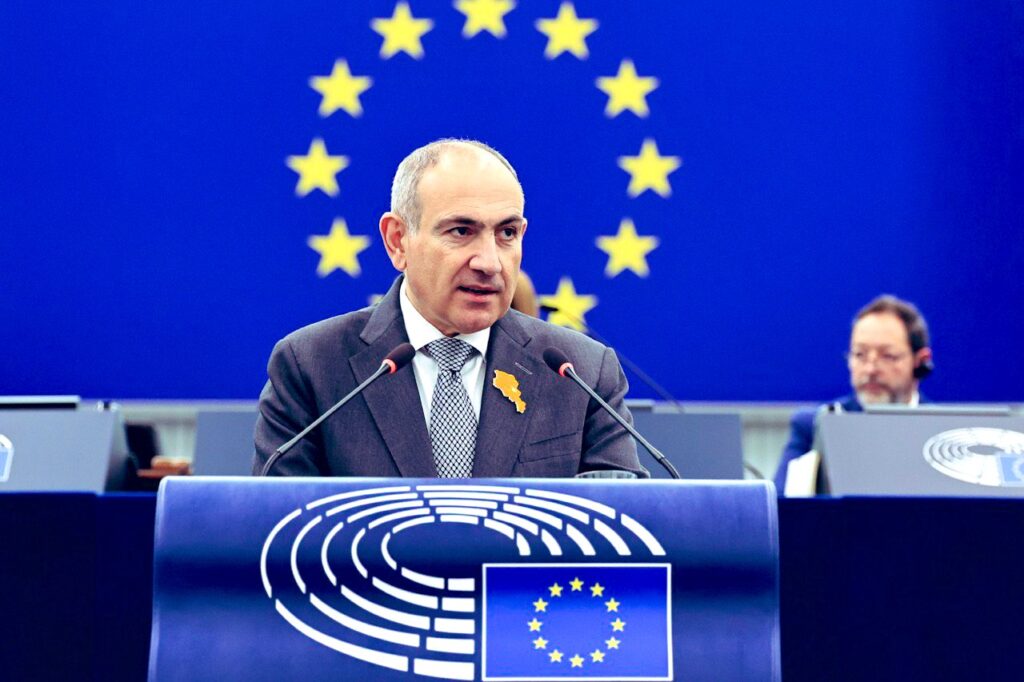
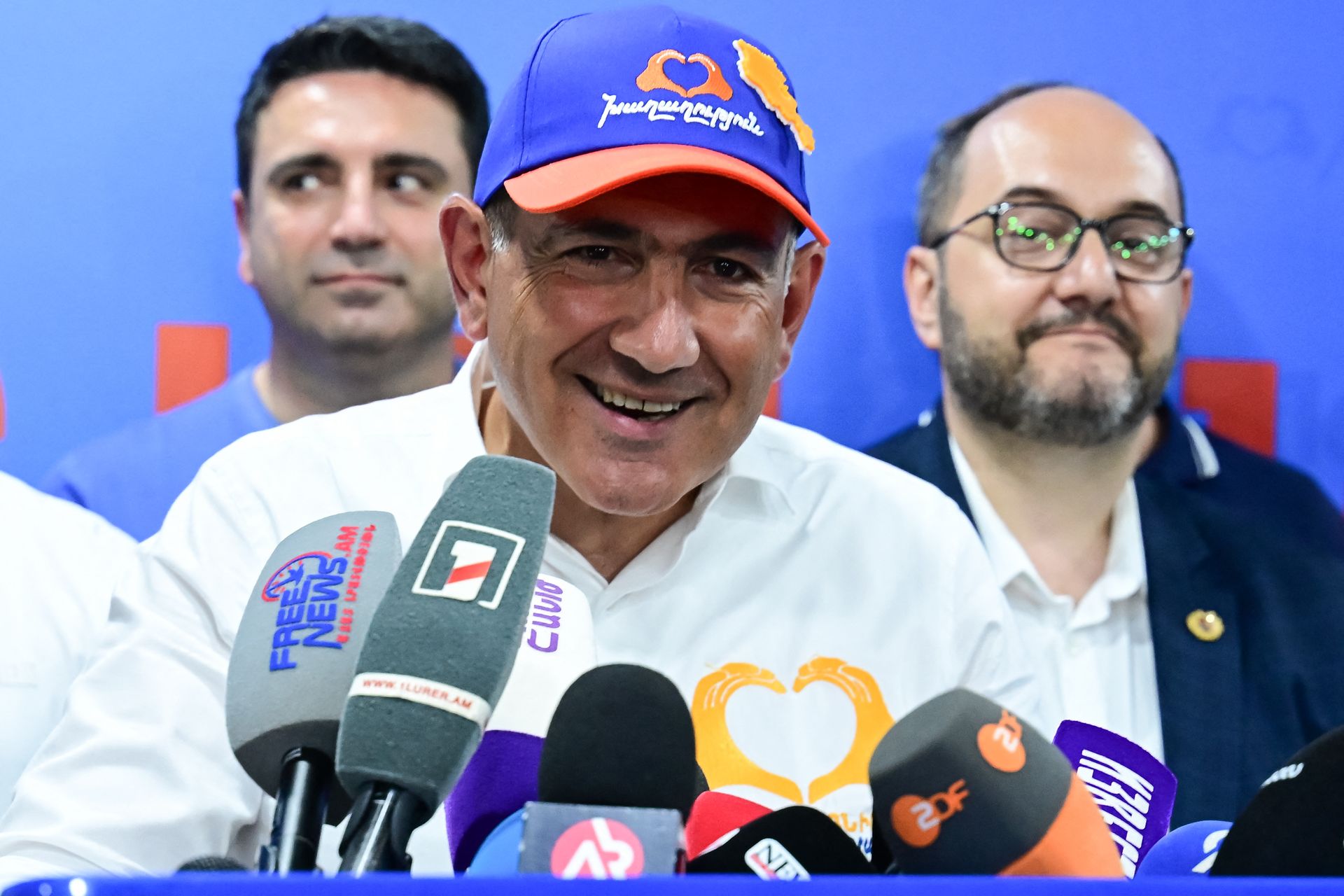
Armenian Prime Minister Nikol Pashinyan's pro-EU Civil Contract party has won the country's parliamentary elections with 49.81% of the vote. The result came despite pro-Russian opposition and Russian electoral pressure, with 100% of ballots processed, according to News.am and the Central Election Commission.
The victory is a clear public endorsement of Pashinyan's turn toward European integration and away from the post-Soviet Russian sphere — a turn that has placed Armenia, like Ukraine before it, in the position of a former Soviet republic actively choosing the EU over Moscow's preferred order.
Previously, Russian President Vladimir Putin warned Armenia of a "Ukrainian scenario" over its EU push at the recent EAEU summit.
Vote breakdown
Four political forces enter the new Armenian parliament. Pashinyan's Civil Contract leads with 49.81%, followed by Samvel Karapetyan's pro-Russian "Strong Armenia" alliance at 23.29%, the "Armenia" electoral bloc at 9.94%, and the Prosperous Armenia party as the fourth force in parliament.
Karapetyan, a Russian-Armenian oligarch and founder of the Tashir Group, ran on a platform to restore closer ties with Moscow.
Post-Soviet context and EU push
Armenia, a former Soviet republic that gained independence in 1991, has been a member of the Russian-led Collective Security Treaty Organization (CSTO) and the Eurasian Economic Union (EAEU).
The relationship cooled sharply after the 2023 Azerbaijani military operation that ended Armenian control of Nagorno-Karabakh, with Yerevan accusing Russia and its CSTO of failing to deliver promised security guarantees.
Pashinyan's government has since suspended Armenia's participation in CSTO meetings, signed a bilateral strategic partnership charter with the US, and accelerated EU integration efforts.
The EU announced a €50 million support package for Armenia on 4 June, days before the election.
Russia's response and "Ukrainian scenario"
Putin's "Ukrainian scenario" warning, delivered at the EAEU summit shortly before the election, was a direct threat that Russia would consider treating Yerevan's EU pivot the way Moscow has treated Ukraine's: economic pressure, hybrid operations, military threats.
Despite both, Armenia voted for Pashinyan and the EU path by a roughly two-to-one margin over the largest pro-Russian alternative.

 Login
Login