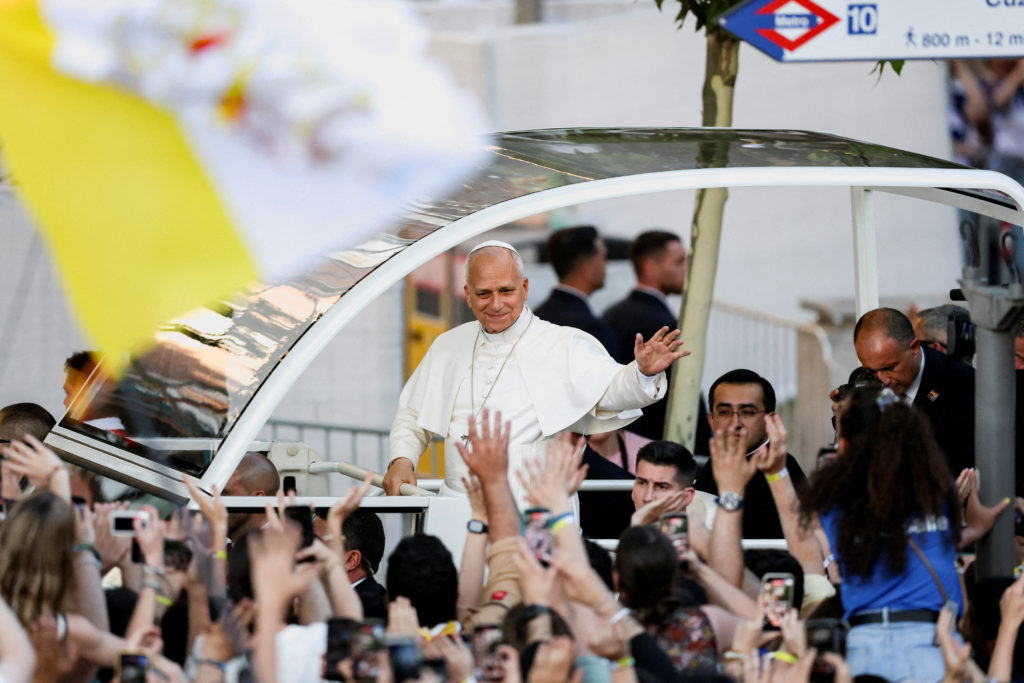
Pontiff appeals in Catalan for harmony on Barcelona leg of Spain tour after making football foes in city
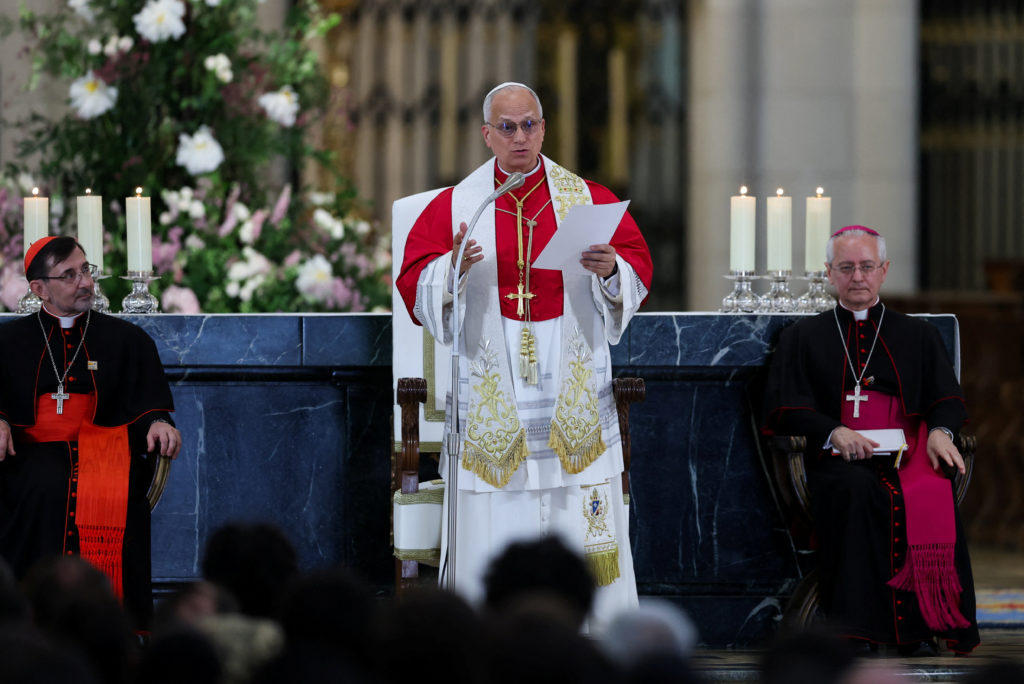
To the delight of many, Pope Leo XIV kicked off the Barcelona leg of his week-long visit to Spain with a few words in Catalan, calling on the faithful who had gathered in the city’s cathedral on Tuesday “to build harmony and communion beyond all polarisation”.
The pontiff’s familiar and commendable plea for people to set aside their differences may, however, have come a little late. Three days earlier, while chatting to journalists on the flight to Spain, Leo had made an awkward confession.
Lisbon’s Design Museum (MUDE) and Lisbon Museum – Pimenta Palace are among the 34 nominees for the European Museum of the Year Award, which the organisers will host on Saturday
Pope Leo and Armando Jesús Lovera have known each other for decades. They have watched World Cup games together, gone on road trips and once searched for a teddy bear for Mr. Lovera’s future wife.
Researchers have confirmed that an underwater helmet hoard off Spain’s eastern coast near Benicarló is medieval rather than Ancient Roman as long assumed. The finding places the collection in the late 14th to early 15th century, during a period of intense maritime conflict along the Valencian coast.
The study was led by Manuel Frallicciardi, a doctoral student jointly supervised by the University of Alicante and the University of Salerno, and published in the journal Antiquity. It marks the first time radiocarbon dating has been applied to iron helmets from an underwater site.
Divers recovered the helmets in 1990 from Piedras de la Barbada, a submerged site about six meters (20 feet) deep near Benicarló in eastern Spain. At least forty-three helmets were identified. Split between two institutions, most of the helmets are stored at the Museu de Belles Arts de Castelló, while two conserved ones are on display at the Museo de la Ciudad de Benicarló.
Because the site had also yielded Roman-era artifacts, including ancient amphorae and Punic War-era bronze helmets, early researchers assumed the iron helmets belonged to the same ancient period.
Fabric linings within helmets unlocked dating mystery
Frallicciardi and his team found organic evidence trapped inside the helmets. Marine sediment had sealed fabric linings in place, protecting them from full decay. The fibers, identified as plant-based bast material in a plain tabby weave, were sent to the Beta Analytic laboratory in Miami and the Curt-Engelhorn-Zentrum Archaeometrie in Mannheim, Germany.
Four of the five radiocarbon results clustered between the last quarter of the 14th century and the early 15th century. One sample returned a date roughly 150 years later than the rest. Researchers linked this to post-depositional contamination. That helmet sat in a more exposed position, and microscopic analysis showed its fibers were more degraded, conditions that could allow younger carbon to infiltrate the sample.
Spain’s underwater helmet hoard links to medieval piracy era
The helmets fall into two types. Most have rounded skull caps with a central ridge, resembling simplified infantry helmets documented in medieval sources, including the Holkham Bible from around 1330 to 1340 and a fresco painted by Jacopo Uccello around 1378. One helmet has a six-panel faceted construction comparable to a kettle hat depicted in a 1437 altarpiece by Hans Multscher.
Frallicciardi noted the helmets predate the era when large Italian and German workshops standardized European armor production. Their simple construction points to smaller regional workshops supplying local infantry markets. The historical context strengthens that picture. From the 1370s onward, Islamic piracy along the Valencian coast intensified sharply, peaking in the final decades of the 14th century.
Communities responded by building coastal towers, fortifying settlements, and mobilizing local militias. Researchers believe the helmets were most likely lost at sea during this period of sustained maritime insecurity.
Spain's lawmakers have given Pope Leo XIV a lengthy standing ovation after his historic address to parliament. This marks a new level of acceptance of the Catholic Church in largely secular Spain.
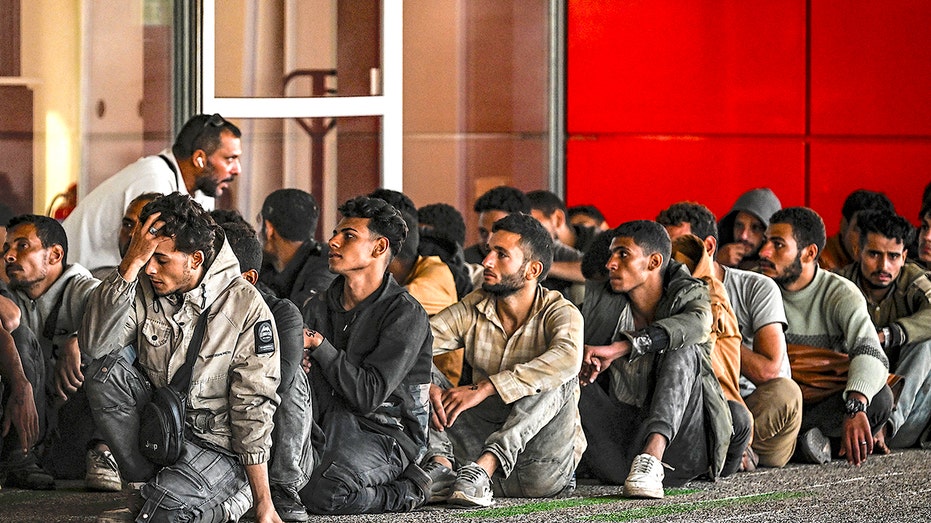
Earlier in June, the European Union appeared to finally react to concerns raised by President Donald Trump and many European voters over illegal immigration by introducing tougher border entry rules for the 27-nation bloc.
The EU agreed on new, stricter rules regarding migration and asylum. The laws are specifically designed to ensure that illegal/undocumented migrants who enter the bloc are processed and, where necessary, quickly sent to deportation centers in countries outside the EU.
People seeking asylum will be screened for identity, security, and their health before even entering any asylum system. The border officials will now track and record non-EU citizens entering and exiting the bloc. Plus, it will use biometric data such as fingerprints and facial recognition. And all member states must now help one another and share information.
The Associated Press reported that the provisional deal struck by the EU's three main institutions is expected to go to EU lawmakers and governments, where approval is expected.
Alan Mendoza, founder and executive director of the Henry Jackson Society, told Fox News Digital that "The EU’s demography is changing Europe’s culture. We are now having to deal with people who are not integrating with the local customs."
While the U.K. is not part of the EU, he said, "Britain’s efforts are behind the new EU rules." Noting the country has "not managed to have offshore migrant holding centers, which would make sure Britain is not seen as a soft touch."
Other experts say the longer countries take to fix the problem, the harder it will be to deal with. Some say it’s already too late.
While Europe’s workaday men and women have clearly seen the problems of illegal immigration for years, their leaders are only just getting the message.
President Donald Trump told world leaders about the damage caused by a flood of undocumented migrants into Europe during his speech to the United Nations General Assembly last year. "You’re destroying your countries," he said. "Europe is in serious trouble; they’ve been invaded by a force of illegal aliens like nobody’s ever seen before."
Just last week, Vice President JD Vance commented on the stabbing death of the 18-year-old British man who was stabbed to death.
In part, Vance posted, "Henry Nowak died the same way a civilization dies: abandoned, handcuffed by authorities who neither trusted nor cared for him, and accused of hate crimes he did not commit. His murder is as tragic as it is enraging. He should still be alive today, and he would be if the last few generations of European elites had stood their ground against the politics of self-hatred and the mass invasion of migrants, many of whom despise the West and the people who love it."
Secretary of War Pete Hegseth also made reference to the topic during a speech to commemorate D-Day in France on the weekend. "Sadly, today, different European beaches are stormed by different dangerous ideologies. Beaches in Spain and Italy and Greece and Bulgaria, boats and men arrive. When will European capitals do something about that invasion? Or is it too late? I pray not, and I believe not," he said.
Elsewhere in the EU, Spain seems to have broken with the rest of the bloc on its new stance on undocumented immigration. The country decided to legalize half a million undocumented migrants.
"When undocumented migrants arrive, they get papers, and they get social security," Javier Negre, owner of the La Derecha Diario newspaper, told Fox News Digital. He says a lot of the push to house migrants has come via nongovernmental organizations. "NGOs had a big business, and they promoted illegal immigration," he says.
Another problem is that many undocumented migrants don’t choose to integrate into their new domicile. "They don’t have the same values," Negre said. "We import a lot of people, and some realize they can steal iPhones and wallets," he said, commenting on the rise in crimes.
Critics of the move mostly came from the European left and NGOs. Mélissa Camara, from the French Green party, said the deal was "a historic setback" for human rights in the bloc," the Associated Press reported.
"The legalization of return hubs outside the European Union, the green light for the detention of minors, home visits inspired by ICE practices: the legal arsenal serving a xenophobic ideology is now complete," she said.
Addressing lawmakers, Leo XIV also highlights migration at a time when Madrid is bucking European trends
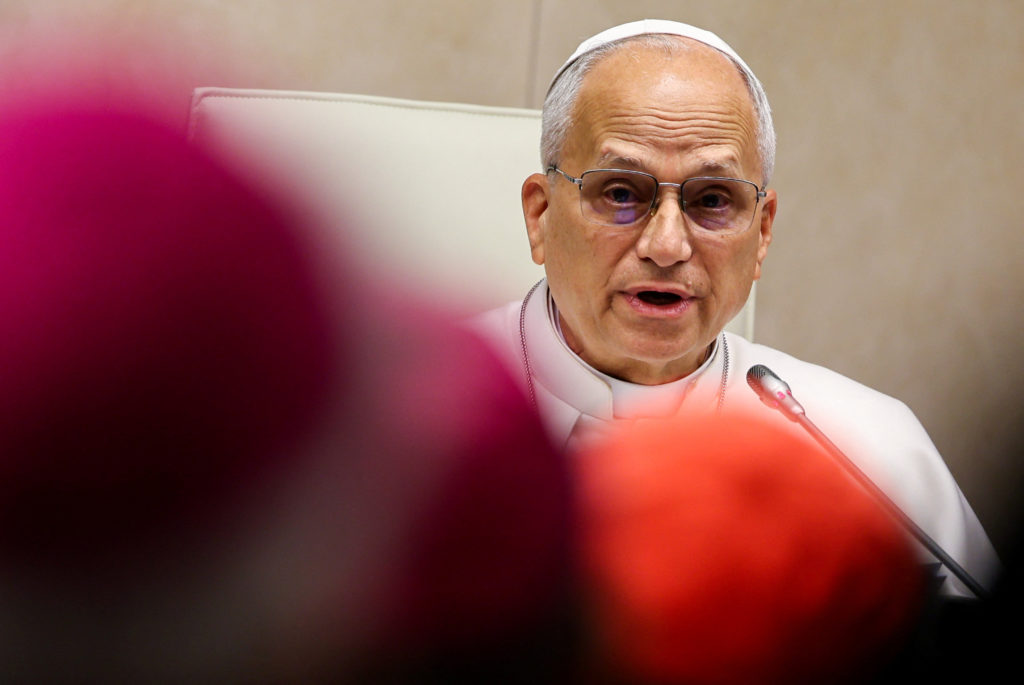
Pope Leo XIV has used an address to the Spanish parliament to warn the world is undergoing “a deep spiritual and cultural crisis” and to urge the international community to tackle the causes and consequences of what he termed “the tragic drama of migration”.
In a wide-ranging speech delivered to lawmakers in Madrid, the pontiff also touched on conflict, artificial intelligence, the climate emergency, and the issues of abortion and euthanasia.
Pope Leo XIV urged Spaniards on Saturday to stop "fanning the flames of polarization" as he arrived in Spain at a moment of political turmoil for the Socialist-led government and a credibility crisis for the Catholic Church.

 Login
Login