
Normal view

Draco: The Harshest Lawgiver of Ancient Athens

5 June 2026 at 08:11
Greece parthenon made by Greeks
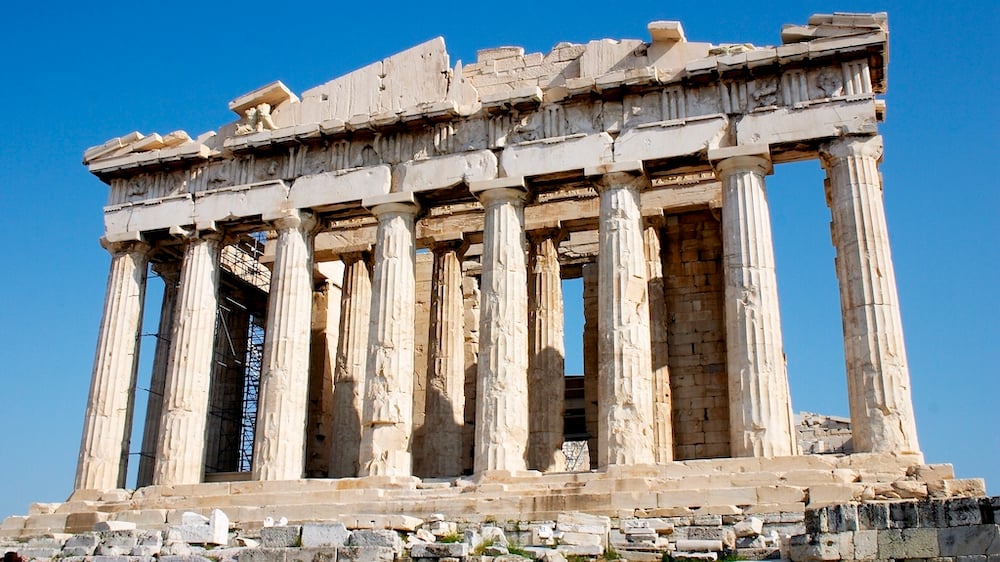
The Parthenon of Athens. Credit: Barcex/Wikimedia Commons/ CC BY-SA 3.0

Ancient Athens is renowned to this day as the birthplace of democracy and cradle of philosophical debate, but few know the story of the city state’s harshest lawgiver.

Draco, also spelled Drako or Drakon, was Athens’ first recorded democratic legislator. Draco was called upon by his fellow Athenian citizens to establish a comprehensive legal code for the city.

Many Athenians were surprised by the harshness of the laws introduced by Draco and baulked at the Draconian constitution that bore his name. Nevertheless, the Draconian constitution introduced several important innovations, namely the transition from oral laws to written laws.

Who was Draco?

Draco was an Athenian aristocrat born sometime during the 7th century BC. Despite his importance to the city’s history, Draco’s biographical details remain incredibly sketchy and little is known about his life beyond the laws that he imposed.

Indeed, as the historian Chis Carey points out in an academic paper published in The Cambridge Classical Journal, “Already for Greeks of the Classical period, Drakon was a shadowy figure. We get no patronymic, no biography; he simply emerges fully formed as a legislator.”

“He may be wholly or in part a fiction,” Carey continues. Crucially, however, Carey sees no reason to dispute the dates given by the ancient Athenians for the introduction of Draco’s laws between 624 and 620 BC.

So, whether or not Draco was a real individual, or perhaps a mythologized stand-in for a specific Athenian lawgiver or collective of legislators, the Draconian institution itself was introduced in the 7th century BC as recorded by the Athenians in the view of modern historians.

Draco’s new Athenian laws

Draco’s most important contribution as a legislator was the introduction of Athens’ first written constitution, the so-called “Draconian Constitution”.

This was an important legislative and legal innovation because the laws had previously been recorded orally. This meant that there was far too much room to arbitrarily interpret or apply the laws. A written system meant that the law was much fairer and more universally interpreted.

So that everyone would be made aware of the new laws – or at the very least, those who were literate – the laws were made visible in the city on wooden tablets called axones. These were presented on rotatable four-sided pyramids called kyrbeis.

One of Draco’s chief aims as a legislator was to bring an end to the blood feuds plaguing the city. He introduced laws that differentiated between homicides and accidental killings and specified punishments for each crime. The translations below provide some perspective:

  • “He who kills another Athenian, without a purpose or by accident, should be banished from Athens forever. If the killer apologizes to the family of the murdered man and the family accepts the apology, then the murderer may stay in Athens.”
  • “A relative of a murder victim, can hunt and take into custody the murderer and thus hand him to the authorities where he will be judged. If a relative kills the murderer he will not be allowed to enter the Athenian Forum (agora), or participate in competitions or set foot into sacred places…”

Athens’ harshest lawgiver?

As a lawgiver Draco was innovative and his changes made the legal system in Athens clearer and more consistent. However, his laws were also deemed to be excessively harsh and were subsequently repealed by Solon in the early 6th century BC.

Severe punishments were often dealt out for relatively minor crimes. For example, a thief might be sentenced to death for stealing a cabbage.

The lawgiver and his code also attracted infamy for its bias in favor of the elite over commoners in Athens. For instance, a debtor unable to honor his debts to a higher-class creditor could be sold into slavery, whereas punishments for higher-status individuals indebted to lower-status creditors were more lenient.

The English word “draconian”, meaning “excessively harsh” or “very severe” is derived from the Draconian Constitution, which is remembered for its severity.
Free Camping in Greece: Tourists Face €300 Fines and Possible Arrest

4 June 2026 at 19:01
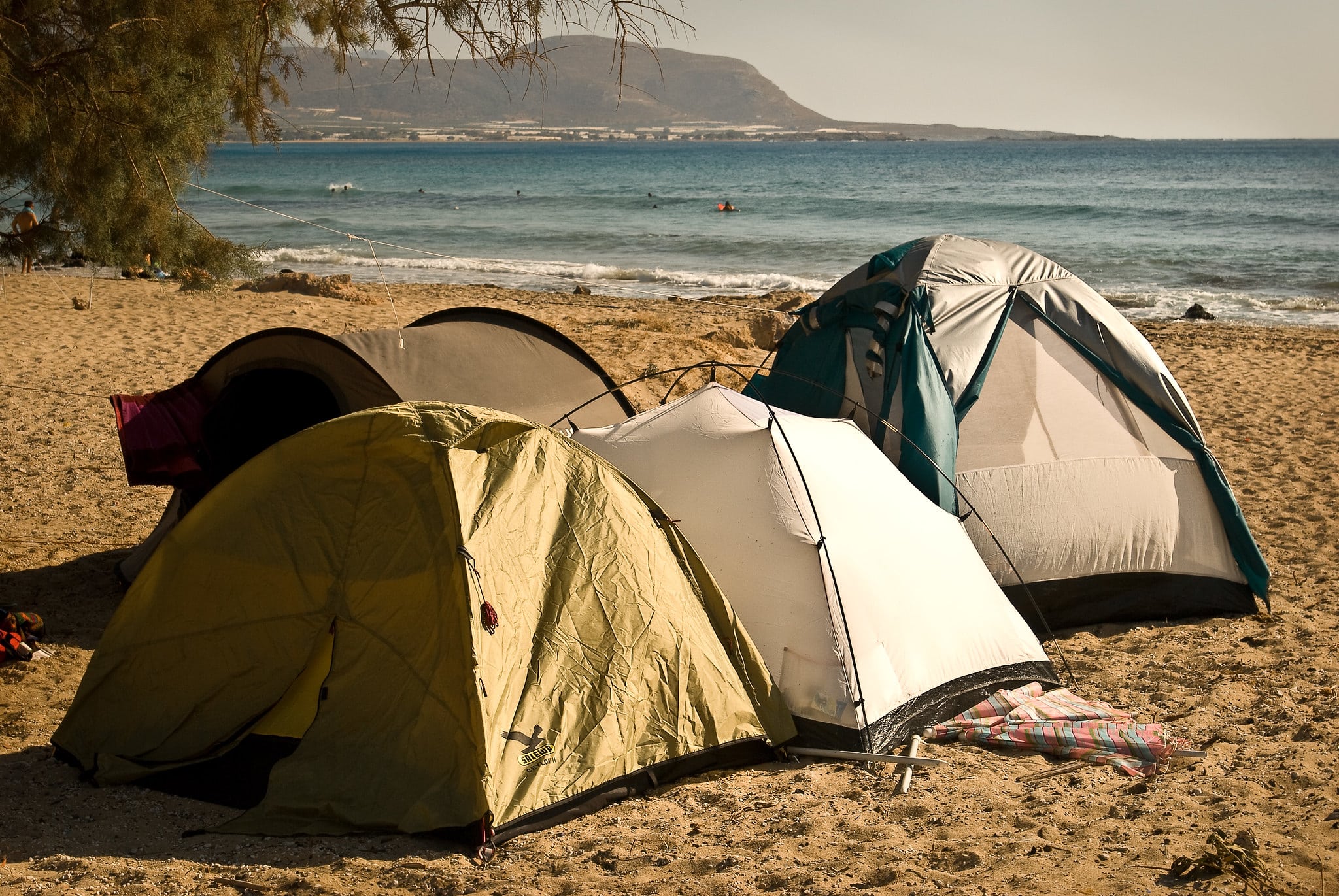
Tents set up for free camping on Falasarna beach in Crete, Greece.
Tents are seen on Falasarna beach in Crete. Free camping outside organized sites remains illegal in Greece and can lead to fines and criminal penalties. Credit: Flickr / Sergio Alvarez / CC BY NC SA 2

As the summer season begins, Greek authorities are stepping up checks on free camping, a practice that remains illegal outside organized sites and continues to spark debate across Greece.

For many travelers, pitching a tent near the sea is seen as an affordable and alternative way to enjoy the holidays, especially as the cost of living continues to put pressure on households. In Greece, however, camping outside licensed facilities remains prohibited and can lead to fines, criminal proceedings, and even jail time.

Free camping remains illegal outside organized sites in Greece

Under Law 392/1976, the installation of tents, the parking of caravans for overnight stays, and camping in general are banned on beaches, in forests, near archaeological sites, and in other public areas that are not officially designated for that purpose.

Greek law allows camping only in organized and licensed facilities, such as official campsites. Those who violate the rules may face administrative fines, while in certain cases authorities can also initiate criminal procedures, including arrest under the fast-track process.

A notable case occurred last summer at Thapsa beach in Evia, where the presence of hundreds of tents sparked strong reactions and led to intervention by local authorities. Campers were removed from the area, while surveillance and inspections were increased.

Fines reaches €300 per person, tent, or vehicle

Under the current rules, those caught free camping in Greece face an administrative fine of €300 ($348) per person, tent, or vehicle.

In more serious cases, offenders may also face criminal penalties. These can include imprisonment of up to six months or a court-imposed financial penalty. The total fine imposed by the courts can reach up to €3,000 ($3,488).

Skiathos arrests renew the debate

The issue resurfaced this week after authorities arrested two men for allegedly free camping on a beach in Skiathos on Monday afternoon.

According to local reports, the case drew further criticism because the campers had allegedly left waste in the surrounding area, showing disregard for other beachgoers and the local environment.

Similar incidents are reported from time to time across Greece, especially in areas where free camping has long been tolerated informally. In some destinations, a decades-old practice and an unofficial understanding between campers, local authorities, and local stakeholders have often existed alongside a legal framework that strictly prohibits the activity.

Supporters point to affordable and alternative tourism

Supporters of free camping argue that it offers a closer connection with nature and gives people a cheaper way to travel at a time when accommodation and holiday costs have risen sharply.

They also point to examples from other European countries, where more flexible systems allow responsible camping in open, non-organized spaces under specific conditions. According to this view, Greece could adopt a more regulated model that permits free camping in selected areas, provided strict environmental rules are followed.

Authorities warn of environmental risks from free camping in Greece

Authorities and environmental organizations, however, argue that uncontrolled camping can put serious pressure on natural areas.

Their concerns include the accumulation of waste, damage to sensitive ecosystems, and an increased risk of fires, especially during the summer months when Greece faces high temperatures and dry conditions.

They also note that the absence of organized infrastructure makes it difficult to manage large numbers of visitors in protected or remote areas. The lack of sanitation facilities, waste collection, fire protection measures, and supervision is often cited as one of the main reasons the Greek state continues to restrict free camping outside licensed sites.

Abortion Activists Supply Illegal Drugs in Malta, Violating National Law

31 May 2026 at 07:00

A Dutch pro-abortion organisation has placed lockboxes containing abortion pills across Malta and Gozo, directly challenging one of Europe’s last remaining pro-life countries. The campaign is being presented as a humanitarian intervention […]

The post Abortion Activists Supply Illegal Drugs in Malta, Violating National Law first appeared on The Expose.

❌