Normal view

The Lost Letters of the Greek Alphabet

6 June 2026 at 16:12
Ancient Greek vase with early Greek aphaber
Early Greek alphabet painted on the body of an Attic black-figure cup. Today, there are missing letters in the Greek alphabet. Credit: flickr / Dan Diffendale CC BY-SA 2.0

The Greek alphabet has changed in many ways over the course of its existence. This is hardly surprising, given that the Greeks have been using it for nearly three millennia. One way in which it has changed is that some letters that used to exist in the Greek alphabet are now missing. Which letters were these, and what do we know about them?

The first letters of the Greek alphabet

To start, let us establish how the Greek alphabet acquired its letters in the first place. According to ancient Greek historians, the Greeks adopted the Phoenician alphabet after the arrival of a Phoenician prince named Cadmus. Archaeology confirms that this occurred at some point in the ninth century BCE.

The Phoenician alphabet was composed of only consonants. When the Greeks adopted it, they modified it to include vowels as well. This was a major step forward in the development of writing.

According to Plutarch, a Greek historian of the first century CE, there were originally sixteen Greek letters. However, Hyginus, an earlier writer, reports that there were originally eighteen.

In reality, it appears that neither version is correct. Physical evidence in the form of ancient inscriptions reveals that the earliest Greek inscriptions made use of all twenty-two letters in the Phoenician alphabet. However, four of these were for sounds which did not exist in Greek, so they were modified into vowels.

Perhaps this is where Hyginus’ idea of eighteen original letters comes from, being a distorted memory of the eighteen original consonants. In any case, the total number of letters in the Greek alphabet increased over time.

Why are there some missing letters?

Some of the letters used in ancient Greek inscriptions are simply not in the modern Greek alphabet. Why is this? Simply put, the reason is that the Greek language itself has evolved over time, and the alphabet exists to comply to the needs of the language rather than vice versa.

Additionally, different dialects of the Greek language existed within the Greek world at the same time. Therefore, the needs of each dialect would not necessarily be covered by the same letters.

In the late fifth century BCE, the alphabet used by the Ionian Greeks became the official, standardized alphabet of Athens. Over the following century, it then replaced the local alphabets of other Greek regions. By that time, the dialect of the Ionian Greeks was such that their alphabet did not make use of all the letters that had once been in use. Rather, their alphabet used just twenty-four letters. Hence, what were the letters that the Greek alphabet used to have but no longer does?

Digamma

One of the most famous lost letters of the Greek alphabet is Digamma. This had the following form:

Ϝ

It is superficially very similar to the modern F, but the sound was completely different. It was essentially the modern w sound. In fact, the original name for this letter was ‘wau’, taken directly from the Phoenician name for this letter.

San

Another lost letter is San. This had the following form:

Ϻ

Like Digamma, this looks almost identical to a more familiar letter. In this case, it looks just like the modern letter M. However, like with Digamma, the sound indicated by this ancient letter was completely different. Unlike the modern M, the ancient San, or Ϻ, was used to indicate an s sound. This fell out of use in favor of the alternative letter Sigma, written as Σ.

Koppa

Another letter that is no longer in use is Koppa, which had the following written form:

Ϙ

This is similar to the modern Q in the English alphabet, and that is no coincidence. Koppa was still part of the Greek alphabet when the Latins adopted it, which led to this letter eventually becoming the Q in English. The English alphabet originated from the Romans. The sound Koppa indicated was a k sound. It eventually fell out of favor in Greek, being replaced by the alternative letter Kappa, written as Κ.

Sampi

This next letter is called Sampi. It was written as:

Ͳ

This is very similar to the modern T, but it is unrelated. That modern letter comes from the ancient Greek Tau which, of course, had a t sound. In contrast, the ancient Greek Sampi had some kind of s or sh sound, although the exact vocalization is unknown. In any case, it fell out of favor when this sound was no longer used.

Did the Ancient Greeks Name Britain’s Isles of Scilly?

4 June 2026 at 12:14
Satellite photo of the Isles of Scilly
Satellite photo of the Isles of Scilly. Credit: NASA, public domain

The Isles of Scilly are a group of islands off the southwest tip of Britain. The origin of their name has been a mystery for centuries, but one historian believes that he has now discovered the answer. According to Professor Andrew Breeze, the name of the Isles of Scilly comes from Greek. What does the name mean, and what did the ancient Greeks have to do with this group of islands near Britain?

What are the Isles of Scilly?

First, let’s clarify what exactly the Isles of Scilly are. They form a small archipelago off the southernmost tip of Britain, near the southwestern county of Cornwall. There are five inhabited islands and about 140 small rocks and islets.

Historians know very little about the early history of the islands. Something that many investigators agree on, though, is that these islands originally formed just a few larger islands, or possibly even just a single main island and a few outliers.

Speculation abounds as to whether or not these were the Cassiterides, a group of islands mentioned by ancient Greek and Roman texts. These texts refer to the Cassiterides as a group of islands in the Atlantic Ocean from which traders acquired tin.

Since the Isles of Scilly are near Cornwall, which is known for being a source of tin in the ancient world, this suggests that the Isles of Scilly might have been the Cassiterides. Nevertheless, there is no universal consensus about this.

The Greek name of the Isles of Scilly

For centuries, there has been speculation as to the true origin of the name of these islands. However, recent research by Andrew Breeze, a professor of philology at the University of Navarra, may have cleared up the issue. According to Dr Breeze, the name of the Isles of Scilly likely derives from Greek.

The earliest attested form of the name of these islands is ‘Silimnus’. This is probably a mistake for ‘Silinnus’. Other early attested forms are ‘Sillinas’ and ‘Sylina’. Based on these attested forms, Breeze argues that the origin of this place name comes from ‘syle’. This is a Greek word referring to robbery, seizure, or plunder.

Breeze argues that the ending is the Greek suffix ‘ina’, meaning ‘pertaining to’. In other words, this theory proposes that the name of these islands refers to the fact that they were a haunt of pirates and plunder.

Supporting evidence for this theory

At first glance, it might seem implausible to suggest that the Isles of Scilly could have a name with a Greek origin. After all, they were in the territory of the ancient Celts, far from the Greeks. What could the Greeks have had to do with the Isles of Scilly?

Numerous ancient records and archaeological finds demonstrate that the inhabitants of the ancient Mediterranean regularly visited Cornwall. This was a major source of tin, which was necessary to make bronze. This trade route existed for well over 1000 years. Hundreds of Greek coins have been found in Britain, most of them in the south.

There is no doubt that the Greeks had a significant presence in this area before the Roman era of Britain. The name ‘Sylina’ and its variants only appear after this. Therefore, an ancient Greek origin for the name of the Isles of Scilly is plausible.

Furthermore, Breeze highlights records from the medieval and early modern periods to support his theory. These show that the Isles of Scilly were infamous for piracy. Shipwrecks were also common, after which the ship’s cargo would be plundered. Therefore, it is understandable to see how such an area would come to be known as the ‘place of plunder’.

Does this theory stand up to scrutiny?

Since Andrew Breeze’s theory was published only recently, there has been very little response to it so far among historians and etymologists. However, we can readily make a few observations.

As Breeze himself notes, if his theory is correct, it would be the only known example of an ancient place name in Britain having a Greek origin. This, from the start, should raise our suspicions.

Furthermore, the evidence that Breeze uses to associate the Isles of Scilly with piracy and plunder comes from the medieval and early modern periods. Needless to say, this is long after the name of these islands first appears in the records.

Admittedly, though, the reason why these islands were so closely associated with piracy and plunder appears to be primarily a question of geography. For this reason, it may be reasonable to assume that this had been the case for as long as there was shipping in the area.

We know for a fact that it was always a very popular and important source of tin. Hence, there would indeed have been lots of shipping in that area from long before the Roman era of Britain. Therefore, it is likely that shipwrecks and plunder, if not piracy, were just as common back then as they were in later periods.

Is a Greek origin the only possible explanation for the Isles of Scilly?

There is, however, at least one more objection. This is the fact that another suggested etymology exists. This suggestion connects the name ‘Sylina’ to ‘Sulis’, the name of a Celtic god.

Some etymologists have pointed out that this origin would satisfy the attested medieval Cornish form of the name of these islands. However, it would not easily explain the ancient form, which is never written ‘Sul-‘, but always ‘Sil-‘ or ‘Syl-‘.

In conclusion, does the name of the Isles of Scilly really have a Greek origin? Andrew Breeze offers a theory which is surely as plausible as any yet proposed. While there are some valid objections to it, none of them are insurmountable.

Tearko: The Ethiopian King of Ancient Egypt Who Conquered Anatolia

3 June 2026 at 21:05
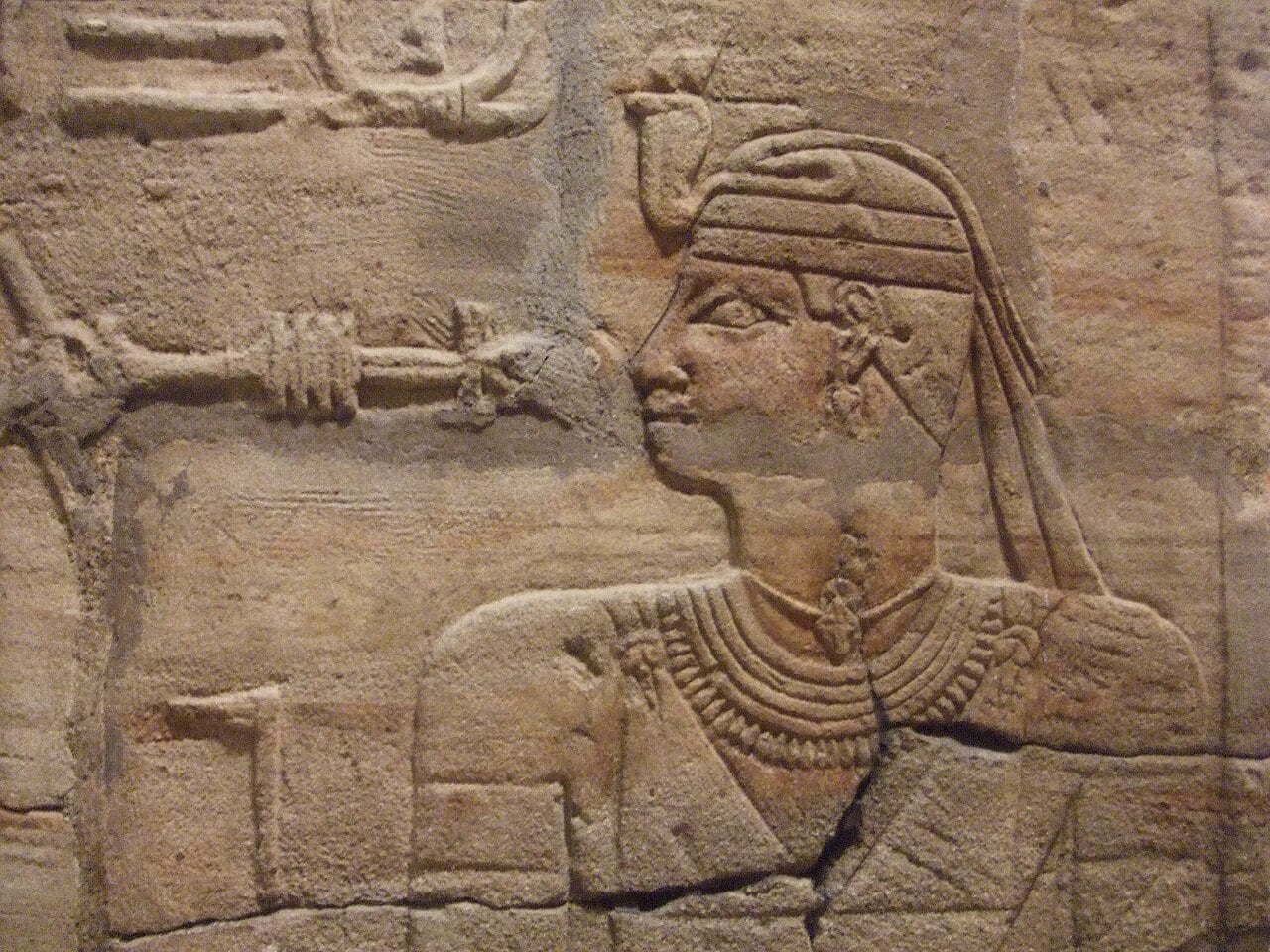
A relief depicting the Ethiopian king of Egypt Taharqa from Kawa, Nubia
A relief depicting the Ethiopian king of Egypt Taharqa from Kawa, Nubia. Credit: Wikimedia Commons, CC-BY-2.0, Aidan McRae Thomson

For some time, Ancient Egypt was ruled by a dynasty of Ethiopian kings. According to legend, one of them was so powerful that he conquered Anatolia, across the Mediterranean from Egypt. Could such a conquest have really occurred, and if not, then what led to this legend of an Ethiopian king of Egypt who was said to have conquered Anatolia?

Strabo’s legend of the Ethiopian king of Egypt who conquered Anatolia

The source for this legend comes from one particular document. This is Strabo’s Geography, written in the first century BC. Strabo mentions a particularly notable Ethiopian king twice. In the first instance, he mentions him alongside other notable conquerors of the ancient world, writing:

“Nor yet for the most part are the expeditions of their chiefs, for instance, Madys the Scythian, Tearko the Ethiopian, Cobus of Trerus, Sesostris and Psammeticus the Egyptians.”

Without going into details, the context of this reference makes it clear that Tearko the Ethiopian was supposed to have set out on a major expedition or conquest. He is grouped together with other famous conquerors of antiquity, such as Sesostris.

The next mention of Tearko provides additional information. Here, Strabo calls him “Tearco.” Referring to the claims of an earlier historian called Megasthenes, he wrote:

“Sesostris, the Aegyptian, he adds, and Tearco the Aethiopian advanced as far as Europe; and Nabocodrosor, who enjoyed greater repute among the Chaldaeans than Heracles, led an army even as far as the Pillars. Thus far, he says, also Tearco went; and Sesostris also led his army from Iberia to Thrace and the Pontus.”

According to this legend, Tearco the Ethiopian conquered as far as the Pillars, meaning the Pillars of Hercules. However, how is this associated with Anatolia, and why have we called this Ethiopian ruler a king of Egypt?

Who was Tearco the Ethiopian?

To understand the answer to these questions, we first need to understand who Tearco actually was. It is necessary to take a look at the context in which Strabo places him. In the first reference to him, Strabo grouped him together with figures such as Madys the Scythian, known to modern historians as Madyes, his contemporary king Cobus, and Psammeticus of Egypt. These were figures of the seventh century BC.

In the second reference to Tearco, Strabo groups him together with Nabocodrosor of the Chaldaeans, known to historians as Nebuchadnezzar of Babylon, and Sesostris of Egypt, probably the historical Shebitku. These were also figures of that same era. Furthermore, immediately after the quoted passage, Strabo mentions Idanthyrsus, a Scythian king of the sixth century BC.

Therefore, based on the context in which Tearco is mentioned, it is obvious that we should be looking for an Ethiopian king who ruled at some point within that same era. For this reason, the mainstream conclusion among scholars is that Strabo’s Tearco is the historical Taharqa.

Taharqa was a member of the Ethiopian dynasty that ruled Egypt for much of the eighth and seventh centuries BC. Chronologically, he fits in perfectly with the other figures mentioned by Strabo, and his name is a linguistic match as well. We know, historically, that Taharqa became the ruler of Egypt, despite Strabo making no mention of this fact.

A bust of Taharqa from the Nubian Museum, Aswan
A bust of Taharqa from the Nubian Museum, Aswan. Credit: Wikimedia Commons, CC-BY-2.0, Bruce Allardice

Understanding the legend

Now that it’s clear who Strabo was referencing, let us see if we can actually understand Strabo’s claim. It is easy to be confused by the reference to Tearco conquering as far as the Pillars. It might seem like Tearco was said to have conquered as far as Spain. After all, the Strait of Gibraltar is the standard location of the Pillars of Hercules.

For a king of Egypt, this might appear to make sense in the context of an exaggerated tale. It would mean that Tearco warred across the coast of North Africa until finally reaching the Strait of Gibraltar. However, this is illogical in the context of Strabo’s passage. As the quoted passage shows, Strabo states that both Nebuchadnezzar and Tearco reached the Pillars.

Given the reference to Nebuchadnezzar, Strabo may be referring to pillars that, according to Isocrates, were situated near the entrance of the Black Sea, at Troy, rather than the actual Pillars of Hercules at Gibraltar. While Nebuchadnezzar never historically got as far as Troy, he did conquer parts of Anatolia.

Furthermore, Strabo associates the event with Sesostris’ campaigns as far as Thrace and the Pontus (the Black Sea). This reinforces the point that Strabo was referring to pillars by the entrance to the Black Sea rather than the Pillars at the Strait of Gibraltar. Incidentally, the reference to Iberia in association with Sesostris must point to the Caucasian Iberia, as it is often called by modern historians, on the eastern end of the Black Sea region.

Conclusively, Tearco the Ethiopian, the historical Taharqa king of Egypt, was said to have conquered all across the Levant and right through Anatolia.

Is the legend of the Ethiopian king who conquered Anatolia actually true?

If an Ethiopian king of Egypt really did conquer Anatolia, we would definitely know about it. There would have been clear references to such an event in archaeological records. Nevertheless, that does not mean that this legend has no identifiable historical basis.

It is clear that the legend is not simply based on exaggerated accounts of Taharqa’s historical conquests. The reason is that Taharqa was, in reality, not a notable conqueror. Plenty of kings of Egypt engaged in far more impressive conquests than he ever did, yet no legends ever centered around them. Therefore, the true explanation must be something unique in his case.

The Bible provides the answer. In its account of Sennacherib of Assyria waging war against Jerusalem, the Bible mentions Taharqa. Using the spelling “Tirhakah,” it describes how this Ethiopian king went out to fight against Sennacherib. Historically, Taharqa was unable to secure a victory.

Nevertheless, we know that the Egyptians remembered it as a victory. Herodotus, in the fifth century BC, recorded an Egyptian legend about a king of Egypt named Sethos who successfully defeated the Assyrians. Scholars generally understand Sethos to be Shebitku. It appears that Shebitku was the senior king at the time of Sennacherib’s attack, with Taharqa as the junior king. Shebitku was the king of Egypt, while his relative Taharqa was the king of Ethiopia and the one who actually led the army against the Assyrians.

Hence, what appears to have occurred is that the Egyptians remembered the attack as a victory, regardless of the historical outcome. It was then exaggerated into tales of Tearco actually conquering the Assyrians. Since their territory extended far into Anatolia, this naturally led to the legend of Tearco, an Ethiopian king of Egypt, conquering as far away as Anatolia.

Greek Mythology’s Mysterious Eridanos River May Point to a Real Place in Europe

3 June 2026 at 16:32
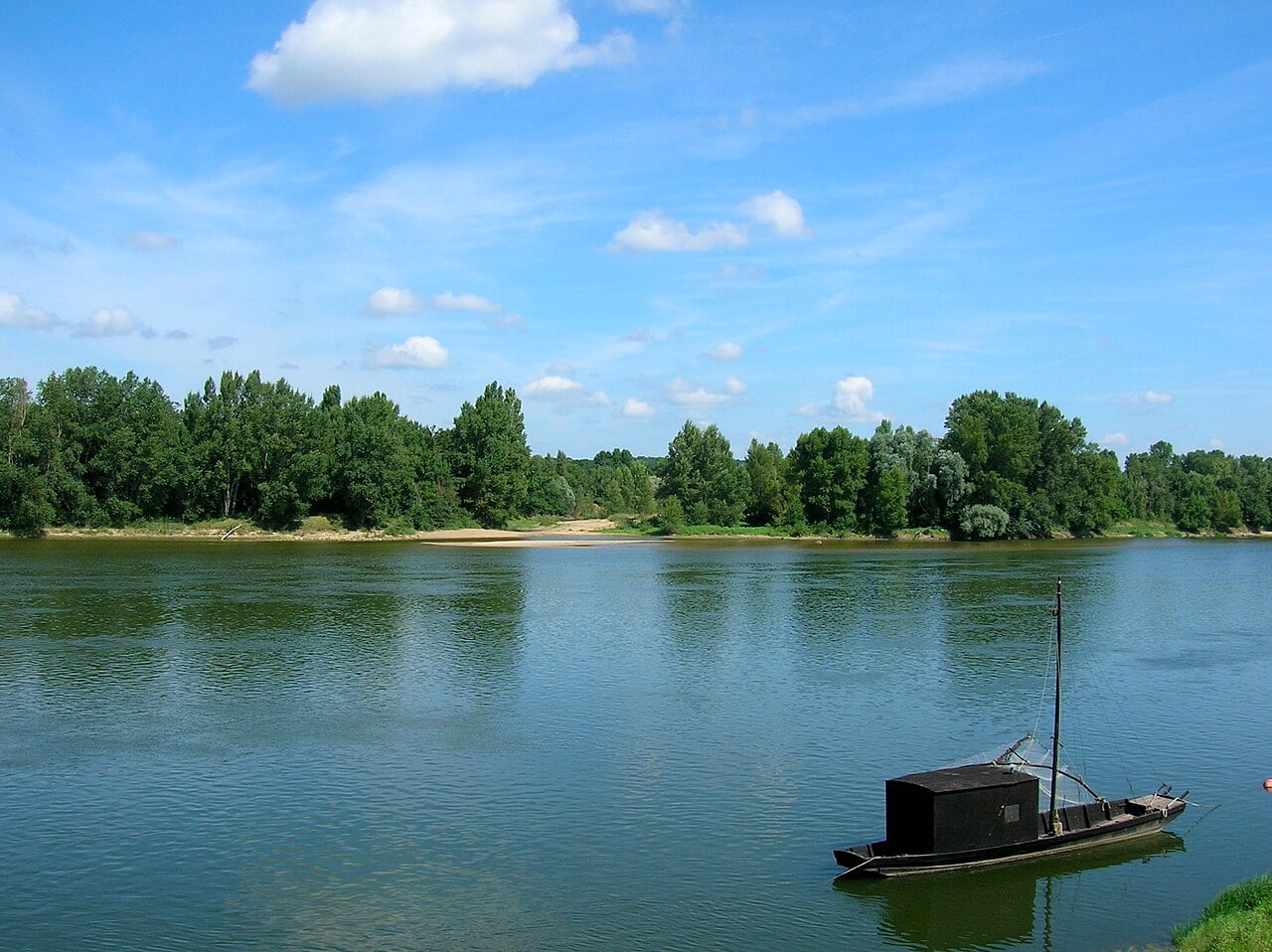
The Loire River, likely part of the Eridanos River of Greek mythology
The Loire River, likely part of the Eridanos River of Greek mythology. Credit: Wikimedia Commons, CC-BY-SA 3.0, LPLT

The Eridanos River of Greek mythology is a mysterious river whose location has long been debated. Numerous real-world rivers around Europe have been suggested, but some scholars believe it is completely mythical and corresponds to no real-world location. Nevertheless, some may wonder where this river might actually be situated.

The Eridanos River of Greek mythology

To try to understand which real-world river it might correspond to, we first need to look at what ancient sources say about it. The Eridanos River is most famous for its connection with Phaethon and amber. In the relevant legend, it’s the river into which Phaethon crashes after he steals the chariot of the sun god.

Phaethon’s sisters, the Heliades, grieved the loss of their brother, and the gods transformed them into poplar trees. These trees, in turn, supposedly produced amber for which the river was well known. Numerous scholars have attempted to use this information to identify this body of water.

Furthermore, we know that the Eridanos River cannot have been an obscure, minor river. Hesiod mentions it in his list of the offspring of Oceanus. Eridanos appears first in the list, and Hesiod even calls it “deep-swirling,” which is an expression normally reserved for the great Oceanus itself.

Where was the Eridanos River?

With these facts in mind, what have scholars argued about the location of this river? Well, one popular candidate is the Vistula River, since this flows through Poland and leads to the Baltic Sea. This was a major source of amber in the ancient world, and this fits the criterion of the Eridanos River being a source of amber.

Furthermore, Herodotus associates the Eridanos River with a certain “northern sea.” Since the Baltic Sea is to the north of Greece, it could fit Herodotus’ description. However, another popular candidate is the Po River, which flows through northern Italy and enters the Adriatic Sea. In fact, several ancient sources explicitly identify the Eridanos with this real river. At first, that might seem to settle the matter. However, it’s more complicated than that.

A closer look at Herodotus’ description

Herodotus, in the fifth century BC, was not the first person to mention the Eridanos River. As we saw earlier, that was Hesiod. However, he does seem to provide the earliest useful description of it. His description reads:

“As to the extremities of Europe towards the West, I am not able to speak with certainty: for neither do I accept the tale that there is a river called in Barbarian tongue Eridanos, flowing into the sea which lies towards the North Wind, whence it is said that amber comes; nor do I know of the real existence of the Cassiterides from which tin comes to us… However that may be, tin and amber certainly come to us from the extremity of Europe.”

As we can see from this description, the Eridanos River was explicitly said to flow into the sea which lies towards the North Wind, and Herodotus refers to this region as the “extremity of Europe”. This definitively rules out the Po River, which flows into the Adriatic Sea near Greece itself.

Does this mean that the Vistula River is the most likely candidate? At first, that might seem to match Herodotus’ reference to the “extremity of Europe” and the fact that the river flowed into the sea towards the North Wind. However, that does not work either. Herodotus prefaces this passage by referring to the “extremities of Europe towards the West”.

Since the Vistula and the Baltic Sea are essentially directly north of Greece, this does not match this aspect of Herodotus’ description.

Jason and the Argonauts

Jason and the Argonauts Disembark at Colchis, Charles de La Fosse, 1672
Jason and the Argonauts disembark at Colchis, Charles de La Fosse, 1672. Credit: Wikimedia Commons, CC-BY-SA 3.0

The Argonautica, by Apollonius Rhodius of the third century BC, reveals the answer to this conundrum. Although it contains some fictional geography, it is clear about where the Eridanos River was supposedly situated, and this aligns perfectly with Herodotus’ description.

According to Apollonius, Jason and the Argonauts sail from the Black Sea through the Danube and then reached the Adriatic Sea via a fictional channel between the two. They then sail up into the Eridanos River, actually signifying the Po River in this context. Eventually, they make it to the Rhodanus River, or the Rhone as it is known today, a body of water which flows through France relatively close to the Po River source and then spills into the the Mediterranean Sea on the country’s southern coast.

This is significant because it demonstrates that the Greeks believed the Po and the Rhone were connected. In fact, other ancient texts attest to this same belief. Consequently, this means Apollonius is presenting the Rhone as part of the Eridanus River.

How the Argonautica reveals the true location of the Eridanos River

At this point in the Argonautica, the true nature of the Eridanos River is made clear. Apollonius writes:

“Thence they entered the deep stream of Rhodanus which flows into Eridanus; and where they meet there is a roar of mingling waters. Now that river, rising from the ends of the earth, where are the portals and mansions of Night, on one side bursts forth upon the beach of Ocean, at another pours into the Ionian Sea, and on the third through seven mouths sends its stream to the Sardinian sea and its limitless bay.”

Apollonius refers to the Eridanos River as having three mouths. One arm of the river flows into the Ionian Sea, which is an ancient reference to the Adriatic Sea. That is the arm of the river that Jason and the Argonauts have just been described as sailing up. Another one of the arms of the river is said to flow into the Sardinian Sea. That would be the Rhone, in accordance with Apollonius who explicitly presents the Rhodanus (the Rhone) as part of the Eridanos.

The third arm is the final piece of the puzzle. According to Apollonius, it flows into the “beach of Ocean.” Incidentally, this matches Herodotus’s description of the Eridanos flowing into the sea on the other side of Europe, which doesn’t match the Rhone nor the Po. The notable point is that this shows that the Ancient Greeks believed the Po, the Rhone, and a third river were all part of one enormous waterway in Europe, which they referred to as the Eridanos.

What was the third arm of the Eridanos River?

A few lines later, Apollonius refers to the mouth of the river in the southern part of France as the middle of the three mouths of the Eridanos. With the Po River having the mouth closest to Greece, and the Rhone having the intermediate one, the third mouth must have been even further west. This, again, is in harmony with Herodotus’ description, which associated the Eridanos with the western extremity of Europe.

Based on this, the only plausible candidate for the third arm of the Eridanos River is the Loire. This is a river whose mouth is further west than the mouth of the Rhone. It flows out into the Atlantic Ocean on the western side of France and is located towards the north—another detail of Herodotus to keep in mind. Furthermore, it flows quite close to the Rhone near its source, making sense of the belief that they were connected.

In summary, it appears that the Greeks imagined the Loire, the Rhone, and the Po Rivers to all be connected. The Greeks received their amber via the Po River, since it was the final part of the Amber Road which originated in the Baltic Sea. However, they believed that the Po was connected to the Loire.

This perfectly matches up with Herodotus’ description of the Eridanos River in its entirety. As we saw, he claimed it flowed into the sea on the other side of Europe and associated it particularly with the north and the west, which points to the Loire.

❌