From Japanese mountains cloaked in cherry blossoms to Icelandic valleys under midnight sun, these 15 destinations transform so dramatically across seasons they almost seem like different places
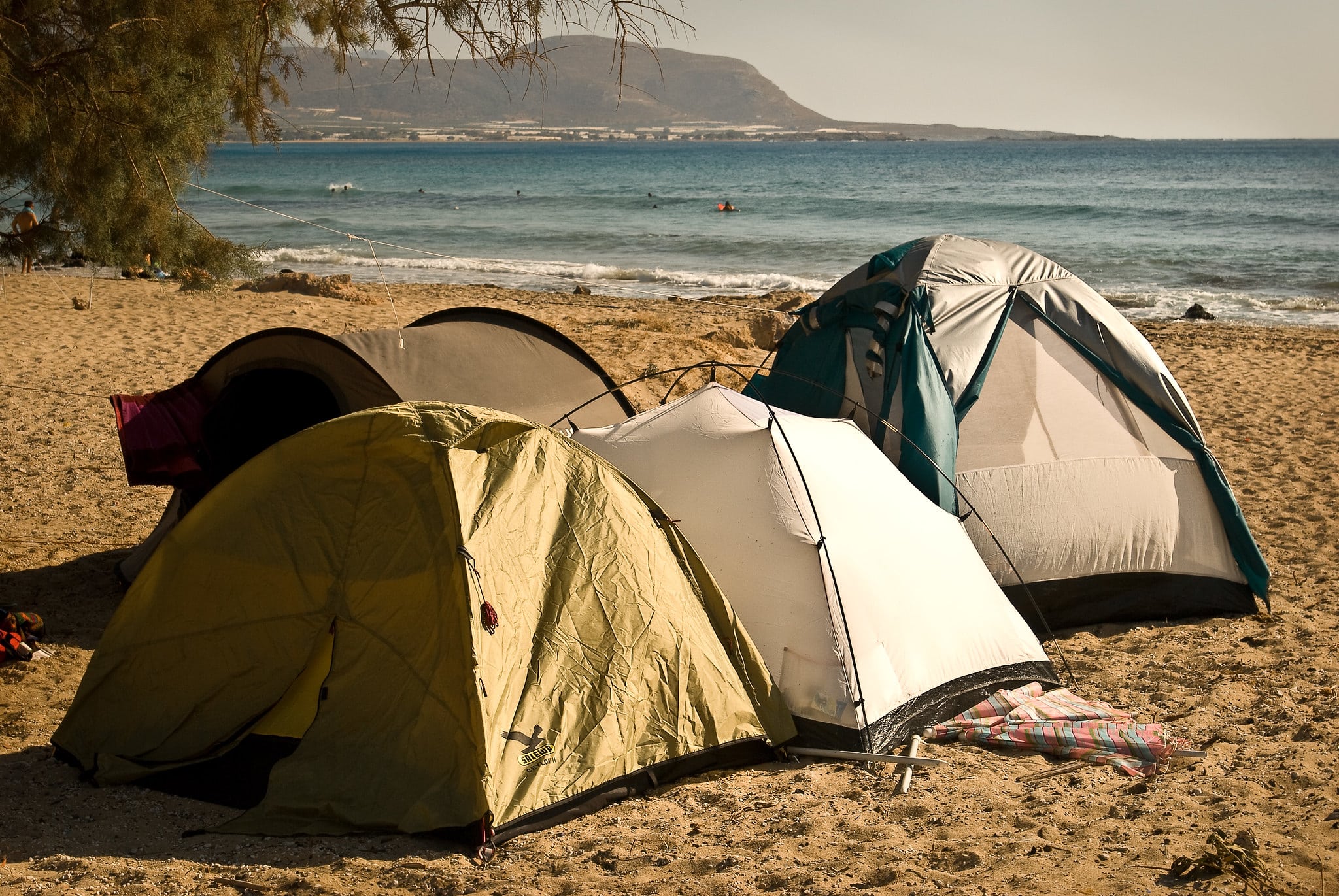
Tents are seen on Falasarna beach in Crete. Free camping outside organized sites remains illegal in Greece and can lead to fines and criminal penalties. Credit: Flickr / Sergio Alvarez / CC BY NC SA 2
As the summer season begins, Greek authorities are stepping up checks on free camping, a practice that remains illegal outside organized sites and continues to spark debate across Greece.
For many travelers, pitching a tent near the sea is seen as an affordable and alternative way to enjoy the holidays, especially as the cost of living continues to put pressure on households. In Greece, however, camping outside licensed facilities remains prohibited and can lead to fines, criminal proceedings, and even jail time.
Free camping remains illegal outside organized sites in Greece
Under Law 392/1976, the installation of tents, the parking of caravans for overnight stays, and camping in general are banned on beaches, in forests, near archaeological sites, and in other public areas that are not officially designated for that purpose.
Greek law allows camping only in organized and licensed facilities, such as official campsites. Those who violate the rules may face administrative fines, while in certain cases authorities can also initiate criminal procedures, including arrest under the fast-track process.
A notable case occurred last summer at Thapsa beach in Evia, where the presence of hundreds of tents sparked strong reactions and led to intervention by local authorities. Campers were removed from the area, while surveillance and inspections were increased.
Fines reaches €300 per person, tent, or vehicle
Under the current rules, those caught free camping in Greece face an administrative fine of €300 ($348) per person, tent, or vehicle.
In more serious cases, offenders may also face criminal penalties. These can include imprisonment of up to six months or a court-imposed financial penalty. The total fine imposed by the courts can reach up to €3,000 ($3,488).
Skiathos arrests renew the debate
The issue resurfaced this week after authorities arrested two men for allegedly free camping on a beach in Skiathos on Monday afternoon.
According to local reports, the case drew further criticism because the campers had allegedly left waste in the surrounding area, showing disregard for other beachgoers and the local environment.
Similar incidents are reported from time to time across Greece, especially in areas where free camping has long been tolerated informally. In some destinations, a decades-old practice and an unofficial understanding between campers, local authorities, and local stakeholders have often existed alongside a legal framework that strictly prohibits the activity.
Supporters point to affordable and alternative tourism
Supporters of free camping argue that it offers a closer connection with nature and gives people a cheaper way to travel at a time when accommodation and holiday costs have risen sharply.
They also point to examples from other European countries, where more flexible systems allow responsible camping in open, non-organized spaces under specific conditions. According to this view, Greece could adopt a more regulated model that permits free camping in selected areas, provided strict environmental rules are followed.
Authorities warn of environmental risks from free camping in Greece
Authorities and environmental organizations, however, argue that uncontrolled camping can put serious pressure on natural areas.
Their concerns include the accumulation of waste, damage to sensitive ecosystems, and an increased risk of fires, especially during the summer months when Greece faces high temperatures and dry conditions.
They also note that the absence of organized infrastructure makes it difficult to manage large numbers of visitors in protected or remote areas. The lack of sanitation facilities, waste collection, fire protection measures, and supervision is often cited as one of the main reasons the Greek state continues to restrict free camping outside licensed sites.
The new motorhome framework finally distinguishes between “overnight parking” and “active camping.” Credit: ELAT
Following a controversial crackdown in Greece last year that effectively barred motorhomes from public spaces, a new legislative intervention is welcoming them across the country once again.
The shift marks a major turning point for nomadic travelers. In May 2025, Greece introduced a strict law that banned caravan and motorhome parking in all public spaces outside of officially designated campsites. Aimed at curbing illegal wild camping and protecting local coastal environments, the blanket ban sparked immense backlash. Travelers and tourism boards argued it was overly punitive, treating responsible motorhome owners, who contribute significantly to local economies, the same as illegal campers.
Recognizing the strain the 2025 law placed on road tourism, the Greek government has introduced a balanced intervention. The new framework finally distinguishes between “overnight parking” and “active camping.” Under the updated 2026 rules, motorhomes are permitted to park in public spaces just like standard passenger vehicles, provided they do not deploy awnings, tables, or outdoor gear.
To support this re-entry, Greece is greenlighting the development of municipal “Camper Stops”—dedicated, short-stay parking zones equipped with waste disposal and water refills, an infrastructure standard common throughout Western Europe. By pivoting from a total ban to regulated integration, Greece aims to protect its natural landscapes while tapping back into Europe’s lucrative, year-round road tourism market.
Understanding the regulatory shift on motorhomes in Greece
The transition from the 2025 crackdown to the 2026 resolution highlights a major evolution in how Greece views road tourism. Under the previous year’s restrictions, any public overnight stay in a motorhome was met with high fines and a total prohibition, forcing travelers exclusively into traditional, often crowded campsites.
The new framework resolves this friction by legally treating motorhomes as regular vehicles for standard parking purposes. Wild camping is now strictly defined and is forbidden only if outdoor gear is deployed, allowing travelers to rest peacefully overnight without fear of fines. Furthermore, instead of relying solely on traditional campsites, Greece is rolling out automated, short-stay municipal “Camper Stops” to seamlessly accommodate modern nomads.
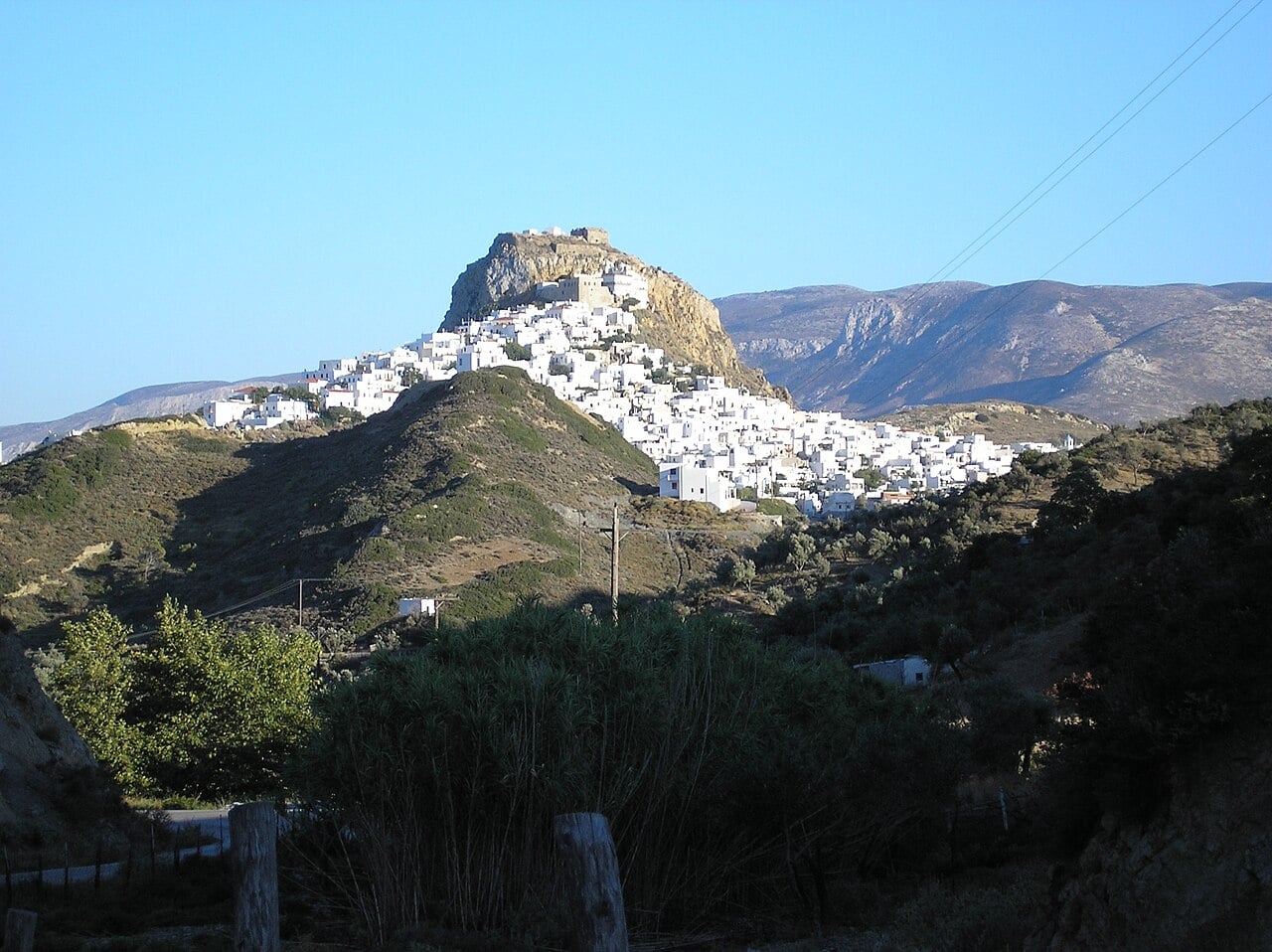
The Chora on Skyros island is a postcard-perfect labyrinth of whitewashed homes. Credit: Public Domain
One of the most fascinating aspects of island architecture in Greece is the “Chora” (Χώρα), which literally means “main town” or “capital.” On almost every Aegean island, you will find it perched precariously on a jagged mountain peak, cliffside, or steep hilltop, miles away from the main port.
Today, these towns are postcard-perfect labyrinths of whitewashed houses, but their dramatic locations were originally born entirely out of fear, survival, and defensive strategy.
Why was a Chora on the islands of Greece built on a hilltop?
Between the 7th and 18th centuries, the Aegean Sea was a terrifying place to live. It was heavily plagued by piracy, notably by Saracens, Venetians, Genovese, and later Ottomans, who raided coastal villages for loot and slaves. Building on high ground served several genius military purposes:
Early Warning System: High vantage points allowed islanders to scan the horizon and spot approaching enemy sails hours before they hit the shore, allowing locals time to prepare or hide.
The “Invisible” Town: Throughout the islands of Greece, many areas that functioned as a Chora were built tucked slightly behind a ridge facing away from the sea. From a pirate ship on the water, the natural stone and tightly packed white houses blended into the landscape, making the island look completely uninhabited.
Fortress Architecture (Kastro): The houses themselves were built as defense walls. They were tightly packed together with tiny, maze-like alleys, dead ends, and steep steps designed to disorient and trap invaders who managed to break through.
The Venetian Castle: Often, the very peak of the Chora features a Kastro (castle), built during Venetian rule. If pirates breached the town, the entire population would retreat into this central fortified citadel for a final stand.
Spectacular examples of Greece’s Choras in the Aegean
1. Folegandros: The Sheer Cliffside Drop
Chora, Folegandros Island, Greece. Credit: Wikimedia Commons / Etienne Dallaire / CC BY 4-0
Folegandros in the Cyclades boasts a Chora that is absolutely amongst the most jaw-dropping in Greece. Part of the settlement, specifically the oldest medieval quarter, called the Kastro, is built directly on the edge of a vertical cliff that plunges 200 meters (650 feet) straight down into the Aegean. The outer walls of the houses form the defensive perimeter, meaning a window at the back of a house opens directly into an abyss. From the town, a famous, majestic zigzagging stone path leads further up the spine of the mountain to the white Church of Panagia.
2. Astypalaia: The Crowned Amphitheater
Greece’s Astypalaia has been named the world’s best destination for 2026. Credit: Flickr / Soulape / CC BY ND 2
Shaped like a butterfly, the island of Astypalaia bridges the Cyclades and the Dodecanese. Its Chora is a brilliant white hill of cubic houses that ascends like an ancient amphitheater. The absolute summit is crowned by the dark, volcanic stone of the Querini Castle, built by the Venetians in the 13th century. The striking contrast between the pitch-black stone castle and the blinding white homes wrapping around it makes it one of the most architecturally dramatic sights in Greece.
3. Amorgos: The Invisible Mountain Hideout
The Chora on Amorgos. Credit: Public Domain
Amorgos’ Chora is the quintessential example of an “invisible” town. It is completely hidden from the sea, nestled in a rocky mountain saddle 350 meters above sea level (about 1,150 ft). Dominated by a massive rock central spire topped with a 13th-century castle, the town is a dense maze of alleys designed to cut the fierce Aegean winds. Just outside the main town cluster, a stark ridge line is punctuated by a row of historic, abandoned stone windmills, highlighting just how exposed and elevated this sanctuary truly is.
4. Kea (Tzia): The Ancient Inland Capital
The island of Kea (also Tzia), Greece, Credit: Wikimedia Commons, Michael Paraskevas CC BY SA 3-0
Unlike most Cycladic islands Choras were established in the Middle Ages, the Chora of Kea, known as Ioulis, has stood in the exact same mountainous mountain saddle since the Archaic period. Because it is built on a lush, spring-fed mountain, Ioulis breaks the “blinding white” stereotype. It features traditional clay tile-roofed houses, steep stairways, and historic stone arches (stegadia) that tunnel underneath the buildings.
5. Skyros: The Secret Village of “Pirate Alleys”
The Greek island of Skyros and its Chora. Credit: Municipality of Skyros
Located in the Sporades group, the Chora of Skyros clings to a massive 179-meter (587-ft) vertical crag. It is a masterful trick of architectural camouflage. Skyros was plagued by Saracen and Ottoman raids, including the notorious pirate Barbarossa. To survive, the locals built the Chora tucked onto the inland-facing northeastern slope of the rock, making the village completely invisible from the open sea. The streets are famously known as “pirate alleys”—cobbolstone paths so narrow, steep, and winding that they acted as a physical maze to trap enemies while residents fled up to the safety of the Byzantine Castle at the peak.
6. Serifos: The Vertiginous Amphitheater
Serifos. Credit: Public Domain
The Chora of Serifos is widely considered one of the most structurally striking in the Cyclades. It is built amphitheatrically down the slopes of a cone-shaped, sheer rock rising 230 meters (755 ft) above the harbor. The village is split into Pano Chora (Upper Town) and Kato Chora (Lower Town). Pano Chora is a classic medieval fortress settlement established in 1434 by the Venetian Mikieli family. Space was so restricted by the vertical terrain that houses are literally glued to each other, leaving only a chaotic web of “labyrinth alleys” where invaders would easily become disoriented.
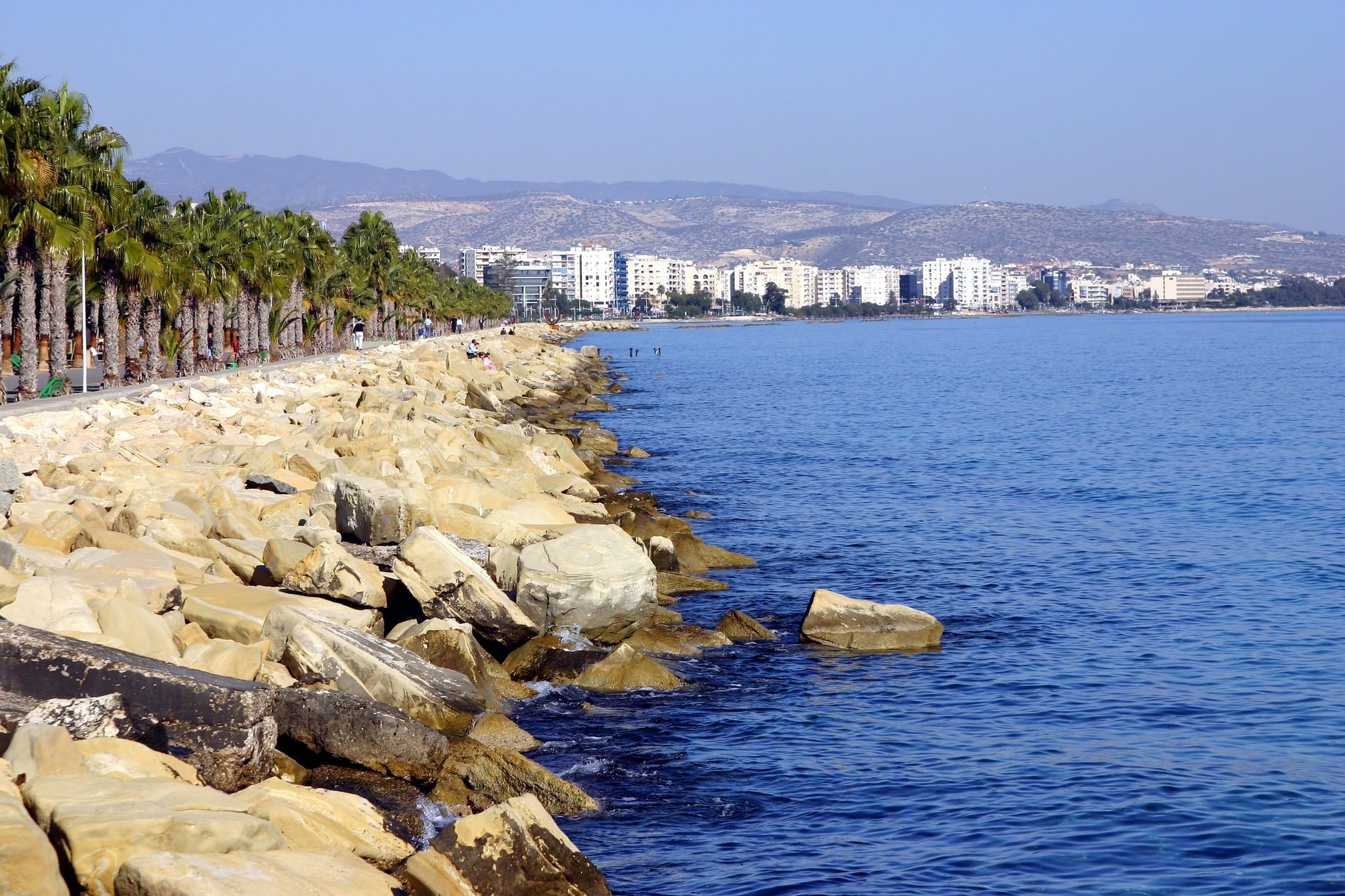
Limassol, Cyprus. The UK has removed a special travel warning for Cyprus linked to Middle East tensions. Credit: Flickr / Leonid Mamchenkov / CC BY 2
The UK has removed special travel warning for Cyprus that had been introduced following heightened tensions in the Middle East, offering a positive signal for the island’s tourism sector at the peak of the summer season.
The updated guidance from the UK Foreign, Commonwealth & Development Office no longer includes specific references to heightened regional risks or possible travel disruption linked to developments in the Middle East.
UK drops special warning for Cyprus
The previous advisory had placed Cyprus alongside at least 17 other countries in the region under a specific warning related to the increased risk of regional instability.
The concern was connected to the ongoing conflict in the Middle East, as well as a drone attack targeting a British military base on the island. At the time, the FCDO warned that regional tensions could result in travel disruptions and other unforeseen consequences.
British citizens were advised to exercise increased caution when traveling, although the UK government never advised against travel to Cyprus.
General safety advice remains in place
The latest update removes those special references from the official travel guidance. While general safety advice for Cyprus remains in place, there is no longer any specific mention of heightened regional risks or potential disruption caused by the Middle East crisis.
The change is being interpreted as an indication that British authorities believe the risk of direct consequences for Cyprus from regional developments has significantly diminished.
Positive signal for Cyprus tourism
The update is particularly important for Cyprus as the summer tourism season reaches its peak. The United Kingdom remains the island’s largest tourism market, making British travel advice highly influential for the tourism industry.
The earlier warning had raised concerns among tourism stakeholders in both Cyprus and the UK, with several British media outlets highlighting the references to regional instability.
For the island’s tourism sector, the removal of the warning is expected to help ease concerns among British travelers and operators, especially as Cyprus continues to depend heavily on arrivals from the UK during the summer months.
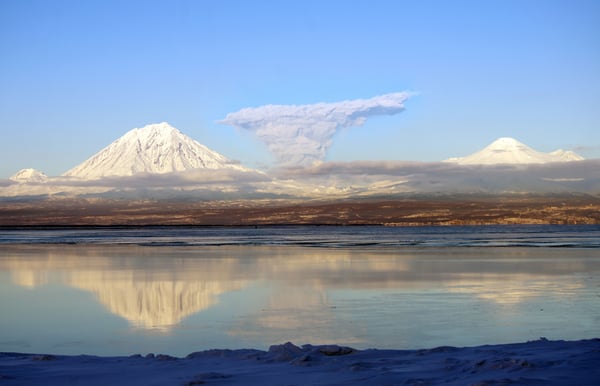
From Vesuvius to Tambora, volcanic eruptions have destroyed cities, collapsed empires, and altered the course of human history — sometimes preserving the very worlds they buried
 Login
Login