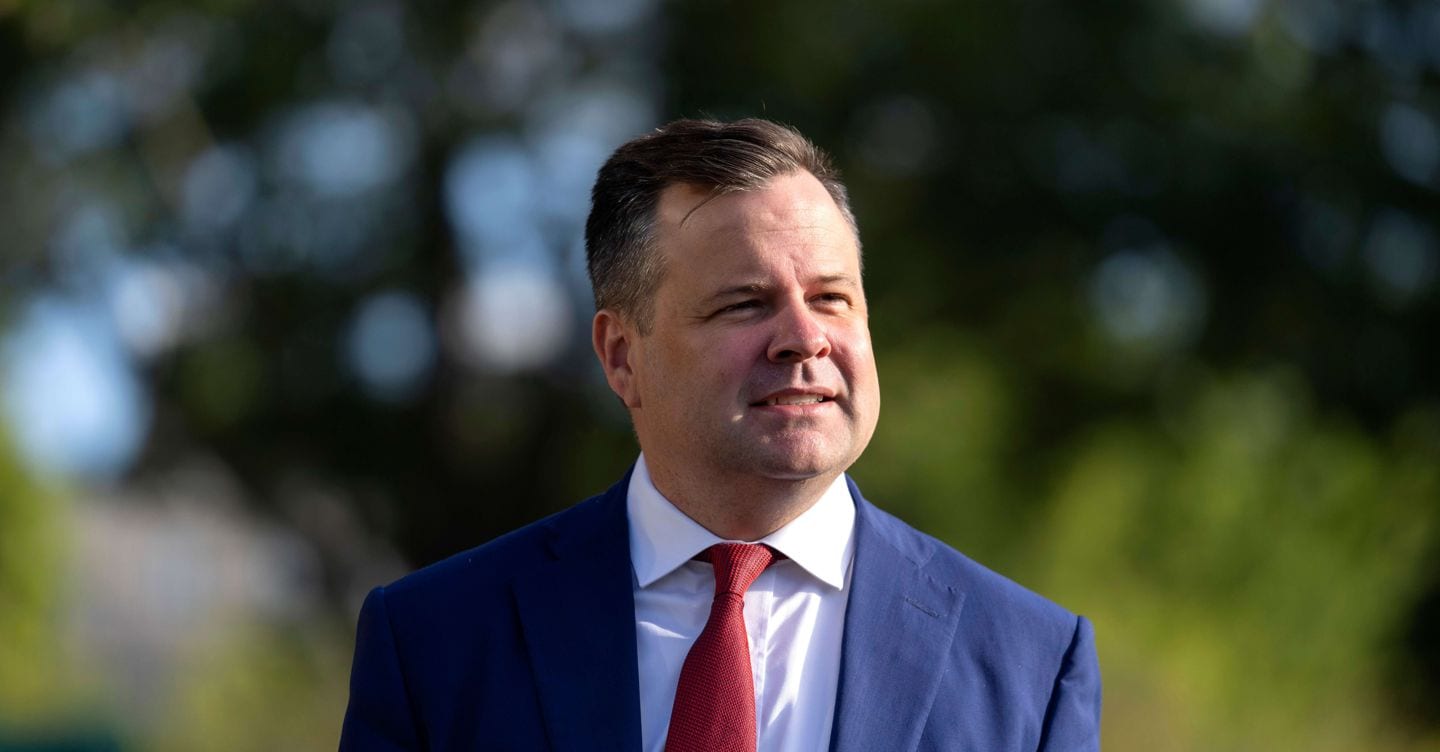
Da investitore immobiliare alla guida - seppur provvisoria - della National Intelligence: l’ascesa del dirigente scelto dal presidente, tra Fhfa, Fannie Mae, Freddie Mac e fedeltà politica
Physicist Stephen Volz had been working with colleagues at the U.S.’s National Oceanic and Atmospheric Administration for nearly 10 years to produce a new generation of geostationary satellites — instruments that would provide critical observations about atmospheric conditions, climate patterns and weather. But when Donald Trump returned to office in January 2025, this long-term project was thrown into disarray. “This administration canceled three of the five instruments on that program,” Volz, the assistant administrator for NOAA’s National Environmental Satellite, Data, and Information Service, who has been on administrative leave since July 2025, told Mongabay. The cancellations applied to instruments that measured air pollutants, tracked lightning to forecast hurricanes and tornadoes, and monitored ocean color to detect events such as algal blooms, sargassum seaweed surges and salinity changes, according to Volz. “They said, ‘those are all wasted money, they’re climate alarmist, I don’t need air quality, I don’t need ocean color,’” Volz said about the administration’s decision. The axing of this project is just one example of what experts describe as a broad, long-term effort by the Trump administration to weaken NOAA. The long-standing scientific and regulatory agency within the U.S. Department of Commerce has historically been responsible for everything from forecasting the weather and monitoring the climate to managing fisheries and protecting marine mammals. The White House did not respond to Mongabay’s request for comment. NOAA’s GOES-19 satellite, which tracks hurricanes and tropical storms in the Atlantic Ocean basin, as well as monitor severe weather, atmospheric rivers, wildfires, volcanic eruptions…This article was originally published on Mongabay
A version of this story was originally published by the Pulitzer Center, which supported Elizabeth Claire Alberts as an Ocean Reporting Network fellow. We didn’t set out to investigate China’s deep-sea mining fleet, but as our research into the burgeoning industry developed over our yearlong partnership, it became clear that an investigation into the fleet’s alleged military dual use was emerging as an important, untold story. Shortly after we embarked on our joint project, geopolitics around the deep-sea mining landscape began to shift dramatically. In February 2025, China signed an agreement with the Cook Islands government to collaborate on deep-sea mining research and exploration. At the same time, it was pursuing a similar deal with the archipelago nation of Kiribati, marking a notable expansion of Chinese influence in the Pacific. China holds the largest number of exploration contracts issued by the International Seabed Authority (ISA), the U.N.-affiliated deep-sea mining regulator, and is also its biggest financial contributor. It also operates the world’s largest oceanographic research fleet. Against this backdrop, we kept returning to a central question: was China’s pursuit of deep-sea mining driven solely for accessing mineral resources, or was it also shaped by broader geopolitical strategy? Through extensive reporting, we learned that China’s interest in seabed mining was motivated by both of these things, and that some of its vessels were engaged in both deep-sea mining work and militarily strategic surveillance. Meanwhile, deep-sea mining efforts have been gathering pace in the United States. In March 2025, The Metals Company,…This article was originally published on Mongabay
Elsa Cordeiro é a nova diretora regional do Instituto do Emprego e Formação Profissional (IEFP) no Algarve, confirmou o Sul Informação junto da própria.
A antiga vice-presidente da Comissão de Coordenação e Desenvolvimento Regional (CCDR) do Algarve começou ontem, dia 1 de Junho, a trabalhar nas suas novas funções na liderança do IEFP, tendo mesmo tido uma reunião com o secretário Estado Adjunto e do Trabalho, em Évora.
Elsa Maria Simas Cordeiro é licenciada em Gestão Económica e Financeira, com PósGraduação em Avaliação de Políticas Públicas, Pós-Graduação em Direito do Urbanismo e do Turismo e detentora do CAGEP – Programa de Formação em Gestão Pública.
Tem um percurso profissional consolidado de mais de três décadas no setor financeiro, com 34 anos de experiência em funções de gestão bancária, destacando-se pela liderança de equipas, planeamento estratégico e rigor na gestão.
Em paralelo, desenvolveu um extenso percurso na vida pública, tendo exercido funções executivas e políticas a nível local, regional e nacional. Foi vice-presidente da Câmara Municipal de Tavira, deputada à Assembleia da República pelo círculo de Faro, onde integrou, como membro efetivo, a Comissão de Orçamento, Finanças e Administração Pública e a Comissão da Saúde, e desempenhou diversos cargos de responsabilidade em estruturas políticas e associativas.
Desde Outubro de 2020 até ao início do passado mês de Março, exerceu funções de vice-presidente da CCDR Algarve, designada por Resolução do Conselho de Ministros, com intervenção em matérias de coordenação regional, políticas públicas e articulação institucional.
O seu percurso evidencia experiência relevante nas áreas da governação pública, saúde, ação social e administração financeira, aliando conhecimento técnico, capacidade de liderança e profundo compromisso com o serviço público.
Elsa Cordeiro sucede no cargo a Madalena Feu, que se reformou no final do ano passado.
Gostou do que leu? Ajude-nos a continuar!
O nosso compromisso é levar até si notícias rigorosas, relevantes e próximas da sua comunidade. Para continuarmos a fazer o que fazemos, precisamos do seu apoio. Qualquer donativo, por mais pequeno que seja, faz a diferença e ajuda a garantir a continuidade deste projeto. Juntos, mantemos a informação viva no Algarve e no Alentejo. Obrigado por fazer parte desta missão!
PRESS REVIEW – Monday, June 1: Piles of trash are flooding Havana, as Cuba struggles under US President Donald Trump's oil blockade. Next, papers look at the latest cancer research breakthrough and the industry of hair transplants. Also: US farmers find alternative ways to make money. Finally, some Paris metro stations have new names after PSG's Champions League win.
This story originally appeared in Labor Notes on May 29, 2026. It is shared here with permission.
On a patch of sidewalk on a busy industrial corridor in Newark, federal agents with rifles, metal batons, flak vests, and balaclavas faced off against unarmed activists with cardboard signs and a bullhorn. Detained workers could be heard on the soccer field behind the prison walls, shouting in Spanish, “¡Libertad!” (Freedom!)
Since May 22, 300 of them are on a work stoppage and hunger strike. Over video chat, one worker told the crowd outside that they had stopped eating and working for as little as $1 an hour (or no pay at all) to demand an improvement in their living conditions. “But that’s not all we demand,” he said. “We are also doing this to demand freedom. We’re not treated like people. We’re treated like animals.”
The hunger strikers are demanding to meet with the governor, the release of young and elderly detainees and all medically vulnerable people, and ultimately, freedom for all.
For months a group of activists with the ICE Out of NJ coalition, which includes the immigrant rights group Cosecha, the Catholic advocacy group Pax Christi, and the worker center New Labor, has been protesting outside Delaney Hall, a 1,000-bed privately owned detention center where immigrants, mostly Latino, are jailed without due process.
Families and lawyers of the detainees report that Immigration and Customs Enforcement agents and guards with the GEO Group, the private-prison contractor, have been denying them medical care, offering them food swarming with worms, and refusing them bail bond or access to their lawyers. Many were snatched from construction job sites, or still wearing their service-industry work clothes; others were taken while reporting at courthouses for green-card appointments.
“In our cases, we had already been processed, we were complying with legal requirements, and there was no order from a judge for our detention or arrest,” wrote a worker identified as Brian in a handwritten letter in early May, co-signed by 300 others with redacted names, pleading for help from elected officials. “ICE officers did not take into account the fact that there was already an immigration court date, and they arrested us during check-in appointments at USCIS [U.S. Citizenship and Immigration Services] facilities.”
FROM SCARCE FOOD TO NONE
They struck because they wanted to hit their jailers’ bottom line, but they were already going without food, and their health has further deteriorated. “People aren’t eating because of the strike we are organizing and there’s no medical assistance,” said a released hunger striker named Luis to Radio Jornalera (Day Laborer Radio). Speaking with his back to the camera to conceal his identity for fear of retaliation by ICE, Luis said another detainee had become severely dehydrated and couldn’t walk. Food was already scarce or inedible, even before the strike.
When hunger strikers sought medical help at the nursing center in the prison, “they wouldn’t lend us the wheelchair,” Luis said. “We had to put in our own pills, give our own liquids with sugar and a little salt to compensate for electrolytes.” He said there has been no due process for the detentions; he was detained by ICE during a routine check-in, which doesn’t normally occur for people who have a legal case going through the immigration system. People with no criminal records have faced exorbitant fees of upwards of $50,000 for bail, or outright denials to be released on bond.
“If they freed us, we wouldn’t generate profit for this business,” Luis told the Guardian.
Nationwide, the majority of imprisoned immigrants through 2025 had no criminal records. As the American Prospect has reported, the GEO Group is raking in record profits with a federal contract valued at $1 billion. Some of these profits come from imprisoned immigrants working for little or no pay. Workers report they are coerced into participating in the government’s supposedly Voluntary Work Program through solitary confinement and other forms of torture.
The 13th Amendment to the U.S. Constitution abolished slavery, with an asterisk: “except as a punishment for crime whereof the party shall have been duly convicted.” Convicted or not, all labor has value. But what’s doubly wrong is that immigrants in ICE jails haven’t even been convicted, and are being denied due process.
VIOLENT RETALIATION
In what activists are calling retaliation, on May 28 the GEO guards and ICE agents responded to the hunger strike and work stoppage with beatings. Detainees have reported to their lawyers and families that striking units have even had the building’s ventilation cut off, while the floors in some cells are smeared with the blood of detainees.
“Right now there are ICE agents inside of Delaney Hall violently beating the hunger strikers,” Nedia Morsy, director of the nonprofit Make the Road NJ, said in a statement. “Someone will be killed if no one intervenes and shuts this down.”
Gabriela Fuentes said her husband Jose Marroquin called her around 1:30 p.m. to “say they were being beaten and pepper sprayed… This started because they [ICE] wanted to take the only person who translates for them in the unit.”
“They wanted to take him away,” she said outside the prison in a video recording. “So all of the prisoners asked to not take him away. So then agents, ICE agents came to the unit and tried to cuff him, and that’s when the confrontation started.”
She said that the detainees lifted their hands to indicate they didn’t want to fight. The guards took them to their cells. “And then there were the prisoners banging on the doors to please let them out,” Fuentes said. “My husband says there was blood in the floor and in the walls that clearly the agents now were cleaning up because they knew they messed up.”
In a statement, Fuentes said that she bolted to the prison to speak out about what was happening inside. When she got there, she saw that “one of the guys was taken by the ambulance because a guard broke his nose.”
U.S. Department of Homeland Security officials said agents responded to “to a physical fight involving detainees at Delaney Hall.” Homeland Security Secretary Markwyane Mullin has upped the ante, threatening to retaliate against sanctuary cities by pulling Customs and Border Protection officers from airports.
Even before the strike, speaking out about conditions in the prison was met with retaliation. “We have to be very careful, everything we say and do is closely monitored, at all times,” Jordi Alvarado told local news outlet NJ.com in early May. “And then, almost as if on cue, his face abruptly disappeared from the screen of the iPhone advocates had used to call him,” reported NJ.com columnist Daysi Calavia-Robertson. On the blacked out screen, a message popped up. “Call paused.” And shortly after, “Call ended.”
OFFICIAL ACTION DEMANDED
Local and federal elected officials have put out statements condemning the deplorable living conditions and treatment of detainees. New Jersey Sen. Andy Kim, a Democrat, went inside the prison on May 25, came out, joined the protestors, and got pepper sprayed. But the ICE Out of NJ coalition is demanding more action.
“Elected officials, the Governor, and the Attorney General cannot continue ignoring what is happening behind these walls,” said Jorge Torres of the National Day Laborer Organizing Network in a statement. “They must enter the facility immediately, speak directly with the people, and hold GEO Group and ICE accountable for this violence.” The detained immigrant workers have written three letters to legislators pleading for their release; they’ve received no reply.
“I have never thought Delaney Hall should open,” said New Jersey Gov. Mikie Sherrill at a news conference on May 26. “We had a law here in New Jersey against privately run detention facilities…The fact that they wouldn’t let me in there gives you some sense that there is some ‘there’ there, and that’s really concerning to me.”
The cruel impunity is as plain as day, both inside and outside the immigration detention center. On the night of May 27, federal agents struck protesters with batons, pushing one into the path of a tractor trailer wheel, a video shows.
On Thursday after reports of assaults on detainees began circulation, some local elected officials were allowed inside the prison, but access is still limited. That same day, the New Jersey Department of Health was denied full access for an inspection.
The reports often come from the families of the detained. “We’ve been hearing from constituents who have family members inside, including a mother who is being beaten by ICE agents and an 11-year-old girl who spoke to her father inside who said that there are a lot of people inside who are bloodied,” U.S. Rep. Bonnie Watson Coleman told NJ.com on the afternoon of May 28.
SOLIDARITY FUNDRAISERS
Gabriela Soto’s husband Martin Soto Hernandez was detained in January while buying diapers. He had previously been arrested for a domestic violence incident, but the charges were later dismissed and expunged, according to his lawyers. His lawyer says Soto Hernandez has lost 110 pounds: “He’s skin and bones.”
Even in his poor condition, he helped organize the hunger strike and was later transferred to a different detention camp in Elizabeth, New Jersey, on May 25.
“My husband Martin Soto got illegally detained by ICE tonight,” Soto wrote on a GoFundMe page to raise funds for her husband’s legal defense shortly after he was imprisoned. “We never fully got a lawyer for his immigration status because his court date was due for 2028… I want to be able to have a lawyer defend him so that he can stay here. His kids depend on him. His daughter knows he is her world. This is unfair what Trump is doing to this country. He’s ripping families apart and this is not fair. Please help us.”
“At this very moment, Delaney represents a dark and desolate world for those who sought to attain the American Dream,” said Gloria Guerrero of New Labor in Spanish to Labor Notes. Guerrero organizes alongside domestic workers whose husbands have been detained in ICE prisons. “Children wait for the return of parents detained by a cruel and inhumane system—locked in dungeons, treated like criminals, and stripped of every right, including the right to humane treatment,” she said.
“Yet for others, it is the greatest business venture in history—one that utterly disregards the dignity of human beings. Delaney is a Latino concentration camp where many are forced to sell themselves out of sheer necessity, shielding their faces in shame from a community that cries out: ‘Quit that job now! I am your people! I am your kin!’ Meanwhile, on the inside, others are holding fast in a strike of protest and resistance—a struggle to which we offer hope, and which we support from the outside!”

 Login
Login