Normal view

Polish foundation crowdfunds $39,500 for Vinnytsia after PiS opposition sank Kielce bus donation

12 June 2026 at 09:34

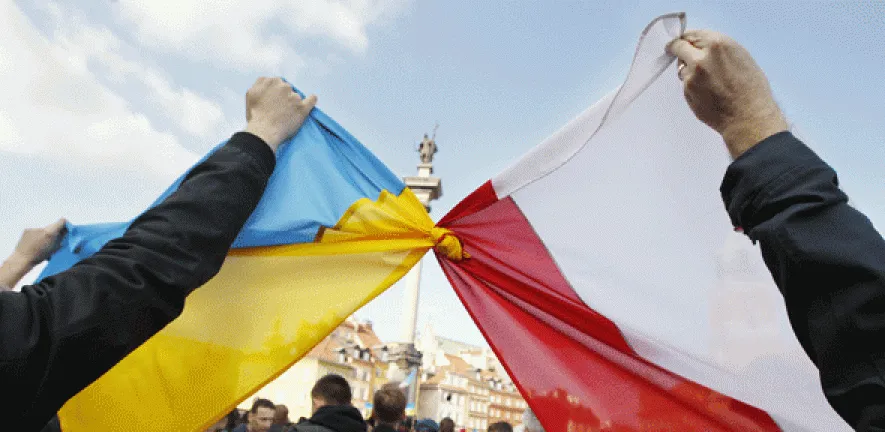
Demonstrators knot a Ukrainian flag and a Polish flag together at a rally in Warsaw's Castle Square

Polish volunteers have raised more than 145,000 zloty (~$39,500) since 11 June to buy 15 decommissioned Solaris vehicles from Kielce. They plan to ship the Vinnytsia buses to Ukraine themselves, as shown on the Polish crowdfunding platform Zrzutka.pl on 12 June.

Their 500,000-zloty ($136 235) goal would buy the 17-year-old fleet at scrap value. The drive began after Polish right-wing councilors in Kielce sank a free transfer of the same Vinnytsia buses. Vinnytsia's tram-and-trolleybus grid runs on electricity. Whenever Russian strikes knock out the national power network, the city of roughly 360,000 freezes in place.

A foundation steps in where a city council stepped back

Fundacja Sikorki na Ukrainie is the Polish humanitarian group behind the drive. Since February 2022, it has shipped roughly 10 million zloty ($2.7 million) of non-weapon equipment to Ukrainian frontline units. Its tally includes 400 drones, 200 night-vision and thermal devices, 30 off-road vehicles, and 200 pallets of medical supplies. Founder Tomek Sikora worked with refugee shelters in Vinnytsia in early 2022. He later pivoted the foundation toward combat brigades near Bakhmut and Avdiivka.

The fundraiser is titled "Buses for Vinnytsia. Politicians block, we keep going." It tripled overnight. Donors pushed the running total from 57,000 zloty on the evening of 11 June to past 145,000 by dawn the next day.

"500,000 zlotys is a trifle for the state budget. For local politicians, the noise around aid is a free chance to score points in polls," the foundation wrote on Zrzutka.pl.

For the activists, the cost was not symbolic but practical.

"For us, it is the real price of proving that real solidarity still exists, and we will not let politicking block hard logistics."—Fundacja Sikorki na Ukrainie

If the Kielce purchase falls through, organizers will redirect the funds to protecting Ukrainian civilians from Russian air attacks. The model echoes a 2022 Polish citizen crowdfunding effort that bought three Mi-2 helicopters for Ukraine's military intelligence. In February 2026, a Slovak fundraiser raised one million euros in two weeks as Bratislava's government cooled on Kyiv.

How a 2022 street renaming became a 2026 sister-city flashpoint

Vinnytsia and Kielce have been sister cities since the Soviet period. The municipal donation collapsed after Law and Justice (PiS) councilors Maciej Jakubczyk and Marcin Stempniewski launched a media campaign against it. They cited Vinnytsia's 2022 renaming of a street to honor Stepan Bandera. Bandera led the wartime Ukrainian nationalist movement whose forces are blamed for the 1943-1944 ethnic cleansing of Poles in Volhynia. Stempniewski called the donation incomprehensible.

"Every time our outstretched hand to help a neighbor is hit by a stick in the form of honoring war criminals," he said, Censor.NET reported.

Vinnytsia mayor Serhii Morhunov withdrew the request on 10 June. PiS councilors then tabled a resolution demanding the city rescind the Bandera renaming. The motion failed at the 11 June council session. Twelve PiS members voted in favor, and two independents abstained. But 11 councilors from Prime Minister Donald Tusk's Civic Platform walked out. That left the resolution one vote short of the 13 needed. Stempniewski plans to resubmit it on 25 June.

The row sits inside a broader bilateral memory dispute. It flared in May after President Volodymyr Zelenskyy named a Ukrainian Armed Forces unit "Heroes of the UPA." Kielce mayor Agata Wojda has accused her city's PiS faction of "ordinary human meanness." Meanwhile, the European Commission has said bilateral disputes should not derail Ukraine's EU accession path. Activists hope the Vinnytsia buses will leave for Ukraine before the Kielce fleet is scrapped.

“Heroes of UPA” unit will keep its name, Budanov’s office says despite Polish pressure

11 June 2026 at 15:16

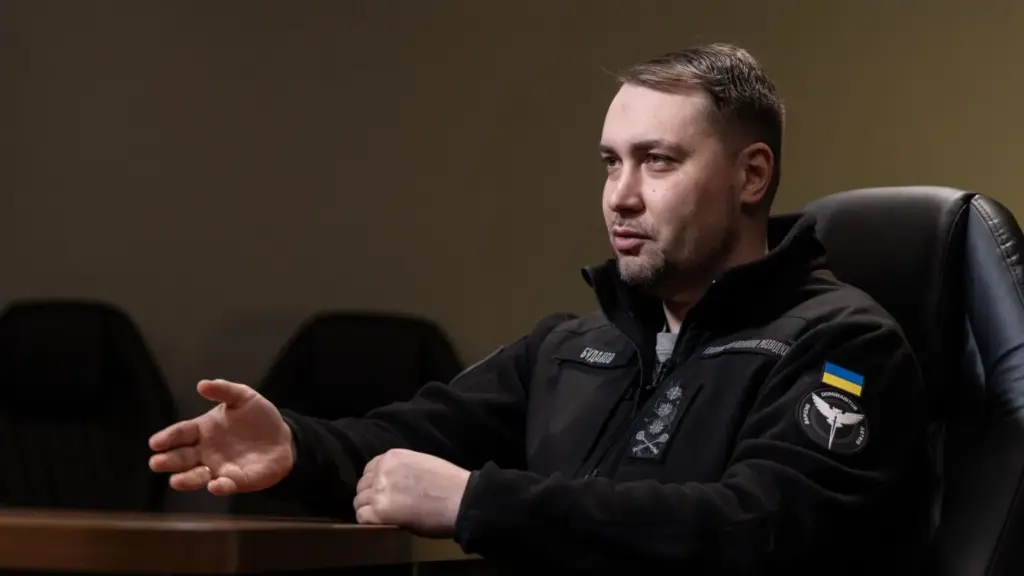
Kyrylo Budanov, head of Ukraine's Office of the President, gestures while speaking during an interview, wearing a black fleece marked with his name and the HUR insignia.

Kyiv has no intention of renaming the "Heroes of UPA" Special Operations Forces unit despite more than two weeks of escalating Polish pressure, a source close to the head of the Office of the President, Kyrylo Budanov, told LIGA.net on 11 June.

The denial closes the most public off-ramp that has been floated since President Volodymyr Zelenskyy signed Decree 440/2026 on 26 May. The Polish outlet Wirtualna Polska, citing its own sources, reported that during Budanov's 5–6 June visit to Warsaw, Ukrainian representatives offered a compromise that would narrow the honor to UPA members who fought only the Soviet Union—with the final call resting with Zelenskyy. "The information the Polish press conveyed does not correspond to reality," the source said.

Two weeks, four Polish escalations

Zelenskyy's decree honored the Separate Center for Special Operations "Pivnich" of Ukraine's Special Operations Forces. Within 72 hours, President Karol Nawrocki moved to strip Zelenskyy of the Order of the White Eagle, Poland's highest distinction, which had been conferred on him by then-president Andrzej Duda in April 2023. On 8 June, the order's Chapter delivered its opinion; Nawrocki's spokesman, Rafał Leśkiewicz, said the president would decide "in due time".

On 1 June, former Polish ambassador Bartosz Cichocki—who stayed in Kyiv through Russia's 2022 invasion—returned his Ukrainian Order of Merit. A day later, Sejm Deputy Speaker Krzysztof Bosak called for blocking Ukraine's EU accession until Kyiv "moves away from the cult of criminals." Foreign Minister Andrii Sybiha replied on 3 June that the unit's name was the choice of Ukrainian soldiers who, "at the cost of their health and often their lives," hold the front line against Russia's war on Ukraine.

"The information the Polish press conveyed does not correspond to reality." —Source close to Budanov, LIGA.net, 11 June

Bartosz Cichocki, Poland’s wartime ambassador to Ukraine. Credit: Vikna Novyny

A cool reception in Warsaw

The Warsaw visit, initiated by Kyiv, did not produce a public breakthrough. Budanov, accompanied by first deputy Serhii Kyslytsia and deputy Iryna Vereshchuk, met Defense Minister Władysław Kosiniak-Kamysz, Bureau of International Policy chief Marcin Przydacz, and Deputy Foreign Minister Marcin Bosacki. Foreign Minister Radosław Sikorski declined to meet the Ukrainian delegation.

Kosiniak-Kamysz posted afterward that "the memory of the victims of Volhynia is not up for negotiation." Prime Minister Donald Tusk added that Ukraine had "brought this problem upon itself" and should resolve it.

Kielce councilors target Vinnytsia's Bandera street

Even as Kyiv held the line, the dispute spread into sister-city relations. On 10 June, the Law and Justice (PiS) faction of the Kielce city council sent a resolution to council chair Maciej Jakubczyk calling on Vinnytsia mayor Serhii Morhunov to rename the city's Stepan Bandera street. The councilors invoked the 70-year Kielce–Vinnytsia partnership and described the street name as "a stain" linked to "mass atrocities against the defenseless civilian population".

A day earlier, Vinnytsia had withdrawn a request for 15 decommissioned Kielce buses after Jakubczyk and PiS councilor Marcin Stępniewski opposed the donation over the same street.

Poland refuses to send 20-year-old buses to Ukrainian city under Russian strikes because of street name

10 June 2026 at 15:11

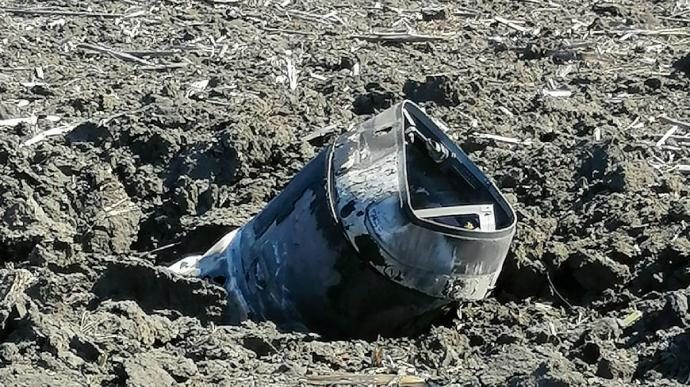
downed iskander missile vinnytsia oblast

Vinnytsia has withdrawn its request to transfer 15 old buses from its Polish sister city, Kielce, following a wave of hostility and contempt from local politicians and on social media. This followed the city's recent renaming of a street to Stepan Bandera Street, Kielce Mayor Agata Wojda announced.

Vinnytsia Mayor Serhii Morhunov rejected the request not because Vinnytsia's transport needs disappeared amid the war, but to prevent the aid from becoming a political issue. 

Russia actively uses the image of Stepan Bandera, the Ukrainian nationalist leader who led the Organization of Ukrainian Nationalists (OUN) and the Ukrainian Insurgent Army (UPA), in its propaganda, referring to Ukrainians as “Banderites” and portraying Ukrainian statehood as a continuation of Nazism.

At the same time, attitudes toward Bandera in Poland are also largely negative because of the events in Volhynia in 1943–1944. Historical interpretations of these mass killings differ: in Poland, they are often described as a genocide of the Polish population, with primary responsibility attributed to the UPA. 

In Ukraine, many historians emphasize the more complex nature of the conflict, pointing to mutual violence between Ukrainians and Poles, as well as the role of the Nazi occupation authorities and Soviet structures. The Polish position plays into the Kremlin's hands amid Russia's war. 

The buses, which are roughly 20 years old and being decommissioned by Kielce in any case, would otherwise have been sold for parts or scrapped, Wojda said.

Why Vinnytsia needed buses

Vinnytsia's municipal transport is primarily powered by trams and trolleybuses — both dependent on electricity. Russian strikes on Ukrainian electrical infrastructure since 2022 have caused recurring power outages across Ukrainian cities, during which Vinnytsia's tram-and-trolleybus network cannot operate, resulting in transport disruptions for residents.

Backup diesel buses, like the 15 Kielce was prepared to donate from its decommissioning fleet of 40 vehicles, would have provided the city with an alternative during electricity outages.

"Precisely in such situations, the decommissioned buses from Kielce were supposed to help," Wojda said.

Polish opposition

The donation was opposed by Kielce city council members, including Maciej Jakubczyk and Marcin Stempniewski of the Law and Justice party (PiS), per Polish media, including Slawa.

According to Jakubczyk, the timing of the transfer "was not appropriate," and the donation "would have worsened already strained Polish-Ukrainian relations."

Jakubczyk specifically cited the Stepan Bandera street renaming in Vinnytsia: "In Vinnytsia, one of the streets was renamed Stepan Bandera Street. And it is precisely on this street that one of the 15 buses from Kielce, which were to be transferred free of charge to the city, would drive."

A wave of hostile commentary followed on Polish social media, with "hundreds of posts full of insults, accusations, and aggression," in Wojda's description.

Kielce mayor's response

Wojda strongly defended the donation and criticized its opponents. She said Morhunov refused its request not "because the needs of his city suddenly disappeared," adding that the war continues to be a daily reality.

"He did this because he did not want the question of help to a city living under wartime conditions to become an instrument of political dispute and the cause of further divisions. It is a gesture that deserves respect," Wojda said of Morhunov's decision to withdraw.

She noted that Kielce buys new buses partly thanks to European funds from partner countries, implying that solidarity flows in multiple directions.

"This story is a test of our decency and solidarity. The solidarity that we ourselves have felt for many years," she said.

❌