Normal view

At world’s top defense exhibition in Paris, Ukraine and Sweden agree to mass-produce combat robot born on frontline

16 June 2026 at 21:23

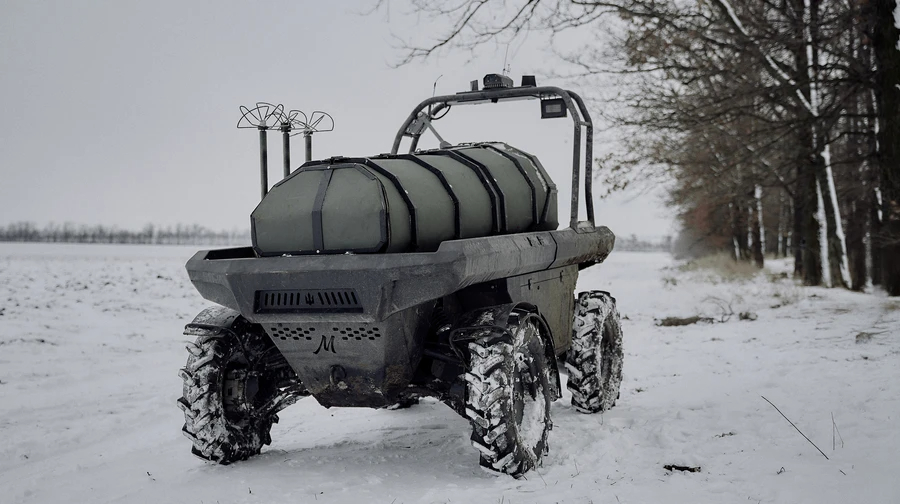
The MAUL unmanned ground vehicle. Source: AIDronesUA

Ukrainian defense manufacturer AIDronesUA and Swedish technology firm Njord Technology AB have signed a Memorandum of Strategic Partnership at the Eurosatory-2026 defense exhibition in Paris, per Oboronka. The partnership scales production of the MAUL casualty evacuation, logistics, and ammunition delivery platform in Sweden. 

The MAUL ground robot costs between $22,600 and $33,900 per unit, depending on the communication configuration. AIDronesUA says that MAUL was developed and continuously refined based on real combat experience and direct feedback from Ukrainian soldiers operating the platform on the frontline.

AIDronesUA expands Ukrainian production capacity through Swedish partnership

"Together with Njord Technology AB, we plan to organize joint production of UGV MAUL on Swedish territory, which will allow expanding production capabilities and accelerating delivery of robotic systems," AIDronesUA says.

The Ukrainian company emphasizes that its priority remains meeting the needs of the Ukrainian Defense Forces, with most of the produced complexes intended for logistics, casualty evacuation, and the preservation of Ukrainian soldiers' lives. 

Njord Technology brings Swedish engineering to Ukrainian battlefield experience

"The combination of Ukrainian practical experience and Swedish engineering expertise will create modern robotic solutions that improve task performance and help save lives," Njord Technology notes.

This partnership will also foster industrial cooperation between Sweden and Ukraine and create new opportunities for technological development and innovation, the company said. 

The Swedish company creates autonomous solutions and AI systems, and is a member of the Swedish Security and Defense Industry Association (SOFF). The partnership joins a growing list of Swedish-Ukrainian defense industry agreements, including the Saab-Radionix sensor and defense electronics memorandum and ongoing discussions regarding potential Gripen fighter aircraft supply.

Ground robotic systems lead Ukrainian defense innovation

Ground robotic systems have become one of the most active categories of Ukrainian defense industry expansion. Ukraine ordered 25,000 ground robots for H1 2026 procurement, which is more than double the 2025 total.

Defense Minister Mykhailo Fedorov reported in March 2026 that Ukrainian ground robotics manufacturers had grown from zero to more than 100 since the start of the full-scale aggression. 

Ukraine built 90% of its newly authorized weapons itself. Year ago, it was 70%

16 June 2026 at 20:33

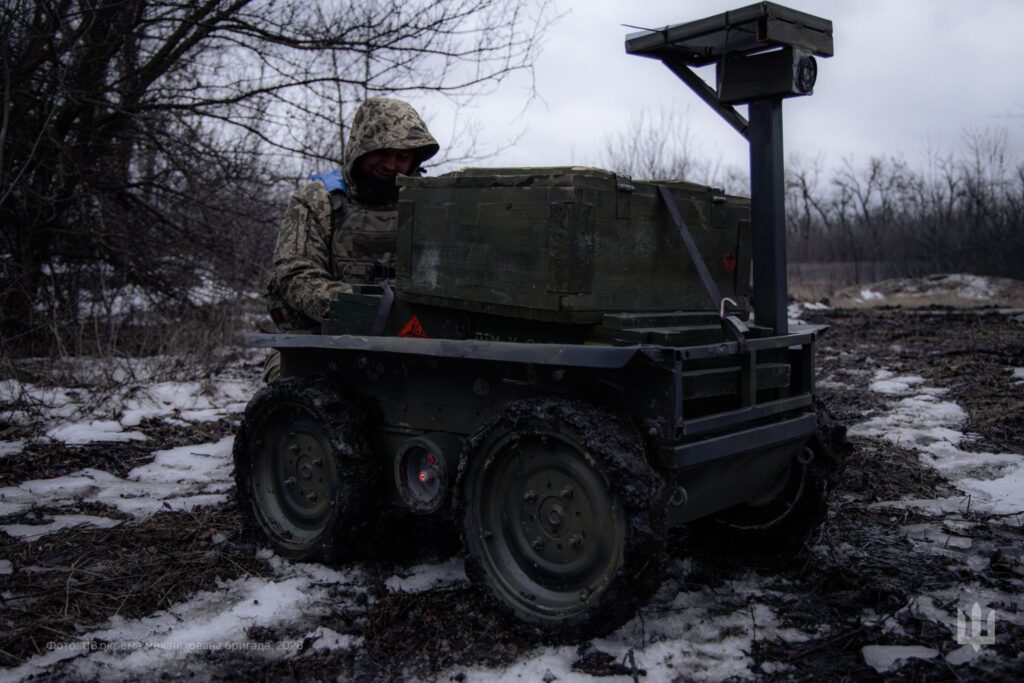
A Ukrainian soldier is loading a ground robotic system. Source: The General Staff

Ukraine's Defense Ministry has announced that it has codified and authorized 1,000 samples of weapons and military equipment since the start of 2026. It's a 50% increase from the 659 samples authorized during the same period in 2025.

The pace of codification and the domestic share signal a substantive shift in Ukraine's wartime defense-industrial dependency, with Ukrainian defense industry capacity progressively scaling over three years of full-scale war.

Of the 1,000 samples authorized, 892 are produced in Ukraine, raising the domestic share to nearly 90%, up from 69.6% in 2025 and 74.6% in 2024.

The 1,000 samples include over 300 unmanned aerial complexes, 188 ammunition types, 128 communication systems, more than 60 electronic warfare and electronic intelligence systems, 50 ground robotic complexes, and nearly 50 armored vehicles and special armored cars. 

Unmanned aerial systems lead 2026 weapons codification

"All of the codified samples have passed the necessary testing and confirmed their declared characteristics. A significant portion is already being used by Defense Forces units," the Defense Ministry stated.

The pace of codification accelerated through 2026: in May 2026 alone, the Defense Ministry codified 175 new weapons models for operational use.

The dominance of unmanned aerial complexes among the 2026 codifications reflects Ukrainian battlefield priorities — Russia's intensified Shahed-type drone strikes, Ukraine's middle-strike operations against Russian rear targets, and the operational shift toward unmanned-systems integration across combat arms.

Ukrainian manufacturers expand domestic share to 90%

The Ukrainian-made share of newly authorized weapons has risen sharply over three years of full-scale war from 74.6% in 2024 to 69.6% in 2025 to nearly 90% in 2026. The Defense Ministry emphasized that Ukrainian manufacturers are increasingly producing high-technology weapons and military equipment designed with consideration of contemporary war experience and frontline needs.

Cabinet allocates $244.6 million to boost defense capabilities

The Cabinet of Ministers additionally allocated $244.6 million in May 2026 to strengthen Ukraine's defense capabilities. Of this amount, $204.2 million is directed to new weapons procurement, modernization, and the repair of military equipment, while $40.4 million is invested in the development of the Ukrainian defense industrial complex.

The defense-industrial investment is allocated to implementing new technologies, expanding production capacity, and supporting further sector development. Fedorov took over as Defense Minister on 14 January 2026 and has focused his tenure on the technological transformation of the Ukrainian Armed Forces.

Germany’s Diehl in talks to produce Ukraine’s Flamingo cruise missile on German soil

12 June 2026 at 14:07

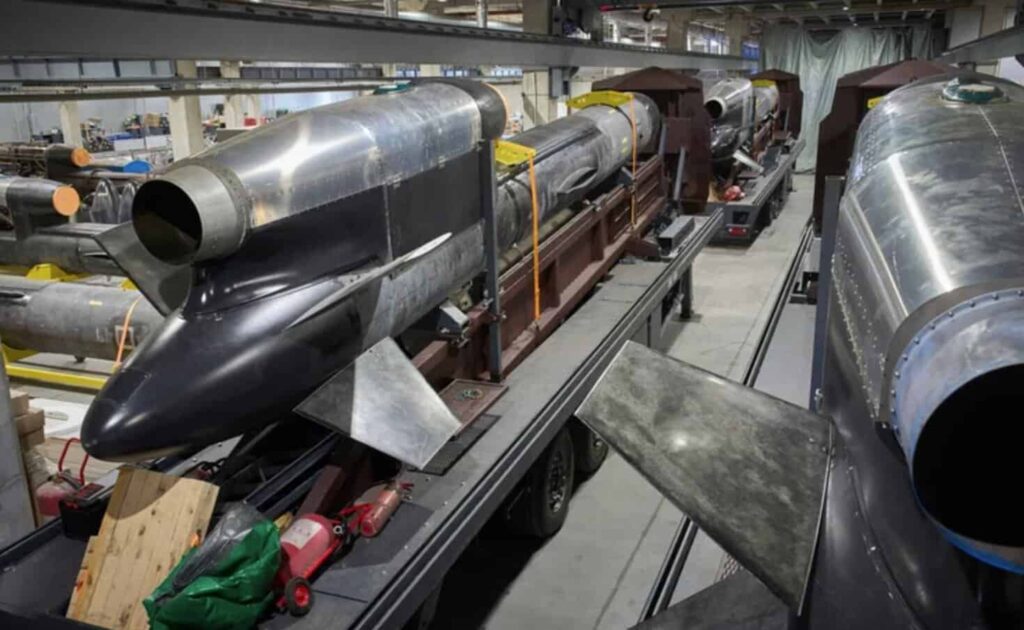
germany's diehl talks produce ukraine's flamingo cruise missile german soil · post fire point's missiles production facility ракета фламінго компанії point джерело єфрем лукацький maker defence negotiating manufacture germany financial

Germany's missile maker Diehl Defence is negotiating to manufacture Ukraine's Flamingo cruise missile in Germany, the Financial Times reported. Talks with the Ukrainian developer Fire Point are planned for the coming weeks, as European states hunt for weapons able to reach deep into Russia.

Four years of full-scale war have turned Ukraine's defense industry from an aid recipient into a source of battle-tested designs, with Kyiv's manufacturers now fielding interceptor drones and advancing a domestic ballistic missile program that European militaries increasingly want to tap. German Flamingo production would hand Europe a ground-launched deep-strike weapon independent of Washington's political swings, while giving Fire Point the orders and financing to scale output.

"This could really happen"

Diehl chief executive Helmut Rauch briefed journalists during the ILA Berlin Air Show.

"We are in discussions about how we could work together," he said. "I think this could really happen. In the next few weeks, we have several meetings regarding this and then we will see." 

For a new product, he added, it "makes a lot of sense to have it also in Germany or other countries," and Diehl is "optimistic and positive" about cooperation. The Ukrainian outlet Militarnyi noted that joint output of the FP-5 Flamingo in Europe could become the largest example of NATO countries adopting Ukrainian defense know-how.

IRIS
Explore further

Germany delivers IRIS-T to Ukraine — high-tech system that engages cruise missiles, as Russia continues to strike residential buildings

German Defense Minister Boris Pistorius, visiting Kyiv last month, said the "technological leaps here in Ukraine are remarkable." Joint ventures are being explored for long-range drones, air defenses, and electronic warfare, he said.

The initiative comes as Berlin scrambles to replace US Tomahawk missiles that were due in Germany this year alongside an American battalion. US President Donald Trump scrapped that Biden-era decision amid friction with Chancellor Friedrich Merz around the war in Iran. 

Diehl builds the Iris-T air-defense system, a mainstay of Ukraine's protection against Russian missile attacks. The firm inked a technology deal with Fire Point in April without disclosing details.

Render of the Pulse P19 multi-purpose optionally piloted aircraft. Source: Quantum Systems
Explore further

German company that already supplies Ukraine with drones has unveiled Shahed-hunter aircraft with four weapons categories on single airframe

Twice the Tomahawk's range, 200 missiles a month

The ground-launched Flamingo claims over 3,000 km of reach — roughly double the Tomahawk's. The missile has so far played a limited part in Ukraine's long-range campaign, and some reports have questioned its effectiveness. At least two Flamingos, though, struck a military plant in the Russian city of Cheboksary on 10 June, about 900 km from the Ukrainian border — the longest successful known Flamingo strike so far.

Fire Point co-founder and chief designer Denys Shtilierman told the Financial Times in May that the company turns out about 200 Flamingos a month with capacity to spare. 

"We just need orders and money," he said, admitting an engine bottleneck he expected to resolve soon.

So far, however, publicly documented Flamingo attacks remain limited to a handful of strikes, each involving only a small number of missiles.
❌