Login
LoginFraming David Hockney’s Greatest Art
12 June 2026 at 19:33
Whether in Los Angeles, in his native England or traveling the world, the artist always reinvented the world he saw, with psychological insight.



In May 2021, while the world was still trying to recover from the Covid pandemic, British artist David Hockney presented his exhibition The Arrival of Spring. Normandy, 2020, dozens of hours of meticulous work he devoted to capturing — on his iPad using the Brushes app — the essence of the changing seasons while the world was confined by tragedy. True to form, he did not give up on either innovation or joy.

© Luc Castel (Getty Images)
© Dmitry Kostyukov for The New York Times
© Paul Faith/Agence France-Presse — Getty Images
Respect Henry Nowak's family’s wishes and don’t exploit his death, intoned Starmer. But when murdered Rhiannon Whyte's mother demanded an end to illegal immigration, Starmer didn't want to know, says Steven Tucker.
The post Two-Tier Tears: Don’t Politicise the Grief of Henry Nowak’s Parents, Warns Starmer – Whilst Politicising the Grief of Henry Nowak’s Parents appeared first on The Daily Sceptic.
© Hollie Adams/Reuters
Researchers examining the remains of an Iron Age woman in northern Scotland have found signs that her brain may have been intentionally removed more than 2,000 years ago.
The discovery, made at a burial cairn in Sutherland, also revealed long-distance family connections, suggesting prehistoric communities maintained social and cultural ties across wide areas of Scotland.
The findings were published in the journal Antiquity and come from an investigation of two individuals buried in a low stone cairn at Loch Borralie, near the northwestern tip of mainland Scotland. The burial contained the remains of an adult woman and a juvenile boy.
Understanding funerary traditions in Iron Age Britain has long been difficult because human remains rarely survive. Soil conditions often destroy bone over time. North-west Scotland is one of the few regions where environmental conditions have preserved skeletal remains, offering researchers a rare opportunity to study how ancient communities treated their dead.
Researchers from the United Kingdom and the United States examined the remains to determine who the individuals were, where they came from, and whether they were related to each other or other groups in the region.
“We knew that in the north-west of Scotland, including the Northern and Western Isles, the circulation and deposition of human remains were particularly prominent,” said lead author Dr. Laura Castells Navarro of the University of York.
To investigate the burial, researchers combined osteological analysis, isotope testing, and ancient DNA studies.
The most striking discovery involved the adult woman. Researchers found fine cut marks on the inside of her skull and identified unusual modifications to several long bones, including the upper arm, forearm, and thigh bones. The bones had been shaped so that their ends tapered into points.
According to the researchers, the evidence suggests the woman’s brain was intentionally removed after death, and some of her bones were deliberately carved before burial.
The purpose of these actions remains unclear. However, researchers believe the treatment may indicate that the woman held a special place within her community.
“The motivation behind the extensive manipulation of the skeletal remains of Individual 1 is very difficult to interpret,” Castells Navarro said. “However, the care with which she was reassembled and deposited in the cairn possibly suggests she commanded a level of reverence and respect by her community.”
The study also uncovered evidence of extensive mobility among Iron Age communities.
Isotope analysis indicated that both individuals likely spent their childhoods about 80 kilometers southeast of Loch Borralie. Ancient DNA revealed genetic links to people living in Orkney, roughly 175 kilometers northeast of the site, and Applecross, around 225 kilometers to the southwest.
Researchers also determined that the woman and the boy were closely related, most likely maternal second cousins.
The findings suggest that family groups moved regularly around Scotland’s northern coast and islands while maintaining relationships across considerable distances.
“More broadly, our research shows that prehistoric maritime communities periodically moved around the north coast and Northern Isles of Scotland, possibly in small groups,” Castells Navarro said. “This movement allowed for the spread and maintenance of cultural practices and traditions.”
Taken together, the evidence of possible brain removal, deliberate bone modification, and long-distance family connections points to a complex society linked by shared traditions and social networks.
While researchers cannot determine exactly why the woman’s remains were altered, the burial suggests that some Iron Age communities maintained ongoing relationships with the dead and practiced funerary rituals that extended far beyond simple burial.
The findings provide a rare glimpse into beliefs and customs that shaped life in prehistoric Scotland more than two millennia ago.
© Peter Morrison/Associated Press
© Peter Morrison/Associated Press
The Tories have pledged to tear up the requirement in the Equality Act for public-sector bodies to promote equality and diversity following the murder of Henry Nowak.
The post Tories Pledge to Scrap Diversity Rule After Nowak Murder appeared first on The Daily Sceptic.
© Temilade Adelaja/Reuters
© Ben Stansall/Agence France-Presse — Getty Images
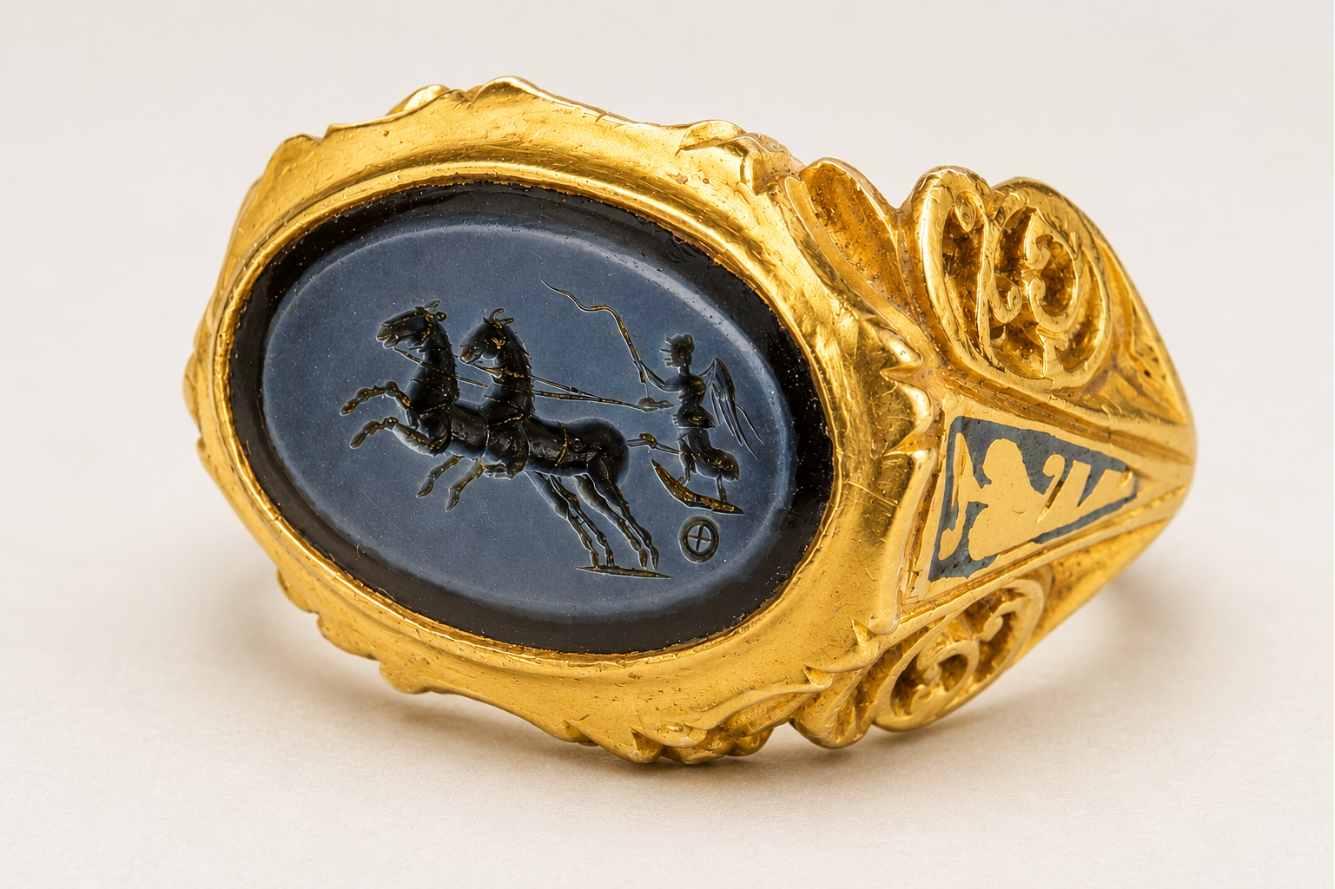
A rare Roman gold ring discovered by an amateur metal detectorist in southwest England is offering new insights into a turbulent period of Roman Britain nearly 1,700 years ago.
The ring was found near Ilminster in Somerset by Kevin Minto, a former soldier and truck driver who has spent years searching local fields with a metal detector. Experts have described the find as one of the most significant Roman discoveries made in the region in recent years.
Weighing 48 grams (1.7 ounces), the ring is unusually large compared with most Roman jewelry recovered in Britain. At its center is a finely carved gemstone depicting Victory, the Roman goddess of triumph, driving a two-horse chariot. Researchers say the craftsmanship is exceptional, and comparable examples are rarely found in Britain.
The discovery was made in an area where Minto had previously uncovered a hoard of nearly 300 Roman coins. He continued returning to the site over several years, eventually finding the gold ring and other Roman-era objects.
Under Britain’s treasure laws, significant archaeological finds must be reported to authorities and assessed before museums can acquire them. The South West Heritage Trust has now acquired the ring and coin hoard after raising £78,010 (about $105,000). The artifacts will eventually become part of the collection at The Museum of Somerset.
Researchers believe the ring belonged to a wealthy member of Roman society. South Somerset was a prosperous region during the Roman period, known for its villas, agricultural estates, and trade connections along the nearby Fosse Way, one of Roman Britain’s most important roads.
The discovery may also shed light on a dramatic chapter in British history. According to museum officials, the ring and accompanying objects were likely buried around A.D. 297 during the aftermath of the Carausian Revolt.
A rare Roman gold ring discovered in Somerset, England, is shedding light on a turbulent chapter of Roman Britain. Researchers believe the ring was buried around A.D. 297 during the aftermath of the Carausian Revolt and remained hidden for more than 1,700 years. #Archaeology pic.twitter.com/K42ig1eBjt
— Tom Marvolo Riddle (@tom_riddle2025) June 4, 2026
The rebellion began in A.D. 286 when Carausius declared himself ruler of Britain and parts of northern Gaul, creating a breakaway state that lasted for nearly a decade. Roman forces eventually regained control of Britain in A.D. 296.
Archaeologists suggest the valuables may have been hidden for protection during this period of political uncertainty and never recovered by their owner.
Amal Khreisheh, senior curator at the South West Heritage Trust, said the artifacts help researchers understand how people in South Somerset lived through a time of instability and change.
Before the ring goes on permanent display, it is being used in community outreach programs. Local schoolchildren have already been given the opportunity to examine the ring and some of the coins.
According to Khreisheh, many students have been fascinated by the mystery surrounding the find, asking who owned the ring and why it was buried. While those questions remain unanswered, the discovery has created a direct link between modern Somerset and its Roman past.
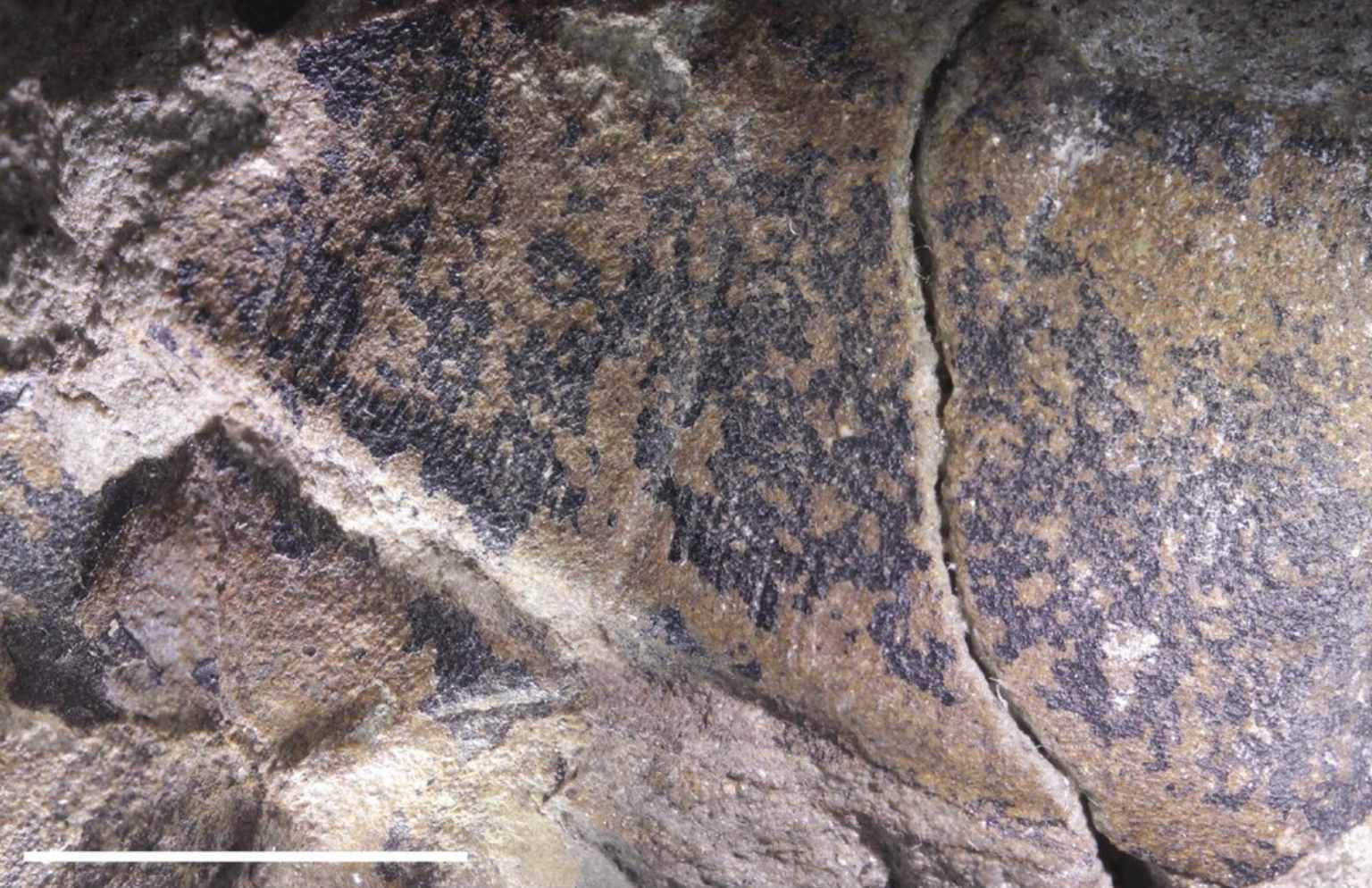
Fossil remains discovered in the United Kingdom have been confirmed as belonging to one of the largest scorpions ever known in Britain, researchers say. The giant species, Praearcturus gigas, measured more than 1 meter (3.3 feet) long and lived about 415 million years ago, making it one of the earliest large predators to inhabit land.
The findings resolve a long-running scientific debate over the identity of the animal. By reexamining fossil fragments from England and Wales, researchers confirmed that Praearcturus was a scorpion rather than a crustacean, as some scientists had previously believed.
With pincers measuring about 16 centimeters (6.3 inches) long, the giant arthropod would have dwarfed modern scorpions. Today, the largest living scorpion reaches only about 23 centimeters (9 inches) in length. The study was published in the journal Palaeontology.
When Praearcturus gigas lived during the Early Devonian Period, life on land was still developing. Small plants and fungi had begun spreading across the landscape, while arthropods were among the first animals to establish themselves away from water.
Researchers believe the giant scorpion preyed on smaller arthropods living on ancient floodplains. Its size likely made it one of the dominant predators of its time.
Lead author Richie Howard said the discovery pushes back the appearance of giant arthropods by tens of millions of years. “When people think of giant arthropods, they often think of creatures such as Arthropleura or giant griffinflies,” Howard said. “But those animals appeared much later, after land ecosystems had become far more complex.”
Howard said the lack of large competing predators may have helped Praearcturus grow to such enormous proportions.
The fossil was first described in 1871 by British paleontologist Henry Woodward, who believed it belonged to a giant crustacean similar to a woodlouse.
For decades, scientists struggled to classify the animal because only fragments of its body had survived. The fossils lacked the distinctive tail that normally identifies a scorpion.
The mystery began to unravel after researchers compared the fossils with Eramoscorpius, a well-preserved ancient scorpion discovered in Canada. Both species share a distinctive triangular sternum on the underside of the body, providing strong evidence that Praearcturus was a true scorpion.
The discovery offers new insight into a key stage of Earth’s history, when animals were adapting to life outside aquatic environments.
Researchers say Praearcturus may not have lived exclusively on land. Fossils from Wales preserve flap-like structures known as epimera, which resemble features seen in modern lobsters and crabs. These structures suggest the giant scorpion may have spent part of its life in water, where larger prey would have been available.
Co-author Greg Edgecombe said the species may even represent a lineage that returned to aquatic habitats after its ancestors adapted to life on land.
Scientists say additional fossil discoveries will be needed to determine how long Praearcturus survived and whether other fragmentary remains found in Britain belong to the species. For now, the fossils provide rare evidence of one of the largest scorpions ever to walk the Earth.
The Isles of Scilly are a group of islands off the southwest tip of Britain. The origin of their name has been a mystery for centuries, but one historian believes that he has now discovered the answer. According to Professor Andrew Breeze, the name of the Isles of Scilly comes from Greek. What does the name mean, and what did the ancient Greeks have to do with this group of islands near Britain?
First, let’s clarify what exactly the Isles of Scilly are. They form a small archipelago off the southernmost tip of Britain, near the southwestern county of Cornwall. There are five inhabited islands and about 140 small rocks and islets.
Historians know very little about the early history of the islands. Something that many investigators agree on, though, is that these islands originally formed just a few larger islands, or possibly even just a single main island and a few outliers.
Speculation abounds as to whether or not these were the Cassiterides, a group of islands mentioned by ancient Greek and Roman texts. These texts refer to the Cassiterides as a group of islands in the Atlantic Ocean from which traders acquired tin.
Since the Isles of Scilly are near Cornwall, which is known for being a source of tin in the ancient world, this suggests that the Isles of Scilly might have been the Cassiterides. Nevertheless, there is no universal consensus about this.
For centuries, there has been speculation as to the true origin of the name of these islands. However, recent research by Andrew Breeze, a professor of philology at the University of Navarra, may have cleared up the issue. According to Dr Breeze, the name of the Isles of Scilly likely derives from Greek.
The earliest attested form of the name of these islands is ‘Silimnus’. This is probably a mistake for ‘Silinnus’. Other early attested forms are ‘Sillinas’ and ‘Sylina’. Based on these attested forms, Breeze argues that the origin of this place name comes from ‘syle’. This is a Greek word referring to robbery, seizure, or plunder.
Breeze argues that the ending is the Greek suffix ‘ina’, meaning ‘pertaining to’. In other words, this theory proposes that the name of these islands refers to the fact that they were a haunt of pirates and plunder.
At first glance, it might seem implausible to suggest that the Isles of Scilly could have a name with a Greek origin. After all, they were in the territory of the ancient Celts, far from the Greeks. What could the Greeks have had to do with the Isles of Scilly?
Numerous ancient records and archaeological finds demonstrate that the inhabitants of the ancient Mediterranean regularly visited Cornwall. This was a major source of tin, which was necessary to make bronze. This trade route existed for well over 1000 years. Hundreds of Greek coins have been found in Britain, most of them in the south.
There is no doubt that the Greeks had a significant presence in this area before the Roman era of Britain. The name ‘Sylina’ and its variants only appear after this. Therefore, an ancient Greek origin for the name of the Isles of Scilly is plausible.
Furthermore, Breeze highlights records from the medieval and early modern periods to support his theory. These show that the Isles of Scilly were infamous for piracy. Shipwrecks were also common, after which the ship’s cargo would be plundered. Therefore, it is understandable to see how such an area would come to be known as the ‘place of plunder’.
Since Andrew Breeze’s theory was published only recently, there has been very little response to it so far among historians and etymologists. However, we can readily make a few observations.
As Breeze himself notes, if his theory is correct, it would be the only known example of an ancient place name in Britain having a Greek origin. This, from the start, should raise our suspicions.
Furthermore, the evidence that Breeze uses to associate the Isles of Scilly with piracy and plunder comes from the medieval and early modern periods. Needless to say, this is long after the name of these islands first appears in the records.
Admittedly, though, the reason why these islands were so closely associated with piracy and plunder appears to be primarily a question of geography. For this reason, it may be reasonable to assume that this had been the case for as long as there was shipping in the area.
We know for a fact that it was always a very popular and important source of tin. Hence, there would indeed have been lots of shipping in that area from long before the Roman era of Britain. Therefore, it is likely that shipwrecks and plunder, if not piracy, were just as common back then as they were in later periods.
There is, however, at least one more objection. This is the fact that another suggested etymology exists. This suggestion connects the name ‘Sylina’ to ‘Sulis’, the name of a Celtic god.
Some etymologists have pointed out that this origin would satisfy the attested medieval Cornish form of the name of these islands. However, it would not easily explain the ancient form, which is never written ‘Sul-‘, but always ‘Sil-‘ or ‘Syl-‘.
In conclusion, does the name of the Isles of Scilly really have a Greek origin? Andrew Breeze offers a theory which is surely as plausible as any yet proposed. While there are some valid objections to it, none of them are insurmountable.