The municipality of Ferreira do Zêzere has officially launched its 2026 bathing season with the inauguration of a new river beach on the shores of the Castelo do Bode reservoir,
DECO – the Portuguese consumer watchdog – has waded into the ‘sun umbrella controversy’, just as we all thought things had settled back down to the way they always were.
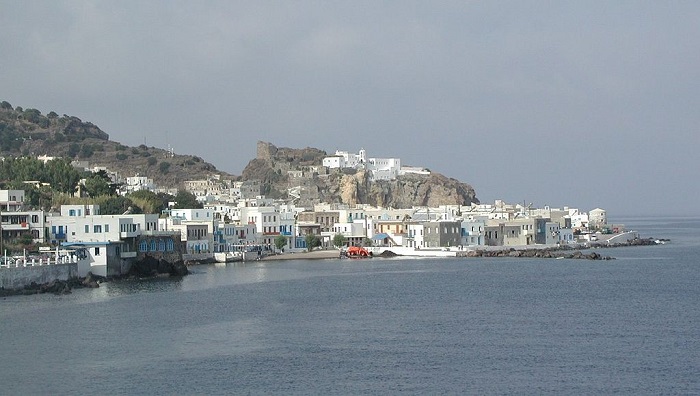
View of Mandraki, Nisyros island, Greece. Credit: Alexandros Diamantidis, CC BY-SA 3.0/Wikimedia
Nisyros is a magical gem located in the Aegean. The island, part of the Dodecanese archipelago, is situated between Kos and Tilos, and has an active volcano which is also the youngest volcano in Greece.
Nisyros offers untouched villages, quiet beaches, hot springs and ancient walls of black volcanic stone. Top that off with the fact that there are few tourists, and you’ll feel like the entire island and all of its many beauties are exclusively yours.
There are several quaint villages on the island; the largest is Mandraki. It is straight out of a photo book of traditional Greek island architecture and great views.
The narrow, cobbled streets and squares lace around the villages where you can take a stroll and feel as though you have traveled back to ancient times. The homes, which are made of volcanic rocks and are insulated with pumice stone, boast wooden balconies.
Emporios. Credit: Robert Powell, CC BY-SA 3.0/Wikimedia
Nightlife on Nisyros is very unlike the hectic pace of party islands in Greece. You will, however, find quaint local tavernas and bars in which to enjoy your lazy summer nights.
The Volcano
You can actually go to the center of the island, walk along the volcano’s rim, and watch its boiling crater. The volcano, which hasn’t actually erupted since 1888, is a spectacular sight.
Located at the edge of the caldera, the view is breathtaking, and you can learn a thing or two about the fascinating geology of the island. 3D animated images to demonstrate various facts about the volcano are available, so be sure to check them out.
Aerial view of Nisyros. Credit: Ferengi, CC BY-SA 3.0/Wikipedia
Paleokastro, Nisyros’ Acropolis
Dating back to the classical period and ruins of the ancient city, the Paleokastro is constructed from one of the hardest rocks in the world, basaltic andesite, which was spewed out from the volcano. This has helped preserve the acropolis through the passage of time.
A Monastery Built in a Cave
The Monastery of Panagia Spiliani sits atop of a hill in northwest Mandraki, the largest part of it constructed inside a cave. A truly unique experience, the cave is divided into two churches and is definitely worth a visit.
Panagia Spiliani. Public Domain
Nisyros’ Thermal Spas
At several points along the coast of Nisyros, you will find spouting hot water springs with temperatures varying from 30 to 60 degrees Celsius (86 to 140 degrees F). The springs are known for their therapeutic effects for muscles and skin.
Around 1.5 km (1 mile) east of the port of Mandraki, you will find the thermal spa of Loutra with hot spring waters at 37 degrees Celsius (or 98.6 Fahrenheit, equal to humans’ body temperature).
Get ready For Beautiful Beaches on Nisyros island
Due to the relatively few numbers of travelers on the island, the beaches of Nisyros are extraordinarily clean, quiet, and relaxing.
You can go to a different beach every day, as there are many to choose from. Some favorites are Lefki Beach, along with Gialiskari, Lyés, Páloi, Pachia Ammos, Katsouni, Aghios Savas, Aghia Irini, and Chochlákia Beaches.
Must-try local cuisine
There are many traditional dishes to be savored on Nisyros island. Some typical “spitiko” or homemade dishes are pita, chickpea nuggets, and kapamas, which is stuffed goat. Of course, as you are on an island, there is always fresh seafood available, too!
Getting there
You can get to the volcanic paradise of Nisyros from the island of Kos or as part of a tour of other islands in the Dodecanese, as well as from Piraeus.
View of Mandraki, Nisyros island, Greece. Credit: Alexandros Diamantidis, CC BY-SA 3.0/Wikimedia
Nisyros is a magical gem located in the Aegean. The island, part of the Dodecanese archipelago, is situated between Kos and Tilos, and has an active volcano which is also the youngest volcano in Greece.
Nisyros offers untouched villages, quiet beaches, hot springs and ancient walls of black volcanic stone. Top that off with the fact that there are few tourists, and you’ll feel like the entire island and all of its many beauties are exclusively yours.
There are several quaint villages on the island; the largest is Mandraki. It is straight out of a photo book of traditional Greek island architecture and great views.
The narrow, cobbled streets and squares lace around the villages where you can take a stroll and feel as though you have traveled back to ancient times. The homes, which are made of volcanic rocks and are insulated with pumice stone, boast wooden balconies.
Emporios. Credit: Robert Powell, CC BY-SA 3.0/Wikimedia
Nightlife on Nisyros is very unlike the hectic pace of party islands in Greece. You will, however, find quaint local tavernas and bars in which to enjoy your lazy summer nights.
The Volcano
You can actually go to the center of the island, walk along the volcano’s rim, and watch its boiling crater. The volcano, which hasn’t actually erupted since 1888, is a spectacular sight.
Located at the edge of the caldera, the view is breathtaking, and you can learn a thing or two about the fascinating geology of the island. 3D animated images to demonstrate various facts about the volcano are available, so be sure to check them out.
Aerial view of Nisyros. Credit: Ferengi, CC BY-SA 3.0/Wikipedia
Paleokastro, Nisyros’ Acropolis
Dating back to the classical period and ruins of the ancient city, the Paleokastro is constructed from one of the hardest rocks in the world, basaltic andesite, which was spewed out from the volcano. This has helped preserve the acropolis through the passage of time.
A Monastery Built in a Cave
The Monastery of Panagia Spiliani sits atop of a hill in northwest Mandraki, the largest part of it constructed inside a cave. A truly unique experience, the cave is divided into two churches and is definitely worth a visit.
Panagia Spiliani. Public Domain
Nisyros’ Thermal Spas
At several points along the coast of Nisyros, you will find spouting hot water springs with temperatures varying from 30 to 60 degrees Celsius (86 to 140 degrees F). The springs are known for their therapeutic effects for muscles and skin.
Around 1.5 km (1 mile) east of the port of Mandraki, you will find the thermal spa of Loutra with hot spring waters at 37 degrees Celsius (or 98.6 Fahrenheit, equal to humans’ body temperature).
Get ready For Beautiful Beaches on Nisyros island
Due to the relatively few numbers of travelers on the island, the beaches of Nisyros are extraordinarily clean, quiet, and relaxing.
You can go to a different beach every day, as there are many to choose from. Some favorites are Lefki Beach, along with Gialiskari, Lyés, Páloi, Pachia Ammos, Katsouni, Aghios Savas, Aghia Irini, and Chochlákia Beaches.
Must-try local cuisine
There are many traditional dishes to be savored on Nisyros island. Some typical “spitiko” or homemade dishes are pita, chickpea nuggets, and kapamas, which is stuffed goat. Of course, as you are on an island, there is always fresh seafood available, too!
Getting there
You can get to the volcanic paradise of Nisyros from the island of Kos or as part of a tour of other islands in the Dodecanese, as well as from Piraeus.
A few of the country’s most popular, breathtaking tourist destinations can instantly transform from an idyllic paradise into a severe survival hazardMyrtos Beach in Kefalonia. Public Domain
Greece is world-renowned for its beaches and postcard-perfect coastlines, but beneath those beautiful, turquoise waters lies danger. When heavy weather conditions strike, a select few of the country’s most popular, breathtaking tourist destinations can instantly transform from an idyllic paradise into a severe survival hazard.
“Lalaria” refers to the smooth white pebbles sculpted over millennia by the Aegean waves. Lalaria is a beach of indescribable beauty on Skiathos, famous for its turquoise waters, blindingly white shoreline, and the majestic stone arch of Tripia Petra rooted in the seabed.
However, Lalaria conceals hidden dangers. The coast is accessible strictly by sea. More importantly, when strong northerly winds blow, waves can reach several meters high, generating a violent, dangerous undertow (antimamalo or clapotis wave reflection) that poses a severe threat to both swimmers and small boats.
2. Matala – Southern Crete
When the scorching Livas (the hot southwesterly wind) sweeps through southern Crete, the shoreline of Matala—the iconic former haven of the 1960s “flower children”—turns stark white with crashing foam. Swings in the weather make swimming completely prohibitive.
The sea routinely breaches the shoreline, rushing past the sunbeds. Lifeguards blow their whistles continuously to signal extreme danger to anyone daring to dive. While reckless thrill-seekers often grab inflatable mattresses to play sea adventurers, the physical terrain is ruthless. The coast features an incredibly abrupt drop-off into deep water. Combined with massive waves, the undercurrent will pull anyone but an Olympic swimmer out into the open sea—where you would be lucky to finally wash ashore in Libya. Local lifeguards continuously flag this beach as hazardous, a risk that similarly applies to the nearby beach of Agios Pavlos in Rethymno.
3. Nas – Ikaria
Located in northern Ikaria, Nas is arguably the single most dangerous beach in Greece. It is the only beach in the country fitted with a permanent safety rope anchored into the rocks. This rope exists so brave swimmers can cling to it to avoid being violently swept out into the open sea or smashed against the jagged cliffs by aggressive rip currents. Nas remains highly popular among nudists and free campers. Access involves leaving your vehicle on the main Agios Kirykos–Armenistis road, hiking down a steep cliffside path of stone steps to a riverbed, and traversing the final stretch through the water or over the rocks.
4. Chorefto – Pelion
Chorefto beach in Pelion is world-famous and heavily visited, but it requires extreme caution. As one visitor noted on social media: “It is a gorgeous, sprawling beach, but as you approach the shoreline, the sand turns into jagged stones. When the wind picks up, swimming is virtually impossible. The heavy currents and crashing waves literally ‘dig up’ the seabed, causing the shoreline to drop off precipitously right in front of you.” Chorefto is a beach where, the moment a northern gale strikes, you need to run. The sheer force of the waves and currents will make you “dance” (Chorefto literally translating to dancer) to the frantic rhythm of the wind.
5. Myrtos – Kefalonia
While internationally celebrated as one of the most beautiful beaches in the world, Myrtos is equally famous among marine experts for its deceptive treachery. Tucked between the feet of two mountains, the beach faces the open Ionian Sea, making it a magnet for fierce winds.
The shoreline features an immediate, precipitous drop-off just a few steps into the water. Because of this unique underwater topography, strong winds create massive, violent waves and a punishing undercurrent. Swimmers who get knocked off their feet by the crashing shoreline waves are frequently dragged into deep water, making it incredibly difficult to swim back to the pebbled shore.
6. Platia Ammos – Kefalonia
While Myrtos beach typically dominates international travel sites as one of Europe’s finest, Kefalonia hides another beach that rivals its beauty but demands expert hiking skills. Platia Ammos is tucked deep within a bay past the Kipouria Monastery, surrounded by sheer, imposing cliffs.
While its deep blue waters are pristine, accessing them used to require climbing down (and back up) over 400 stone steps under a relentless sun. However, severe weather in 2014 collapsed a large portion of the staircase, raising the difficulty level to an extreme “Rambo” mission. If the sea turns rough here, you will find yourself scrambling desperately up the rock face like a mountain goat, wishing you had stayed on a safer beach.
7. Kalami – Kythira
The trek from the village of Mylopotamos to the remote beach of Kalami involves navigating slippery, steep, and highly dangerous cliffs. In several spots, reaching the next foothold requires a literal leap into the void over a drop-off. While the final destination is a stunning reward, the journey is a small Odyssey. Anyone without proper hiking gear, physical conditioning, or nerves of steel is highly advised to stay safely beneath the plane trees by the nearby Fonissa (Killer) Waterfall and leave the photos to the professionals.
8. Paradise Beach – Kos
Located on the southern coast of Kos, this beach looks like a calm, shallow haven perfect for families. However, its danger doesn’t come from towering waves or steep cliffs, but rather from a unique volcanic phenomenon occurring beneath the seabed.
Due to the active volcanic network tied to the nearby island of Nisyros, Paradise Beach emits cold volcanic gases from the seafloor, earning it the nickname “Bubble Beach.” While tourists enjoy swimming through the natural bubbles, these underwater thermal currents can cause sudden, extreme temperature drops in the water. Furthermore, the localized release of volcanic gases can occasionally cause dizziness or sudden fatigue for swimmers who linger too long over the vent areas.
9. Anthony Quinn Bay – Rhodes
Named after the famous Hollywood actor who fell in love with the spot while filming The Guns of Navarone, this emerald-water bay is an aesthetic masterpiece. However, its natural geology requires extreme physical caution.
The entire bay—both on the shore and underwater—is a minefield of sharp, jagged rocks and slick, algae-covered reefs. The main hazard here is orthopedic and physical injury; every year, numerous tourists suffer severe cuts, slips, and fractures while attempting to climb over the rocks to enter the deep water. Additionally, the rocky crevices are a prime habitat for sea urchins, meaning a misplaced step can easily cut a vacation short.
10. Kolymbithres – Tinos
Famous for its otherworldly landscape, Kolymbithres features smooth, gray granite rock formations sculpted by centuries of wind and water, creating a series of tiny, sandy enclaves.
Positioned on the northern coast of Tinos—an island famous for its relentless Aegean winds—this beach bears the full brunt of the Meltemi (the fierce summer north winds). When the gales hit, the wind funnels through the granite rock formations with extreme velocity. This creates chaotic, swirling wave patterns and sudden, unpredictable cross-currents within the narrow rocky channels, easily trapping swimmers against the hard granite walls.
11. Kathisma – Lefkada
Kathisma is a sprawling, cosmopolitan paradise on the western coast of Lefkada, famous for its vibrant beach bars and water that looks almost artificially turquoise. However, its beauty masks a lethal combination of open-ocean geography and violent underwater mechanics.
Because Kathisma faces the completely open Ionian Sea with no natural bays or reefs to break the water’s momentum, it bears the full, unbridled force of western winds. When a storm or heavy wind hits, it generates towering, closely packed waves that smash violently into the shore. More importantly, the shifting tide creates a phenomenon known to locals as “sand-shaving.”
The heavy surf literally hollows out the seabed beneath your feet, causing the shoreline to drop off vertically into deep water just a step from the dry sand. This creates an incredibly powerful, vacuum-like undertow. Swimmers who get knocked off their feet by a wave are immediately sucked into deep water, making it nearly impossible to struggle back onto the slick, collapsing shoreline. Lifeguards here routinely change their flags to red, but many tourists fail to realize that even wading knee-deep in Kathisma’s rough surf can prove fatal.
12. Navagio Beach (Shipwreck Beach) – Zakynthos
Navagio is a global bucket-list destination, defined by the stark contrast of a rusted freighter marooned on a strip of white sand, surrounded by brilliant turquoise water and 200-meter-tall vertical cliffs. However, this paradise is so inherently hazardous that it is the only beach on this list that is completely closed to the public by ministerial decree.
Navagio is plagued by two lethal threats: severe seismic instability and unpredictable marine currents. Tucked beneath towering, sheer limestone walls, the beach is highly prone to sudden, massive rockfalls. Following a terrifying 2018 landslide that capsized tourist boats and a 2022 earthquake that brought tons of rock crashing onto the sand, geologists declared the beach a permanent hazard zone. Furthermore, because the bay faces the open sea, sudden, violent swells can trap boats against the cliffs or create chaotic cross-currents. Today, tourists are strictly prohibited from walking on the beach or swimming in the bay; you can only view this beautiful but perilous marvel from a safe distance aboard a boat or from a designated cliffside viewing platform high above.
The invasive Asian seaweed Rugulopteryx okamurae is expected to remain a feature of Portugal’s coastline for the foreseeable future, but scientists, local authorities and the government are increasingly focusing on
The government has recommended that Portuguese beaches display simple maps at their entrances showing where visitors can place umbrellas and towels, following growing confusion over concession areas and beach access
As the ‘battle of the sunshades’ lurched like a drunkard on the sands, Portugal’s minister for environment and energy has appeared to clarify all doubts. She did so by effortlessly
Round three of the intense debate, opened by APA environmental agency, over the rights (or otherwise) to put up a sunshade has now verged into new territory. With APA insisting
Stretching for more than 150 kilometres along Portugal’s southern coast, the region offers a remarkably diverse beach experience. From the wild, windswept shores of the western Algarve to the calm,
The delivery, carried out under the SEAWATCH project, will significantly boost surveillance, prevention and rescue capacity along the Algarve coastline and other key bathing areas nationwide. The fleet includes 30
Only a few days ago, the nation’s press reported that “there is no law that prohibits people from setting up their sunshades in front of beach concessions. “Private concessions, be

 Login
Login