Normal view

Received — 10 June 2026 GreekReporter.com

Israeli Defense Giants Deliver Final Dossiers for Greece’s €3B ‘Achilles Shield’

10 June 2026 at 14:44
Greece Achilles Shield
Greece is close in approving the ‘Achilles Shield’, a program similar to the Iron Dome, the Israeli air defense system, which intercepted missiles fired from Iran, in Junee 2025. Credit: EPA/ABIR SULTAN via AMNA

A trio of major Israeli defense contractors recently delivered their final proposal dossiers for Greece’s €3 billion ($3.5 billion) ‘Achilles Shield’ program, a sophisticated, multi-layered air, anti-ballistic, and counter-drone defense network powered by cutting-edge Israeli technology.

The proposals by Israel Aerospace Industries (IAI), its subsidiary ELTA Systems, and Rafael Advanced Defense Systems, satisfy all criteria mandated by Greece’s General Directorate for Defense Investments and Armaments (GDAEE), according to a report by newmoney.gr.

The nationwide shield stands out as one of the most critical crown jewels within Greece’s broader Long-Term Defense Procurement Program (2025–2036), which outlines an overall budget of €30 billion.

Industrial co-production

The final procurement contracts are now navigating the signature pipeline through the Ministry of National Defence (YETHA) and the General Staffs. Officials are pushing to have the program formally added to the agenda of the upcoming KYSEA session, tentatively scheduled for June 18, 2026, or the subsequent meeting in early July.

The report notes that a pivotal victory for Greek industry was securing a domestic industrial participation rate locked at a minimum of 25%, spanning both localized manufacturing and technology transfers.

The Israeli consortium has already engaged in extensive talks with domestic contractors, signing several Memorandums of Understanding (MoUs) and strategic partnerships. Industrial analysts estimate that the final domestic footprint could realistically reach 30%, backed by fully drafted proposals to establish dedicated production lines on Greek soil.

Key examples and partners already tapped for the program include:

  • IAI & Hellenic Aerospace Industry (EAB): This existing partnership has already yielded results, notably the successful integration of Greece’s proprietary “Centaur” counter-drone system into the Barak weapon architecture.
  • Domestic Consortium Partners: Major Greek defense, industrial, and infrastructure players have secured preliminary roles, including Metlen, Miltech, Scytalys, Akmon, Salamis Shipyards, and GEK TERNA, with the roster expected to expand over the program’s three-year rollout.
  • Tactical Logistics: The specialized utility vehicles tasked with transporting the mobile defense systems will be sourced from IVECO, represented in Greece by the Syngelidis Group in partnership with Metlen.

The tech blueprint: Inside Greece’s ‘Achilles Shield’

The architecture of the shield relies on a unified, network-centric ecosystem. It is designed to seamlessly interface with Greece’s upcoming Belharra (FDI) frigates, upgraded F-16 Viper fighters, incoming F-35 stealth jets, and existing Patriot missile batteries.

The primary systems slated for integration comprise:

  • IAI Barak MX: Operating as the backbone of the entire network. Utilizing three missile variants with ranges spanning 35 to 150 kilometers, it will completely phase out legacy, Cold War-era Hawk systems.
  • Rafael David’s Sling: Tasked with mid-to-upper-tier interception of advanced ballistic missiles and long-range threats. This system will functionally replace the Soviet-origin S-300 systems currently in the Hellenic inventory.
  • Rafael SPYDER: Providing short-to-medium range coverage (15, 20, and 40 kilometers). These mobile batteries will replace aging eastern-bloc legacy systems like the OSA-AK and TOR-M1.
  • ELTA EL/M-2084 MMR Radars: These mobile, Multi-Mission Active Electronically Scanned Array (AESA) radars will overhaul the Hellenic Air Force’s Air Control System. The state-of-the-art arrays can simultaneously track up to 1,200 airborne targets at ranges up to 475 km, or up to 200 weapon ballistic trajectories within a 100 km radius.
  • Greek-Built C4I Hub: The vital Command, Control, Communications, Computers, and Intelligence (C4I) architecture will be co-developed and assembled in Greece alongside domestic software and engineering firms.


Greece Scuttles Navy Vessels for New Scuba Diving Park in Crete

10 June 2026 at 13:18
Crete diving park
Τhe decommissioned naval ship A/B Folegandros Is being scuttled using controlled explosive charges. Video screenshot.

In the coastal waters of Chania, Crete, decommissioned navy vessels are being scuttled to create Greece’s first highly regulated, wreck-based scuba diving park.

The ambitious underwater project by the municipality of Apokoronou at Omprogialos already features 44 deployed artificial reefs alongside the decommissioned Hellenic Navy vessel Nestor. On Wednesday, the park adds its newest centerpiece: the decommissioned naval ship A/B Folegandros, which is scheduled to be scuttled using controlled explosive charges.

Θάλασσα Χανίων
Το ανατίναξαν για καλό σκοπό…
Στον Ομπρόσγιαλο Χανίων δημιουργείται το πρώτο οργανωμένο καταδυτικό πάρκο της Ελλάδας.
Μετά τους 44 τεχνητούς υφάλους και το «Νέστωρ», βυθίζεται σήμερα το παροπλισμένο «Α/Β Φολέγανδρος» σε βάθος περίπου 25 μέτρων. pic.twitter.com/OjcV1SIXvY

— Αντώνης Νταλακογεώργος (@Adalakogeorgos) June 10, 2026

Hellenic Coast Guard vessels and an elite Navy Underwater Demolition Command (OYK) unit are currently on-site overseeing the operation. Following detonation, the vessel will settle on the seabed at a depth of approximately 25 meters (82 feet).

To ensure public safety, maritime authorities have enacted stringent security measures across the broader Ompros Gialos sea area. A strict multi-kilometer exclusion zone has been established, completely banning the approach, anchoring, or transit of any vessel within a one-kilometer radius of the scuttling site. The Hellenic Coast Guard has been actively patrolling the perimeter since the early hours of the morning and will maintain surveillance until the operation is fully finalized.

A scuba diving park

The scuttling of the Folegandros is a pivotal step toward finalizing the Apokoronou Diving Park, a cornerstone project in the region’s strategic push to develop high-end, niche tourism markets. The diving park, which will be owned and operated directly by the Municipality of Apokoronas, features three distinct underwater routes designed for varying exploration levels:

  • Route 1: The Eco-Trail — Navigating through the network of 44 artificial reefs, submerged at a highly accessible depth of 9 to 10 meters (30–33 feet)
  • Route 2: The Nestor Wreck — Centered around the previously scuttled Hellenic Navy ship
  • Route 3: The Folegandros Deep Wreck — Descending to the newly scuttled vessel at 25 meters, geared toward intermediate and advanced divers

A catalyst for alternative tourism

Local officials aim to have the diving park fully operational by the end of the current 2026 tourism season.

Hailed as one of the most significant alternative tourism infrastructures in Chania and the wider island of Crete, the park is projected to become a premier hotspot for international and domestic diving enthusiasts. Beyond the economic boost, this dedicated “shipwreck museum” is designed to act as a marine sanctuary, generating a highly positive ecological footprint by fostering localized marine biodiversity and promoting sustainable eco-tourism in the Aegean.

Related: Greece’s Ten Best Scuba Diving Spots

The Battle for Milos: Locals Fight Corporate Takeover of Greek Island

10 June 2026 at 09:29
Milos, Greece corporate development
Big hotel construction on Milos undermines the character of the Greek island note local groups. Credit: Greek Reporter

The Mayor of Milos, Manolis Mikelis, has issued a fierce warning against new central government legislation and aggressive corporate development, which he claims threaten to permanently disfigure one of Greece’s most visually distinct islands.

Mikelis extensively critiqued Greece’s proposed tourism zoning framework, accusing the central government of bureaucratic negligence and creating legal loopholes that favor wealthy international funds while systematically locking out local residents.

Corporate development that excludes islanders on Milos

At the heart of the crisis is a newly introduced tourism spatial plan, released online by the Ministry of Tourism. The legislation establishes strict minimum land requirements for the construction of new hotels, setting the threshold at 8, 12, or 16 stremmata (approximately 2 to 4 acres) depending on the specific zone.

Mikelis points out that because land ownership on Milos is historically fragmented, with local families generally owning plots of only 4 to 6 stremmata (about 1-1.5 acres), the law effectively bars residents from developing small, independent hospitality businesses.

“Consequently, it allows the big funds and the rich who have too much money to come in, forcing locals to sell off their property just so these businesses can operate for only seven months a year,” Mikelis warned in speaking to Greek Reporter.

The Mayor also expressed deep concern that the central government plans to issue a legislative decree to retroactively amnesty existing illegal corporate constructions. “That is the goal, and that is what we see happening,” he said, adding that his office is actively trying to block a recent influx of newly issued building permits from being executed.

Environmental violations at Sarakiniko and Mytakas

The local administration has recently been forced to take emergency legal action following severe environmental violations in some of the island’s most ecologically sensitive regions.

In the Kaminia/Sarakiniko area, an investor engaged in illegal excavations directly adjacent to the beach, destroying ancient fossils verified by the Goulandris Museum. Despite public administration inspectors declaring the project “100% illegal,” the developer ignored government-mandated restoration deadlines with zero consequences.

Milos corporate development
The municipality of Milos accuses developers of destroying the landscape of the island. Credit: Greek Reporter

Meanwhile, in Mytakas, an extension of Sarakiniko’s famous lunar-like volcanic landscapes, a large development company purchased an existing hotel with plans to construct a massive 271-bed complex featuring one hundred private swimming pools.

According to municipal records, the developer illegally excavated and shipped out eleven shiploads of pozzolan (volcanic ash) to cement factories. Local authorities intervened only when bulldozers began moving toward the public shoreline. “We went to the Supreme Court (Council of State) and we are waiting for the final decision,” Mikelis stated. “A temporary revocation of the permit has been issued, and we are awaiting the final ruling.”

The fight for the “syrmata”

Beyond environmental destruction, Mikelis is fighting a bureaucratic battle to preserve the island’s unique cultural heritage: the syrmata. These are traditional, vibrantly colored fishermen’s structures carved directly into the seaside volcanic rock across coastal villages like Klima, Mandrakia, and Fourkovouni.

The municipality is pushing for strict architectural guidelines to ensure all 350 existing structures are protected and repaired using traditional methods despite a lack of formal state recognition.

Milos Iconic Boat Garages
The iconic syrmata on Milos. Credit: Greek Reporter

“The syrmata were the cultural heritage of this place, showing the life of people 150 years ago,” Mikelis explained. “In order to survive, they made a hole in the rocks to store their boat and their fishing equipment so they could live off fishing and survive during the Axis occupation and long before it.”

The Mayor noted that the term originates either from dragging (syrsimo) boats into the caves, or from historical lookouts who would shout “Syrma, syrma!” (“Watch out!”) to warn workers of approaching gendarmes, as the structures were originally built without formal permits. “Venice exists inside the water, yet we as a state cannot recognize these areas as special urban settlements,” Mikelis lamented.

A united front against corporate overdevelopment

The conflict highlights a growing rift between local municipalities and the central government. In 2023, Milos completed a comprehensive local zoning plan (SCHOOAP) designed to protect its environmentally-sensitive Natura-designated areas. However, the central government overturned the environmental study to accommodate high-value corporate investments.

Speaking to Greek Reporter, Mikelis described the Ministry’s overriding framework as a “death knell” for the local small entrepreneurs who built the island’s reputation. Instead of smaller rooms tailored to the island’s cultural scale, legal loopholes are being exploited to construct massive 300-bed luxury resorts that block public beach access.

The cash-strapped municipality is currently diverting vast public funds toward legal fees to fight these investments in court, explicitly pointing to neighboring Cycladic islands that have already been devastated by anarchic overdevelopment.

Milos is not fighting alone. Mikelis concluded by vowing to form a united front with other Greek island mayors to force a rewriting of the national tourism framework. “We will use every legal remedy to convince the people who wrote these unacceptable laws not to destroy our land any further,” Mikelis said. “Our destinations shouldn’t last for just ten years and then be degraded because the beauty and unique characteristics of our islands were destroyed. Together with other mayors, we are coordinating to make our voice stronger, ensuring longevity so that when someone pays to travel here from America, Australia, or Europe, they can still find and visit these rare beauties.”

Greece and Turkey Establish Permanent Cultural Forum

10 June 2026 at 08:37
Greece Turkey Cultural Forum
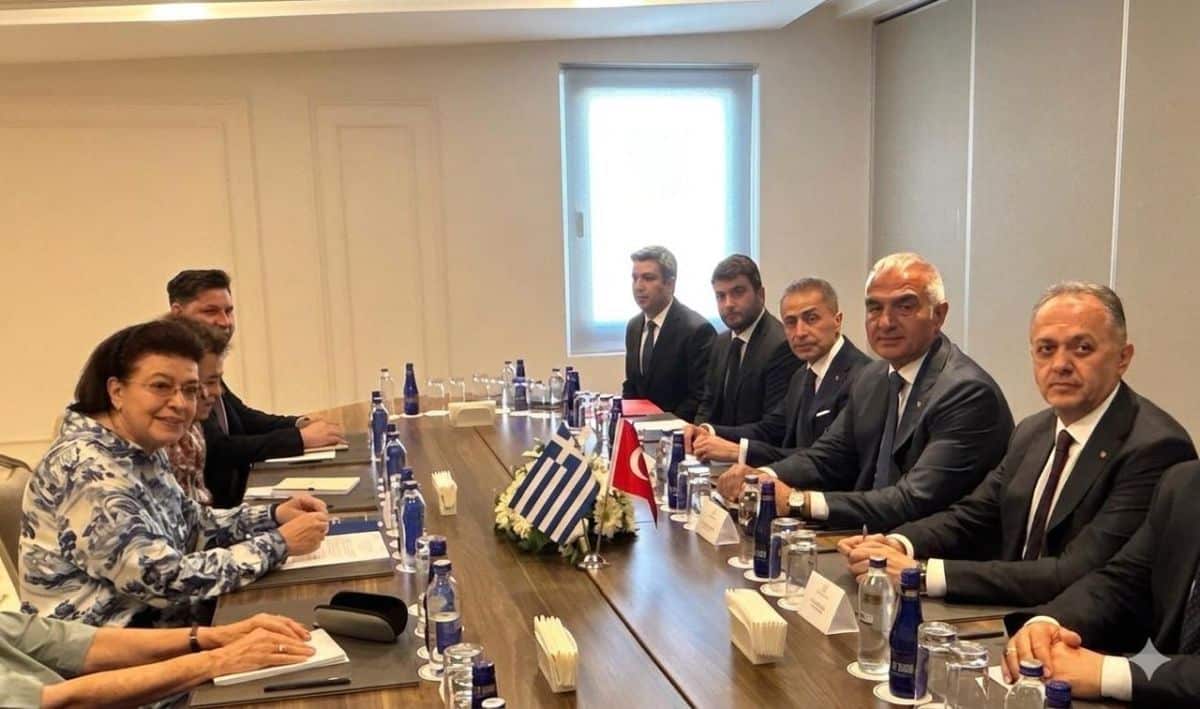
Greek Culture Minister Lina Mendoni and Turkish Culture and Tourism Minister Mehmet Nuri Ersoy. Credit: Ministry of Culture

Greece and Turkey have established a permanent cultural forum to strengthen bilateral cooperation in cultural heritage, museums, research, education, and new technologies, creating a new institutional framework for dialogue between the two countries.

The Greece-Türkiye Cultural Forum was formally established last week through a Joint Declaration signed by Greek Culture Minister Lina Mendoni and Turkish Culture and Tourism Minister Mehmet Nuri Ersoy during the forum’s inaugural session in Cappadocia. Under the agreement, the forum will meet regularly in both countries and serve as a platform for exchanging expertise and developing joint initiatives. “Culture is perhaps the deepest and most enduring field of communication between our societies,” Mendoni said.

The forum is the latest outcome of efforts to strengthen Greek-Turkish relations following the Athens Declaration on Friendship and Good Neighbourly Relations signed by Prime Minister Kyriakos Mitsotakis and President Recep Tayyip Erdogan in December 2023. It also builds on a Memorandum of Cultural Cooperation signed by the two culture ministers during the 6th Supreme Cooperation Council in Ankara.

Heritage protection and cultural cooperation between Greece and Turkey

During the forum, Mendoni outlined Greece’s approach to heritage protection, noting that Greek legislation safeguards all monuments equally—ancient, Byzantine, Ottoman, post-Byzantine and modern—regardless of their religious or cultural origin. She also stated that all are incorporated into the country’s cultural routes and tourism networks.

Furthermore, the forum featured presentations by officials and experts from both countries on the restoration and conservation of Byzantine and Ottoman monuments, heritage management, historical research, and the use of new technologies in the cultural sector. Discussions also focused on combating the illicit trafficking of cultural goods, an area in which Greece and Turkey have cooperated since signing a bilateral protocol in 2013.

“The exchange of information, the cooperation of competent services and the use of international mechanisms are crucial tools for effectively combating the illegal trafficking of cultural goods and securing their return to their place of origin,” Mendoni said. The Joint Declaration also highlights the importance of digitalization and improving public access to cultural resources through digital technologies, while encouraging closer cooperation in the use of emerging technologies in heritage management.

On the sidelines of the forum, Mendoni thanked Ersoy for Turkey’s support at UNESCO’s Intergovernmental Committee regarding the return of the Parthenon Sculptures. She noted that his confirmation that no Ottoman document ever authorized Lord Elgin’s removal of the sculptures strengthens the international case for their reunification in Athens.

Related: Turkey Deals Blow on the UK’s Legal Claim For the Parthenon Marbles

Greece Approves New Migration Bill: Fast-Track Deportations and “Return Hubs”

10 June 2026 at 08:13
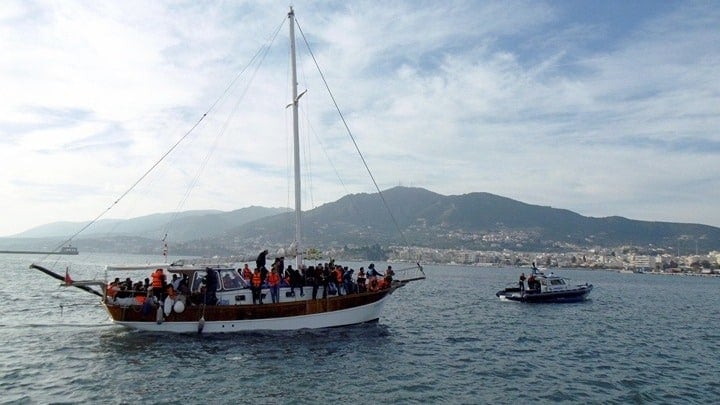
A Hellenic Coast Guard vessel tows a migrant boat to the port. Greece has approved a new migration bill.
A Hellenic Coast Guard vessel tows a migrant boat to the port. Credit: AMNA

Greece’s Parliament has passed a major migration bill that officially integrates the European Union’s new Pact on Asylum and Migration into domestic law. The legislation introduces stringent measures to overhaul border controls, expedite asylum applications, and fast-track the deportation of individuals whose asylum claims have been rejected.

A central element of this new framework is the establishment of offshore “return hubs.” These are transit centers located in non-EU countries where rejected asylum seekers will be transferred if their countries of origin refuse or delay their repatriation.

Minister Plevris on “return hubs” and negotiations

Migration Minister Thanos Plevris clarified that these hubs will not operate outside the law, emphasizing: “These centers will operate within the framework of European Union agreements with third countries and under the guarantees of European and international law.”

Greece is spearheading this initiative alongside Germany, Denmark, Austria, and the Netherlands. The coalition aims to sign their first bilateral agreements later this year so the hubs can become fully operational in 2027. Minister Plevris revealed that advanced talks are already underway. “The Greek government has already been in consultations with two African countries,” he stated.

The Minister also noted that these hubs are a vital tool for Greece, as partner nations frequently experience secondary migration flows—meaning migrants who initially crossed into Europe via Greek territory. He added:

“The creation of a more effective European return mechanism can act synthetically with the existing system and offer an additional innovative tool both to Greece and the remaining member states for managing returns.”

Voluntary returns and stricter detention policies

The new law expands administrative detention, increases surveillance on individuals awaiting deportation, and speeds up removals in coordination with Frontex. Minister Plevris stated that the strict new framework “is already starting to produce tangible results.”

According to Plevris, voluntary returns handled via the International Organization for Migration (IOM) have already increased by 25% since the new measures were introduced, with hundreds of undocumented individuals coming forward to express their intent to return home.

The changing migration numbers in Greece

Minister Plevris linked the accelerated asylum processes and rigid enforcement directly to a steep decline in illegal border crossings, noting that proper returns and secure borders are inherently connected: “These figures confirm that the effective management of returns, the acceleration of asylum procedures, and border protection are interconnected pillars of a cohesive migration policy.”

To demonstrate the shifting impact, Plevris provided specific data comparing past crises to current trends. Under the previous administration between 2015 and 2019, Greece saw a massive wave of 1,215,280 irregular arrivals. Since 2019, that number has dropped significantly to 197,651 total arrivals.

Furthermore, during the first five months of 2026, nationwide arrivals saw a further 31% decrease, with arrivals in the Aegean Sea plunging by 65%. However, localized pressure remains. Over the past two years, for instance, the southern islands of Crete and Gavdos have experienced a sharp rise in migrant boats arriving from Libya.

The efficiency of processing has also changed. Pending asylum applications in Greece have plummeted by roughly 80%, dropping from 142,000 in 2019 to just 28,000 today. At the same time, stricter evaluation standards have caused the international protection approval rate to fall from 71.5% to 40.7%.

Two key pillars of the new legislation

Mandatory Border Screening: Before a migrant is legally considered to have entered EU territory, they must undergo a mandatory pre-entry screening at the border. This process includes identity verification, biometric data capture, security and health checks, and cross-referencing information via the upgraded Eurodac database to track migrant movements across the EU.

Fast-Track Asylum Evaluation: The law establishes much tighter deadlines to eliminate years of bureaucratic delays. Applications flagged as “manifestly unfounded,” particularly those submitted by nationals of countries with historically low asylum approval rates, will face rapid, border-adjacent evaluations and immediate rejection.

Violent Anti-Immigration Riots Erupt Across the UK Following Belfast Stabbing

10 June 2026 at 06:32
Anti-immigration riots in the UK, Belfast
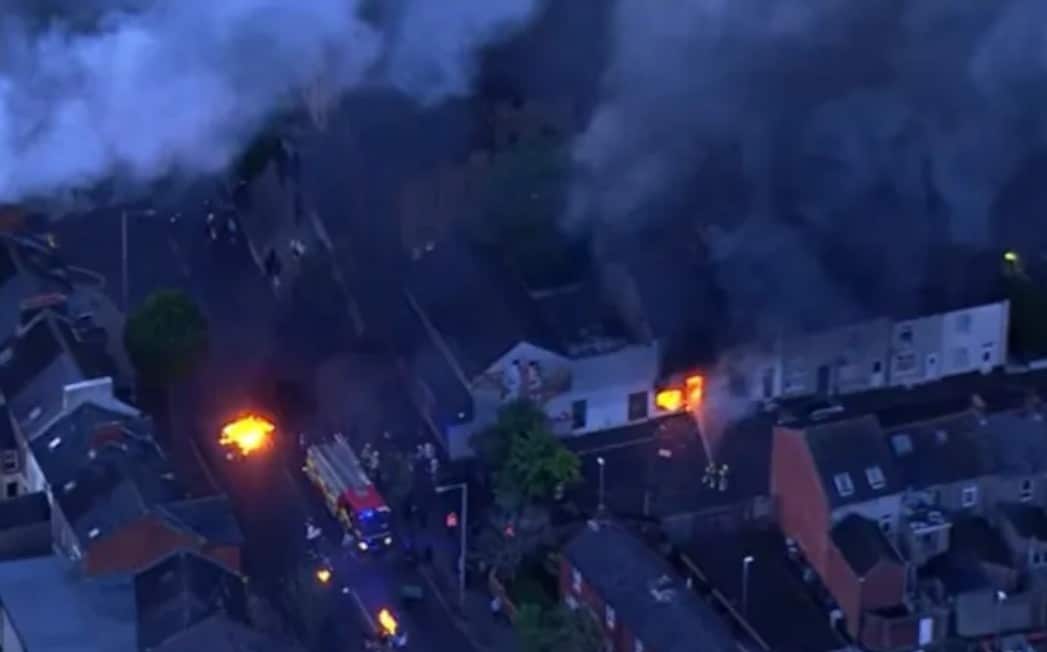
Homes were set on fire in Belfast. Video screenshot/Sky News

Widespread anti-immigration riots broke out across the UK on Tuesday following a particularly violent knife attack in Northern Ireland. The unrest was triggered by news that a thirty-year-old Sudanese national had been charged with attempted murder. Prime Minister Keir Starmer strongly condemned the initial attack, labeling it both “horrific” and “sickening,” while stating he has zero tolerance for such violence.

Escalation of violence in Northern Ireland

🚨 BREAKING: A bus has been set on fire in Belfast amid protests over the attempted beheading of a man pic.twitter.com/FX8maCMalK

— Politics UK (@PolitlcsUK) June 9, 2026

The unrest was most intense in Northern Ireland, where masked mobs caused extensive property damage on Tuesday evening:

  • Belfast: Riots resulted in multiple homes, a bus, cars, and street barricades being set on fire. Northern Ireland First Minister Michelle O’Neill condemned the rioters, stating that groups of masked men were “burning families out of their homes” in acts of “outright thuggery.”
  • Newtownabbey & Kilkeel: Blazes spread to neighboring towns, where verified social media footage showed protesters setting several vehicles ablaze.
  • Wider UK: Smaller, sporadic anti-immigration protests and clashes with police were also reported in other major UK cities, including London, Glasgow, and Bangor.

A large group rioters is attacking migrant HMOs (Houses in Multiple Occupation, a form of taxpayer-funded housing for asylum seekers) in Belfast. pic.twitter.com/o9yjynArd4

— Visegrád 24 (@visegrad24) June 9, 2026

Social media fueling the anti-immigration riots in the UK

The catalyst for the riots was a viral video filmed by a witness during Monday night’s attack in North Belfast. The footage depicts a man pinning a bloodied victim to the ground and repeatedly stabbing him before bystanders and police intervened. Far-right and anti-immigration accounts widely circulated the footage online to mobilize public protests.

Further update from police sources, a property has been set alight in the Lendrick Street area of Belfast.

Emergency services are heading that way.

An earlier bus fire on the Newtownards Road has been extinguished. @BelTel pic.twitter.com/YuNYtTWIXf

— Kevin Scott (@Kscott_94) June 9, 2026

First Minister O’Neill warned that extremist groups are dangerously exploiting a heinous crime to target and intimidate innocent people who are just trying to live their lives.

The incident occurred around 10:30 p.m. on Monday, June 8 on Canard Avenue in North Belfast. A man in his forties suffered severe wounds to his face, back, and eyes. He remains hospitalized in serious condition. Police recovered a kitchen knife at the scene.

A thirty-year-old man was arrested for attempted murder. Authorities confirmed he had traveled from Paris to Dublin before entering Northern Ireland in February 2023. He claimed asylum upon arrival and was granted legal residency in the UK until 2028.

Related: Far-Right Activist Robinson Spotted in Greece as Riots Spread in the UK

From Stanford to CERN: The 11 Greek Scientists in the World’s Top 1,000

10 June 2026 at 05:49
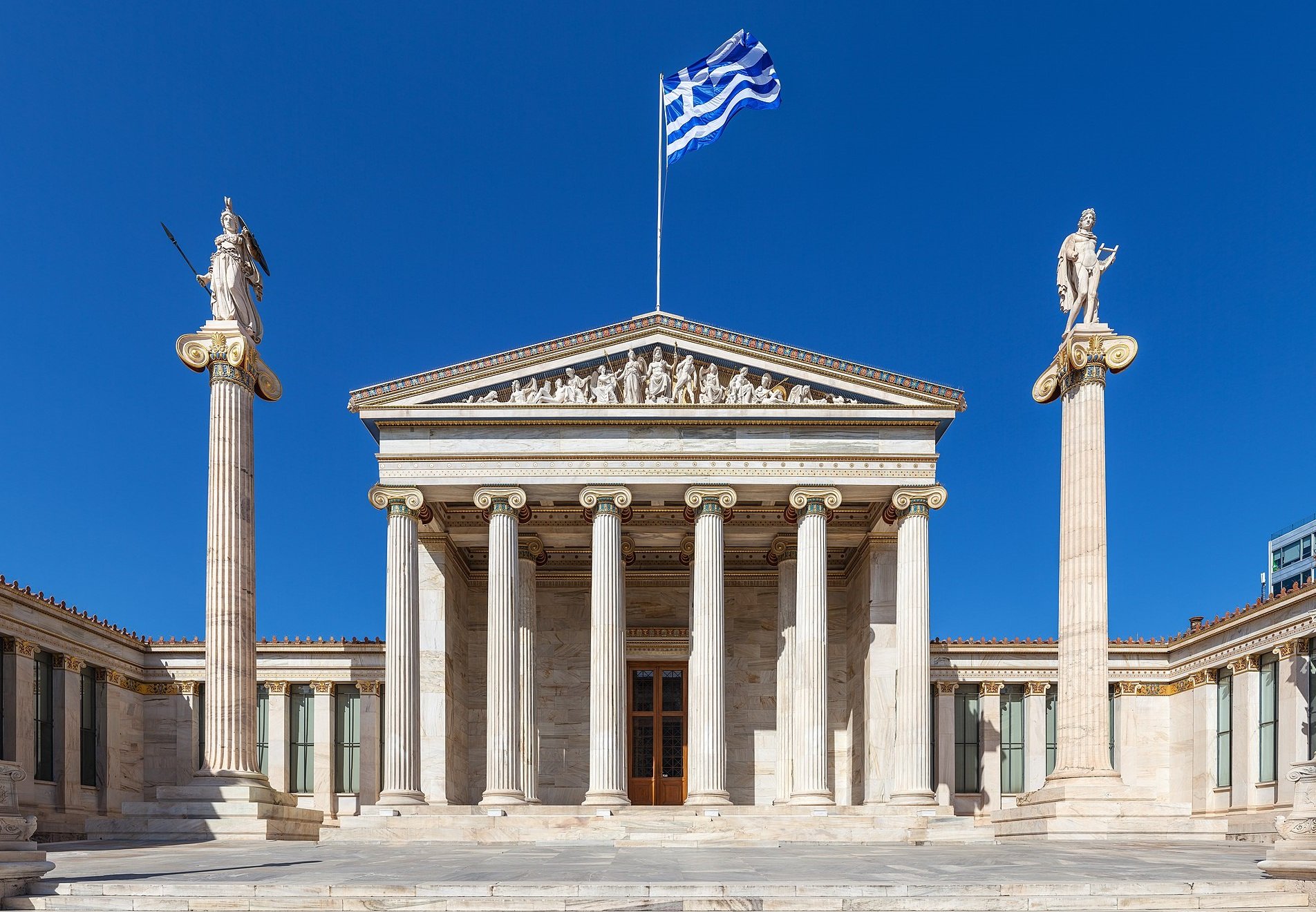
Academy of Athens, Athens, Greece. There are 11 Greek scientists in the world's top 1,000.
The building of the Academy of Athens in downtown Athens. Credit: Thomas Wolf, CC-BY-SA-3-0/Wikipedia

A major international ranking has highlighted eleven Greek scientists who have made it into the global elite of research. Spanning institutions from Stanford and Columbia to the University of Crete, these researchers are recognized among the top 1,000 scientists worldwide in their respective fields.

This prestigious list is compiled annually by Research.com, a prominent educational platform and academic research portal. To compile these rankings, Research.com analyzes data from millions of scientists globally, evaluating their career achievements based heavily on a standard academic metric called the h-index.

The h-index is a metric used to measure both the productivity (how much they publish) and the impact (how often other scientists cite their work) of a researcher.

The top 11 Greek scientists

Here is a summary of the researchers making waves in the global scientific community:

1. John Ioannidis (Stanford University)

John Ioannidis
Dr. John Ioannidis. Courtesy Dr. Ioannidis

A professor of medicine at Stanford and one of the world’s most-cited scientists. He is a pioneer in “meta-research”—the study of scientific methods themselves to improve the quality and reliability of research.

2. George Yancopoulos (Regeneron Pharmaceuticals)

George Yancopoulos
George Yancopoulos. Credit: Public Domain

Yancopoulos is a top biomedical scientist and the billionaire co-founder of Regeneron. He is highly recognized for developing life-saving monoclonal antibody treatments, notably used to combat viruses like Ebola.

3. Tom Maniatis (Columbia University)

Tom Maniatis
Tom Maniatis. Credit: Columbia University

Maniatis is a pioneer in molecular biology and biotechnology who revolutionized gene cloning techniques. His current research focuses on comprehending the molecular mechanisms behind neurodegenerative diseases such as amyotrophic lateral sclerosis (ALS), or Lou Gehrig’s disease.

4. Christos Pantelis (University of Melbourne)

Christos Pantelis
Christos Pantelis. Credit: University of Melbourne

Pantelis is a professor of psychiatry who heads the Melbourne Neuropsychiatry Centre. He is a global leader in using brain imaging to study the development and structural changes associated with schizophrenia.

5. Nicholas Peppas (University of Texas at Austin)

Nicholas Peppas
Nicholas Peppas. Credit: University of Texas at Austin

A chemical and biomedical engineer known as the father of modern drug delivery systems, he pioneered the development of hydrogels used in oral drug delivery, contact lenses, and tissue engineering.

6. Constantinos Stoumpos (University of Crete)

One of the three researchers on the list based entirely in Greece, Stoumpos is a materials chemist specializing in halide perovskites, which are highly efficient materials used to advance next-generation solar cells and electronics.

7. Costas Soukoulis (Iowa State University / FORTH)

Soukoulis is a physicist who split his career between the US and Greece. He is world-renowned for his groundbreaking research on metamaterials—artificial materials engineered to manipulate light and sound waves in ways natural materials cannot.

8. Spyros Pandis (University of Patras / FORTH)

A chemical engineering professor based in Greece, Pandis is an international authority on atmospheric chemistry and air pollution, focusing on how airborne particulate matter affects both human health and global climate change.

9. Eleni Diamanti (CNRS / Sorbonne University)

Eleni Diamanti
Eleni Diamanti. Credit: Olivier Ezratty , CC BY-SA 4.0/Wikipedia

A physicist based in France who is a leading researcher in quantum cryptography, Diamanti develops secure quantum communication networks and protocols to protect data from future cyber threats.

10. George Paxinos (NeuRA / University of New South Wales)

George Paxinos
George Paxinos. Credit: NeuRA

Paxinos is a world-famous neuroscientist based in Australia who mapped the human and animal brain. His highly detailed brain atlases are universally utilized by neurosurgeons and medical researchers worldwide to identify specific brain structures.

11. Gerasimos Rassias (University of Patras)

An organic chemist based in Greece whose research focuses on developing new chemical synthesis methods, his work helps streamline the creation of complex molecules used to manufacture new pharmaceuticals and advanced materials.

❌