Normal view

Received — 9 June 2026 GreekReporter.com

10 Authentic Greek Souvenirs to Pack in Your Suitcase

9 June 2026 at 11:27
Athens, Greece. Aerial view of the Parthenon. What authentic Greek souvenirs should you make sure to pack in your suitcase?
Bringing Greece home: 10 traditional keepsakes with a century of soul. Credit: Greek Reporter

Greece is a goldmine for souvenirs because the best things to bring home are deeply rooted in centuries of culinary, agricultural, and artistic traditions. Skipping the generic plastic keychains, here are the top 10 authentic souvenirs to bring back.

Authentic Greek souvenirs

1. Extra Virgin Olive Oil (EVOO)

Greece consumes more olive oil per capita than any other country, and its liquid gold is world-renowned. Look for oils from Crete, Kalamata, or Mani. For easier travel packing, skip the glass bottles and buy the tightly sealed tin canisters found in local supermarkets or specialty shops.

2. Greek Thyme Honey

Greek honey
Image of Greek honey. Credit: Greek Reporter

Because Greek bees feed on wild herbs under intense sunshine, the honey here is thick, rich, and distinctly aromatic. Thyme honey (particularly from Crete or the Aegean islands) is considered the gold standard.

3. The Mati (Evil Eye) Amulet

Greek souvenirs
Mati. Credit: Greek Reporter

The distinctive blue-and-white eye charm is designed to ward off bad energy or jealousy (to mati). You can find it on beautifully crafted silver jewelry, ceramic wall hangings, or simple glass beads. It’s light, cheap, and undeniably Greek.

4. Ouzo, Tsipouro, or Mastiha

Mastic from Chios
Mastic from Chios. Credit: Anastasios Papapostolou/Greek Reporter

Bring the taste of a Greek summer back home:

  • Ouzo: The famous anise-flavored, clear spirit that turns milky white when you add water or ice
  • Tsipouro: A strong, unaged grape distillate (similar to grappa)
  • Mastiha: A sweet, incredibly refreshing liqueur flavored with resin harvested exclusively on the island of Chios

5. Dried Greek Oregano & Mountain Tea

Greek oregano (rigani) grows wild on rocky hillsides, giving it a much more intense, peppery flavor than supermarket varieties back home. Pair it with a bunch of Greek Mountain Tea (tsai tou vounou), a dried herb brewed for centuries to boost the immune system and soothe digestion.

6. Olive Wood Kitchenware

From salad bowls and cutting boards to honey dippers, items made from Greek olive wood are gorgeous and incredibly durable. The tight grain of the wood means it doesn’t absorb odors or bacteria easily, and each piece features entirely unique natural patterns.

7. Handmade Leather Sandals

Greek sandals
Handmade leather sandals of Greece. Credit: Efi

If you pass through Athens (especially the Monastiraki neighborhood) or certain islands such as Crete and Rhodes, you can buy genuine, handmade leather sandals. They are styled according to Ancient Greek designs, crafted to last for years, and mold comfortably to your feet over time.

8. Greek Ceramics & Pottery

From museum-quality replicas of ancient black-and-figure vases to modern, minimalist, blue-and-white tableware handmade on islands such as Sifnos, Greek pottery is a beautiful addition to any home.

9. Natural Sea Sponges

Natural sponges
Kalymnos sponges. Credit: Nabokov, CC3/Wikipedia

Harvested for generations by traditional divers (most famously on the island of Kalymnos), genuine Greek sea sponges are entirely natural, hypoallergenic, and far softer and longer-lasting than synthetic alternatives. They are fantastic for skincare and bathing.

10. Spoon Sweets (Glyka tou Koutaliou)

These are traditional fruit preserves served on a small spoon alongside Greek coffee or dolloped over Greek yogurt. They are made by boiling wild fruits (like sour cherries, figs, or bitter oranges) in sugar syrup, preserving the firm texture and vibrant flavor of the fruit.

10+1. The Komboloi

Komboloi is also known as Greek Worry beads
Greek worry beads. Credit: Greek Reporter

The Komboloi, or worry beadsmay be one of the most typical symbols of Greece’s easy-going mentality that has been widely established in Greece since the middle of the 20th century. Whether on the street, on an airplane, or in a busy kafeneion downtown, you will find people playing with their worry beads in various manners, even doing flips and tricks with them, letting go of their stress and worries as one bead moves deliberately towards the other. The repetitive action and clicking of the beads turn this pastime into an easy motion reported to help ease tension.

Packer’s Tip: If you’re traveling with carry-on luggage only, you won’t be able to take liquid souvenirs such as honey, olive oil, or alcohol past airport security. Buy these items at the airport duty-free shops after security—the quality is still highly authentic, and the prices are surprisingly fair!
The Magnificent Church of Saint Nicholas on Syros Island, Greece

9 June 2026 at 11:04
Saint Nicholas on Syros
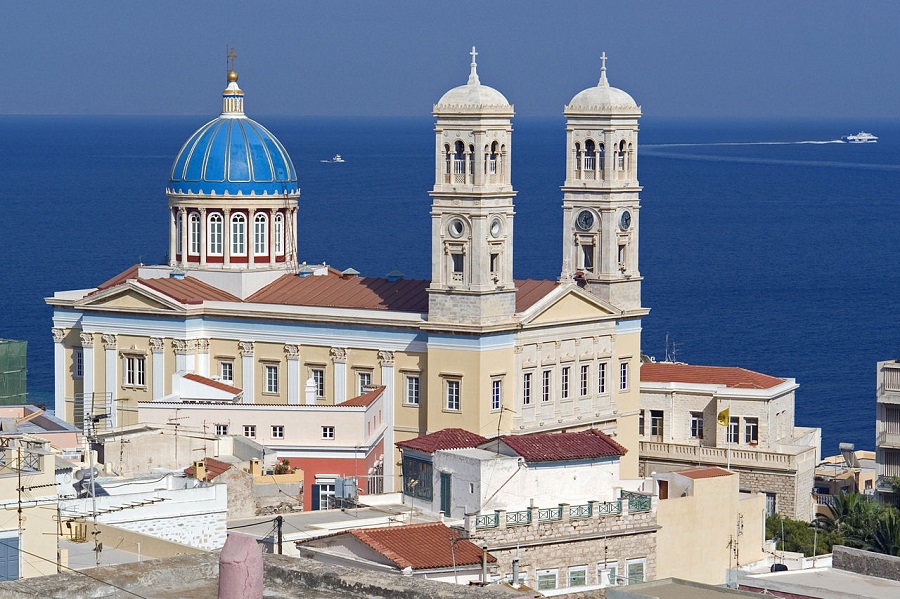
Saint Nicholas dominates the skyline in Ermoupoli, the capital of the island of Syros. Credit: Hans Peter Schaefer, CC BY-SA 3.0/Wikipedia

The Church of Saint Nicholas, a magnificent church in Ermoupoli, the capital of Syros, took twenty-two years to build.

Overlooking the Cycladic island, Saint Nicholas’ construction began in 1848, following the designs of a Greek architect named G. Metaxas. They were personally approved by King Otto, the Bavarian prince who ruled Greece from the establishment of the monarchy in 1832. The church was finally completed in 1870.

Saint Nicholas, the patron saint of seafarers, is also the patron saint of Ermoupoli. The cathedral dedicated to him stands out even to this day for its impressive architectural structure. The two-story monumental church has marble bell towers, an imposing marble staircase and marble propylaea, Ionic columns, archaic motifs, arcades, and an array of sculpted decorations.

It has lavish interiors including its icon of Saint Nicholas, which was plated in silver in Moscow. Its marble throne, pulpit, and marble iconostasis are also very unusual in Greek ecclesiastical architecture.

Saint Nicholas Church one of the finest in Greece

St. Nicholas was constructed between 1883 to 1899 by Tinian sculptor G. Vitalis and is considered one of the finest churches of the nineteenth century in Greece.

Saint Nicholas temple
The Church of Saint Nicholas. Credit: Hans Peter Schaefer, CC BY-SA 3.0/Wikipedia

The church’s icons were created by some of the best hagiographers of the time while many Greeks from abroad, including shipowners, contributed funds toward the construction of the temple.

Internally, arches divide the church into three aisles; places for female congregants run along its three sides.

The imposing church is known as Agios Nikolaos “the rich,” to distinguish it from “Agios Nikolaos of the poor” another church on Syros.

Syros has a long history that began three millennia ago

Syros’ long history explains the many different styles of architecture and the many government buildings in the capital, Ermoupoli. It has also led to the establishment of a wealth of museums and cultural events that take place there in the summer.

On Syros, one will find City Hall, comprised of the remains of the castle in Ano Syros and the Theater Apollon—all buildings atypical of Cycladic architecture.

Syros was never under Ottoman occupation since it was protected by the French, and there is a strong Catholic element on the island due to the Venetian influence there as well.

Nowadays, the island is world-renowned for its rich cultural tradition with events that take place in Ermoupolis, such as the International Classical Music Festival of Cyclades, ANIMASYROS International Animation Festival, Ermoupoleia Cultural Festival etc that offer a range of options for every visitor to experience.

Related: Syros: The Lady of the Aegean Islands

Skiathos Revives Its Winemaking Legacy

9 June 2026 at 10:14
Skiathos. What is its wine-making legacy?
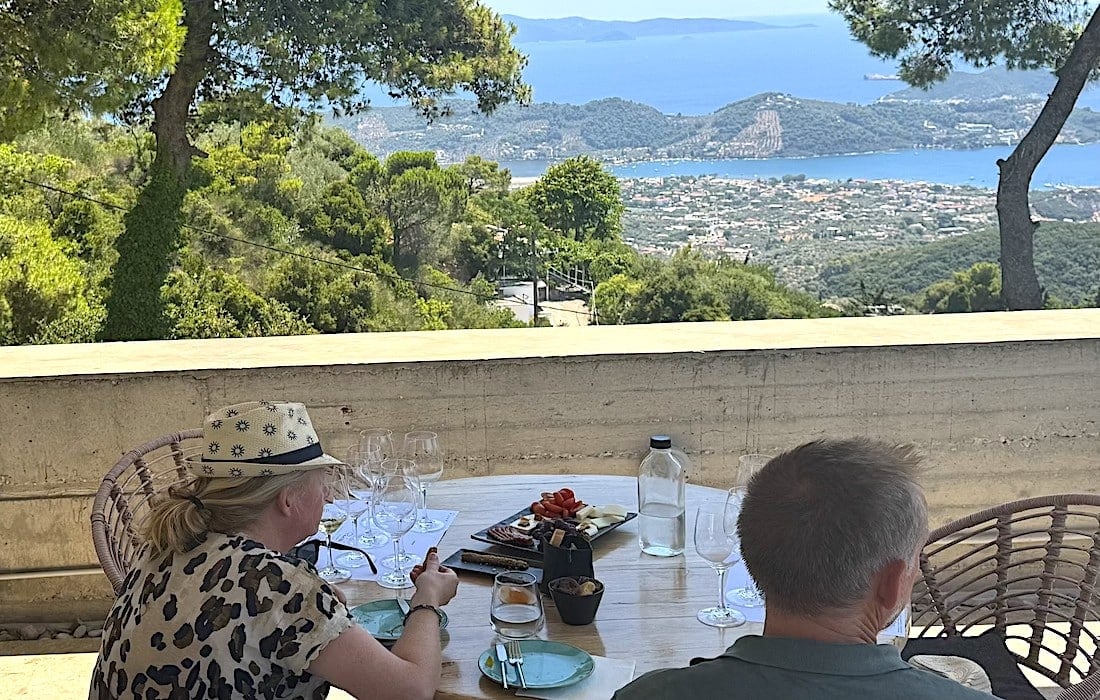
Image of Skiathos. Credit: Greek Reporter

The island of Skiathos in Greece, renowned for its picturesque beaches and vibrant atmosphere, is reviving its ancient wine production as it gains recognition as a gastronomic destination in the Sporades.

Mayor Thodoris Tzoumas has highlighted the island’s unique culinary identity, emphasizing the harmonious blend of fresh seafood and local produce. In speaking to Greek Reporter, he mentioned dishes such as shrimp with wild greens, octopus with zucchini, and distinctive soups featuring foraged greens. The island’s beloved “pita,” both oven-baked and fried, also holds a special place in its culinary heritage.

The return of wine to Skiathos

Skiathos vineyards
Skiathos vineyards. Credit: Greek Reporter

A pivotal development in Skiathos’ burgeoning gastronomic scene is the establishment of its first modern winery, Parissi Winery. This enterprise signifies a profound reawakening of the island’s long-dormant winemaking tradition.

Historically, Skiathos boasted a flourishing viticultural landscape, with vineyards thriving until the mid-20th century. However, a combination of prolonged drought and shifting economic priorities led to a decline in wine production, with many locals turning to olive cultivation instead.

According to Maria Koutseri, co-owner of Parissi Winery, a key element defining Skiathos wines is the island’s unique terroir. Many of their vineyards are strategically situated in secluded areas in close proximity to the sea. This coastal influence imparts a subtle yet distinctive salty, savory characteristic to their wines. This intriguing quality echoes historical accounts of “Stratis,” an ancient Skiathian wine rumored to have incorporated seawater during its production, a practice believed to have enhanced its flavor and appeal among the Romans.

Parissi Winery is dedicated to reclaiming this forgotten legacy. Despite the inherent challenges of cultivating vineyards on a highly tourist-driven island, they are demonstrating the immense potential for producing high-quality, distinctive wines.

The winery operates on a small scale, meticulously cultivating 45 strains of exclusively Greek grape varieties. Their focus is unwavering on showcasing the indigenous flavors of Greece, including Roditis, Assyrtiko, Malagouzia, Alexandria Muscat, Xinomavro, and Limniona. From these, they craft a select range of offerings: four dry whites, one rosé, one red, and a sweet wine, all of which are sold exclusively on Skiathos.

An assortment of wines on Skiathos
An assortment of wines. Credit: Greek Reporter

A wine-making legacy reclaimed

Perched at one of the island’s highest points, Parissi Winery not only offers a taste of its unique wines but also commands breathtaking panoramic views of Skiathos town. Visitors are invited to embark on an immersive experience, beginning with a guided tour of the vineyards, where they learn about the cultivation process and specific grape varieties.

The journey continues into the production area, providing firsthand insight into the meticulous winemaking journey. The experience culminates in a dedicated tasting session, allowing guests to savor the distinctive flavors of Skiathos and take home a piece of its revitalized wine heritage.

Maria Koutseri expresses her heartfelt hope that Parissi Winery will serve as a catalyst, encouraging others to join in this revival. She envisions a future where Skiathos’ rich winemaking tradition is fully restored and celebrated, thereby adding a lasting and sophisticated dimension to the island’s growing reputation as a premier gastronomic destination.

RelatedSkiathos Navigates Tourism Growth With Focus on Sustainability, Quality

Nemi Ships: The Ancient Floating Palaces Destroyed in WWII

9 June 2026 at 09:26
Nemi shipwrecks
The remains of the hull of one of the two ships recovered from Lake Nemi. Workers in the foreground indicate scale. Credit: Public Domain

Located in Lake Nemi in Italy, the Nemi ships consisted of two vessels constructed on orders of Roman Emperor Caligula (37 to 41 AD), known for his extravagant lifestyle.

The ships served as floating palaces, complete with intricate decorations, marble floors, and elaborate plumbing systems and demonstrated advanced Roman engineering techniques.

There is evidence of the use of waterproof concrete, complex hull designs, and innovative plumbing systems with features such as heated baths. The ships were adorned with exquisite artwork, including mosaics, marble statues, and bronze decorations.

Nemi Ships
An artistic depiction of a Nemi ship by CM Knight-Smith. Credit: Public Domain

Nemi ships were impressively large for their time

The Nemi ships were impressively large for their time. The first ship, the Prima Nave, had a length of approximately 70 meters (230 feet) with a width of about 20 meters (66 feet). The second, the Seconda Nave, was 73 meters (240 feet) long and 24 meters (79 feet) wide.

Nemi ship
The remains of a Lake Nemi ship pictured in 1929. Credit: Public Domain

Both ships were constructed with high-quality materials, including oak and pine wood, and featured advanced techniques such as waterproofing with lead sheeting and bitumen.

The sheer size and opulence of the ships reflected the grandeur and luxurious lifestyle associated with Emperor Caligula. They were likely used for leisure and ceremonial purposes, showcasing the emperor’s wealth and technological advancement of the Roman Empire.

Ships discovered and then destroyed during the Second World War

The ships were discovered in the 15th century, but serious attempts to recover them only began in the late 19th and early 20th centuries. Italian dictator Benito Mussolini ordered the draining of Lake Nemi in the 1930s, leading to their successful recovery.

Nemi ships
Benito Mussolini observes the drainage system for the emptying of Lake Nemi. Credit: Public Domain

The Nemi ships were destroyed in the final stages of World War II. On the night of May 31, 1944, a fire broke out in the Museum of Roman Ships at Lake Nemi, where the ships were housed. The fire caused extensive damage, destroying much of the wooden structures and artifacts. Most of the ships were lost to the flames.

The exact cause of the fire remains disputed. One theory suggests that retreating German forces set the museum ablaze to prevent advancing Allied troops from capturing the ships and the valuable artifacts. Another theory posits that the fire resulted from Allied bombing in the area, although there is less evidence to support this.

Furthermore, there was also the possibility of an accidental fire, possibly caused by negligence or the mishandling of flammable materials during the chaotic war period.

The remains of the Nemi ships, along with related artifacts and replicas, are housed in the Museo delle Navi Romane (Museum of Roman Ships), located near Lake Nemi in Italy.

Despite the destruction, some metal and stone artifacts survived the fire. These remnants, along with photographs and drawings made before the fire, have allowed historians and archaeologists to reconstruct aspects of the ships.

Related: Stunning Ancient Marble Bust Found at the Bottom of Italian Lake

Hamas Launching “Strategic Shift” in Europe, Warns Greek Minister After Terror Arrest

9 June 2026 at 07:54
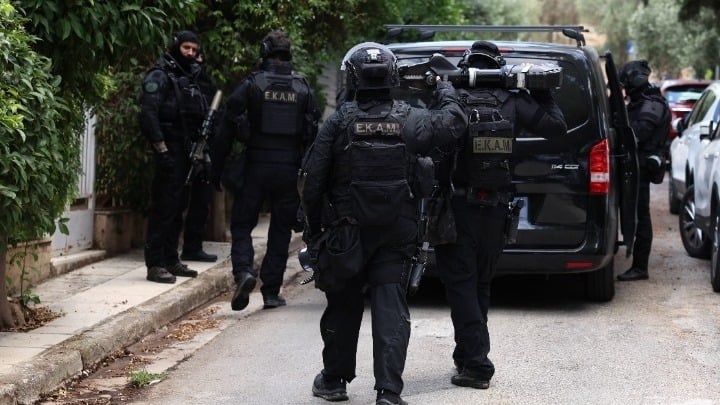
Members of the Greek anti-terrorism squad (EKAM) during a recent operation
Members of the Greek anti-terrorism squad (EKAM) during a recent operation. Credit: AMNA

Greece’s Minister for Citizen Protection, Michalis Chrysochoidis, has warned of a highly concerning “strategic shift” by Hamas, suggesting the organization may be expanding its operations into Europe following the arrest of a suspected operative on Crete.

In an interview with radio station Parapolitika 90.1, Chrysochoidis pointed out that for the forty years since its founding, Hamas has traditionally restricted its violent activities to Israeli territory without causing external disruption. The potential establishment of European networks marks a dangerous departure from that history.

“This is precisely what concerns us greatly—that it constitutes a strategic shift by Hamas,” Chrysochoidis said, emphasizing the need for constant, continent-wide vigilance. “We need to see exactly what this means and understand the potential scope of such a danger, such a threat.” The Minister also firmly rejected the idea that European security forces are dealing with isolated actors. When asked if recent threats could be classified as “lone wolf” actions, Chrysochoidis called the term unfortunate.

“No one can carry out an action on their own; it requires extensive preparation, extensive training,” he explained. “Let’s abandon these images of the lone wolf and focus on efforts carried out by organizations or through coordinated campaigns aimed at striking specific targets.”

Hamas suspect in Greece faces court deadline

The Minister’s warnings come in the wake of a major counter-terrorism operation in Agios Nikolaos, Crete, where a 37-year-old Palestinian man was arrested for allegedly plotting terrorist attacks against Israeli interests using improvised explosive devices (IEDs).

The suspect was escorted to court under heavy security measures to face both felony and misdemeanor charges. Appearing before the prosecutor and the examining magistrate without legal representation, he was granted a deadline until Thursday, June 11 to formalize his statement. According to judicial authorities, the 37-year-old is being prosecuted for:

  • Forming and joining a terrorist organization
  • Receiving specialized training in the manufacturing and usage of explosives for the purpose of carrying out terrorist acts
  • Traveling abroad to attend training related to committing terrorist acts
  • Providing criminal support for terrorist purposes

Greek authorities are now working to determine the extent of the suspect’s connections and whether he is tied to broader cells operating across other European countries.

RelatedGreece Revokes Asylum of Palestinian Over Ties to October 7 Attacks

Cyprus, France Sign Defense Agreement to Deepen Military Ties

9 June 2026 at 07:18
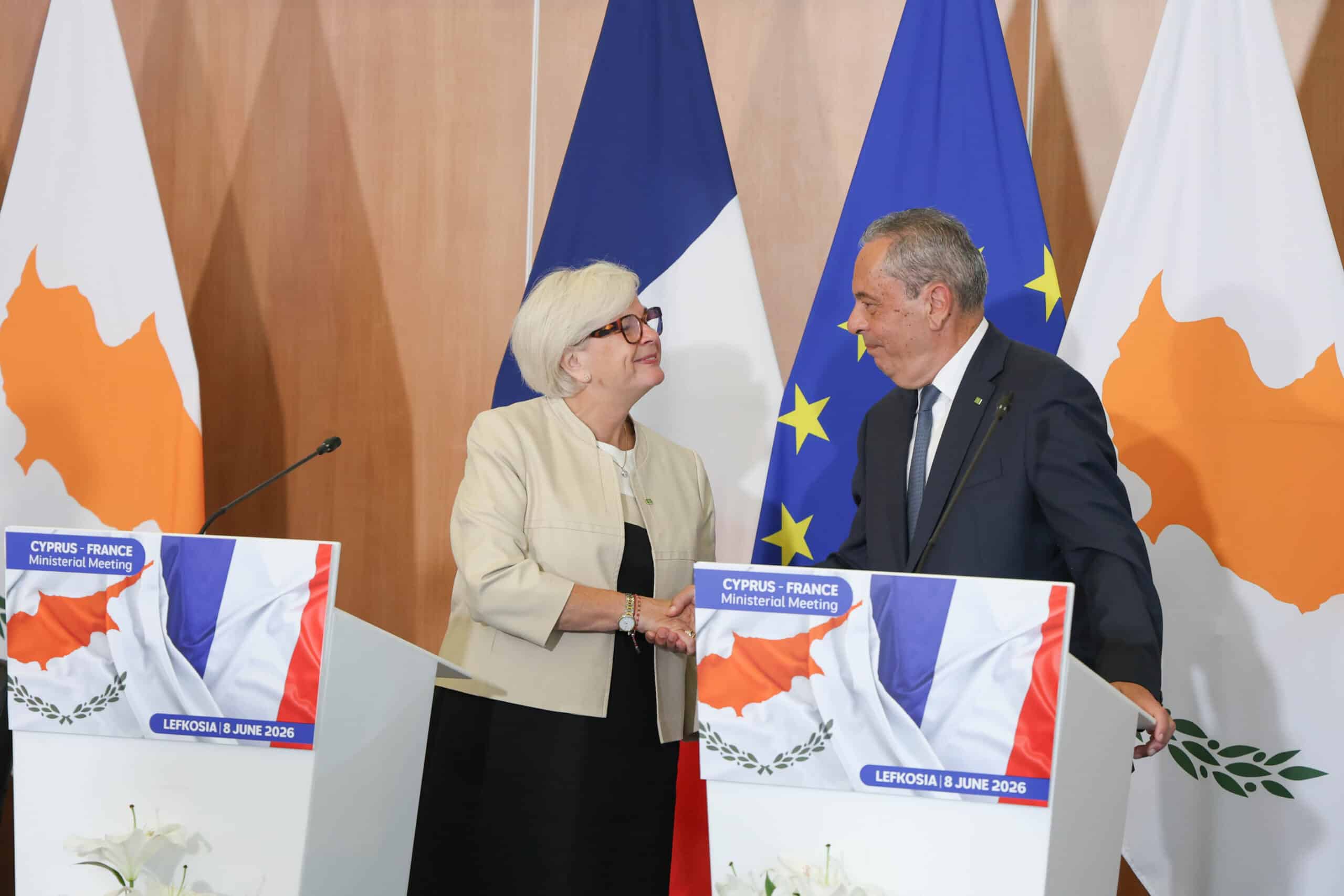
Cyprus Defense Minister Vasilis Palmas and his counterpart from France, Catherine Vautrin, who signed a defense agreement on Monday.
Defense Minister Vasilis Palmas and his French counterpart, Catherine Vautrin, signed the defense agreement on Monday. Credit: European Council

Cyprus and France signed a Status of Forces Agreement (SOFA) on Monday that strengthens defense cooperation between the two nations and allows for the conditional deployment of French troops on the island nation.

The agreement was signed in Nicosia by Defense Minister Vasilis Palmas and his French counterpart, Catherine Vautrin, on the sidelines of the informal meeting of EU defense ministers, hosted by Cyprus.

Vautrin described Cyprus as a key strategic partner for France and an essential hub for French military operations in the Eastern Mediterranean and the Middle East. “Cyprus is an essential support point for the conduct of our military operations in the Eastern Mediterranean and the Near East,” she said.

She noted that the ports of Larnaca and Limassol host around thirty French naval visits annually, with twenty-one already recorded since the beginning of this year. The French Minister highlighted the extensive cooperation between the two countries’ armed forces, pointing to joint naval exercises, including Argonaut and Eunomia, aimed at strengthening maritime security, freedom of navigation, and crisis response capabilities.

According to Vautrin, cooperation has also expanded in recent years to include land and air operations, military mobility, air defense, operational readiness, and logistical support.

Provisions of the Cyprus-France defense agreement

Cyprus President Nikos Christodoulides announced the agreement’s entry into force on his official social media accounts, stating that the signing and implementation of the SOFA contribute to the shared European objective of strengthening the European Union’s strategic autonomy.

Όταν ο Γάλλος Προέδρος Emmanuel Macron επισκέφθηκε την Κύπρο στις 23 Απριλίου 2026, είχαμε αναφερθεί δημόσια, κατά τη διάρκεια της διάσκεψης τύπου, στην πολυεπίπεδη στρατηγική μας συνεργασία, ειδικότερα στους τομείς της Άμυνας και της Ασφάλειας. Μέσα σε αυτό το πλαίσιο, είχα… pic.twitter.com/E3Gk5IZgX8

— NikosChristodoulides (@Christodulides) June 8, 2026

Under the SOFA, which was discussed during French President Emmanuel Macron’s visit to Nicosia on April 23 and subsequently negotiated between the two sides, the military assets of France may be deployed in southern Cyprus under certain conditions. The agreement also provides a legal framework for the presence of French military forces in Cyprus in support of various activities in the Eastern Mediterranean and the Middle East.

Furthermore, the SOFA, whose entry into force was announced by Christodoulides, grants France access to military bases and infrastructure in Cyprus. The agreement is reported to also include provisions on military technology sharing, joint exercises, and strategic dialogue between France and Cyprus.

Trump Eyes Jerusalem Patriarch as Potential Mediator in Russia-Ukraine Conflict

9 June 2026 at 06:47
Jerusalem Patriarch Theophilos meets Trump
President Donald Trump is reportedly considering Patriarch Theophilos III of Jerusalem as a potential mediator in Russia-Ukraine peace efforts. Credit: Jerusalem Patriarchate

In a novel diplomatic development, US President Donald Trump has reportedly approached the Greek Orthodox Patriarch of Jerusalem, Theophilos III, to act as an informal mediator to help de-escalate the war between Russia and Ukraine.

According to reports from Israeli media, including Ynet, and Greek news outlet iefimerida, the proposal was discussed during a recent forty-minute meeting between Trump and the Patriarch at the White House. Sources close to the Patriarchate reveal that Trump asked Theophilos III to leverage his long-standing communication channels with Moscow—and specifically with Russian President Vladimir Putin—to explore avenues toward a ceasefire.

Jerusalem Patriarch: A religious intermediary?

Theophilos III is widely regarded as a figure of immense moral and religious authority, largely viewed as free from direct political alignment. Crucially, the Jerusalem Patriarchate has maintained close ties with the Russian Orthodox Church and has notably abstained from recognizing the autocephaly (independence) of the Ukrainian Orthodox Church, which was granted by the Ecumenical Patriarchate in 2019. This stance, combined with Moscow’s historical interest in protecting the Holy Sites in Jerusalem, gives the Patriarch unique diplomatic leverage with the Kremlin.

Furthermore, the Patriarch is no stranger to sensitive diplomacy. He previously assisted in securing the release of Israeli citizen Naama Issachar from a Russian prison. Trump is reportedly eager to utilize these open channels to demonstrate swift progress in resolving the conflict, especially as official diplomatic avenues remain heavily strained.

Mixed reactions and official caution

A meeting between Patriarch Theophilos III and Vladimir Putin is already scheduled for later this month. While no official mediation proposal has formally been presented to Kyiv, a Ukrainian government source generally welcomed the initiative. “Why not? The more mediators there are, the more responses we will get from Russia showing that Putin wants to keep fighting,” the source stated.

However, ecclesiastical sources in Athens have expressed deep skepticism regarding the feasibility of the endeavor, questioning whether Ukraine will ultimately accept a mediator with such close ties to Moscow.

Diplomatic talks shift to Athens

Patriarch Theophilos III in Athens
Greek FM Gerapetritis welcomes Patriarch Theophilos III in Athens. Credit: Greek Ministry of Foreign Affairs

Amid these backstage diplomatic maneuvers, Patriarch Theophilos III arrived in Athens for an official visit, where he met with Greek Foreign Minister George Gerapetritis. While the Greek Ministry of Foreign Affairs focused on regional stability, Gerapetritis reaffirmed Greece’s unwavering support for the Patriarchate and the protection of Christian populations in the volatile Middle East.

The meeting concluded with the signing of a Memorandum of Cooperation between the Greek Ministries of Foreign Affairs and Culture and the Patriarchate to preserve the Holy See’s cultural heritage. Gerapetritis also underscored the vital importance of maintaining the historical Status Quo of Jerusalem, emphasizing the unity required among the ancient Eastern Patriarchates during this highly complex geopolitical era.

Greek Gaza Flotilla Activist Exposes Alleged Israeli Torture

9 June 2026 at 06:12
Gaza flotilla carrying a Greek activist as well
The Greek activist was aboard a vessel aimed at breaking the naval blockade of Gaza. Credit: Global Sumud Flotilla

Greek activist and academic Antonis Vradis shared his harrowing experience after being detained by Israeli authorities in international waters alongside fellow Freedom Flotilla activists.

Speaking to Al Jazeera, Vradis revealed that he was held for 52 hours aboard an Israeli vessel before being transferred to Israel and ultimately deported. He alleges that he was subjected to brutal torture by Israeli commandos during his detention.

As a member of the Global Sumud Flotilla, a fleet of over fifty vessels aimed at breaking the naval blockade of Gaza to deliver humanitarian aid and stand in solidarity with Palestinians, AntVradis was aboard the La Sirena when it was intercepted by Israeli forces in international waters near Cyprus. The passengers were detained at gunpoint and transferred to the Nahshon, a ship he describes as a “floating prison.”

“I began calculating how many minutes on my knees I would trade for just a few seconds inside the torture container. It felt like we were kneeling for an eternity,” Vradis recalled. “A drone hovered overhead, and a nationalistic song blared continuously from the loudspeakers in an exhausting, repetitive loop.”

Greek flotilla activist alleges torture by Israelis

Greek activist Israel torture
Antonis Vradis is a professor of human geography at the University of Oslo and a reader at the University of St Andrews. Credit: University of St Andrews

The activist detailed accounts of beatings, electric shocks, and humiliation. He noted that he was held in metal containers with dozens of other activists and deprived of food, water, and medical care. This experience, he said, helped him truly understand the depth of sumud—the steadfastness and resilience that characterizes Palestinians.

Upon arrival at the Israeli port of Ashdod, Vradis claims he faced further violence and was threatened with a knife, all while being denied medical attention.

“During the fingerprinting and photographing process inside a large registration tent, two guards dragged me into a small, isolated area behind a curtain,” he described. “One of them lunged at me with a folding knife. The blade was aimed at my stomach, but I instinctively moved, and it struck my arm instead, leaving a bleeding, four-centimeter gash.”

Vradis’ allegations are now the subject of legal proceedings in Greece. Reflecting on the ordeal, he warned that his experience reflects practices that have reportedly been inflicted on Palestinians for decades. “They put us in a black box stripped of all rights,” he stated, describing the incident as an act of “state piracy.”

RelatedIsrael Exploits Greece to Advance Regional Hegemony, UN Special Rapporteur Warns

❌