
 Login
Login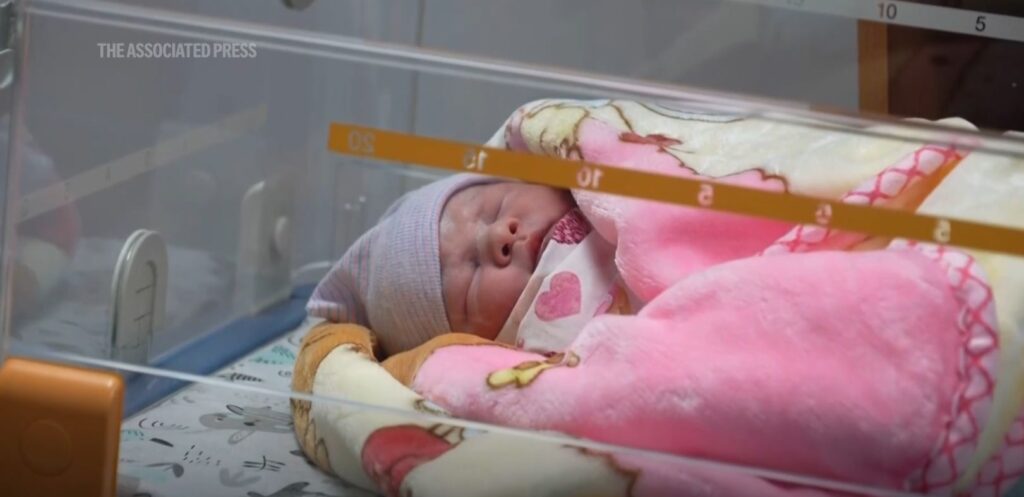

Premature births are climbing in Ukraine’s front-line regions, and doctors blame the ongoing war

Premature births are rising in several Ukrainian regions near the front line, where war-driven stress on pregnant women appears to be taking a toll, according to the Associated Press (AP). Doctors in cities like Zaporizhzhia keep fragile newborns alive between air raid sirens, in wards with windows boarded up against Russian blast waves. The trend compounds a deepening crisis as fewer Ukrainian women give birth at all.
How far the rate has climbed
In Kherson Oblast, early births climbed from 5.4% of deliveries in 2019 to 9.8% by 2025 — close to twice the rate, UN figures show. Zaporizhzhia Oblast rose from 5.7% to 7.6%, and Poltava Oblast from 7.7% to 9.8% over the same period. The front line runs through Kherson and Zaporizhzhia oblasts. Poltava sits farther back but takes regular aerial strikes. Fewer Ukrainian women are giving birth overall, yet a larger share of births now come early, AP reported.
Keeping newborns alive under bombardment
The medical work is delicate and unforgiving. In a Zaporizhzhia intensive care unit, one baby born at 30 weeks weighs just 700 grams, far below the 2,500-gram threshold the World Health Organization (WHO) uses for low birth weight. Marharyta Nekhoroshyva's son arrived even earlier, at 26 weeks and 940 grams. Now nine months old, he still battles chronic breathing problems while she raises him alone, her husband fighting in the war.
Doctors must manage oxygen precisely, since too much risks abnormal blood-vessel growth in the eyes and, in severe cases, blindness, said Dr. Andrii Lobanov, who heads neonatal intensive care at Zaporizhzhia's children's hospital. When sirens sound, staff stay beside the incubators rather than risk moving the babies.
The danger is not abstract. Dr. Nataliia Bohuslavska, who runs the neonatal unit at the city's maternity hospital, opened a shift last month to alarms warning of incoming missiles. Hours later, a Russian glide bomb hit a commercial part of the city and killed at least 12 people. Her team delivered a baby and performed two cesareans that same day, while treating a woman who miscarried after witnessing an airstrike.
The longer cost
Surviving the delivery is only the start. Premature babies often need years of treatment for respiratory, neurological, and developmental conditions, a heavy bill for a country at war. Hospital services get hit "both literally and metaphorically," said Dr. Andrew Weeks, a maternal-health professor at the University of Liverpool.
It also lands on a country whose birth rate has collapsed to about one child per woman — less than half the 2.1 a population needs simply to hold steady.

