
 Login
Login
Ukraine’s newest drones don’t need Starlink. Russia spends $1.5 million to jam it anyway.
- Russia is deploying new jamming systems in a desperate bid to blunt drone strikes on its supply lines
- But many Ukrainian drones are practically unjammable
- Now the Russian jammers themselves are targets for drones
Without warning back in February, trillionaire Elon Musk's Starlink firm bricked thousands of stolen and smuggled satellite terminals used by Russian forces in Ukraine. But Ukraine's own Starlink terminals kept working just fine.
The move abruptly handed Ukraine a major communications advantage. Ukrainian drones can navigate and communicate; Russian drones are struggling. It's no coincidence that, in the months following the Russian Starlink shutdown, Ukraine was able to massively scale up its medium-range drone strikes on Russian supply lines in occupied territories. Hamstrung in the electromagnetic spectrum, Russia hasn't been able to match these counterlogistics strikes.
The catch is that the link Russia is paying to sever is one Ukraine's most advanced drones no longer need. A growing share of Ukrainian strike drones carry onboard AI that locks onto targets without a live connection to a pilot—so a $1.5 million jammer built to break that connection has nothing left to break.
Nevertheless, the Russians are trying to even the aerial balance of power by jamming Ukraine's Starlink terminals. There are just two problems. The jammers aren't foolproof defenses. And they're also big, expensive targets for the same drones they're trying to defeat.
1/3 According to open sources, Russians have developed a jammer for Starlink satellites: "The countermeasure system is named "Volna Kupol Garant." This EW complex consists of an array of sat antennas and targets eight communication channels, each with a bandwidth of 62.5 MHz."… pic.twitter.com/2kdhCJgPov
— Samuel Bendett (@sambendett) June 16, 2026
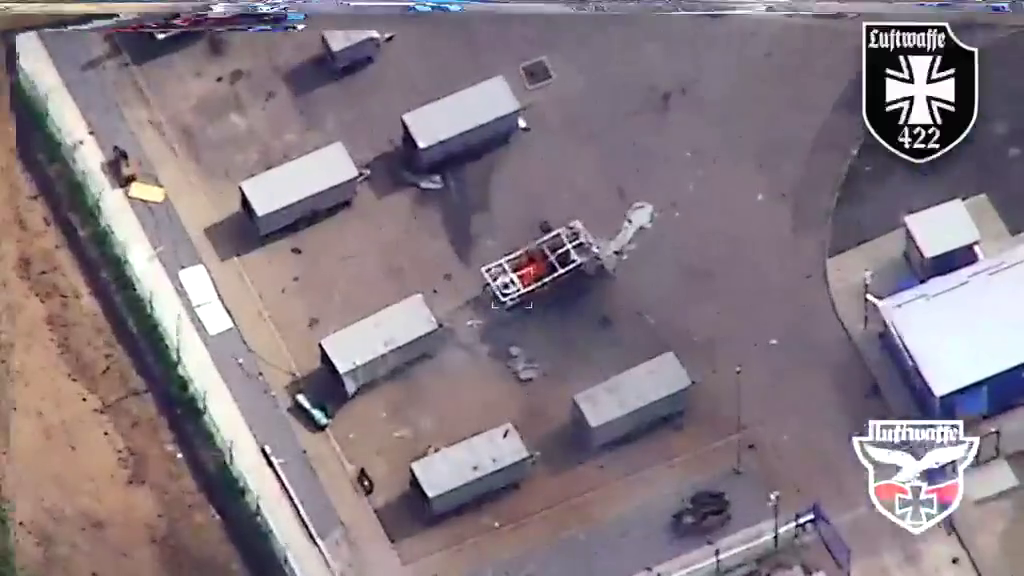
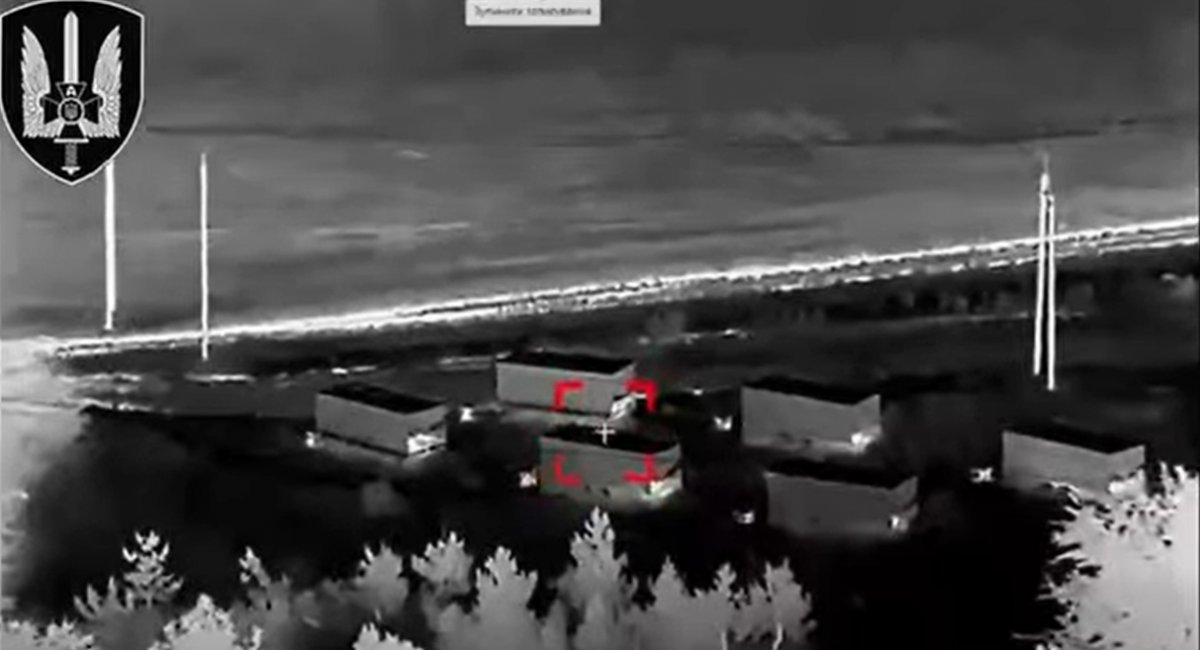
According to Drone Brotherhood, the three-year-old Volna Kupol Garant electronic warfare complex is a "Starlink countermeasure." A single Volna Kupol Garant complex includes six trailers, each with dish that broadcasts a 62.5 MHz signal tuned to disrupt Starlink channels.
Ukrainian drone expert Serhii Beskrestnov estimated a single Volna Kupol Garant system with eight dishes, each tuned to one Starlink channel in the 14–14.5 GHz band, costs $1.5 million. Each could potentially jam Starlink signals over an area of 20 square kilometers. In theory, any Starlink-equipped drone that flies within the effective range of a Volna Kupol Garant complex would lose its connection to its remote operator, possibly sending it careening into the ground.
It's not for no reason the Russians have reportedly deployed Volna Kupol Garants along some of the main supply routes where Ukrainian drones are thickest in the sky. Striking hundreds of Russian trucks a day, day after day, Ukraine's drone units have forced Russian logisticians to switch to longer, less efficient secondary routes.
The Russians have also responded by deploying more mobile air-defense teams and more jammers such as the Volna Kupol Garant. While an air-defense team has some chance of shooting down any drone it can draw a bead on, a jammer only works against a drone that requires a radio connection to a remote operator.
Ukraine's AI assistance
One problem for the Russians is that many of the Ukrainian drones prowling the Russian logistical zone have built-in AI for targeting. Far better AI than the Russians themselves posses. Such drones, including the American-designed Swift Beat Hornet, can spot and home in on targets all on their own.
Yes, a Hornet has a human operator, but their job is just to approve the targets the Hornet designates. All that is to say, Hornets and other AI drones don't depend on uninterrupted, low-lag communications by Starlink or any other method. They're not impossible to jam but they are very hard to jam.
Worse for the crews of the Volna Kupol Garant complexes, it takes a lot of power to disrupt a Starlink signal. The Volna Kupol Garant emits so much electromagnetic energy that it's easy to detect. There's no hiding when you're beaming 62.5 MHz jamming signals straight into the air from a cluster of six dishes.
Needing so much equipment that can be easily detected and having to run it 24/7 is IMO not a great recipe for a jamming system (2 have already been hit recently - and these things dont grow on trees) that only covers an area about 20km2 (about 2.5km from the jammers). https://t.co/HIpwPb3flr
— Jakub Janovsky (@Rebel44CZ) June 17, 2026
"In the future this problem will be corrected," Drone Brotherhood predicted, although it's not clear how. Jamming requires power. Jamming a signal from space requires lots of power. Even if the Volna Kupol Garant can be redesigned to be less obvious, that will take time. For now, each complex emits like a beacon, practically begging for Ukrainian intelligence to locate them, and for unjammable Ukrainian drones to strike them.
Indeed, Ukraine's 422nd Unmanned Systems Regiment recently hit two separate Volna Kupol Garant complexes. It's yet another case of Russia's drone jammers getting droned. And further evidence that Russia is still struggling to close the gap between Ukraine's expanding and improving drone force (with strong Starlink connectivity and effective AI assistance) and its own hobbled drone force (with no Starlink and worse AI).

