Reading view

Ukraine’s drone output grew 12.7% month-on-month, but chief commander says don’t relax

commander-in-chief-of-ukraines-army

Ukraine maintains a 1.5-to-1 FPV drone advantage over Russia, Commander-in-Chief Oleksandr Syrskyi confirmed at the monthly meeting on unmanned systems development. In May 2026, Ukrainian unmanned systems hit nearly 180,000 confirmed enemy targets, which is 12.7% more than in April, the General Staff reports.

Syrskyi also disclosed that Ukrainian drone operators have eliminated 12,500 more Russian troops than Russia could recruit into its own unmanned systems units since the start of the year. 

Ukrainian operators neutralized approximately 4,000 Shahed-type strike drones in May (27% more than April) and hit nearly 10,000 Russian drone-operator positions, Syrskyi said. 

May 2026 metrics: 10,000 operator positions hit

Ukrainian forces additionally hit nearly 10,000 Russian drone operator positions in May. The number represents a doctrinal shift toward degrading Russian operator capability rather than just intercepting Russian platforms in flight.

Striking the operator unit prevents Russian forces from launching additional drones from that position.

The combined month-over-month growth with 12.7% across targets 27% across Shahed neutralization suggests the Ukrainian operational tempo continues to accelerate.

Middle Strike program: 414 headquarters and command posts hit

The Middle Strike program conducted nearly 2,000 strikes in May 2026. Ukraine utilizes this naming for strikes against Russian operational-tactical depth targets. 

Among the targets were 414 headquarters, command posts, troop concentration areas, and other important Russian objects. Syrskyi credited the establishment of coordination centers at the corps level with improving the effectiveness of these strikes.

The coordination centers improve inter-unit cooperation, allowing for more coordinated targeting of high-value Russian operational nodes. 

Ground robotic systems: supply problems persist

Ukrainian ground robotic systems conducted over 12,500 missions in May 2026, working on the most dangerous frontline sections. Their tasks included delivering ammunition and food, evacuating wounded, and providing other support functions.

Syrskyi noted that the potential of ground robotic systems is significantly greater than current deployment levels. Problems with the supply and procurement of these systems have arisen since the start of the year. 

Syrskyi cautions against complacency

Russia recruited only 14,500 contract personnel into its unmanned systems units since the start of 2026, which is approximately one-fifth of Russia's planned figure for the period. This recruitment shortfall is significant because Ukrainian drone operators eliminated approximately 12,500 more Russian troops than Russia recruited into its drone units during the same period.

Syrskyi emphasized that the achieved results should not cause Ukrainian forces to relax. Russia is actively developing its own unmanned capabilities, adopting Ukrainian experience, and improving its solutions.

  •  

German company that already supplies Ukraine with drones has unveiled Shahed-hunter aircraft with four weapons categories on single airframe

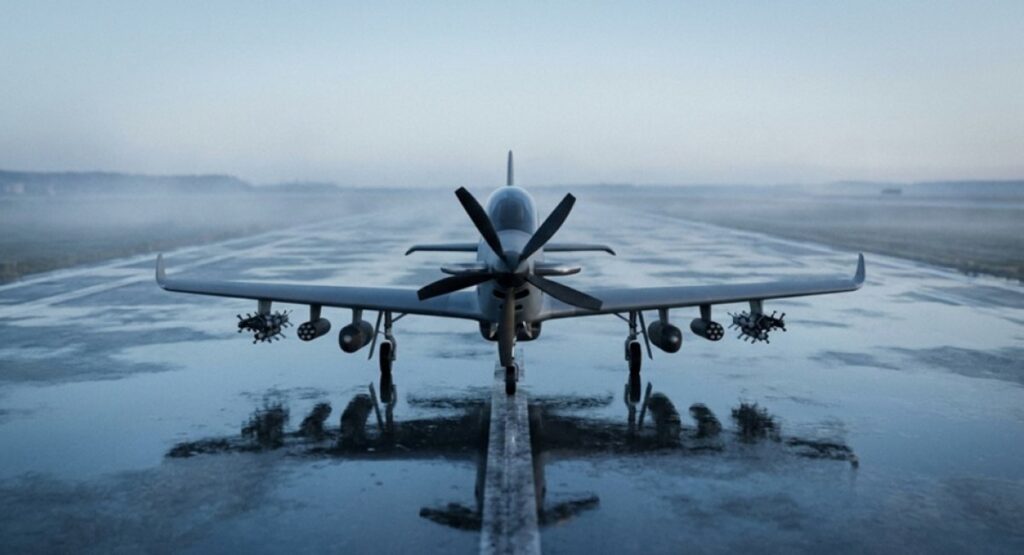
Render of the Pulse P19 multi-purpose optionally piloted aircraft. Source: Quantum Systems

Germany's Quantum Systems has unveiled the Pulse P19, an optionally-piloted aircraft designed to hunt drones and repel massed drone attacks, per Defense Express. The technology company already supplies Vector reconnaissance drones to Ukraine. 

The Pulse P19's primary mission profile, which is hunting drones and repelling massed drone attacks, addresses exactly the Russian Shahed threat that Ukraine has been responding to.

Ukraine is now intercepting 95% of incoming Russian Shaheds, using a layered defense system that includes Patriot, NASAMS, IRIS-T, naval-platform interceptors, helicopter-based interceptors, Ukrainian-made Bullet interceptors, and autonomous drone-on-drone systems.

The Pulse P19 would add a dedicated, optionally piloted drone-hunter platform to this layered defense,  though the aircraft is currently in early design stages, with only renders released.

What does Pulse P19 carry, and how would it hunt? 

For air-target detection and tracking, the Pulse P19 can be equipped with an active electronically scanned array (AESA) radar and an electro-optical targeting station.

The aircraft's armament options are unusually broad. The Pulse P19 is designed to carry interceptor drones, loitering munitions, missiles with semi-active laser homing heads (APKWS class), pod-mounted machine guns, and additional weapons that may be developed in the future.

The interceptor drones referenced in the Quantum Systems presentation are likely the same systems being integrated onto the Airbus U145 helicopter, which Quantum Systems also unveiled at ILA Berlin 2026 with anti-drone armament.

Specifications: small, fast, with significant payload

The Pulse P19 has a maximum speed of 556 km/h and a service ceiling of 7,620 meters. The aircraft's empty weight is approximately 1,700 kg, while it can carry up to 2,500 kg of payload and armament.

The payload-to-empty-weight ratio is unusually high. This indicates the design is built around the requirement to carry multiple weapons systems simultaneously. The 556 km/h maximum speed places the Pulse P19 in the slow-to-mid-tier of fixed-wing combat aircraft, but adequate for the Shahed-pursuit mission, given that Shahed-136 drones typically cruise at 180 km/h.

Development status: renders only, timeline undisclosed

Quantum Systems has presented only renders of the Pulse P19. The project's development stage has not been disclosed. The aircraft is likely still in early design phases. No first-flight timeline has been published.

The aircraft's specifications and weapons configuration represent design intent rather than current operational capability. Ukrainian defense procurement officials would likely engage with Quantum Systems on the Pulse P19 trajectory once the aircraft reaches the flight-test stage, given Quantum Systems' established relationship with Ukraine and the operational fit between the Pulse P19's mission profile and Ukraine's defensive needs.

  •  

15 tons of diesel, $22,500 in damages: Ukraine charges eight in Poltava military fuel-theft scheme

A Ukrainian soldier refuels a vehicle with gasoline. Source: ArmyInform

Six Ukrainian servicemembers and two civilians have been charged in a fuel-theft scheme that diverted over 15 tons of diesel fuel from a military unit in 2025, the Special Prosecutor's Office for Defense Sector of the Central Region announces. The scheme caused damages of over $22,500 to the military unit, whose fuel was destined for Ukrainian Defense Forces operations.

The defendants face up to 15 years' imprisonment under Article 410, Part 4, of the Ukrainian Criminal Code, for theft of military property during martial law by a prior conspiracy group.

The Poltava fuel-theft prosecution is one of several Ukrainian military corruption cases prosecuted in early June 2026.

How did scheme work? 

The scheme was organized by a technician of the Poltava-area military unit, prosecutors said.

The technician engaged refueling drivers with direct access to fuel during transport, along with civilians who acted as buyers and resellers of the stolen diesel. During loading operations, drivers manipulated the measuring sticks and exploited specific technical features of fuel tanker vehicles so that part of the diesel did not appear in official accounting.

They also artificially created fuel surpluses by reducing the actual consumption recorded during transport and entering false data into trip sheets, listing fuel as consumed when it was not.

The "surplus" fuel was poured into canisters and hidden in forest strips near the military unit. The technician then transported the stolen fuel to private buildings, where he stored and sold it to civilians. Proceeds were divided among scheme participants.

Ukraine's defense anti-corruption apparatus continues prosecution

Ukraine's defense-sector anti-corruption apparatus has continued to actively investigate and prosecute internal theft cases during the war. The DBR, Special Prosecutor's Office for Defense Sector, and SBU have pursued cases ranging from procurement fraud at the Defense Ministry level to FPV-drone theft from frontline supply caches to organized fuel-theft schemes like the Poltava case.

Medic stole 16 FPV from firm that entered $1.1 billion Pentagon competition and hid them for four months. Ukraine arrested him when he tried to sell them for 19% of their value

  •  

Strip out this one component and Russia’s drones fly blind. Ukraine found factory where it is made

cheboksary

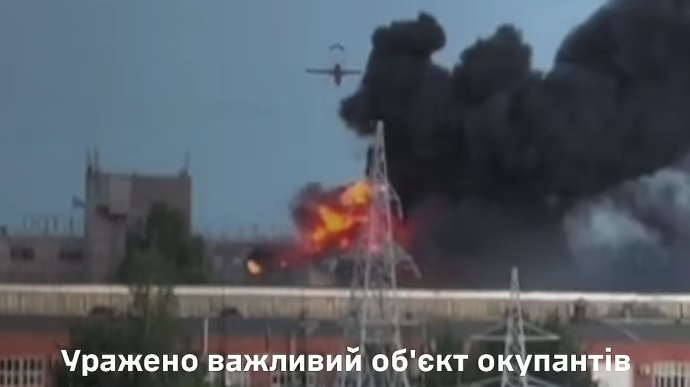
On 10 June, Ukrainian FP-5 "Flamingo" missiles struck the VNIIR "Progress" plant in Cheboksary, Russia. The factory produces satellite navigation antennas essential for Russian Shahed drones, KABs (precision-glide bombs), jet drones, Iskanders, and Orlans, advisor to the Defense Minister Serhii "Flash" Beskrestnov says.

Without these antennas, Russian precision weapons lose substantial accuracy against Ukrainian targets.

Cheboksary is over 1,400 km from the Ukrainian border. President Volodymyr Zelenskyy confirmed the strike. Social media photos suggest one of the factory buildings was practically completely destroyed, per ArmyInform. 

"Production for murder and terror" 

Progress manufactures satellite navigation systems without which Shaheds don't fly accurately, KABs and jet drones don't hit their targets, Iskanders can lose precision, and Orlans navigate poorly, Beskrestnov explains.

"Probably many are familiar with the CRPA antenna 'Kometa', which this plant produces. The enterprise does not produce military products for the defense segment. It produces products for murders and terror," Beskrestnov said. 

What CRPA antennas do, and why they matter

Controlled reception pattern antenna (CRPA) systems are anti-jamming receivers. They allow precision-guided weapons to maintain satellite navigation lock in electronic-warfare environments. Komea CRPA performs this function by filtering out interference and false GPS/GLONASS signals generated by Ukrainian electronic warfare systems, per United24 Media.

Kometa-M antennas with up to 16 elements have been found in Iskander-K cruise missiles, Shahed-type drones, and other Russian long-range weapons, per Defense Express.

Ukraine has developed its own electronic warfare systems to counter these Russian CRPAs, including the Lima-Quant system, which can suppress Russian Kometa CRPAs at distances of up to 50 km, Ukraine Today reports.

The Kometa antenna is part of a continuing EW-counter-EW arms race, and striking the manufacturer of these antennas degrades the precision capability across the entire Russian strike-weapons portfolio.

FP-5 Flamingo and 1,400 km strike envelope

The FP-5 "Flamingo" is a Ukrainian-made cruise missile that has become a primary weapon in Ukraine's expanding deep-strike envelope. The strike on the Progress plant in Cheboksary, approximately 1,400 km from the Ukrainian border, represents one of the deepest successful Ukrainian strikes on Russian territory.

This demonstrates that the Russian rear-area defense industry is no longer geographically insulated from Ukrainian operations. It was the second strike on the Progress plant in under a week, marking a deliberate Ukrainian sustained operation against this specific supply node.

  •  

“Fourth house. Blue doors”: Four years ago three Ukrainians changed global warfare forever (VIDEO)

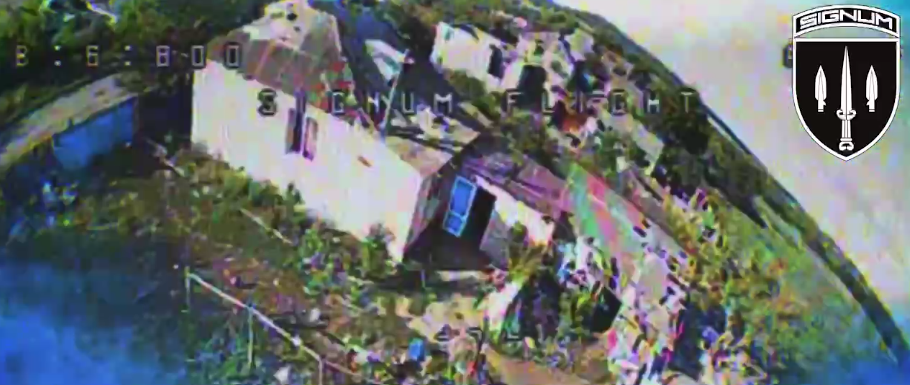
Screenshot

On 10 June 2022, the world's first successful FPV drone combat strike was carried out by Ukrainian Armed Forces fighters from the SIGNUM battalion. The three operators with call signs "Turyst," "Shvaiger," and "Bagdad" fired the strike against a Russian target, an advisor to the Defense Minister, Serhii Sterneko, recalls

The footage of the strike has become a defining artifact of the Russo-Ukrainian war. Four years later, Ukraine's Unmanned Systems Forces (SBS) has struck nearly $40 billion worth of Russian targets and grown into a full branch of the Armed Forces with its own doctrine and eleven combat units.

The 10 June 2022 FPV strike is recognized as the moment that changed not only the Russo-Ukrainian war but the broader rules of armed conflict. The combat application of a commercial-grade quadcopter against a moving Russian target opened a new category of warfare that has since been replicated by militaries worldwide.

Ukraine remains the operational pioneer in this category, with the SBS now leading the Logistics Lockdown program targeting Russian rear-area logistics, deploying $113 million in mid-strike drones.

"Fourth house. Blue doors" 

The footage of the 10 June 2022 strike captures Ukrainian SIGNUM battalion fighters operating an FPV drone against a Russian target on the frontline.

The radio call "Fourth house. Blue doors." — used by the operators to identify the target — has become one of the most recognizable phrases from the early war.

The day that changed military doctrine worldwide: On 10 June 2022, Ukraine carried out the world's first FPV drone combat mission

As a result, Ukraine established Unmanned Systems Forces, helping save thousands of Ukrainian lives
📹Sternenko pic.twitter.com/kbk5KphZBG

— Euromaidan Press (@EuromaidanPress) June 11, 2026

From battlefield improvisation to separate branch of armed forces

The 10 June 2022 strike was an act of battlefield improvisation. Ukrainian forces were using commercial drone technology adapted for combat, with no formal doctrine, no procurement pipeline, and no command structure for FPV operations.

Three years later, on 11 June 2025, Ukraine formally established the Unmanned Systems Forces (SBS) as a dedicated grouping within the Armed Forces.

SBS now has eleven combat units and its own military doctrine. President Volodymyr Zelenskyy on 10 June 2026 signed a decree establishing the Day of Unmanned Systems Forces as an annual commemorative day, to be observed each 11 June.

Robert "Madiar" Brovdi: from volunteer to branch commander

The SBS commander is Major Robert Brovdi with a call sign "Madiar". Brovdi is a Hero of Ukraine, the founder of the "Madiar's Birds" unit, and one of the originators and leading practitioners of innovations in unmanned systems for combat applications.

He traveled the path from volunteer to commander of a separate branch of the Armed Forces. The trajectory is consistent with the SBS's broader institutional history, which began with battlefield improvisation in places like the 10 June 2022 SIGNUM strike, and has developed into a formal military structure with doctrine, procurement, and command.

The footage of the strike has become a defining artifact of the Russo-Ukrainian war. Four years later, Ukraine's Unmanned Systems Forces (SBS) has struck nearly $40 billion worth of Russian targets and grown into a full branch of the Armed Forces with its own doctrine and eleven combat units.
  •  

US sanctions 13 Iran-Belarus-China entities supplying Iran’s IRGC. That’s three of four “Axis of Upheaval” states

tehran

      The US imposed sanctions on 13 individuals and entities from Iran, Belarus, and China for facilitating weapons procurement for the Islamic Revolutionary Guard Corps (IRGC), State Department spokesperson Thomas Pigott announces. The designations aim to implement the UN sanctions regime on Iran, which was reinstated due to Tehran's "significant non-performance" with its nuclear obligations.

      The US sanctions package targets the network that integrates three of the four states scholars have identified as the "Axis of Upheaval" — Russia, China, Iran, and North Korea — whose deepening cooperation has sustained Russia's war on Ukraine.

      Iran has been the primary supplier of Shahed-type drones used by Russia against Ukraine since 2022, with Russian-produced Geran-4 jet variants now reaching speeds of 500 km/h based on Iranian designs.

      Belarus has served as a launch territory and signal-relay base for Russian drones targeting Ukraine.

      China has been a key supplier of dual-use components, electronics, and materials. 

      13 designations across three jurisdictions — Iran, Belarus, China

      The State Department statement describes the network as supplying conventional arms to the IRGC. This is in violation of the UN Security Council resolution that obligates UN members to prevent the supply, sale, or transfer of conventional weapons to Iran.

      The US said the designations are part of its continuing maximum pressure policy on Iran. The policy is designed to deprive the Iranian government and the IRGC of access to resources.

      Why analysts call this "Axis of Upheaval"

      In April 2024, foreign policy scholars Andrea Kendall-Taylor and Richard Fontaine published a Foreign Affairs analysis titled "The Axis of Upheaval: How America's Adversaries Are Uniting to Overturn the Global Order."

      The analysis argued that Russia, China, Iran, and North Korea have deepened cooperation across defense industry, intelligence, diplomatic, and financial channels to challenge "the US-based order".

      US sanctions targeting the Iran-Belarus-China network supplying the IRGC explicitly address three of the four Axis of Upheaval members.

      North Korea has separately supplied Russia with artillery shells, missiles, and troops since 2024. 


      •  

      Russia is building up forces in Belarus right next to Ukraine’s NATO supply corridor. Ukraine just started covering roads

      fishing nets used mediterranean millennia — now italy wants turn drone shields over ukrainian cities · post workers install anti-drone above road kharkiv's ring 2026 2daykhua sitka6 italy's senate has

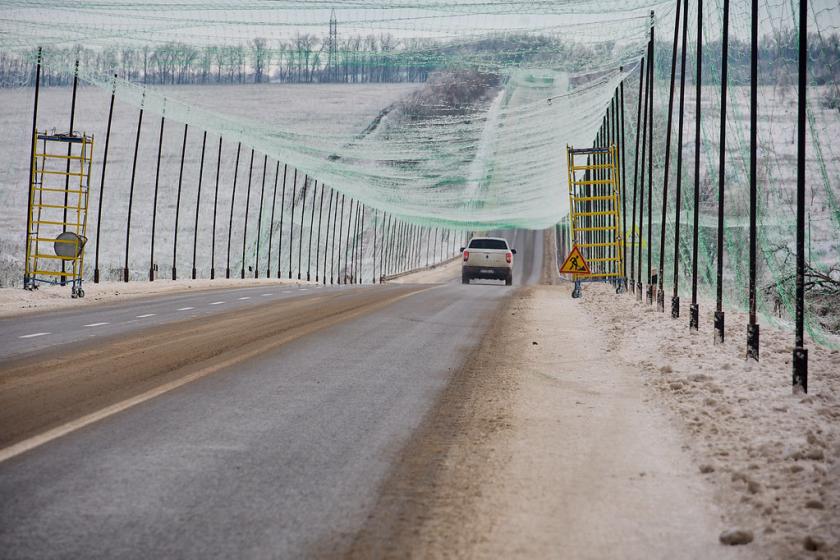
      Ukraine's Volyn Oblast will install anti-drone nets along sections of roads near the border with Belarus, the acting head of the Volyn Oblast Military Administration, Roman Romaniuk, announced. Volyn Oblast borders both Belarus and Poland in the northwest of Ukraine.

      Most Western military and humanitarian aid to Ukraine flows through the Polish border corridor, making the region not just a border zone but Ukraine's logistical lifeline to NATO.

      The anti-drone nets address the localized threat of FPV-class drones that could target road traffic on this corridor.

      Threat from Belarus 

      In April 2026, Ukrainian President Volodymyr Zelenskyy reported the expansion of military and road infrastructure in Belarus near the border with Ukraine, creating a potential security threat.

      Ukrainian intelligence has recorded the construction of new roads, military camps, training grounds, bases, and artillery positions.

      Russia has already used Belarus as a launch pad for signal-relay balloons that help its drones reach Ukrainian cities.

      In 2025, Russian drones launched from Belarus had already crossed into Polish airspace when 19 Russian Shahed-type drones entered Poland, and Warsaw invoked NATO Article 4 for the first time in the war.

      Meanwhile, the Institute for the Study of War (ISW) has assessed that a Belarusian ground invasion of Ukraine remains "very unlikely," but Russia may continue to use Belarusian airspace to hit Western Ukraine — and, as 2025 demonstrated, to test NATO's eastern flank response.

      Romaniuk: "Risks from the neighboring state remain"

      "Risks from the neighboring state remain, so Volyn Oblast continues to systematically prepare for any possible challenges," Romaniuk said.

      Ukraine is currently installing engineering barriers, strengthening defensive positions, and implementing new security measures.

      "One of them will be the installation of anti-drone nets on individual sections of roads, including on the territory of Shatsk hromada," the Shatsk hromada quoted Romaniuk as saying.

      Romaniuk added that Volyn today is one of the best-prepared border regions of Ukraine and that this work must be continued.

      •  
      ❌