Reading view

Former Air Canada pilot charged after allegedly flying without proper license for 16 years

Geoffrey Wall is alleged to have flown over 900 flights domestically and internationally between 2009 and 2025

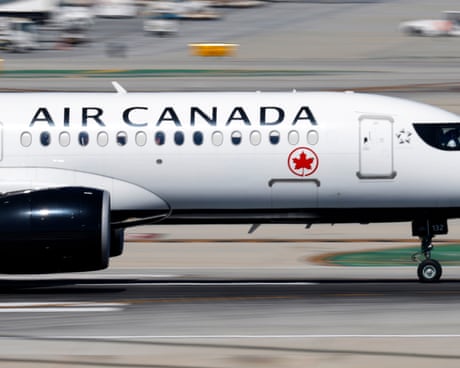
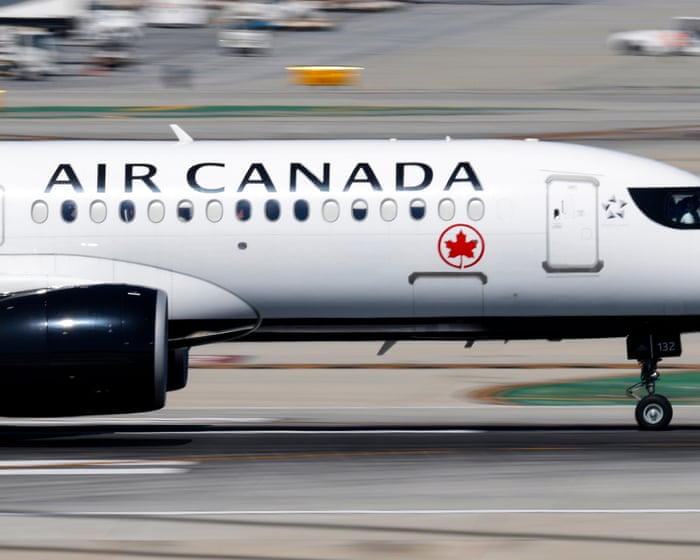
A former Air Canada pilot has been charged after flying for years without a proper license, Canadian police have said.

Geoffrey Wall, of Barrie, Ontario, is alleged to have operated as an airline captain between 2009 and 2025 without a license to fly large commercial passenger planes, according to Peel regional police.

Continue reading...

© Photograph: Kevin Carter/Getty Images

© Photograph: Kevin Carter/Getty Images

© Photograph: Kevin Carter/Getty Images

  •  

Sarampo: infectologista alerta sobre vacinação em viagens para a Copa

Logo Agência Brasil

O aumento do número de casos de sarampo registrado nos Estados Unidos, México e Canadá – que sediarão jogos da Copa do Mundo 2026 – acende o alerta para a necessidade de vacinação dos turistas brasileiros que viajarão para o Mundial. Juntos, os três países respondem por 70% dos casos nas Américas.

A observação foi feita nesta terça-feira (9) à Agência Brasil pela infectologista Natalie Del Vecchio, do Instituto Nacional de Saúde da Mulher, da Criança e do Adolescente Fernandes Figueira, da Fundação Oswaldo Cruz (IFF/Fiocruz).

Notícias relacionadas:

“O sarampo é uma doença altamente contagiosa”, disse. Isso significa que uma pessoa com o vírus consegue transmiti-lo para muitas outras simultaneamente. “E a gente tem visto a baixa cobertura vacinal nesses países e também no Brasil”, observou Natalie Del Vecchio.

Expansão

No ano passado, a Organização Mundial da Saúde (OMS) alertou para a expansão dos casos, quando o Canadá registrou 5.062 ocorrências, o que levou à perda da certificação de país livre da doença. Em 2026, foram confirmados 124 casos no território canadense.

O México elevou o número de sete casos, notificados em 2024, para 6.152 registros em 2025. Somente em janeiro deste ano, foram 1.190 casos, de acordo com informações preliminares. Nos Estados Unidos, por sua vez, ocorreram 2.144 casos em 2025 e 721 em janeiro de 2026.

Segundo a infectologista do IFF/Fiocruz, o perigo é maior para os brasileiros que viajam para esses países sem estarem com o esquema vacinal contra sarampo completo. A vacinação pode evitar a eventual reintrodução do vírus no Brasil.

Natalie lembrou que, em novembro de 2024, o Brasil recebeu da Organização Pan-Americana da Saúde (Opas) a recertificação de país livre do sarampo. O documento foi entregue ao presidente Luiz Inácio Lula da Silva e à então ministra da Saúde, Nísia Trindade. Em 2016, o Brasil já havia alcançado essa posição de nação livre da circulação endêmica do sarampo mas, em 2018, as baixas coberturas vacinais permitiram a reintrodução do vírus no país.

Risco

“A baixa cobertura vacinal é um risco para o nosso país de reintrodução do vírus no Brasil”, afirmou a infectologista. Em 2025, foram notificados 38 casos no país, todos importados de nações vizinhas. Em janeiro de 2026, foram registrados dois casos de sarampo, de uma mulher de 22 anos. no Rio de Janeiro, e de um bebê de 6 meses, em São Paulo. Os dois não tinham registro de vacinação.

Natalie Del Vecchio recomenda que mesmo as pessoas que não vão viajar para os países-sede da Copa do Mundo devem procurar completar o calendário vacinal. Para aquelas acima de 1 ano de idade até 30 anos, são necessárias duas doses da vacina contra sarampo e, de 30 a 60 anos, uma dose.

“Se a pessoa já tem o calendário dela completo, não precisa tomar uma dose extra da vacina. Se o calendário não estiver completo, os viajantes que se destinam aos países-sede da Copa devem completar o esquema vacinal. Essas pessoas viajarão com tranquilidade, exatamente para não estarem adquirindo o vírus do sarampo, nem trazendo para o nosso país. Para, exatamente, evitar um novo surto e novos casos do sarampo no Brasil”, afirmou a infectologista.

Reforço

O Ministério da Saúde lançou campanha nacional orientando brasileiros que viajarão aos Estados Unidos, México e Canadá para a Copa do Mundo a reforçar a vacinação contra o sarampo. Para crianças de 6 a 11 meses, a recomendação é que tomem a dose zero pelo menos 15 dias antes da viagem. Na faixa de 12 meses a 29 anos, é necessário ter duas doses.

Os adultos de 30 a 59 anos devem ter recebido pelo menos uma dose ao longo da vida. Outra recomendação é que a aplicação da vacina Tríplice Viral (que também protege contra caxumba e rubéola) deve ocorrer pelo menos 15 dias antes da viagem. As doses estão disponíveis gratuitamente nas unidades de saúde do Sistema Único de Saúde (SUS).

Gravidade

O sarampo é uma doença grave que pode deixar sequelas por toda a vida e até causar a morte. As principais complicações variam de acordo com as fases da vida do paciente. Para crianças, pode causar pneumonia, infecções de ouvido, encefalite aguda (inflamação no encéfalo – parte do sistema nervoso dentro do crânio) e morte. Em adultos, causa pneumonia. E, em gestantes, pode resultar em parto prematuro e bebê com baixo peso.

Altamente contagiosa, a doença se espalha pela tosse, fala ou respiração. Uma pessoa infectada pode contaminar outras antes mesmo de saber que está doente. Os sintomas mais comuns são febre alta, tosse persistente, coriza, irritação nos olhos, e manchas vermelhas que começam no rosto e depois no corpo. Os sintomas costumam aparecer entre sete e 14 dias após o contato com o vírus.

  •  

Sarampo: infectologista alerta sobre vacinação em viagens para a Copa

Logo Agência Brasil

O aumento do número de casos de sarampo registrado nos Estados Unidos, México e Canadá – que sediarão jogos da Copa do Mundo 2026 – acende o alerta para a necessidade de vacinação dos turistas brasileiros que viajarão para o Mundial. Juntos, os três países respondem por 70% dos casos nas Américas.

A observação foi feita nesta terça-feira (9) à Agência Brasil pela infectologista Natalie Del Vecchio, do Instituto Nacional de Saúde da Mulher, da Criança e do Adolescente Fernandes Figueira, da Fundação Oswaldo Cruz (IFF/Fiocruz).

Notícias relacionadas:

“O sarampo é uma doença altamente contagiosa”, disse. Isso significa que uma pessoa com o vírus consegue transmiti-lo para muitas outras simultaneamente. “E a gente tem visto a baixa cobertura vacinal nesses países e também no Brasil”, observou Natalie Del Vecchio.

Expansão

No ano passado, a Organização Mundial da Saúde (OMS) alertou para a expansão dos casos, quando o Canadá registrou 5.062 ocorrências, o que levou à perda da certificação de país livre da doença. Em 2026, foram confirmados 124 casos no território canadense.

O México elevou o número de sete casos, notificados em 2024, para 6.152 registros em 2025. Somente em janeiro deste ano, foram 1.190 casos, de acordo com informações preliminares. Nos Estados Unidos, por sua vez, ocorreram 2.144 casos em 2025 e 721 em janeiro de 2026.

Segundo a infectologista do IFF/Fiocruz, o perigo é maior para os brasileiros que viajam para esses países sem estarem com o esquema vacinal contra sarampo completo. A vacinação pode evitar a eventual reintrodução do vírus no Brasil.

Natalie lembrou que, em novembro de 2024, o Brasil recebeu da Organização Pan-Americana da Saúde (Opas) a recertificação de país livre do sarampo. O documento foi entregue ao presidente Luiz Inácio Lula da Silva e à então ministra da Saúde, Nísia Trindade. Em 2016, o Brasil já havia alcançado essa posição de nação livre da circulação endêmica do sarampo mas, em 2018, as baixas coberturas vacinais permitiram a reintrodução do vírus no país.

Risco

“A baixa cobertura vacinal é um risco para o nosso país de reintrodução do vírus no Brasil”, afirmou a infectologista. Em 2025, foram notificados 38 casos no país, todos importados de nações vizinhas. Em janeiro de 2026, foram registrados dois casos de sarampo, de uma mulher de 22 anos. no Rio de Janeiro, e de um bebê de 6 meses, em São Paulo. Os dois não tinham registro de vacinação.

Natalie Del Vecchio recomenda que mesmo as pessoas que não vão viajar para os países-sede da Copa do Mundo devem procurar completar o calendário vacinal. Para aquelas acima de 1 ano de idade até 30 anos, são necessárias duas doses da vacina contra sarampo e, de 30 a 60 anos, uma dose.

“Se a pessoa já tem o calendário dela completo, não precisa tomar uma dose extra da vacina. Se o calendário não estiver completo, os viajantes que se destinam aos países-sede da Copa devem completar o esquema vacinal. Essas pessoas viajarão com tranquilidade, exatamente para não estarem adquirindo o vírus do sarampo, nem trazendo para o nosso país. Para, exatamente, evitar um novo surto e novos casos do sarampo no Brasil”, afirmou a infectologista.

Reforço

O Ministério da Saúde lançou campanha nacional orientando brasileiros que viajarão aos Estados Unidos, México e Canadá para a Copa do Mundo a reforçar a vacinação contra o sarampo. Para crianças de 6 a 11 meses, a recomendação é que tomem a dose zero pelo menos 15 dias antes da viagem. Na faixa de 12 meses a 29 anos, é necessário ter duas doses.

Os adultos de 30 a 59 anos devem ter recebido pelo menos uma dose ao longo da vida. Outra recomendação é que a aplicação da vacina Tríplice Viral (que também protege contra caxumba e rubéola) deve ocorrer pelo menos 15 dias antes da viagem. As doses estão disponíveis gratuitamente nas unidades de saúde do Sistema Único de Saúde (SUS).

Gravidade

O sarampo é uma doença grave que pode deixar sequelas por toda a vida e até causar a morte. As principais complicações variam de acordo com as fases da vida do paciente. Para crianças, pode causar pneumonia, infecções de ouvido, encefalite aguda (inflamação no encéfalo – parte do sistema nervoso dentro do crânio) e morte. Em adultos, causa pneumonia. E, em gestantes, pode resultar em parto prematuro e bebê com baixo peso.

Altamente contagiosa, a doença se espalha pela tosse, fala ou respiração. Uma pessoa infectada pode contaminar outras antes mesmo de saber que está doente. Os sintomas mais comuns são febre alta, tosse persistente, coriza, irritação nos olhos, e manchas vermelhas que começam no rosto e depois no corpo. Os sintomas costumam aparecer entre sete e 14 dias após o contato com o vírus.

  •  

Florida shaken by 6.1-magnitude earthquake off coast of Cuba

Earthquake was region’s strongest tremor in nearly 150 years and was also felt in parts of Mexico including Cancún

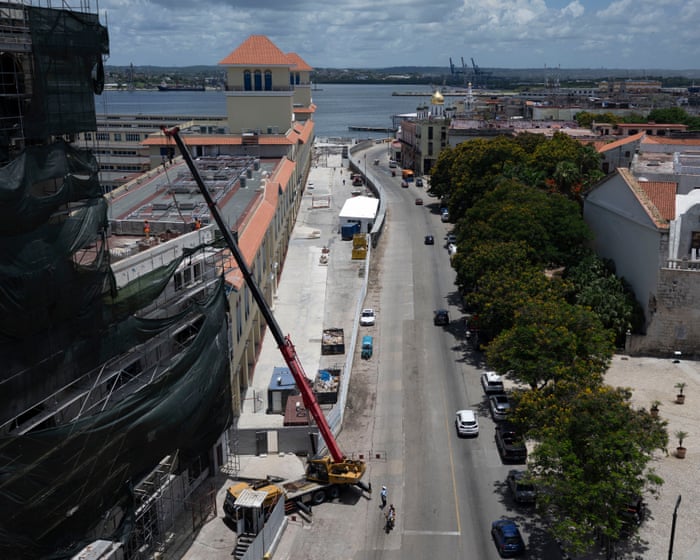
An earthquake on Monday off the coast of Cuba, which was that region’s strongest tremor in nearly 150 years, could be felt in Florida and parts of Mexico.

The 6.1-magnitude earthquake, which struck in the afternoon, occurred approximately 65 miles (105km) north-west of Mantua, Cuba, according to the US Geological Survey (USGS). The USGS added that the earthquake had a depth of 16 miles.

Continue reading...

© Photograph: Pablo Porciúncula/AFP/Getty Images

© Photograph: Pablo Porciúncula/AFP/Getty Images

© Photograph: Pablo Porciúncula/AFP/Getty Images

  •  

NATO has its eyes on our health too: What awaits the health services of member countries in a ‘state of war’?

NATO plans to seize civilian health systems for war – turning hospitals into military logistics hubs, Erkin Oncan writes.

Join us on TelegramTwitter, and VK.

Contact us: info@strategic-culture.su

The global public is waiting for the NATO Summit to be held in our capital, Ankara, on 7–8 July.

At the summit, of course, imperialist aggression against Iran and the latest developments in the Russia–Ukraine war will likely be the main issues. But the real key headline is the target of member countries spending 5 percent of their Gross Domestic Product (GDP) on defense.

Except for Spain, all allies have pledged to reach the 5 percent defense spending target by 2035. We had previously written about the burden this would place on countries’ national economies and the possible consequences, especially cuts in social spending. (Source)

However, NATO is, as expected, carrying out its preparations for the so-called ‘big war’—which is now effectively an open secret—through a multi-layered program. The alliance is preparing for the historic summit and the transformation that will take place in the summer through committee and various subcommittee meetings.

Another threshold in this preparation was crossed recently in North Macedonia. This critical development, which did not receive much media coverage, is focused on preparing member states’ health systems as well for the expected ‘big war.’

Who organized the meeting?

The meeting was organized by the NATO Committee of Chiefs of Military Medical Services (COMEDS).

Its origins go back to EUROMED, established in 1970 by the medical services leadership of EUROGROUP, which itself was founded in 1968 for the purpose of logistical coordination among NATO’s European members.

By the 1990s, all EUROGROUP activities except EUROMED were transferred to the Western European Union (WEU)—which would be dissolved in 2011—while EUROMED joined NATO. EUROMED was then institutionalized by the NATO Military Committee in the 1993–1994 period and transformed into today’s COMEDS structure.

Since then, this structure has worked on organizing health services for military personnel, as well as on medical evacuation and related fields. But this structure is also tasked with operating in civilian areas, not only military ones. Epidemics in member countries, natural disasters, emergencies, and the like… In all of these ‘civilian’ events too, this committee is responsible for providing ‘coordination’ on highly sensitive matters such as medical supplies and patient transport.

What was discussed at the meeting?

The meeting, recorded as the NATO COMEDS 65th Plenary Meeting, was held in Skopje, North Macedonia, on 1–4 June.

From the statements made by senior officials speaking at the meeting, it appears that two points were emphasized.

The first of these is accelerating the treatment of the wounded and their return to the front.

In his opening remarks, Belgian Major General Luc Vanbockryck, Director of NATO’s Logistics and Resources Division, said that medical support should be regarded as “a critical capability equivalent to any weapons system.”

Norwegian Brigadier General Petter Iversen, who holds the committee’s chairmanship, also described “a new reality” and stated:

“Military medical services are no longer just a broad support domain; they are becoming a fundamental element just like any weapons system. We must accelerate the process of returning soldiers to the front. This has strategic importance.”

In other words, NATO sees its wounded soldiers not merely as patients, but as resources that need to be “repaired” as quickly as possible. This stance is also an indication that NATO anticipates serious losses in the event of a possible war.

Work on the NATO Medical Action Plan (MAP), which entered into force in January 2025, was also one of the main topics at the meeting. Due to the decision on ‘confidentiality,’ the full text of this action plan has not yet been made public, but we can infer the main trends in the plan from meetings of this kind and from the statements of officials.

And this brings us to the second important point:

Civil-military health integration

According to official documents, NATO explicitly describes the MAP through a “Whole-of-government, whole-of-society” approach. In other words, these plans involve not only the military health system, but also the health capacity of the state and society.

We also learn what this integration looks like in practice from NATO documents open to the public.

At NATO’s first joint military-civilian health meeting, held on 7 December 2023, the issues discussed with COMEDS were striking:

National health authorities; mass casualty planning, supply security for blood and blood products and medical countermeasures, patient evacuation and transfer…

The following year, in discussions between COMEDS and NATO’s Joint Health Group, the main topic was again civil-military cooperation.

The most striking aspect of this meeting was NATO’s assessment that “civilian authorities’ civilian health systems need to be able to function for longer in a conflict environment.” In other words, NATO is not aiming to expand the military system in the health field; it is aiming to make civilian health capacity directly resilient to war conditions.

The guidelines contained in the alliance’s health manuals point exactly to the place we are highlighting:

Strategic stocks, shared access arrangements in civilian/military medicine, joint disease/health surveillance, communication lines, and more…

What does all this mean?

The best way to understand the effect of all these regulations and proposed regulations on the public is through a kind of written simulation.

Based entirely on NATO documents, let us imagine that NATO, led by the United States, together with member countries, has started a hot war against a “great enemy,” and that our country is also involved in this war with its military power.

In such a scenario, what will happen in the field of medicine can be summarized as follows:

When our country is involved in any total war of NATO, the first break occurs first in the supply chain, transport, and communications; all of these sectors come under intense pressure. In other words, the war moves from the front to the cities very rapidly, and public services are instantly paralyzed.

The expected picture in Turkey in such a war would be, in addition to injuries and deaths, a contraction in access to health services, shortages of medicines and medical supplies, psychological trauma, migration and internal displacement, price increases, disruptions in transport and communication, and the diversion of public resources to the war.

Turkey’s health infrastructure is redesigned at great speed according to the tempo of war, not according to the needs of the public. City hospitals, state hospitals, military hospitals, university hospitals, and private health chains learn whom they will serve and how not according to the country, but according to the alliance and the laws of the war it is in.

From this point on, the matter is no longer merely a question of medical capacity; it becomes directly a question of sovereignty. Because in wartime, health is not just about “saving the wounded,” but about deciding who will be treated, which wounded person will be moved first, which medicine will be given to whom, and which hospital will operate according to military priorities.

For example, in its medical situation assessment prepared at the center in the first moments of war, COMEDS determines in which countries the health system is under strain, in which regions patient transfer is possible, and in which areas civil-military coordination is needed.

According to the plan to be created under the MAP, some allied countries will take on advanced surgery and intensive care capacity, while others will assume the role of evacuation, rehabilitation, blood products, medicine delivery, or logistics hub. So who will distribute these roles? The answer is again in NATO documents: “Lead nations,” that is, leading countries…

The question not answered in NATO documents is this: On what basis will the division of tasks be made? On military power? On political power? On a country’s place within the alliance? Or according to the Atlantic-centered strategic reflexes that give the alliance its true character?

Let us continue with NATO documents… If military medical services are insufficient on their own—which is expected to be the case—COMEDS begins cooperation with civilian health authorities. This cooperation, which NATO explains through seemingly “health-focused” concepts such as supply security and patient referral and transfer, has one more frightening requirement: the use of national and regional stockpiles.

In other words, when NATO deems it necessary, it can, for example, use the blood stock held by civilian health services for military personnel. This is actually a law applicable in every country. But it is much more than a state’s ability to use its own stock within the country for the sake of its own army and its own interests in war.

In short, let us think about health services, which are at the center of human life…

When health services, militarized by officials who consider them equivalent in importance to weapons systems, are quickly transformed from “burden sharing” into “resource sharing” in wartime due to NATO membership, how much of them will reach whom?

And let us imagine a country…

A country that is not among the “upper ranks” of the imperialist-capitalist system, yet is kept within the alliance by governments at any cost; whose economy is extremely fragile; whose public services, especially health, already run sluggishly; but which has a large military/civilian population. In such a scenario, how many years—not years, but months—could it hold on, and which of its “allies” would have the courage to shoulder the burden of rescuing such a wreck?

  •  

The criminal cartels cashing in on the World Cup – podcast

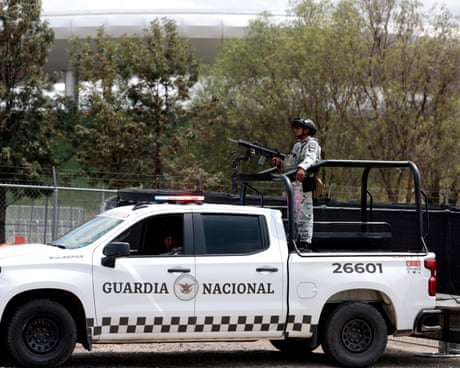
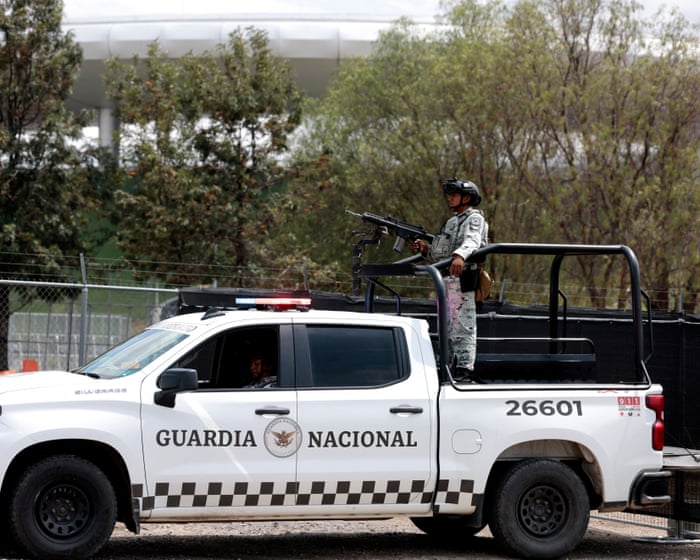
Football fans are celebrating the tournament coming to Guadalajara. But with a brutal crime syndicate holding sway there, what are the risks for fans – and the government?

Excitement is mounting in Mexico as the World Cup opens in Mexico City, then heads to the city of Guadalajara.

Mexican journalist Leon Krauze is a fan. He was there the last time the World Cup came to Mexico and will be watching again. The city of Guadalajara has a mythical footballing past: “Pele’s Brazil played there in 1970, then Zico and Socrates played there in 1986. There is a real football memory there, a love affair between Guadalajara and football in general, and I expect it to be a wonderful party.”

Continue reading...

© Photograph: Ulises Ruiz/AFP/Getty Images

© Photograph: Ulises Ruiz/AFP/Getty Images

© Photograph: Ulises Ruiz/AFP/Getty Images

  •  
❌