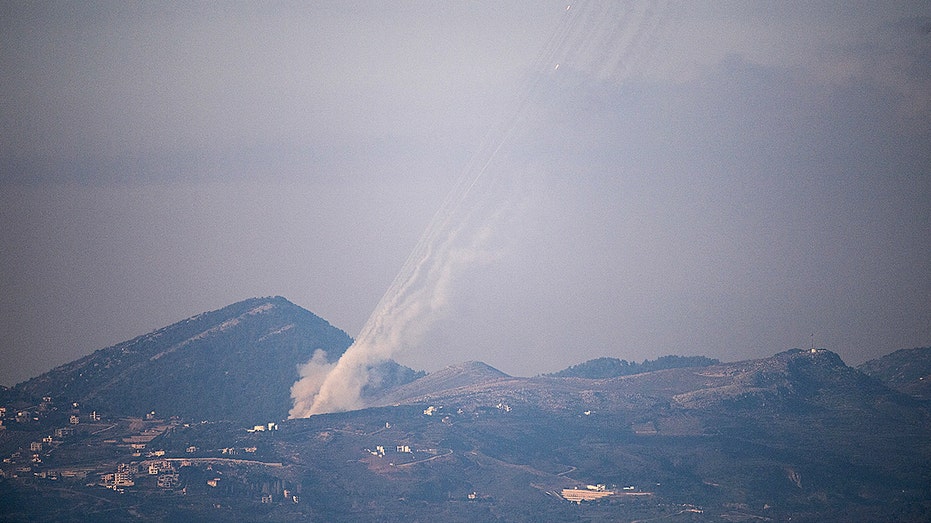
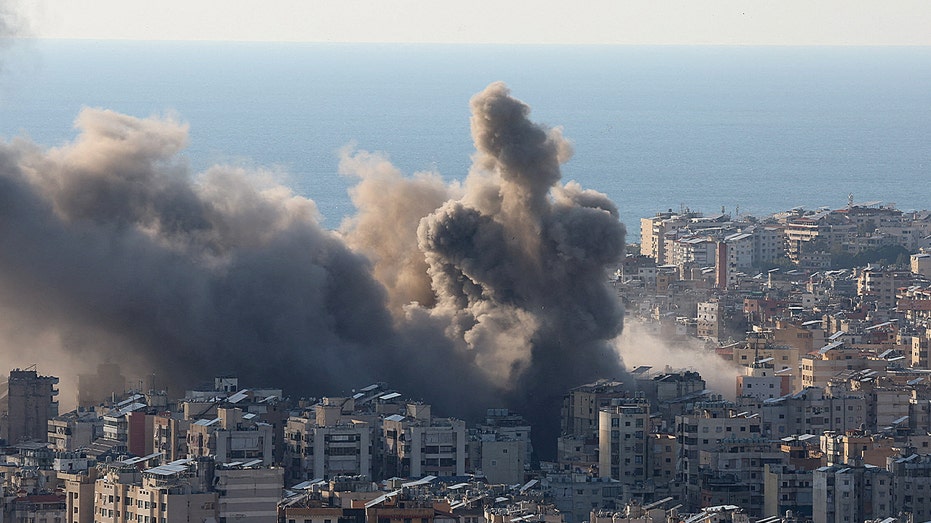
Hezbollah has begun unleashing "game changing" waves of "lethal" nighttime drones against Israel, a defense expert warns, with the attacks contributing to casualties, defense breaches and plunging parts of the border region into chaos, according to reports.
Escalating deployments by Hezbollah had also prompted Prime Minister Benjamin Netanyahu to convene an emergency security meeting on May 30 following a surprise Hezbollah strike, amid reports of "utter chaos" as Israeli forces scrambled to respond.
"These nighttime drones are the very small Category 1 and Category 2 drones," defense expert and Draganfly CEO Cameron Chell told Fox News Digital.
"They are generally used by squads on the ground to go and conduct tactical lethal missions or surveillance missions right in theater immediately. What they are able to do is use thermal sensors to be able to fly at night and use heat signatures to spot IDF troops," he said.
"Hezbollah now has nighttime capabilities, which is game changing," Chell added.
"What you will see is an escalation of the use of drones and the innovation of asymmetric warfare in that particular area by Hezbollah," he warned.
Chell’s comments came amid reports of makeshift defenses with nets being deployed against the backdrop of a significant shift in the conflict.
Israeli soldiers have resorted to buying commercial fishing and soccer nets to entangle the incoming aerial threats, according to reports.
"This means that there is a whole other set of countermeasures that the IDF has to put in place, whether it is electronic jamming, net guns or the use of netting just to put in front of installations or in front of vehicles to try to stop the final impact of the drone if it is a strike drone," Chell added.
"The IDF will have to change a lot of their tactics regarding their ability to move around and conduct operations at night. Now they will have to factor in the fact that Hezbollah has nighttime capabilities to at least do observation using thermal cameras, as well as strike capabilities."
According to a report by Channel 13, the Israeli army was surprised by the scale of the fire as well as Hezbollah's decision to shift its operational policy in response to the expansion of Israel’s ground operations beyond the Litani River.
Reports from the ground described "utter chaos" in parts of the north. While rockets were said to have hit the cities, Hezbollah simultaneously launched waves of drone strikes.
Hezbollah leader Naim Qassem has also touted the militant group’s drone capabilities, calling them an effective weapon against Israeli forces operating near and inside southern Lebanon.
Netanyahu has also described Hezbollah's drone capabilities as a major threat given the difficulty in detecting them.
"Hezbollah have got a supply line or supply chain of some sort set up," Chell added before stating that they are not "using stuff that is groundbreaking; this is very old technology and tactics that they are using."
"That said, somebody is making the equipment available to Hezbollah — whether it is coming via Iran, China, Russia, Afghanistan or the black market, someone is getting enough product and feeding it into their supply chains," Chell warned.
Israeli and Lebanese military delegations opened Pentagon-mediated talks Friday morning in Washington, launching a new U.S.-brokered security coordination track aimed at preventing renewed escalation along the Israel–Lebanon border and shoring up a fragile ceasefire reached in mid-April.
A State Department official told Fox News Digital, "As we have continuously stated, the only path to lasting peace is through direct negotiations between the two sovereign governments."
The discussions mark a shift from diplomatic negotiations into direct military coordination, with talks expected to focus on ceasefire enforcement, border stability, Israeli withdrawal from parts of southern Lebanon and the role of the Lebanese Armed Forces in containing Hezbollah.
The talks come weeks after a U.S.-brokered ceasefire first reached during the broader regional conflict tied to the U.S.–Iran war. While large-scale fighting has eased, Israeli forces continue operating inside parts of southern Lebanon, and Hezbollah maintains drone and rocket capabilities, keeping tensions high along the border.
The ceasefire was extended on May 15 for another 45 days, creating pressure on both sides to show progress before the current arrangement expires.
But analysts say the central question overshadowing the talks is whether Lebanon can realistically curb Hezbollah’s military power without risking internal collapse.
"This will be the first meeting between representatives of the militaries since the start of the negotiation process between Lebanon and Israel," Ahmad Sharawi, a research analyst at the Foundation for Defense of Democracies think tank, told Fox News Digital.
Representing Lebanon in the talks is Lebanese Armed Forces (LAF) commander Gen. Rodolphe Haykal, who previously served as commander of the Lebanese Armed Forces in southern Lebanon, an area where Hezbollah maintains a strong presence. Hezbollah is the Iran-backed Lebanese terrorist organization designated by the United States as a foreign terrorist organization.
"What we should expect is talks regarding de-confliction and what the expectations are for the LAF in terms of the broader disarmament plan against Hezbollah’s weapons," he said.
Sharawi said the chances of a broader breakthrough remain limited so long as Hezbollah remains heavily armed and politically entrenched inside Lebanon.
He also warned that Hezbollah’s deep support among Lebanon’s Shiite population complicates any attempt to move toward normalization with Israel.
"There’s a fear of a civil war," he said. "That also accounts for the Lebanese state’s unwillingness to disarm Hezbollah."
The talks opened as Prime Minister Benjamin Netanyahu signaled Israel intends to maintain military pressure on Hezbollah despite the negotiations.
Sharawi argued the Trump administration nevertheless appears determined to push the process forward as part of a broader effort to weaken Iranian influence in the region.
"The reason behind these meetings is that President Trump is really trying to push for a peace agreement between Israel and Lebanon," he said. "Peace between these two countries could really undermine Hezbollah and its influence in Lebanon."
Israeli analysts similarly described the talks less as a breakthrough and more as a strategic signal aimed at Hezbollah.
"The war between us and Hezbollah is continuing," Yossi Kuperwasser, head of the Jerusalem Institute for Strategy and Security and former head of the Research Division of Israeli Military Intelligence, told Fox News Digital.
"There is no doubt the Lebanese government does not have a monopoly on the use of force in Lebanon."
Kuperwasser said expectations for an immediate diplomatic breakthrough should remain low but argued the talks themselves send an important political message.
"The purpose of these talks is first and foremost to send a message to Hezbollah and also to the Americans," he said. "Both sides are prepared to sit together against Hezbollah and signal that they are moving, even if slowly, toward normalization between Israel and Lebanon."
He argued Hezbollah has been weakened politically and militarily by the ongoing conflict and by growing frustration among Lebanese civilians displaced by the fighting.
"For years, Hezbollah portrayed itself as the defender of Lebanon," Kuperwasser said. "Now many Lebanese see Hezbollah as responsible for the suffering Lebanon is experiencing."
Kuperwasser added that while Israel supports strengthening the Lebanese army, Beirut fears direct confrontation with Hezbollah could ignite another civil war.
"The Lebanese government fears military action against Hezbollah would lead to civil war," he said. "That fear shapes everything."
The talks also come amid mounting domestic pressure inside Israel, where critics of Netanyahu have accused the government of pursuing containment rather than decisive military victory against Hezbollah.
Speaking Friday during a visit to Israel’s northern front, Netanyahu said Israeli forces had crossed the Litani River and were operating across multiple parts of Lebanon.
"We are operating in Beirut, in the Bekaa Valley, across the entire front and striking Hezbollah hard," Netanyahu said.
Meanwhile, Lebanon’s leadership is attempting to balance growing American pressure with fears of internal instability and renewed sectarian conflict.
Following Friday's meeting, the Pentagon issued a statement, saying, "Under Secretary of War for Policy Elbridge Colby hosted military delegations from the State of Israel and the Republic of Lebanon to launch the security track supporting the ongoing talks between the two nations.
"The delegations engaged in productive, military-to-military talks focused on building practical frameworks for regional security and stability. The progress and tangible outcomes from these discussions will directly inform the Department of State-led political track, which is scheduled to reconvene next week.
"The Department of War deeply values its strategic partnerships with both the Israel Defense Forces (IDF) and the Lebanese Armed Forces (LAF). The Department supports Lebanon's sovereignty and territorial integrity, free of armed non-state actors, and welcomes the commitment of both militaries to these historic efforts. These are essential steps toward realizing President Trump's vision for a lasting peace in the Middle East.
"The United States anticipates reconvening soon to continue the security track."
Neither the Israeli Embassy in Washington nor the Lebanese Embassy in Washington immediately responded to requests for comment.

 Login
Login