O futebol de seleções se consolidou como uma indústria multibilionária, e o valor de mercado dos elencos nacionais passou a refletir não apenas o desempenho esportivo, mas também a força econômica das principais potências do esporte.
O chamado “valor de plantel” representa a soma das avaliações individuais de todos os jogadores convocáveis de uma seleção. Levantamento elaborado com base em dados da Transfermarkt e da Sports Value aponta a Inglaterra como a seleção mais valiosa do mundo em 2026.
De acordo com o ranking, o elenco inglês está avaliado em aproximadamente € 1,62 bilhão, o equivalente a R$ 9,44 bilhões. A França aparece na segunda colocação, com valor estimado em R$ 8,57 bilhões, seguida pela Espanha, com R$ 7,64 bilhões.
A Alemanha ocupa o quarto lugar, com um plantel avaliado em R$ 5,89 bilhões, enquanto Portugal aparece logo atrás, com R$ 5,63 bilhões.
O Brasil surge na sexta posição entre as seleções mais valiosas da Copa do Mundo de 2026, com valor de mercado estimado em R$ 5,28 bilhões. O ranking é influenciado pela presença de atletas que atuam nos principais clubes da Europa e possuem elevado valor de transferência no mercado internacional.
Confira as 10 seleções mais valiosas da Copa do Mundo de 2026:
Inglaterra — R$ 9,44 bilhões
França — R$ 8,57 bilhões
Espanha — R$ 7,64 bilhões
Alemanha — R$ 5,89 bilhões
Portugal — R$ 5,63 bilhões
Brasil — R$ 5,28 bilhões
Holanda — R$ 4,45 bilhões
Argentina — R$ 4,44 bilhões
Bélgica — R$ 3,25 bilhões
Turquia — R$ 3,06 bilhões
O ranking evidencia a concentração de talentos nas principais ligas europeias e mostra como o mercado do futebol influencia diretamente a valorização das seleções nacionais às vésperas da Copa do Mundo de 2026.
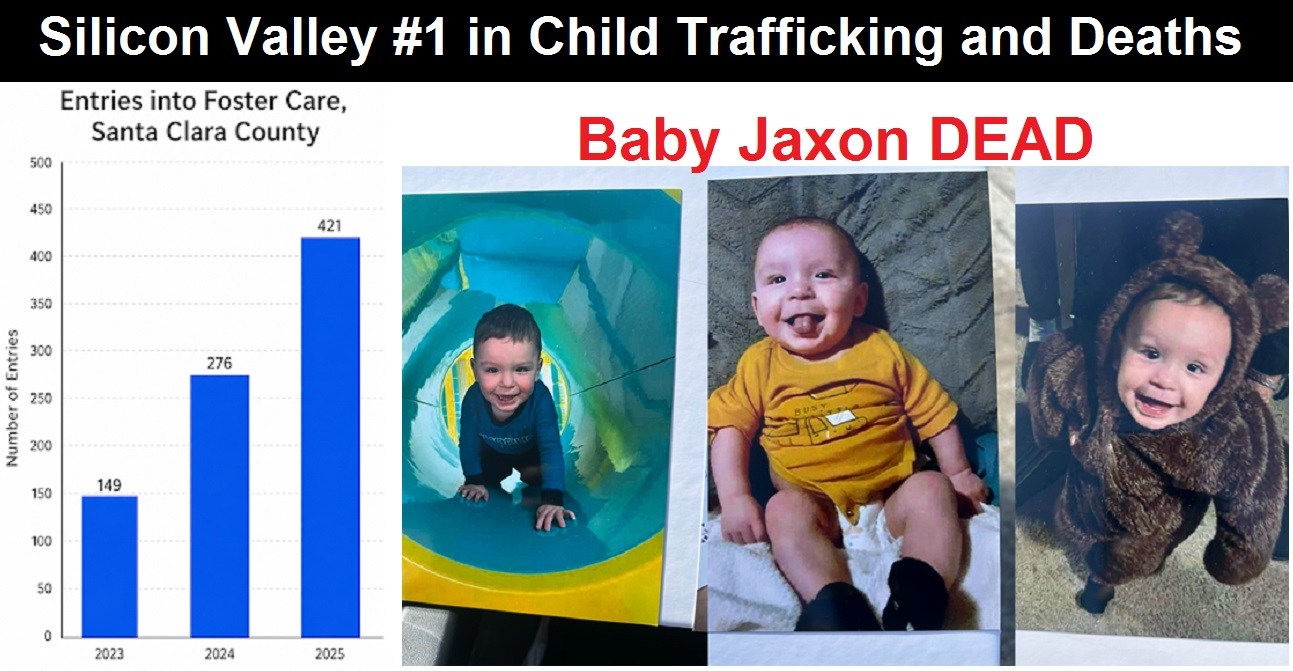
Richard Wexler, the Executive Director of the National Coalition for Child Protection Reform has recently reported that Santa Clara County, home to Silicon Valley in California, now leads the nation in ripping children out of their homes and putting them into their foster care system where children are now dying at a rate higher than anywhere else in the U.S.
As I have been reporting for over a decade now, the foster care system in the United States is the #1 pipeline for child sex trafficking. Most of the foster care system in the U.S. is run by Christians who partner together with the government and their churches in this very lucrative system of “legalized” child trafficking. See:
Multiple studies over the years have clearly shown that children who are left in their homes with their parents, even if they are “troubled homes” where drug abuse may be occurring, for example, have far better lives than being put into the evil foster care system.
Santa Clara County in Silicon Valley, home to billionaires and some of the richest people in the world, has an especially notorious reputation for trafficking and sexually abusing children, while protecting the pedophiles.
Here is a video testimony from Debra Grant, who had her children taken away from her and then given to her pedophile husband, where she explains how these people get away with trafficking children that was recorded 13 years ago. (Amazingly, this video is still up on YouTube. But if it disappears, we have a copy here.)
WARNING! GRAPHIC CONTENT!
Calculating the price of foster-care panic – in children’s lives and health
Researchers estimate that the foster-care panic in Santa Clara County will lead to anywhere from four to 12 foreseeable premature deaths, and a whole lot of serious illness, that would not have happened had the children been left in their own homes.
Their methodology can be applied to any foster-care panic anywhere, and to states that regularly tear apart families at rates far above the national average.
KEY POINTS
Researchers have examined scores of studies following millions of foster children around the world, showing the inherent harm of foster care placement. They were able to estimate the percentage of children who will have worse outcomes – including premature death – because they were taken from their families and placed in foster care. They were able to show that the harm to health and the premature deaths are directly attributable to the separation from their families, not anything their families supposedly did to the children beforehand.
Then they applied the findings to what is, proportionately, the nation’s worst foster-care panic, the one in Santa Clara County, Calif. In that county, over the past two years, entries into foster care over the course of a year nearly tripled. Over that time, 399 more children were torn from their families than would have been taken had there been no panic. They applied their findings about harm to health and premature death to those 399 children.
Their conclusion: 42 children will suffer long-term illness and/or disability that they would not have suffered had they remained in their own homes.
Between four and 12 children will suffer premature death that would not have happened had they remained in their own homes. The researchers emphasize that the death estimate is conservative.
Their report, sent to the Santa Clara County Board of Supervisors on Saturday, includes seven specific recommendations for making all vulnerable children in the county safer.
Among the most popular pages on NCCPR’s website is one that summarizes some of the mass of evidence comparing what happens to children in foster care when compared to comparably-maltreated children left in their own homes.
Over and over, the studies find that in typical cases, the foster children do worse.
How, then does this apply to Santa Clara County?
In the wake of two high-profile child abuse deaths, the Vice President of the County Board of Supervisors, Sylvia Arenas, and the San Jose Mercury News, in particular, reporter Julia Prodis Sulek, rushed to falsely scapegoat efforts to keep families together.
That set off what is, proportionately, the worst foster-care panic I’ve seen anywhere in America in at least 40 years.
Indeed, the panic may have made the latest tragedy more likely by overloading workers, so they have less time to investigate any case thoroughly. None of that has stopped Arenas or Sulek from continuing to throw gasoline on the fire.
Neither has the massive study of more than 3.4 million case records and more than 24,000 child abuse deaths which found that increasing entries into foster care does nothing to decrease such deaths.
What all this research tells us is that increasing foster care does nothing to save lives, but can, in itself, lead to premature deaths.

 Login
Login