Editorial: By offering Labour’s Makerfield candidate a role in government if he wins, the prime minister has shown how a faltering administration could yet be rebuilt. It would not look good to spurn such a substantive opportunity to serve both party and country
Joy Behar, a co-host of “The View” who has been a staunch critic of President Trump, on Tuesday said she doesn’t think Vice President Vance is a “bad guy” and said a faceoff between him and California Gov. Gavin Newsom (D) in 2028 would be “interesting.” “Truthfully, as I said to you in the beginning…
Joy Behar, a co-host of “The View” who has been a staunch critic of President Trump, on Tuesday said she doesn’t think Vice President Vance is a “bad guy” and said a faceoff between him and California Gov. Gavin Newsom (D) in 2028 would be “interesting.” “Truthfully, as I said to you in the beginning…
Infowars’ would-be creative director talks Sandy Hook, comedy’s MAGA turn, and why the future of satire may look more like a streaming startup than a late-night show.
PRESS REVIEW – Wednesday, June 17: Russian and Polish papers discuss the murder of a Russian cartoonist who mocked Vladimir Putin. Next: The New York Times investigates the final days before Jeffrey Epstein's death and his "fraying" mental health. Finally, we ask why India is not in the World Cup and discover Brooklyn Beckham's latest family feud.
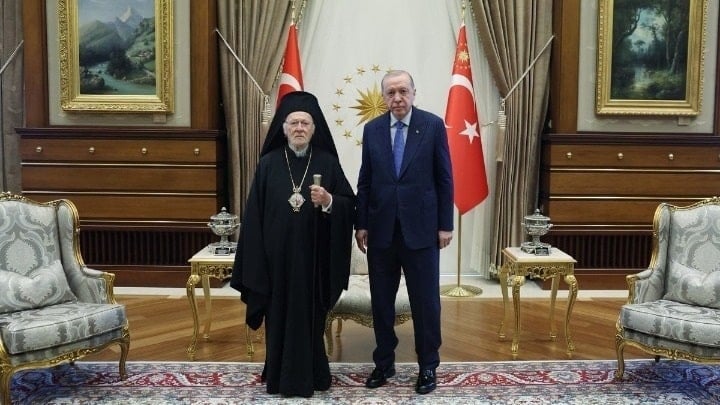
The meeting between Erdogan and Ecumenical Patriarch Bartholomew on the Halki Seminary reopening centered on concrete steps to revive the historic institution. Credit: Presidency of the Republic of Türkiye/X
Ecumenical Patriarch Bartholomew and Turkish President Recep Tayyip Erdogan held a highly anticipated meeting on Tuesday in Ankara to discuss the prospective reopening of the Holy Theological School of Halki.
According to an official statement from the Ecumenical Patriarchate, the discussions were held in a “cordial atmosphere,” focusing on long-standing issues concerning the Greek Orthodox community in Istanbul. Most notably, the dialogue centered on concrete steps to revive the historic seminary, a process now being actively negotiated among Turkey’s Ministry of National Education, the Council of Higher Education (YÖK), and the Patriarchate.
While the meeting marks a significant diplomatic thaw domestically, insiders note that the sudden momentum behind the talks is deeply tied to political pressure radiating from Washington, specifically via US President Donald Trump, who is expected to visit Ankara (and, perhaps, Athens) in July.
The Washington catalyst
The groundwork for Tuesday’s breakthrough was largely laid during a high-stakes, two-hour meeting at the White House between President Trump and President Erdogan last September. During their joint Oval Office press conference, the reopening of Halki was thrust into the international spotlight as a major bargaining chip in US–Turkey relations.
President Trump revealed that he had personally hosted Ecumenical Patriarch Bartholomew at the White House just days prior, when the leader of global Orthodoxy requested American intervention. “The Greek Orthodox Church was here and they would really like some help, and I said I would bring it up,” Trump told reporters with Erdogan sitting beside him.
Erdogan publicly acknowledged to reporters that the reopening of Halki was on the table, stating that Turkey was “ready to do whatever we can on our side” following direct coordination with Patriarch Bartholomew.
Halki Seminary: A decades-old wound
The Holy Theological School of Halki, perched atop a hill on the island of Heybeliada near Istanbul, has been a painful point of contention for over half a century. Established in 1844, it served as the main theological school for the Ecumenical Patriarchate of Constantinople, training generations of Orthodox bishops and Patriarchs.
However, in 1971, the seminary was forced to shut its doors after the Turkish parliament passed a law banning private institutions of higher education, effectively nationalizing or closing religious schools. For fifty-five years, the closure has throttled the Ecumenical Patriarchate’s ability to train new clergy locally, threatening the long-term survival of the spiritual center of the world’s three hundred million Orthodox Christians.
Ukrainian forces have many tools in their arsenal to make sure the warheads meet their appointed foreheads—or trucks, trains, ferries, forward bases, and air defenses. Of all these tools, Starlink is one of the most problematic for the Russians because it’s reliable and jam-resistant.
Still, it’s not jam-proof. The Russians have again begun deploying giant jammers, such as the Volna Kupol Garant, which can disrupt a satellite signal and protect an area of 20 square kilometers, Defense Ministry adviser Serhiy “Flash” Beskrestnov posted on 16 June.
There are two problems though. The first is that they cost $1.5 million per system, require massive amounts of power, and are giant, having to be dragged around on six trailers.
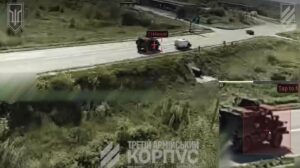
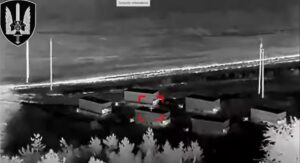
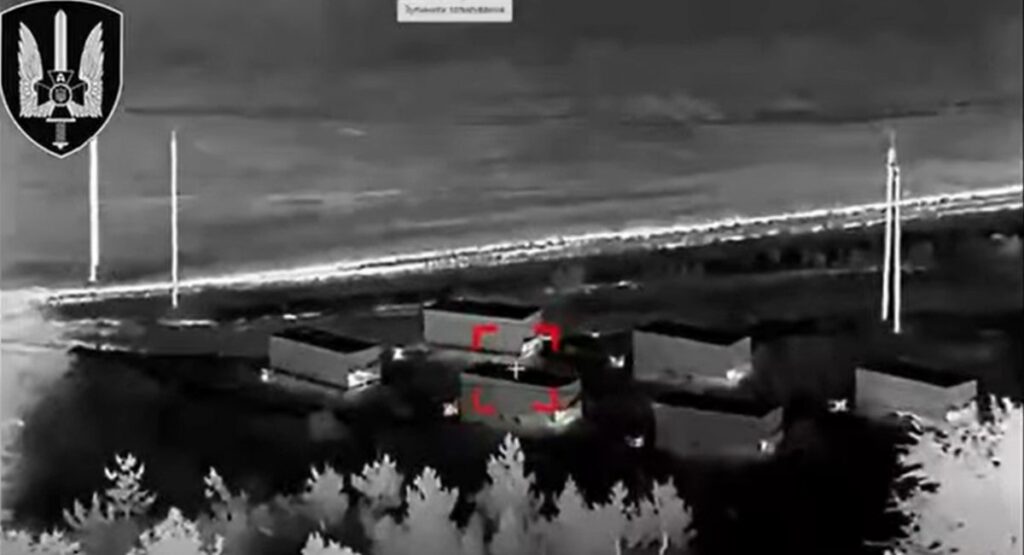
Which leads into the second: they’re being hunted and destroyed, as one was by the Security Service of Ukraine and the 422nd Separate Unmanned Systems Battalion Luftwaffe on 14 June.
In the 422nd’s video of the strike, a Ukrainian strike drone maintains a perfect, uninterrupted video feed as it flies into the cluster of six trailers, while an observation drone nearby records the explosion.
The 422nd Unmanned Systems Regiment “LUFTWAFFE” of the 17th Army Corps and the Special Operations Centre “A” of the Security Service of Ukraine destroyed a Russian electronic warfare (EW) station in the southern direction.
“The first case of suppression of Starlink by the enemy was recorded in 2024 in the Kharkiv direction,” Flash wrote. It was “quickly detected by the Ukrainian military and destroyed. Until 2026, there were no mass attempts to repeat its use.”
Even if it’s effective at disabling Starlink in an area, the Volna Kupol Garant and its ilk appear not to actually offer any kind of guarantee against Ukrainian attacks. Even when intact, they appear very expensive and cumbersome for the amount of coverage they provide. Also, while Starlink has been a massive lifeline for Ukraine, it’s just one of the tools at Kyiv’s disposal.
“New systems are already entering service whose capabilities the enemy is entirely unaware of,” the Azov Corps told Euromaidan Press on 13 June. “They have a substantially greater range and are equipped with next-generation communications systems.”
Why Starlink is hard to jam
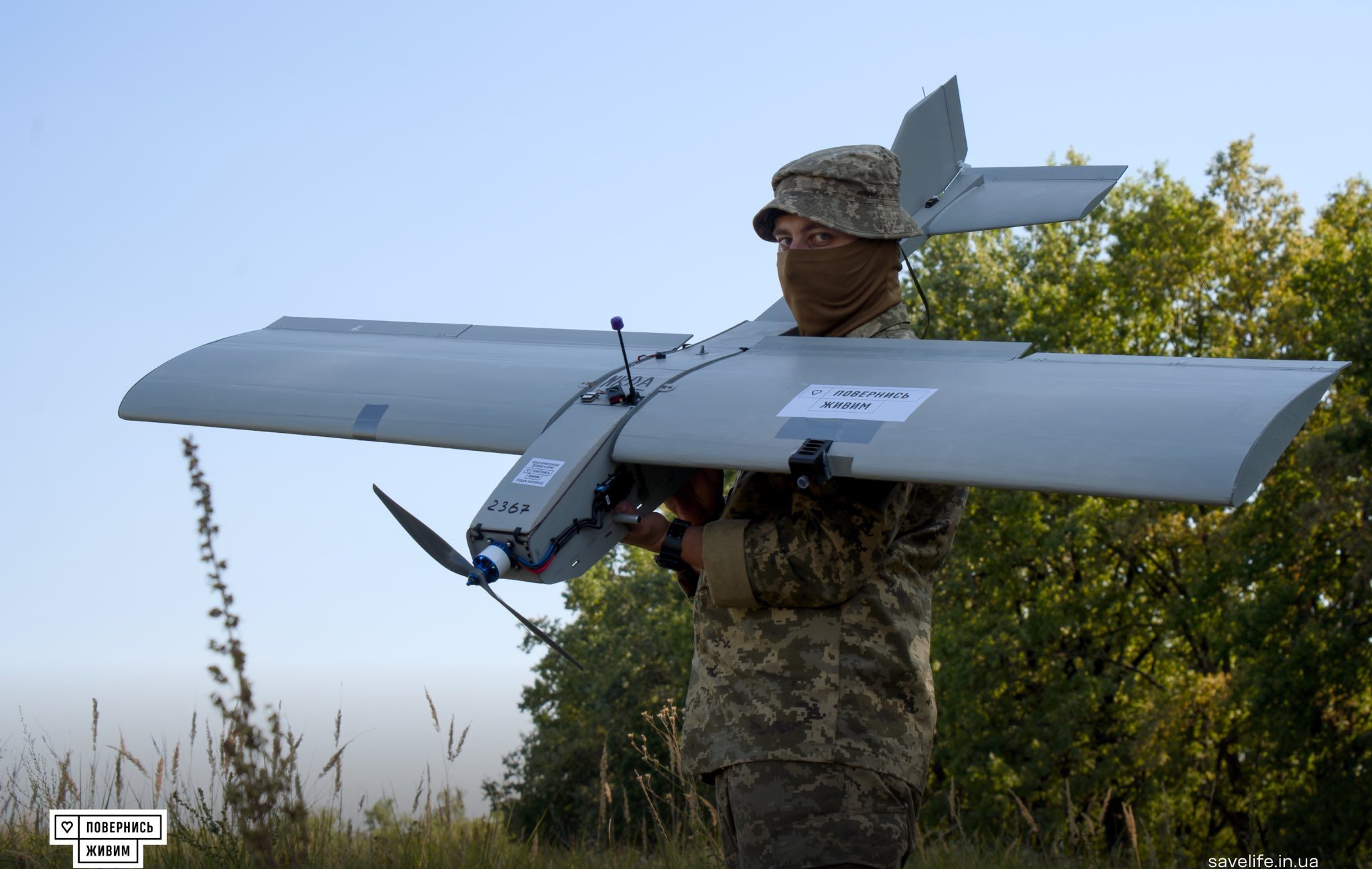
Starlink makes it less likely that a UAV will lose signal to the operator and improves the odds of an uninterrupted live video feed to the pilot, who can be anywhere in the world and react in real time.
Starlink connections also run at much higher frequency ranges than most drones controlled from the ground. To jam a connection, an EW system should match the target frequency. The higher the frequency, the more complex the jamming solution has to be.
Explore further
Ukrainian drones adopt focused antennas to slip by Russian detection
Most drones are controlled at single-digit gigahertz ranges. Starlink can operate between 11 and 20 GHz, Ukrainian engineers previously told Euromaidan Press—Flash put the range at 14-14.5 GHz.
Finally, Starlink points straight up at space, making these waves harder for ground-based EW and radar systems to interfere and detect them, respectively.
How the jammer works and why it falls short
The Volna Kupol Garant works through a series of satellite antennas that point at passing satellites overhead, according to Flash.
“The system emits powerful interference from Earth to the satellite, so that the satellite does not hear signals from conventional terminals,” he wrote.
Since Starlink’s range is divided into eight channels spaced at specific bandwidths apart, the Russians “took eight satellite ‘dishes,’ directed them at the satellite, and each ‘dish’ transmits interference on that channel. That’s it. The satellite is ‘deaf.’”
If the system can only jam one overhead Starlink satellite at a time, that could mean its utility is limited, as SpaceX has 10,000 satellites in orbit. Drones in flight can “jump” between them, as the Russians showed when they used to mount Starlink terminals on Shahed attack drones before Ukraine and SpaceX booted them off the service in February.
And even if it does work, Ukrainian forces have shown that it presents a very juicy target that costs a lot of money to the Russian military.
"The gentlemen from Russian Dome (the company that makes this system) managed to sell these products to the army for $1.5 million apiece," Flash wrote. "This is simply a fairytale."
PRESS REVIEW – Tuesday, June 16: Papers focus on the historic Pechersk Lavra monastery in Kyiv that was set on fire by a missile barrage blamed on Russia. Next: a French-Vietnamese woman is appealing against the companies that supplied the deadly Agent Orange chemical during the Vietnam War. Also: an investigation shows that North Korean hackers are stealing Balkan identities. Finally, a cat interrupts the final scene of "Romeo and Juliet" in a theatre in Turkey.
Kallas calls the Lavra attack a war crime and announces new EU sanctions. The Foreign Affairs Council listed 34 individuals and 47 entities, including Lukoil-Western Siberia, two Chinese drone-component suppliers, the Kremlin's Presidential Fund for Cultural Initiatives, and 15 people tied to Alexei Navalny's persecution and death.
Editorial: If the ceasefire holds, Donald Trump’s ill-starred foray into the Middle East will have left the Iranian regime stronger than it was before the conflict
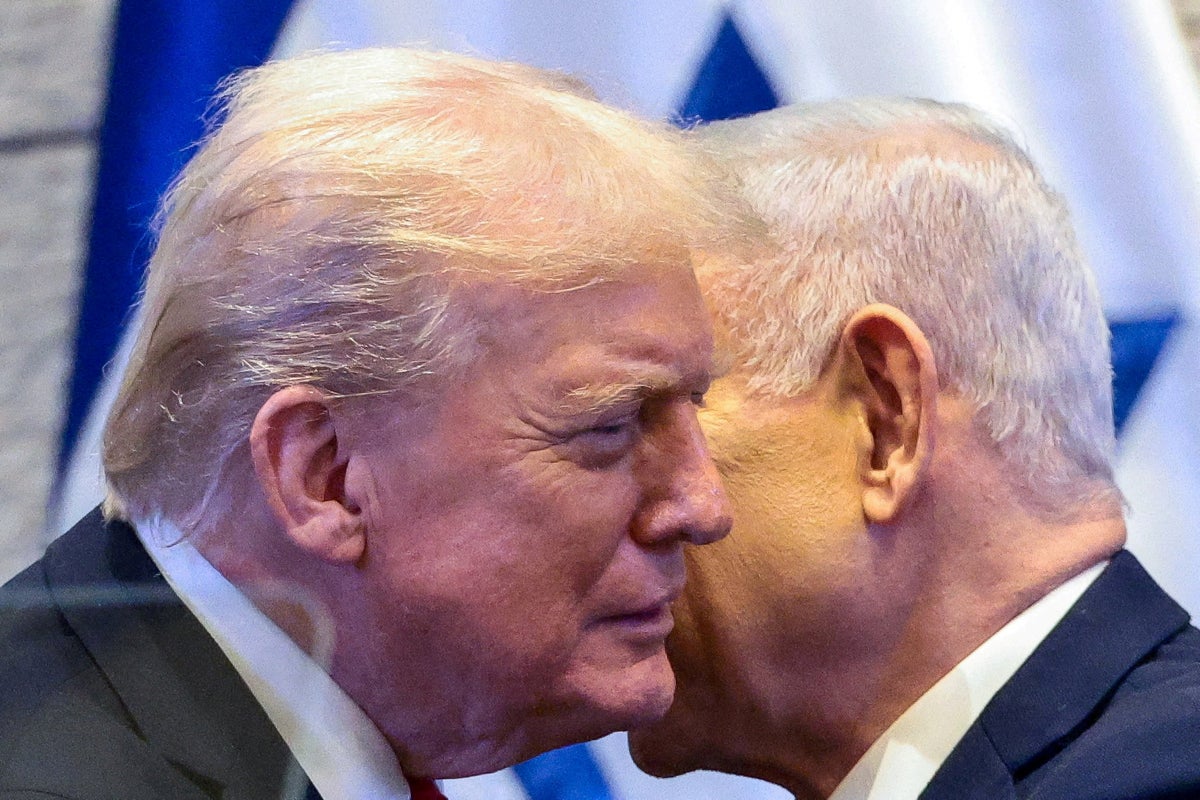
PRESS REVIEW – Monday, June 15: Papers discuss the US-Iran "truce of convenience". According to the Israeli paper Haaretz, Israel's Benjamin Netanyahu is humiliated by Donald Trump. The US president has just turned 80, but is "really uncomfortable with ageing". Finally, could Gwyneth Paltrow get cancelled? Many people hope so.
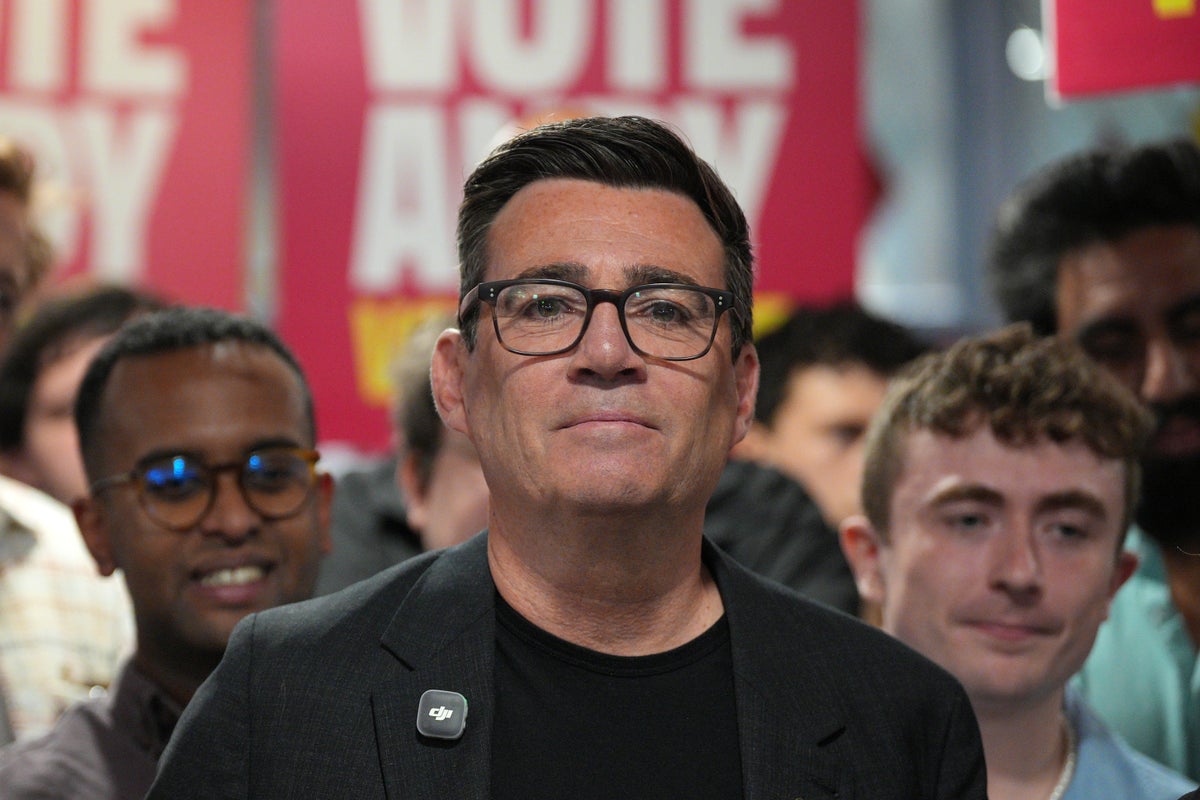
Editorial: Andy Burnham will finally find out whether he is to return to Westminster this week – and be able to launch his bid for PM. Labour must resolve its leadership crisis fast and deliver for the British people

 Login
Login






 The
The  422nd Unmanned Systems Regiment “LUFTWAFFE” of the 17th Army Corps and the Special Operations Centre “A” of the Security Service of
  Russian electronic warfare (EW) station in the southern direction.
 MilitaryNewsUA