Reading view

Expert warns of 'general escalation' of fighting if Houthis resume Red Sea campaign

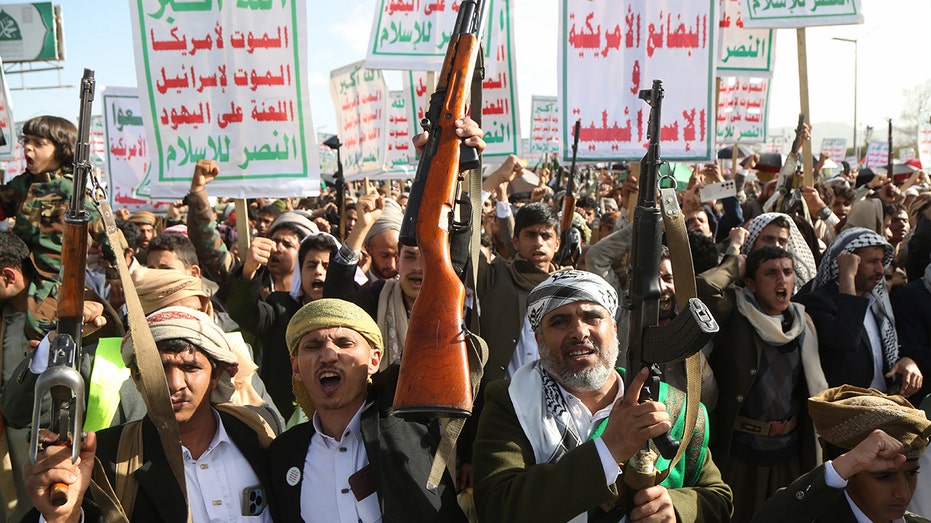
The U.S. has hit back against threats to now block another Middle East waterway by Iranian terror proxy, the Houthis.

Earlier this week, the group declared a complete ban on Israeli-owned ships using the Red Sea, declaring them to be "legitimate targets."

The Red Sea and the waterway through its narrow Bab-el Mandeb Strait has become the main route for oil to ship out of the Middle East to Asia since the Strait of Hormuz has effectively stopped functioning as the main route of navigation for shipping.

IRAN'S AFRICA ACTIVITIES POSE 'SIGNIFICANT THREATS TO US NATIONAL SECURITY'

Houthi spokesperson Yahya Saree posted on Monday, "We declare a complete and total ban on Israeli maritime navigation in the Red Sea, and we consider all enemy movements to be legitimate targets."

In a statement to Fox News Digital, a State Department spokesperson struck back: "The escalatory actions of Iran and their Houthi proxies are unacceptable. These dangerous actions only serve to further enflame tensions and further disrupt global supply chains. We will continue to work with our partners to ensure freedom of navigation in the Red Sea and the Strait of Hormuz." 

Edmund Fitton-Brown, a senior fellow at The Foundation for Defense of Democracies, told Fox News Digital, "The Houthis have indeed risen to the challenge, at least verbally. In common with much ‘Axis of Resistance’ rhetoric at present, the intention appears to be to leverage U.S. political nervousness and market volatility, and to drive a wedge between the Americans and the Israelis."

Fitton-Brown, a former U.K. ambassador to Yemen, added, "Provided the allies keep talking to each other, the Israelis respond proportionately, as they have done, and the Iranians continue to provoke President Trump with actions like the downing of the helicopter, these tactics are unlikely to achieve significant success."

"It will be interesting if the Houthis do go all in, and resume their campaign against Red Sea shipping with full intensity," Fitton-Brown said, adding, "This will draw international anger and likely result in Israeli and U.S. strikes on Sana'a and Hodeida. There is potential for a general escalation if this happens, albeit one in which the allies have a clear military advantage."

US STRIKES ON YEMEN CONTINUE AFTER HOUTHI MISSILE HITS BY ISRAELI AIRPORT; TERROR GROUP VOWS 'AERIAL BLOCKADE'

Landlocked Ethiopia acts as regional anti-terrorism buffer

Such actions come as reports emerge that Ethiopia, the Red Sea region’s most populous country, is stepping up as a major U.S. ally against Islamic terrorism.

While landlocked, Ethiopia has a population of some 130 million, making it the largest nation in the Horn of Africa. Located near parts of the Red Sea corridor, the country is roughly 60% Christian, according to a recent report by the Association of Religion Data Archives.

And despite it being landlocked, Ethiopian researcher Blen M. Diriba told Fox News Digital that the country acts as a strategic roadblock or "a keystone state" on the Islamist expansionist "highway" that has formed all the way from Iran to Sudan.

Diriba, executive director of the Horn Review — an Addis Ababa-based research and publication think tank — told Fox News Digital that "Ethiopia, long a frontline U.S. security partner, now sits at the center of an expanding pressure zone where maritime disruption, insurgent violence, terrorist threats, and proxy competition converge."

Diriba added. "Iran’s Bab el-Mandeb threat transforms the Horn of Africa into a militarized frontline, placing Ethiopia at the center of a choke point crisis. With Iranian influence radiating through conflict ecosystems in Sudan, Eritrea and Somalia, the region is beginning to resemble a continuous arc of instability stretching from the Arabian Peninsula into East Africa."

"Ethiopia sits at the center of one of the world's most combustible security corridors," Diriba continued. "And in strategic terms, its relevance to the United States is amplified, not diminished, by that reality: From the Red Sea disruptions driven by the Houthis to the persistent insurgency threat of al-Shabab in Somalia, Ethiopia functions as a massive inland security buffer whose stability directly shapes whether these threats expand or are contained."

IRAN’S KILLER DRONES INCREASE SLAUGHTER IN SUDAN AMID WORLD’S FORGOTTEN WAR

But in addition to being pro-U.S., Ethiopia also has relations with Iran.

Fitton-Brown believes to some extent Ethiopia can be accused of playing both sides, as he said Tehran "has helped Ethiopia with its internal conflicts, giving drone support and military aid to the Ethiopian government during the recent Tigray War."

He added, "There is a new memorandum of understanding built upon that basis, with Iran gaining influence in Ethiopia, while Ethiopia receives military, police and intelligence support to counter its domestic ethnic insurgencies."

 However, Diriba said, "Ethiopia’s engagement with Iran is neither affinity nor alignment, it’s strategic awareness: keeping channels open to engage where necessary, cooperate selectively, and strategically manage its relations with a complex regional actor, while firmly anchoring its core partnerships with its emerging and long-standing partners — the United States being on the top of that list."

"Ethiopia has pursued a flexible multi-alignment strategy, Diriba said, "prioritizing its entrenched security partnership with Washington while keeping open channels with Tehran to preserve diplomatic room to maneuver in an increasingly fragmented Horn of Africa–Red Sea order."

CLICK HERE TO DOWNLOAD THE FOX NEWS APP

Fitton-Brown said relations between the U.S. and Ethiopia "are good, especially in the field of counterterrorism. Both countries use Somaliland to their advantage without having gone so far as to recognize it as an independent state."

Fox News Digital reached out to both the Department of War and the Ethiopian government for comment, but received no response by the time of publication.
  •  

Christian leaders hold emergency summit in Jerusalem to confront global rise in antisemitism

JERUSALEM — The International Christian Embassy Jerusalem (ICEJ) convened an emergency summit this week amid growing concern over the global rise in antisemitism following the Hamas-led Oct. 7 massacre in 2023.

The three-day conference in the Israeli capital comes at a time when social media influencers are consistently pushing antisemitic hate to their millions of followers.

"Attacking the Jews means attacking the very roots of one’s own faith. It means fighting against the people who gave us the Bible. Jesus was Jewish," ICEJ President Jürgen Bühler told Fox News Digital.

CANADA'S CARNEY PLEDGES ACTION ON ANTISEMITISM AMID BACKLASH OVER NEW ANTI-HATE COUNCIL MEMBERS

"If you don’t fight antisemitism, you are sawing off the branch you sit on. For the church to survive, we need to connect to our roots, (and) fighting antisemitism needs to be at the forefront of every pastor and every leader around the world," he added.

One of the central themes of the conference is replacement theology, a doctrine that holds the church has replaced the Jewish people in God’s plan.

"The Bible is full of God’s eternal plan, which includes the Jewish people. Paul’s statement in Romans 11 that ‘the gifts and the calling of God are irrevocable' relates to Israel. This is a doctrine that goes contrary to what the New and Old Testament are teaching and that’s why we need to have this conference," Bühler said.

"One cannot deny the Jewishness of the Bible. The most frequent word in the Bible is the name of God, and the second most used name is Israel. Jesus was born in Bethlehem, he died in Jerusalem, resurrected in Jerusalem, rose to heaven from Jerusalem, and he is coming back to Jerusalem. If you read the Bible, it is so easy to see the connection to Israel," he added.

HUCKABEE CONDEMNS EFFORTS TO ERASE JEWISH HISTORY TO THE HOLY LAND AS ‘ABSURD’

Israel’s newly appointed special envoy to the Christian world, George Deek, addressed the meeting on Wednesday, while Foreign Minister Gideon Sa’ar and U.S. Ambassador to Israel Mike Huckabee are scheduled to attend the summit’s closing event Thursday at the foreign ministry as keynote speakers.

In a recorded message broadcast at the summit, Israeli President Isaac Herzog thanked Christian leaders for mobilizing against antisemitism.

"We are witnessing a very disturbing surge of antisemitism all over the world. This is a major challenge for humanity. This is the age-old, perhaps the oldest plague in humanity, and we have to stand up together — thought leaders and religious leaders — and say, ‘No more' and teach people about the sources of this evil and how to counter antisemitism," Herzog said.

"I believe that countering antisemitism requires a combination of three major elements: law enforcement, adjudication and education.

"You, dear leaders, have a huge capability of fighting back, and I bless you. Truly, I bless you as the president of Israel for coming here and fighting back, for coming here and discussing how to fight back," Herzog concluded.

Dr. Andrew J. Nolte, who launched Regent University’s Israel Institute in 2024, said students often repeat antisemitic claims, including the accusation that Jews killed Jesus.

"The answer from a Christian theological perspective is that we all killed Jesus. He died for our sins. There is a theological understanding of the guilt we bear for Jesus’s blood," Nolte told Fox News Digital.

ISRAEL LOOKING FOR 'SOLUTIONS' TO OPEN CHRISTIAN SITES AFTER BARRING CHURCH LEADER ON PALM SUNDAY DUE TO WAR

While Israel has faced recent criticism over treatment of Christians — mostly at the hands of a few extremists — the country is seen as a beacon of freedom of religion in the Middle East.

According to Israel's Central Bureau of Statistics, as of December 2025, Israel’s Christian population stood at approximately 184,200, representing 1.9% of the country’s total population. The community grew by 0.7% over the previous year.

Arab Christians account for 78.7% of Israel’s Christian population and comprise 6.8% of the country’s overall Arab population.

Most Arab Christians reside in northern Israel. Among non-Arab Christians, 42% live in the Tel Aviv and Central districts, compared to 33.9% in the Northern and Haifa districts.

Nolte said that Christians in Israel hold prominent positions, noting that the provost of the University of Haifa is a Maronite Christian and that Christian communities in the country report relatively high income levels. He also said that, in most cases involving civil rights and religious freedom brought by Christians in Israel, the outcomes have been decided in their favor.

"If you are comparing Israel to any Muslim country in the Middle East, the status of Christians is much higher. As a Christian, you are better off here than anywhere else in the region," he added.

CHRISTOPHER RUFO: THE POLITICAL RIGHT AND THE ANTISEMITIC INFLUENCER PROBLEM

Christopher Kuehl, founder of Present Witness and co-host of the "One New Man" podcast, emphasized that biblical illiteracy among younger generations is fueling confusion about Israel.

He opened his remarks at the conference by citing a recent U.S. study on Gen Z’s alignment with biblical teachings and how closely its worldview corresponds with scripture, noting that only about 5% demonstrated strong adherence.

"Israel gets thrown into that ignorance, that biblical ignorance. Social media is what teaches children and Gen Z; they spend eight hours a day on it and go to church once a week for 20 minutes. How does one create a message in 20 minutes that will overcome spending eight hours on social media every day?" Kuehl told Fox News Digital.

FAITH UNDER FIRE: NETANYAHU CALLS OUT EFFORTS TO DIVIDE CHRISTIANS AND ISRAEL IN US

Pastor Matthew Earls joined the summit as part of Eagles’ Wings Ministries’ Israel Christian Nexus program, which focuses on young Christian leaders and gives them the opportunity to experience Israel early in their careers and build a well-rounded perspective.

"We want to teach biblical truth so that the church does not look completely different in the next generation," Earls told Fox News Digital. "The greater mission is one of solidarity with the people of Israel and of equipping people with talking points in the hope that dialogue can take place and lead to greater understanding, or at least mutual respect for one another’s positions."

Sacha Roytman, CEO of the Combat Antisemitism Movement, told Fox News Digital Christians and Jews face many of the same challenges in defending their faith, history and future, adding that those who reject Jews and Zionism also reject the Christian worldview because the two are aligned.

"I’m here to share this message with Christian leaders who go back to their communities empowered with more knowledge, more energy and different tools to fight this battle," Roytman said.

CLICK HERE TO DOWNLOAD THE FOX NEWS APP

As part of its research, CAM has examined how social media algorithms amplify antisemitic content and conspiracy theories. 

"We discovered that the algorithms are trained to deliver engaging content that upsets people and keeps them hooked. Often, it is anti-establishment content and conspiracy theories that fuel antisemitism," Roytman said.

More than 200 theologians, pastors and ministry leaders from over 30 countries are attending in person, alongside approximately 3,000 online participants.

  •  

Hezbollah's secret 'kill, wound and maim' bomb network exposed as Israel strikes Beirut

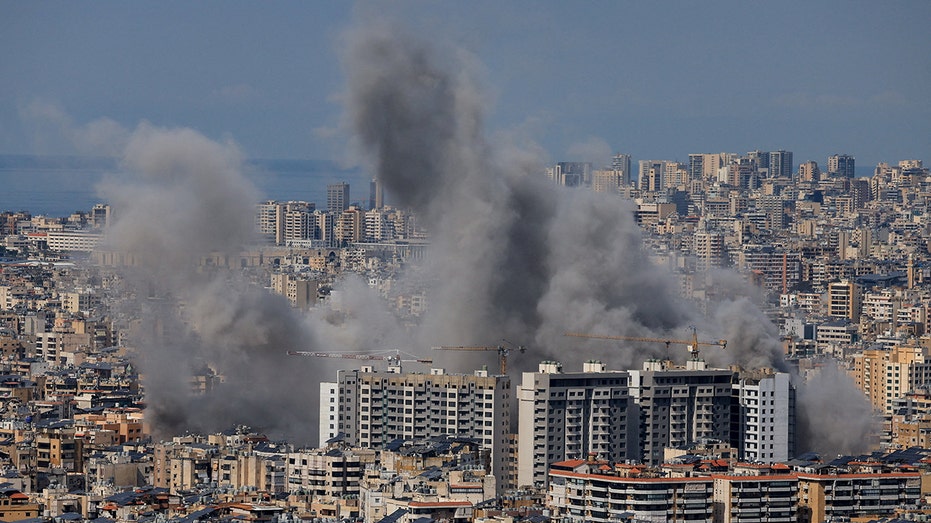
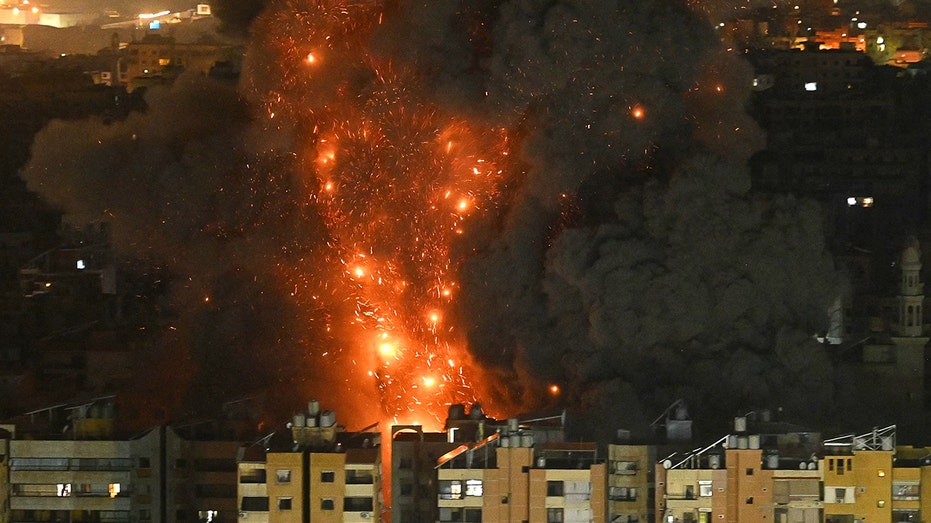
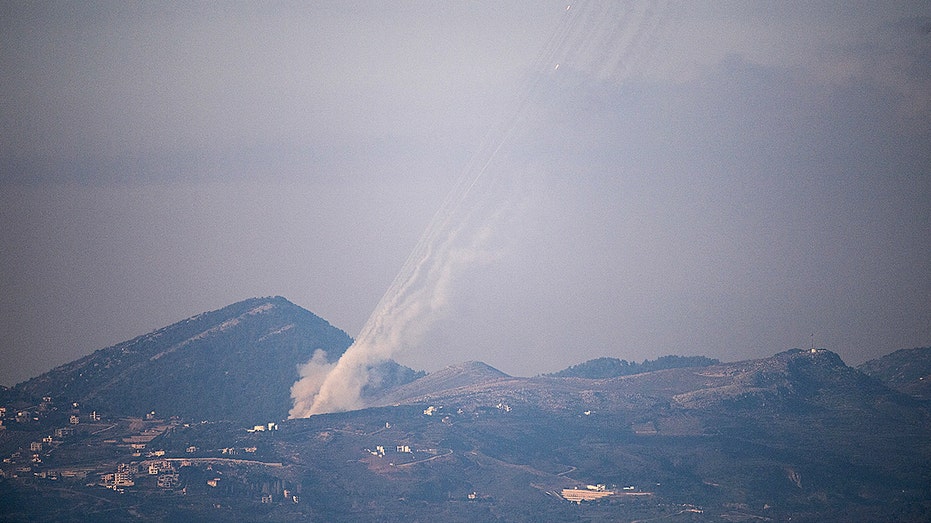
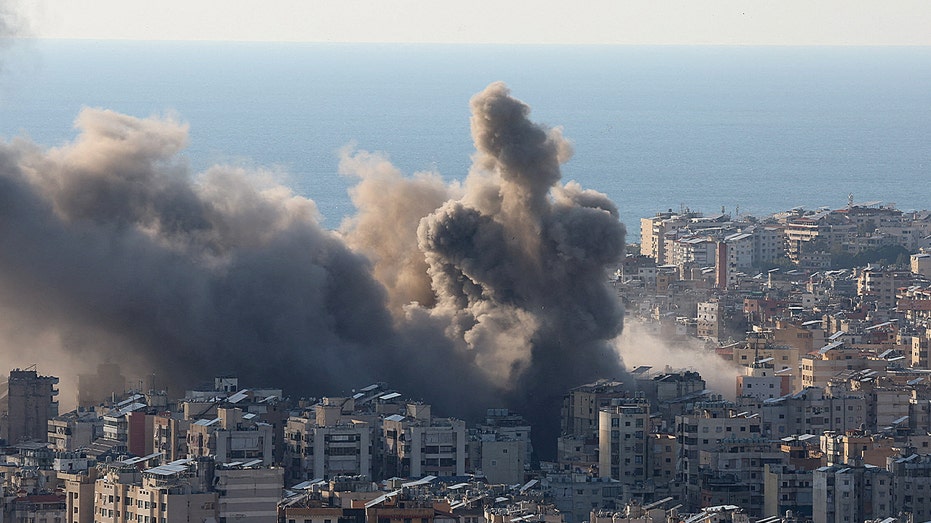
Israel launched retaliatory airstrikes on sites it described as Hezbollah command centers in Beirut's southern suburbs Sunday, hours after Israeli officials said Hezbollah fired rockets into northern Israel. Hezbollah did not immediately claim responsibility.

The escalation came days after the U.S., Israel and Lebanon announced a renewed conditional ceasefire framework requiring Hezbollah to halt fire and withdraw from parts of southern Lebanon. It also followed the release of IDF footage that Israel said showed troops dismantling a Hezbollah explosives facility, where an outside expert said components appeared consistent with anti-personnel shrapnel devices designed to wound or kill people on foot.

The strikes mark a major cross-border escalation days after the U.S., Israel and Lebanon announced a renewed conditional ceasefire framework requiring Hezbollah to halt fire and withdraw from parts of southern Lebanon.

Israeli Prime Minister Benjamin Netanyahu’s office announced the military action was direct retaliation for the group's violation earlier in the day.

HEZBOLLAH FIRES BARRAGE OF ROCKETS INTO ISRAEL AFTER IDF TARGETS HEZBOLLAH COMMAND CENTERS IN BEIRUT

Concurrently, footage released by the Israel Defense Forces (IDF) showed troops locating and dismantling a hidden, booby-trapped explosives warehouse.

The multipurpose assembly hub appeared to contain materials that could be used in makeshift shrapnel and propane tanks to create a distributed, lethal network.

Nick Reese, an adjunct professor at NYU’s Center for Global Affairs and a former U.S. national security adviser, told Fox News Digital that the captured weapons cache suggests a deliberate emphasis on personnel casualties, which could be military or civilian targets.

"Given the current situation, they probably targeted more military personnel. Shrapnel bombs are intended to hurt and kill people on foot," Reese said.

"The video cuts between the IDF entering the building and showing the contents. It's at this moment that they probably cleared any booby traps," Reese added. "It would be standard practice to look for and disable any booby traps in a facility like this before going inside and before filming anything."

"It's possible the booby traps could be using shrapnel methods, but I can't see evidence of that in the video. It shows what appears to be a shrapnel bomb, but it is not hidden so likely not a booby trap unless the IDF disarmed it off camera," he said.

HEZBOLLAH ‘HUMAN SHIELD’ STRATEGY BEHIND LEBANON AMBUSH, BOMB DETONATION - MACRON DRAWN IN

Among the items found in the raid was a container filled with nails and other sharp objects, which Reese noted are specific indicators of anti-personnel targeting.

"This video shows what appears to be a container with nails or other sharp implements in it," Reese noted. "This is likely for creating shrapnel bombs intended to kill, wound, and maim targets."

"Such devices are both effective and cause significant fear among the population, which was likely the intent," Reese continued. "The method is not particularly sophisticated but shows that they were targeting humans, not simply hardware or infrastructure."

"Making shrapnel bombs also tends to be cheap, easily concealed, and effective, especially against personnel. These types of bombs would likely have been in significant use."

"The video shows a variety of materials that could have been used to create bombs, from makeshift shrapnel to what appears to be a propane tank," Reese explained.

"These components would be used for very different purposes, so the location seems to have been a central general-purpose explosives-making facility."

"Propane tanks would be used for larger targets like tanks or buildings, while shrapnel would be used against infantry or in public places," Reese said.

US, ISRAEL ANNOUNCE TARGETED KILLINGS OF TERROR LEADERS IN SYRIA AND LEBANON

The dismantling of the factory follows a high-profile decapitation strike against the leadership running these hidden networks.

The IDF announced Friday that an airstrike in Lebanon killed Hezbollah’s chief explosives engineer, Abed Harb, the commander of Hezbollah’s engineering unit, after he "attempted to harm" Israeli soldiers.

The military said Harb was a veteran commander responsible for "numerous attacks against IDF soldiers" over the decades.

When considering the expertise required to manage such operations, Reese observed: "Over a 20-year career, this is difficult to say. Given Iran's well-known funding and support to Hezbollah and its experience fighting the Israelis in multiple conflicts, he likely had a mix of internal and external training combined with combat experience."

"Harb was targeted as part of an effort to disrupt Hezbollah's war-making infrastructure and limit its ability to continue to plan and execute large bombing operations against the IDF and civilian targets."

"The loss of Abed Harb by Hezbollah is not just a loss of leadership but of institutional knowledge," Reese added.

"His two decades of battlefield experience were significant to Hezbollah not only because of his bomb-making abilities but because of how he understood the IDF, Hezbollah, and the junior ranks.

CLICK HERE TO DOWNLOAD THE FOX NEWS APP

"As a member of Hezbollah since 2006, Harb likely had significant skills in making and disguising bombs over a 20-year career, which will be a blow to Hezbollah's operational capabilities and infrastructure," Reese said.

  •  

Iran admits extraordinary new detail in Khamenei strike, Trump offered 'way out': expert

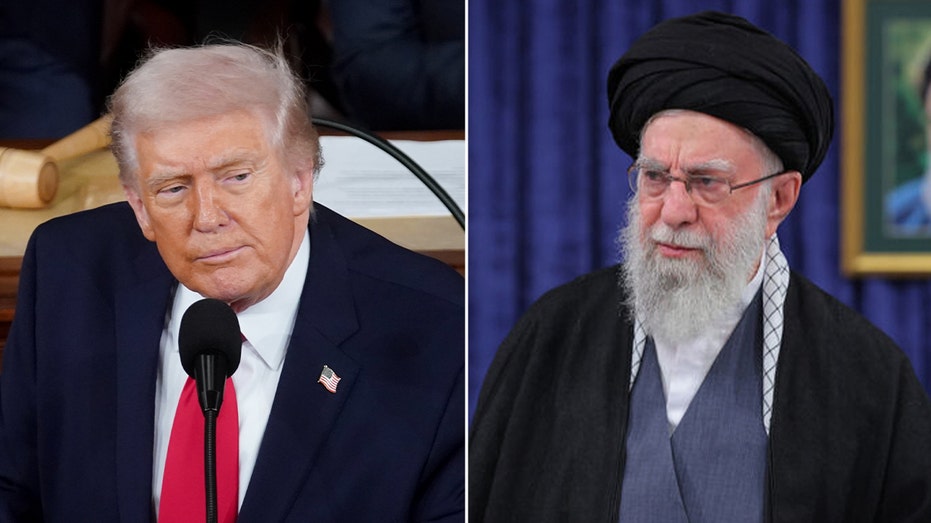
New details from Iran’s top diplomat about the strike that killed Supreme Leader Ali Khamenei provide some of the clearest evidence yet of the precision and strategy behind the joint U.S.-Israeli operation that launched Operation Epic Fury, counterterrorism experts said Sunday.

The account, revealed by Iranian Foreign Minister Abbas Araghchi in a new television interview, also highlights what analysts describe as a defining feature of President Donald Trump’s national security doctrine: using a decapitation strike against a hostile regime while simultaneously creating an off-ramp to end the conflict.

"Well, the building we were sitting in was targeted, but the wing we were in remained intact while the other wing of the building was destroyed," Araghchi said in an interview that aired June 4 on the Lebanon-based, Hezbollah-backed Al Mayadeen television network.

While Araghchi survived the Feb. 28 strike because he was in a different wing of Khamenei's compound when the attack occurred, he went on to detail how Khamenei was in his office and how others survived.

BEFORE-AND-AFTER SATELLITE IMAGERY OFFERS A RARE LOOK AT DAMAGE INSIDE IRAN

Reviewing the original segment, counterterrorism expert Dr. Omar Mohammed told Fox News Digital that Araghchi’s account confirms the operation targeted a specific section of the complex rather than flattening the entire site.

"In the Arabic version, Araghchi says he was in a different wing of the compound, briefing another official, and his wing survived while the leader’s office was destroyed," Mohammed explained.

Araghchi also told the interviewer that he had an appointment that day with an official at the compound regarding the Geneva negotiations and that, based on the usual workflow, Khamenei "had to be present in his office."

Mohammed, director of the Antisemitism Research Initiative at the Program on Extremism at George Washington University, added that if Araghchi’s account is accurate, this was Iran's glaring acknowledgment of U.S. strategic capabilities.

"They did not flatten a building; they took one wing and left the one next to it standing. That is President Trump’s whole doctrine in a single strike — he does not want a war of occupation, he wants to show the United States can reach the center of a hostile regime with precision and then offer it a way out," Mohammed said.

DOZENS OF TOP IRANIAN REGIME OFFICIALS, SUPREME LEADER KILLED IN ISRAELI STRIKES

The daylight strike on elder Khamenei’s compound was carried out by Israeli jets targeting the site with 30 precision munitions alongside Sparrow air-launched ballistic missiles.

Military officials confirmed that a precise strike sequence killed Khamenei, 86, alongside Defense Minister Amir Nasirzadeh, IRGC Commander Mohammed Pakpour and multiple top security leaders.

Trump confirmed U.S. involvement in Khamenei’s killing in a post on social media at the time.

"He was unable to avoid our intelligence and highly sophisticated tracking systems, and, working closely with Israel, there was not a thing he or the other leaders killed alongside him could do," the president wrote.

"Iran was handed the clearest message an adversary can get — we can reach your leader in his own office, and here is the off-ramp," Mohammed noted. "A rational state takes the exit. Tehran did the opposite. It fired on Israel, killed a civilian in Bahrain, struck Kuwait, Qatar and the United Arab Emirates, and closed the Strait of Hormuz, setting off a global energy crisis. The surgical strike was American. The months-long war that followed was Iran's choice."

Following the leadership transition, Ali Khamenei's son, Mojtaba Khamenei, became Iran's new supreme leader.

IRAN’S NEW SUPREME LEADER IS ‘HIS FATHER ON STEROIDS,’ EXPERTS WARN OF HARDLINE RULE

He has since been involved in back-channel discussions with the U.S. while maintaining a confrontational public stance.

"In Arabic, Araghchi calls the new leader ‘the young Khamenei in place of the elderly Khamenei.’ That is the language of a monarchy, not a republic of clerics," Mohammed observed. "They are rewriting the theology on air to fit a son who lacks the religious rank, who was wounded in the same strike and who then vanished for weeks. A revolution that came to power by ending a monarchy is handing the throne from father to son."

CLICK HERE TO DOWNLOAD THE FOX NEWS APP

"The real story is not that Iran is strong," Mohammed continued. "It was shown the precision of American power and the door was held open, and it chose to widen the war instead."

  •  

Suspected Hamas terrorist arrested in Greece for allegedly plotting attack on Israeli cruise ship

A suspected Hamas terrorist, reportedly granted asylum a year from the Gaza war, was arrested by Greek police for allegedly plotting an attack on an Israeli cruise line.

The Gaza man, 37, was arrested on the Greek island of Crete on Sunday for his alleged ties to one of four suspected Hamas terrorists previously arrested in Cyprus, having traveled with him to Malaysia, where they allegedly received training in making explosives from commercially available chemical agents.

The Israeli cruise ship MS Crown Iris was the believed target of the attack before it was scheduled to arrive in Crete on Tuesday. Police did not publicly identify the man or name a target in their initial statement.

Searches in homes in both Crete and the Greek capital, Athens, turned up a number of mobile phones, a laptop, external hard drives and bank cards, The Associated Press reported.

3 ALLEGED HAMAS MEMBERS ACCUSED OF PLOTTING AGAINST JEWISH INSTITUTIONS IN GERMANY

The suspect, an electrician who has been reportedly living in Crete for the past year and working at a hotel there after being granted asylum, will appear before a magistrate later Sunday.

The suspected terrorist had placed an online order for what police said were "chemical agents" that could be used in the manufacture of explosives, according to the report.

State broadcaster ERT, cited by Israeli and Greek media, reported that police also found laboratory equipment.

TWO CONVICTED OF TERRORISM IN DENMARK FOR GRENADE ATTACK NEAR ISRAELI EMBASSY

The case appears to be part of a broader regional counterterrorism probe. Cypriot authorities arrested two Palestinians on May 22 after intelligence led investigators to materials in two residences that police said could be used to manufacture explosives. Two more Palestinian men were detained May 29 as part of the same investigation, according to Greek police.

The Crown Iris has become a recurring flashpoint at Greek ports amid anger over the war in Gaza. Protesters gathered near the ship when it docked in Piraeus on Wednesday, June 3, and demonstrations against the vessel have followed it at Greek ports since last year.

Protesters allege that Mano Maritime, the owner of the MS Crown Iris, is profiting from the Hamas-Israel war by selling tourist services to Israel Defense Forces soldiers during breaks from active duty.

In July 2025, Greek police used tear gas and made arrests as demonstrators tried to block the ship at Agios Nikolaos on Crete.

CLICK HERE TO DOWNLOAD THE FOX NEWS APP

The investigation remains ongoing, and authorities have not announced formal charges against the suspect.

The Associated Press contributed to this report.

  •  

As Hezbollah rejects truce, families on Israel's northern border describe life under fire

Two days after another ceasefire was announced between Israel and U.S. terrorist designated group Hezbollah, Yulia Bar-Dan was standing outside her temporary home in Kibbutz Manara in northern Israel when the familiar sound of an interceptor echoed overhead. 

"There will probably be another siren soon," she told Fox News Digital.

Minutes later, an alert appeared on her phone warning residents in northern Israel to take shelter.

For Bar-Dan, the scene captured the reality of life on Israel's northern border nearly two years after Hezbollah joined the war against Israel on Oct. 8, 2023. 

After Hezbollah entered the recent war in support of Iran, Washington launched a diplomatic effort aimed at turning the ceasefire into a broader arrangement for Lebanon. 

ISRAEL OPENS FIRE IN LEBANON AT ‘SUSPECTS’ ALLEGEDLY VIOLATING TRUCE, WHICH HAS ENTERED ITS SECOND DAY

Multiple rounds of talks between Israeli and Lebanese officials have taken place in Washington, and President Donald Trump has repeatedly announced ceasefire understandings aimed at restoring calm along the border. Residents of communities like Manara, Israel, say the rockets, drones and uncertainty never really stopped.

"A ceasefire is supposed to be on both sides," she said. "Not that Hezbollah keeps shooting at us and we just keep absorbing it."

When Fox News Digital first spoke to Bar-Dan in December 2024 during the war, she and her husband had fled Manara, Israel, with their three children and were living out of a single hotel room, unsure whether they would ever return home.

Today, roughly 200 of the kibbutz's 280 residents have returned, Bar-Dan said. But many, including Bar-Dan's family, still cannot live in their original homes because of war damage. 

Despite repeated ceasefire announcements, residents say normal life remains elusive.

"There hasn't really been a routine or a quiet day since February," she said.

Schools officially reopened in early June, but Bar-Dan decided not to send her children.

"They take the bus to school," she said. "What if there's a siren on the way? I can't take that chance."

ISRAEL DESTROYS HEZBOLLAH'S 'LARGEST PRECISION-GUIDED MISSILES MANUFACTURING SITE' AS GROUP VOWS TO 'FIGHT'

Her frustration is not directed at Hezbollah alone.

Like many residents interviewed by Fox News Digital, Bar-Dan says there is a growing disconnect between the reality experienced on the border and the reality described by politicians.

"It doesn't really matter where the decisions are being made," she said. "The decisions just need to match reality. Right now there is a decision, but the reality is completely different."

A year and a half after most of Manara's residents were evacuated amid fears of a Hezbollah invasion, community leader Yochai Wolfin says residents have developed their own name for the current situation. 

"We call it 'the ceasefire war,'" he said. 

The phrase has become common in the community.

First came a year and a half of evacuation. Then came the return home. Then came what Wolfin describes as three months of "fire within a ceasefire."

The uncertainty has become part of daily life.

Children study inside shelters. Parts of the kibbutz still lack protected rooms. Construction projects remain unfinished because contractors are reluctant to work so close to the border. 

He said many residents increasingly feel that the decisions determining their future are being made far from the communities that bear the consequences.

ISRAEL WARNS IT WILL GO AFTER LEBANON DIRECTLY IF CEASE-FIRE WITH HEZBOLLAH COLLAPSES

"Who knows what tomorrow will bring?" Wolfin said. "We know who is calling the shots. We saw it a few days ago when Trump announced another ceasefire. But for us, the reality on the ground hasn't changed."

The comments come as Hezbollah Secretary-General Naim Qassem warned Thursday that northern Israel would remain unsafe as long as Israeli strikes continue in Lebanon, according to Reuters.

In a written statement broadcast on June 4, 2026, Qassem condemned the Washington-mediated framework as "absurd, humiliating, and insulting," calling it a roadmap for surrender.

For residents of Israel's northern border communities, the statements reinforced what many say they have been experiencing for months: a ceasefire that exists on paper but not in daily life.

Naor Shamia, who heads Manara's emergency response team, says residents increasingly worry that temporary emergency measures are becoming permanent.

"The fear isn't today," he said. "The fear is that this becomes years. We are in a deadlock."

Across the border region, similar concerns are heard.

In the community of Adamit, resident Yael Cohen-Arazi described the contrast between the beauty surrounding her and the reality of living under constant threat.

"Every morning I wake up and think I'm living in paradise," she said in footage provided to Fox News Digital by the Israeli news agency TPS-IL. "Then there are the explosions that shake my soul."

Her children, she said, have spent so much of their lives under fire that they no longer know what normal looks like.

"I tell them there are children who don't live like this," she said.

Back in Manara, Israel, another alert interrupted the afternoon.

Bar-Dan says she is not angry anymore. Mostly, she is tired and sad.

"I feel bad for the soldiers," she said. "Every day there is another casualty, and there is still no solution."

Yet she insists she is staying.

CLICK HERE TO DOWNLOAD THE FOX NEWS APP

"This is our home," she said. "Someone has to live on the borders of this country."

Then another explosion sounded in the distance.

  •  

Israeli official says EU sanctions reveal antisemitism hiding behind 'socially acceptable mask'

Israel's deputy foreign minister accused the European Union of weaponizing a "socially acceptable mask" of anti-Zionism to target Israel— after it sanctioned Israeli civil society groups that oppose a Palestinian state. It also sanctioned several individuals.

"We are witnessing a deeply troubling trend where traditional antisemitism has simply put on a new, socially acceptable mask: anti-Zionism," Deputy Foreign Minister Sharren Haskel told Fox News Digital. "Where prejudice once targeted the individual Jew, it is now directed at the collective Jewish state and our fundamental right to live in our ancestral homeland. But make no mistake, the political targeting of Israel always bleeds into an assault on Jewish life itself," Haskel added. 

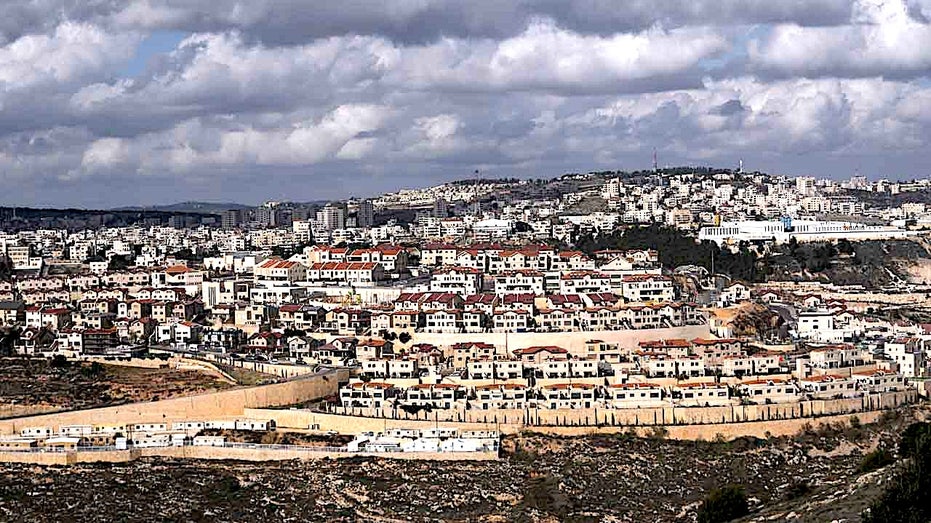
The European Union imposed the sanctions on four Israeli civil society organizations and three of their senior figures, alleging support for "settler violence" and claiming they undermine prospects for a Palestinian state — a move that Regavim, one of the groups targeted, described as an infringement on Israeli sovereignty.

LEADING EVANGELICALS IN PUSH TO HAVE PRESIDENT TRUMP RECOGNIZE ISRAELI SOVEREIGNTY OVER ‘BIBLICAL HEARTLAND’

"Our entire activity consists of legal and parliamentary work. We collect and analyze information and policies and go to court and the legislature to highlight areas where Israel’s policy is either lacking or misguided," Naomi Kahn, Regavim’s director of international division, told Fox News Digital.

"The European Union is trying to control the internal political system and policies of an independent state that is supposed to be an ally. When we point out the absurdity of the situation, they don’t like it," she said.

In its announcement, the European External Action Service (EEAS) stated that "extremist settlers and the organizations supporting them contribute directly to violence, forced displacement and dispossession across the West Bank."

The sanctions, according to the EEAS, "target entities and individuals that facilitate, finance or support activities contributing to settler violence and serious human rights abuses against Palestinians."

The statement also accused Regavim of lobbying for "the demolition of Palestinian property" and referenced an EU-funded school in Jabbet al-Dhib near Bethlehem.

'SQUAD' MEMBERS 'DECIDE TO LIE AND TWIST FACTS' ABOUT ISRAEL'S HISTORY, SAYS PROMINENT ARAB ACTIVIST

Kahn said the school was constructed illegally on Israeli state land in Area C, within a nature reserve connected to the Herodian complex. She said legal proceedings were carried out regarding the structure and that it was ultimately demolished.

Under the 1993 Oslo Accords, negotiated during the Clinton administration, the West Bank was divided into three areas: Area A, under full Palestinian control; Area B, under Palestinian civil authority with Israeli security control; and Area C, under full Israeli administrative and security control.

Kahn added that an engineering assessment found the school unsafe for use, arguing that placing students and teachers inside it posed "downright dangerous" conditions.

"We pointed out that the EU and the Palestinian Authority are simply violating the law in a very purposeful, systematic way to take control of Area C using structures like schools, sometimes mosques, and homes of innocent people that they push into those areas," she added.

Regavim has published a report claiming there are 100 illegal schools in Area C that it says are being used by the P.A. as part of a broader strategy of de facto annexation.

Separately, a 2023 mapping study by Regavim estimated that roughly 103,000 unauthorized Arab-built structures exist across the West Bank, asserting that the P.A.— often with external support — has facilitated extensive illegal construction activity.

SIGN UP FOR ANTISEMITISM EXPOSED NEWSLETTER

In response, Israel’s cabinet last month approved a set of broad measures aimed at countering efforts by the P.A. to establish de facto control over disputed territories.

Under the resolution, initiatives attributed to Ramallah to create a parallel land registry in Area C were declared to have no legal validity or standing.

"The real target here is not violence, but legitimate political opposition. The sanctioned organizations do not support violent action; rather, they have consistently challenged the concept of a two-state solution and exposed how the EU actively builds illegal structures in Judea and Samaria," Haskel said, referring to the biblical names of the territories.

She accused the EU of disregarding the Oslo Accords and "attempting to unilaterally alter facts on the ground to steal Israeli land."

Haskel acknowledged there was an issue, as in any society, with some individuals who break the law, but emphasized they represent a small minority and that Israel investigates and prosecutes them. She said grouping hundreds of thousands of law-abiding Israeli residents in the West Bank together with Hamas — a genocidal terror organization responsible for mass murder — distorts moral distinctions.

CLICK HERE TO DOWNLOAD THE FOX NEWS APP

She said, "This creates a false and dangerous symmetry that minimizes the exceptional threat of global terrorism while politically targeting individual Israelis. It is an unacceptable moral equivalence that blurs the line between a sovereign democracy defending its people and the savage terror apparatus trying to destroy it."

Following several requests for comment, EEAS referred Fox News Digital to its original sanctions statement.

  •  

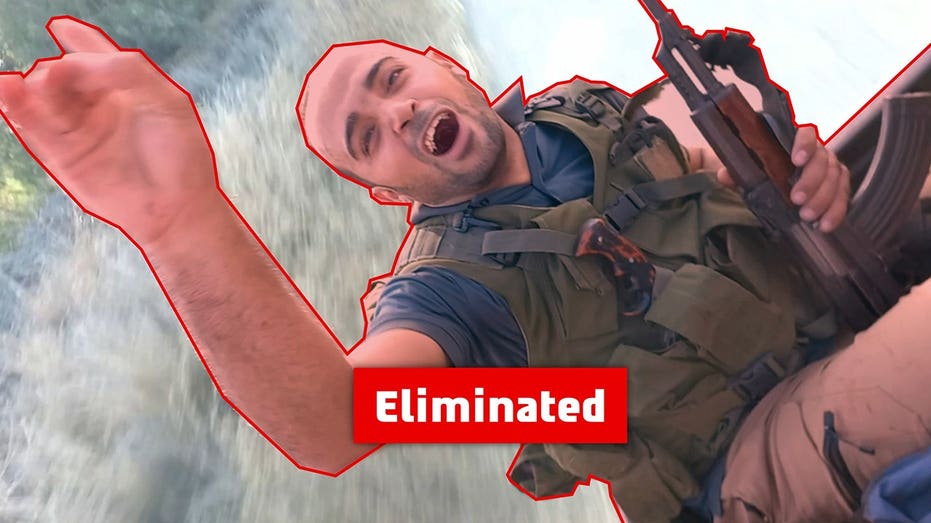
Israel's military eliminates Hamas terrorist who helped abduct American-Israeli hostage, 3 others

The Israel Defense Forces announced Tuesday that it eliminated a Hamas terrorist who helped abduct American-Israeli hostage Hersh Goldberg-Polin, who ultimately was murdered in the Gaza Strip. 

The IDF said Yousef Ayesh Awad Ramadan, a deputy commander of a Hamas Nukhba terrorist cell, was killed in the central Gaza Strip on Monday. Nukhba, which is Arabic for elite, is the special forces for the Al-Qassam Brigades, which is Hamas' military wing. 

"Ramadan infiltrated Israeli territory during the October 7th massacre and took part in the abduction of Hersh Goldberg-Polin, Eliya Cohen, Alon Ohel, and Or Levy from the bomb shelter at the Re’im Junction," the IDF said Tuesday. 

"In addition, throughout the war, and in recent weeks, the terrorist advanced attack plans against IDF soldiers and Israeli civilians. As such, he posed an immediate threat to IDF troops operating in the Gaza Strip," it continued.

HAMAS STRUGGLES TO FILL LEADERSHIP RANKS AS ISRAEL HUNTS OCTOBER 7 TERRORISTS

Goldberg-Polin survived almost 11 months in underground tunnels following his capture but was killed alongside other hostages in August 2024, while still in captivity. He was 23 at the time of his death. 

"According to our initial assessment, they were brutally murdered by Hamas terrorists shortly before we reached them," then- IDF spokesperson Rear Admiral Daniel Hagari said. 

Goldberg-Polin was abducted at a music festival in southern Israel during Hamas' Oct. 7 attack against the Jewish State.

He lost part of his left arm to a grenade in the attack.  

PENTAGON HOSTS FIRST-EVER ISRAELI-LEBANESE MILITARY TALKS AIMED AT CURBING HEZBOLLAH

Eliya Cohen survived 505 days in captivity. He faced extreme starvation, was kept chained in tunnels, and had surgery for a gunshot wound without anesthesia. He was released in February 2025 as part of a negotiated deal.

Or Levy survived 491 days in captivity. He endured harsh conditions and only learned after his release that his wife, Einav, had been killed in the Oct. 7 attack. He has since reunited with his young son.

Alon Ohel spent more than two years as a hostage in Gaza until his release in October last year. 

 CLICK HERE TO GET THE FOX NEWS APP 

A talented pianist, he endured starvation, torture and serious eye injuries from a grenade. He was freed on Oct. 13, 2025, through a U.S.-brokered deal and returned home to recover. He now performs with Israeli artists.

Fox News’ Yonat Friling, Robert McGreevy and Landon Mion contributed to this report.

  •  

Hezbollah's 'game changing' night-hunting weapon punches through Israel's defenses: expert

Hezbollah has begun unleashing "game changing" waves of "lethal" nighttime drones against Israel, a defense expert warns, with the attacks contributing to casualties, defense breaches and plunging parts of the border region into chaos, according to reports.

Escalating deployments by Hezbollah had also prompted Prime Minister Benjamin Netanyahu to convene an emergency security meeting on May 30 following a surprise Hezbollah strike, amid reports of "utter chaos" as Israeli forces scrambled to respond.

"These nighttime drones are the very small Category 1 and Category 2 drones," defense expert and Draganfly CEO Cameron Chell told Fox News Digital.

"They are generally used by squads on the ground to go and conduct tactical lethal missions or surveillance missions right in theater immediately. What they are able to do is use thermal sensors to be able to fly at night and use heat signatures to spot IDF troops," he said.

ISRAEL SAYS IT IS STRIKING HEZBOLLAH TARGETS IN LEBANON

"Hezbollah now has nighttime capabilities, which is game changing," Chell added.

"What you will see is an escalation of the use of drones and the innovation of asymmetric warfare in that particular area by Hezbollah," he warned.

Chell’s comments came amid reports of makeshift defenses with nets being deployed against the backdrop of a significant shift in the conflict.

Israeli soldiers have resorted to buying commercial fishing and soccer nets to entangle the incoming aerial threats, according to reports.

"This means that there is a whole other set of countermeasures that the IDF has to put in place, whether it is electronic jamming, net guns or the use of netting just to put in front of installations or in front of vehicles to try to stop the final impact of the drone if it is a strike drone," Chell added.

HEZBOLLAH DISARMAMENT DEADLOCK RISKS CIVIL WAR, ANALYSTS SAY, AS US PREPARES FOR ISRAEL–LEBANON TALKS

"The IDF will have to change a lot of their tactics regarding their ability to move around and conduct operations at night. Now they will have to factor in the fact that Hezbollah has nighttime capabilities to at least do observation using thermal cameras, as well as strike capabilities."

Netanyahu called a meeting with top officials following an intense Hezbollah rocket and drone blitz that caught the military off guard on Saturday.

According to a report by Channel 13, the Israeli army was surprised by the scale of the fire as well as Hezbollah's decision to shift its operational policy in response to the expansion of Israel’s ground operations beyond the Litani River.

IDF SOLDIERS ACCUSE UN PEACEKEEPERS OF ENABLING HEZBOLLAH TERRORISTS AMID INCREASING CEASE-FIRE VIOLATIONS

Reports from the ground described "utter chaos" in parts of the north. While rockets were said to have hit the cities, Hezbollah simultaneously launched waves of drone strikes.

Hezbollah leader Naim Qassem has also touted the militant group’s drone capabilities, calling them an effective weapon against Israeli forces operating near and inside southern Lebanon

Netanyahu has also described Hezbollah's drone capabilities as a major threat given the difficulty in detecting them.

"Hezbollah have got a supply line or supply chain of some sort set up," Chell added before stating that they are not "using stuff that is groundbreaking; this is very old technology and tactics that they are using."

CLICK HERE TO DOWNLOAD THE FOX NEWS APP

"That said, somebody is making the equipment available to Hezbollah — whether it is coming via Iran, China, Russia, Afghanistan or the black market, someone is getting enough product and feeding it into their supply chains," Chell warned.

  •  

Pentagon hosts first-ever Israeli–Lebanese military talks aimed at curbing Hezbollah

Israeli and Lebanese military delegations opened Pentagon-mediated talks Friday morning in Washington, launching a new U.S.-brokered security coordination track aimed at preventing renewed escalation along the Israel–Lebanon border and shoring up a fragile ceasefire reached in mid-April.

A State Department official told Fox News Digital, "As we have continuously stated, the only path to lasting peace is through direct negotiations between the two sovereign governments."

The discussions mark a shift from diplomatic negotiations into direct military coordination, with talks expected to focus on ceasefire enforcement, border stability, Israeli withdrawal from parts of southern Lebanon and the role of the Lebanese Armed Forces in containing Hezbollah.

ISRAEL MOVES TOWARD CEASEFIRE DEAL WITH HEZBOLLAH: REPORTS

The talks come weeks after a U.S.-brokered ceasefire first reached during the broader regional conflict tied to the U.S.–Iran war. While large-scale fighting has eased, Israeli forces continue operating inside parts of southern Lebanon, and Hezbollah maintains drone and rocket capabilities, keeping tensions high along the border.

The ceasefire was extended on May 15 for another 45 days, creating pressure on both sides to show progress before the current arrangement expires.

But analysts say the central question overshadowing the talks is whether Lebanon can realistically curb Hezbollah’s military power without risking internal collapse.

"This will be the first meeting between representatives of the militaries since the start of the negotiation process between Lebanon and Israel," Ahmad Sharawi, a research analyst at the Foundation for Defense of Democracies think tank, told Fox News Digital.

Representing Lebanon in the talks is Lebanese Armed Forces (LAF) commander Gen. Rodolphe Haykal, who previously served as commander of the Lebanese Armed Forces in southern Lebanon, an area where Hezbollah maintains a strong presence. Hezbollah is the Iran-backed Lebanese terrorist organization designated by the United States as a foreign terrorist organization. 

"What we should expect is talks regarding de-confliction and what the expectations are for the LAF in terms of the broader disarmament plan against Hezbollah’s weapons," he said.

Sharawi said the chances of a broader breakthrough remain limited so long as Hezbollah remains heavily armed and politically entrenched inside Lebanon.

"The biggest obstacle here is that the Lebanese state is yet to present a feasible plan to disarm Hezbollah," he said.

LAWMAKERS QUESTION WHETHER US MOVING FAST ENOUGH TO CAPITALIZE ON HEZBOLLAH'S WEAKENED STATE

He pointed to the terms of the November 2024 ceasefire agreements, which placed responsibility for disarming Hezbollah on the Lebanese state.

"We are yet to see the confiscation of one single bullet from Hezbollah," Sharawi said.

He also warned that Hezbollah’s deep support among Lebanon’s Shiite population complicates any attempt to move toward normalization with Israel.

"There’s a fear of a civil war," he said. "That also accounts for the Lebanese state’s unwillingness to disarm Hezbollah."

The talks opened as Prime Minister Benjamin Netanyahu signaled Israel intends to maintain military pressure on Hezbollah despite the negotiations.

Sharawi argued the Trump administration nevertheless appears determined to push the process forward as part of a broader effort to weaken Iranian influence in the region.

"The reason behind these meetings is that President Trump is really trying to push for a peace agreement between Israel and Lebanon," he said. "Peace between these two countries could really undermine Hezbollah and its influence in Lebanon."

WALTZ SAYS TRUMP HAS CREATED 'BEST CHANCE IN OUR LIFETIME' TO BREAK HEZBOLLAH’S GRIP ON LEBANON

Israeli analysts similarly described the talks less as a breakthrough and more as a strategic signal aimed at Hezbollah.

"The war between us and Hezbollah is continuing," Yossi Kuperwasser, head of the Jerusalem Institute for Strategy and Security and former head of the Research Division of Israeli Military Intelligence, told Fox News Digital.

"There is no doubt the Lebanese government does not have a monopoly on the use of force in Lebanon."

‘OVERBLOWN’ REPORTS ON ISRAEL–LEBANON NORMALIZATION RISK HINDERING BORDER TALKS BEFORE THEY BEGIN: OFFICIAL

Kuperwasser said expectations for an immediate diplomatic breakthrough should remain low but argued the talks themselves send an important political message.

"The purpose of these talks is first and foremost to send a message to Hezbollah and also to the Americans," he said. "Both sides are prepared to sit together against Hezbollah and signal that they are moving, even if slowly, toward normalization between Israel and Lebanon."

He argued Hezbollah has been weakened politically and militarily by the ongoing conflict and by growing frustration among Lebanese civilians displaced by the fighting.

"For years, Hezbollah portrayed itself as the defender of Lebanon," Kuperwasser said. "Now many Lebanese see Hezbollah as responsible for the suffering Lebanon is experiencing."

Kuperwasser added that while Israel supports strengthening the Lebanese army, Beirut fears direct confrontation with Hezbollah could ignite another civil war.

"The Lebanese government fears military action against Hezbollah would lead to civil war," he said. "That fear shapes everything."

The talks also come amid mounting domestic pressure inside Israel, where critics of Netanyahu have accused the government of pursuing containment rather than decisive military victory against Hezbollah.

Speaking Friday during a visit to Israel’s northern front, Netanyahu said Israeli forces had crossed the Litani River and were operating across multiple parts of Lebanon. 

"We are operating in Beirut, in the Bekaa Valley, across the entire front and striking Hezbollah hard," Netanyahu said.

Meanwhile, Lebanon’s leadership is attempting to balance growing American pressure with fears of internal instability and renewed sectarian conflict.

Following Friday's meeting, the Pentagon issued a statement, saying, "Under Secretary of War for Policy Elbridge Colby hosted military delegations from the State of Israel and the Republic of Lebanon to launch the security track supporting the ongoing talks between the two nations.

"The delegations engaged in productive, military-to-military talks focused on building practical frameworks for regional security and stability. The progress and tangible outcomes from these discussions will directly inform the Department of State-led political track, which is scheduled to reconvene next week.

CLICK HERE TO DOWNLOAD THE FOX NEWS APP

"The Department of War deeply values its strategic partnerships with both the Israel Defense Forces (IDF) and the Lebanese Armed Forces (LAF). The Department supports Lebanon's sovereignty and territorial integrity, free of armed non-state actors, and welcomes the commitment of both militaries to these historic efforts. These are essential steps toward realizing President Trump's vision for a lasting peace in the Middle East.

"The United States anticipates reconvening soon to continue the security track."

Neither the Israeli Embassy in Washington nor the Lebanese Embassy in Washington immediately responded to requests for comment. 

  •  
❌