
Reading view

Spearfisherman killed by suspected 15-foot shark after third fatal attack in less than a month

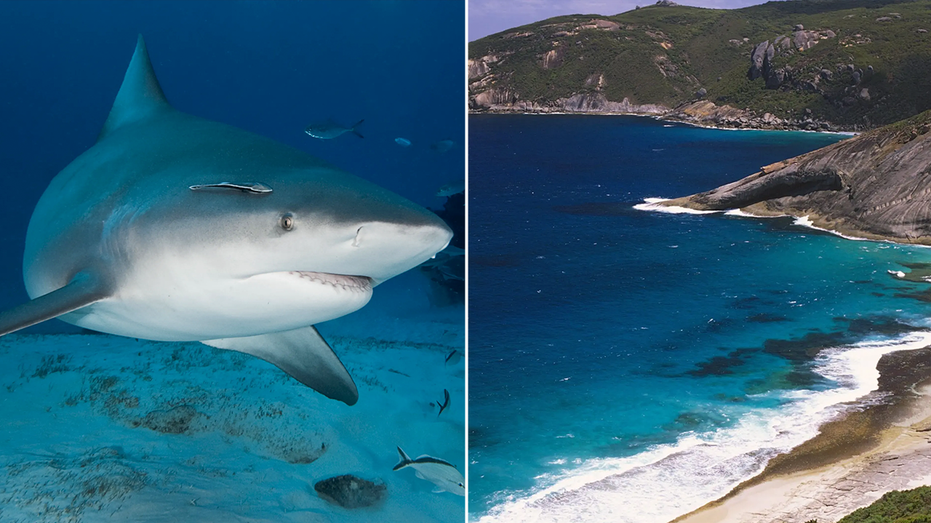
A fisherman was killed late Saturday morning after an attack by a suspected nearly 15-foot shark off the coast of Western Australia.

The unidentified 35-year-old was spearfishing near Michaelmas Island, a protected sand cay on the Great Barrier Reef not far from the city of Albany.

The island is around 240 miles south of Perth, the state’s capital.

His was the third fatal shark attack in the country in less than a month.

SHARK ATTACK DEATHS SURGE ABOVE DECADE AVERAGE IN 2025

The man was brought by boat to shore, but paramedics weren’t able to revive him.

On May 24, 39-year-old Michael Jensz was killed after suffering head injuries while spearfishing along the Great Barrier Reef off the country’s northeast coast. 

A bull shark is suspected in his death.

On May 16, 38-year-old Steve Mattabonni was killed by a white shark at Rottnest Island, a popular resort in Western Australia. He was also spearfishing.

In January, a 12-year-old also died a week after he was attacked by a shark in Sydney Harbor.

Australia usually averages around three shark deaths per year.

"We do see an increase in larger sharks this time of the year, particularly chasing the sardine and the salmon along the coast, which is quite normal," commercial fisherman Gregory Sharp told the Australian Broadcasting Company Saturday.

He added that sharks also tend to attack in areas "where there's a lot of seals, and the island area in King George Sound is renowned for seals."

Michaelmas Island is located in King George Sound.

CLICK HERE TO DOWNLOAD THE FOX NEWS APP

Western Australia Premier Roger Cook said in a Facebook post Saturday that he was deeply saddened to hear of this morning's fatal shark attack in Albany. 

This is a tragedy and my thoughts are with the victim's family and friends, as well as the first responders."
  •  

Offshore wind power cables can affect sensory system of sharks and rays: studies

As offshore wind farms expand rapidly in the global renewable energy transition, scientists are studying how these large marine infrastructure projects affect ecosystems beneath the waves. Research from Wageningen University & Research in the Netherlands suggests that offshore wind may bring both risks and benefits for sharks and rays, known collectively as Elasmobranchii, which are highly sensitive to electromagnetic fields (EMFs). A six-year project called “Elasmopower” examined how EMFs from subsea power cables in offshore wind farms affect bottom-dwelling sharks and rays. These species depend on natural electric and magnetic fields for key behaviors such as navigation, prey detection, habitat use and long-distance movement, particularly in low-visibility environments. The studies conducted as part of the Elasmopower project have been published in four papers, with three additional papers currently undergoing peer review. Sharks and rays have specialized electroreceptors called ampullae of Lorenzini. The jelly-filled sensory canals around the head and snout can detect even extremely weak EMFs from prey and predators, water movement, and the Earth’s geomagnetic field, Erwin Winter, a scientist at Wageningen, told Mongabay. This system is central to hunting and orientation, making Elasmobranchii especially relevant for studying EMF exposure from offshore energy infrastructure, Winter added. Erwin Winter, a researcher with the Elasmopower project, presented findings on offshore wind, electromagnetic fields and bottom-dwelling sharks and rays at the Sharks International 2026 conference in Colombo, Sri Lanka, in May. Image by Malaka Rodrigo for Mongabay. During a presentation on a summary of the Elasmopower research at the Sharks International 2026…This article was originally published on Mongabay

  •  
❌