John Swinney has finally admitted SNP funds raised for independence were spent on something else. This is fraud and the people of Scotland cannot shrug and move on – the reckoning must begin now.
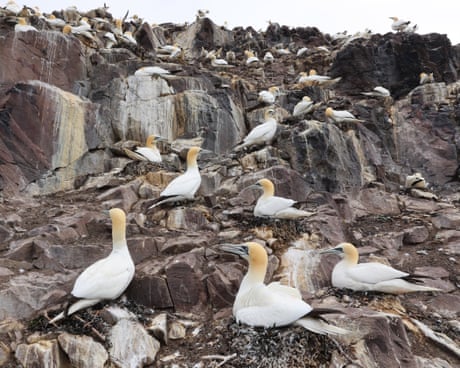
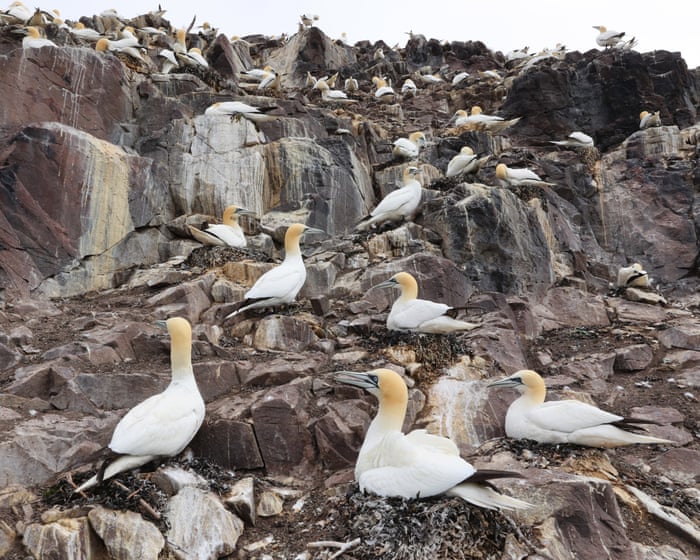
Annual killing of infant gannets has been carried out on a remote Scottish island for at least 400 years
Animal welfare campaigners have called for talks on phasing out the “inhumane” hunt for infant gannets known as guga, which are killed by hunters on a remote Scottish island once a year.
OneKind and the League Against Cruel Sports said it should be slowly phased out in dialogue with the Hebridean islanders who see the hunt, which has been carried out for at least 400 years, as a cultural pursuit and as sustainable food harvesting.
Stonehenge Altar Stone. Credit: Wikimedia Commons / Public Domain
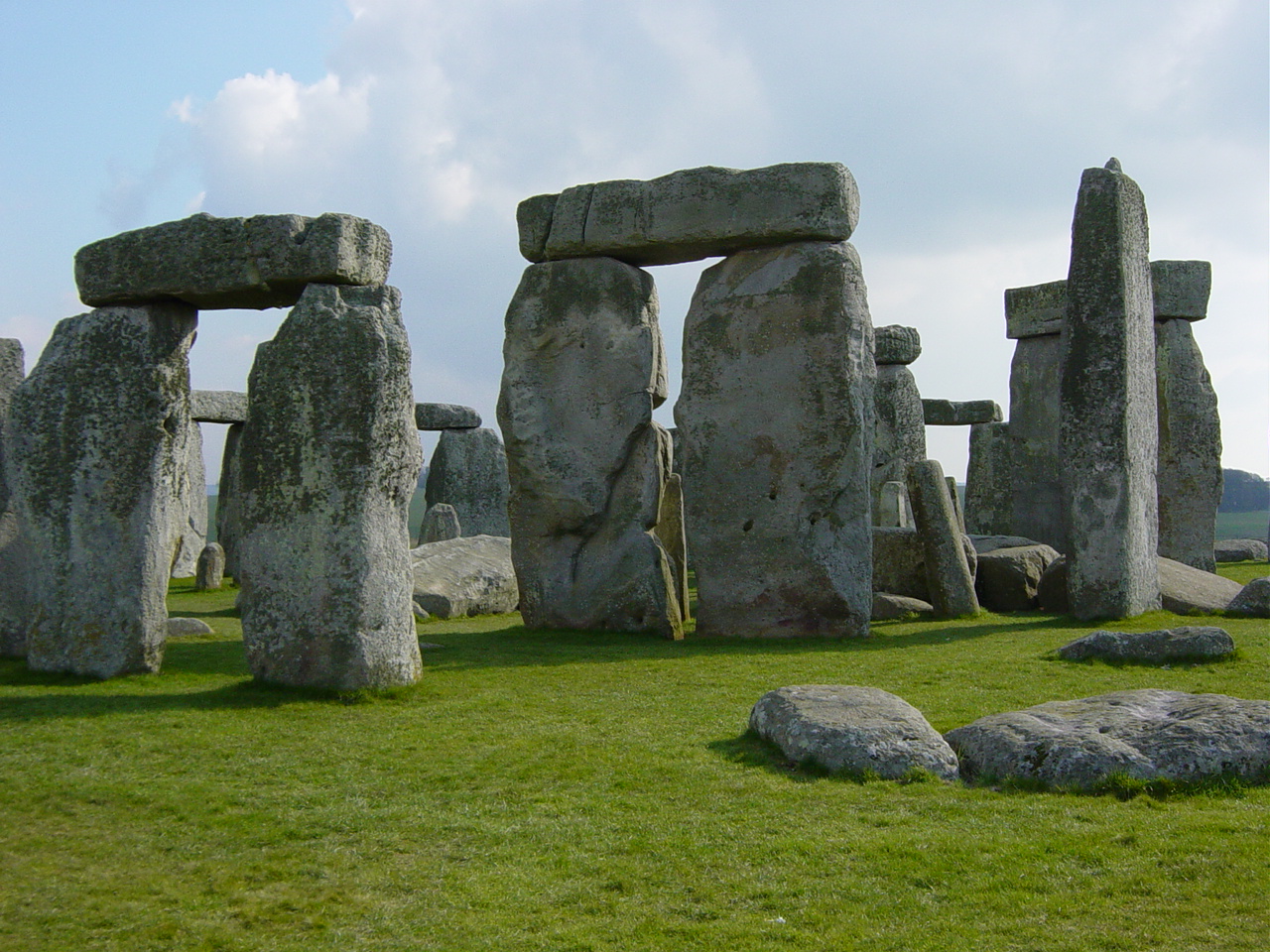
The massive Altar Stone at Stonehenge may have received some help from ancient glaciers on its long journey to southern England, but people still likely carried it much of the remaining distance, according to new research.
The study, led by Anthony J. I. Clarke and published in the Journal of Quaternary Science, examined the possible origins and transport routes of the six-ton sandstone monument that sits at the center of Stonehenge.
Researchers have long believed the Altar Stone came from northeast Scotland, roughly 700 kilometers (435 miles) from Stonehenge. However, exactly where the stone originated and how it reached Salisbury Plain have remained major archaeological mysteries.
Searching for the stone’s birthplace
The team combined geological analysis with computer models of ancient ice sheet movements to investigate whether glaciers could have transported the stone southward during the last Ice Age. Scientists focused on the Orcadian Basin, a large geological region in northeast Scotland that has been proposed as the stone’s source.
How did a 6-ton stone reach Stonehenge from Scotland?
Researchers found that glaciers may have moved the monument's famous Altar Stone part of the way. But ancient people likely completed the final journey, hauling the massive rock hundreds of kilometers across Britain. pic.twitter.com/mQFbTIb3ve
— Tom Marvolo Riddle (@tom_riddle2025) June 4, 2026
The study compared the Altar Stone’s mineral signature with sandstone formations across the basin. Researchers looked specifically at the ages of zircon grains embedded in the rock. These grains act like geological fingerprints and can help identify where a stone was formed.
The results pointed most strongly toward Caithness in mainland northeast Scotland. Sandstones from that region showed the closest match to the Altar Stone’s zircon age patterns.
Ice movement presents a problem
Although Caithness appears to be the best geological match, computer models revealed a complication.
Ancient glaciers in the area mostly moved toward the northeast rather than toward southern England. The models showed only a limited pathway that could have carried material southeast toward Dogger Bank, a now-submerged area beneath the North Sea.
That finding makes a direct glacial journey to Stonehenge unlikely. Researchers concluded that glaciers alone could not explain how the stone reached its final location.
Human transport still likely
Even if glaciers carried the stone as far as Dogger Bank, people would still have needed to move it about 400 kilometers (250 miles) to Stonehenge.
The study also noted another challenge. Dogger Bank was flooded by rising sea levels after the Ice Age before the Altar Stone is thought to have arrived at Stonehenge. This creates a timing problem for any theory relying entirely on glacial transport. As a result, researchers suggest that ice may have played only an intermediate role in the stone’s journey.
The findings support the idea that Neolithic communities were responsible for moving the enormous stone over great distances. While glaciers may have shortened part of the route, substantial human effort would still have been required to bring the Altar Stone to Stonehenge, one of the world’s most famous prehistoric monuments.
The study adds a new piece to the puzzle of how ancient builders assembled Stonehenge and highlights the remarkable achievements of the people who constructed it thousands of years ago.

 Login
Login