Reading view

The Seven Ancient Greek Styles of Speech That Still Shape Rhetoric Today

Digital depiction of the Council of 500 meeting in ancient Athens, depicting a group of citizens engaged in discussion.
Hermogenes of Tarsus developed the seven ancient Greek styles of speech to explain how rhetoric shapes clarity, emotion, persuasion, character, and intellectual power. Credit: GreekReporter archive.

Among the greatest rhetorical theorists stood Hermogenes of Tarsus, an Ancient Greek sophist and rhetorician who lived during the second century AD and developed a sophisticated theory of style that categorized speech according to seven major rhetorical qualities or styles of speech. These included Clarity (saphēneia), Grandeur (megethos), Beauty (kallos or omorphia), Rapidity (gorgotēs), Ethos, Sincerity, and Force (deinotēs).

Although many people mistakenly associate these rhetorical categories with the rhetorician Demosthenes, the systematic classification belongs to Hermogenes himself. Together, these categories formed a complete philosophy of expression. Hermogenes did not view rhetoric as ornamental alone. Instead, he treated speech as a living art capable of shaping thought, emotion, and public action.

The Ancient Greek Hermogenes and the art of rhetoric qualities or styles of speech

Ancient Greek rhetoric shaped political life, education, philosophy, and literature for centuries. Public speech held enormous importance in the Greek world because success in courts, assemblies, and intellectual debates depended upon persuasive expression. As rhetoric evolved, Greek thinkers attempted to classify the qualities that made speech effective, elegant, and emotionally powerful.

Hermogenes of Tarsus gained fame at a very young age. He was a rhetorical prodigy whose abilities astonished teachers and audiences alike, and he later composed several influential rhetorical treatises, especially On Types of Style. This work became one of the most significant manuals of rhetoric in late antiquity and Byzantium. Byzantine scholars such as George of Trebizond studied Hermogenes extensively, and introduced his theories in the West during the Renaissance.

Unlike simpler rhetorical systems, Hermogenes established a highly nuanced approach. He understood that persuasive speech requires flexibility rather than rigid formulas. Differing situations demand different styles, tones, and emotional effects. For this reason, his seven categories of styles of speech function less as isolated techniques and more as interconnected dimensions of expression.

“Clarity,” or Saphēneia, as a critical style of speech according to the Ancient Greek Hermogenes

Hermogenes considered clarity the foundation of all effective speech. Without clarity, audiences are unable to follow arguments or comprehend meaning. A speaker may possess intelligence and passion, yet confusion eradicates persuasion. Clarity therefore requires precise vocabulary, logical structure, and direct expression. Sentences should communicate ideas without unnecessary obscurity.

Nevertheless, Hermogenes did not reduce clarity to simplicity alone. Clear speech can still remain elegant and intellectually sophisticated. The goal involves illumination rather than oversimplification.

Greek philosophers also highly valued clarity. The philosopher Plato often criticized sophists who concealed weak arguments beneath decorative language. Similarly, Aristotle emphasized intelligibility as an essential feature of rhetoric. Hermogenes continued this tradition while developing a more refined stylistic analysis.

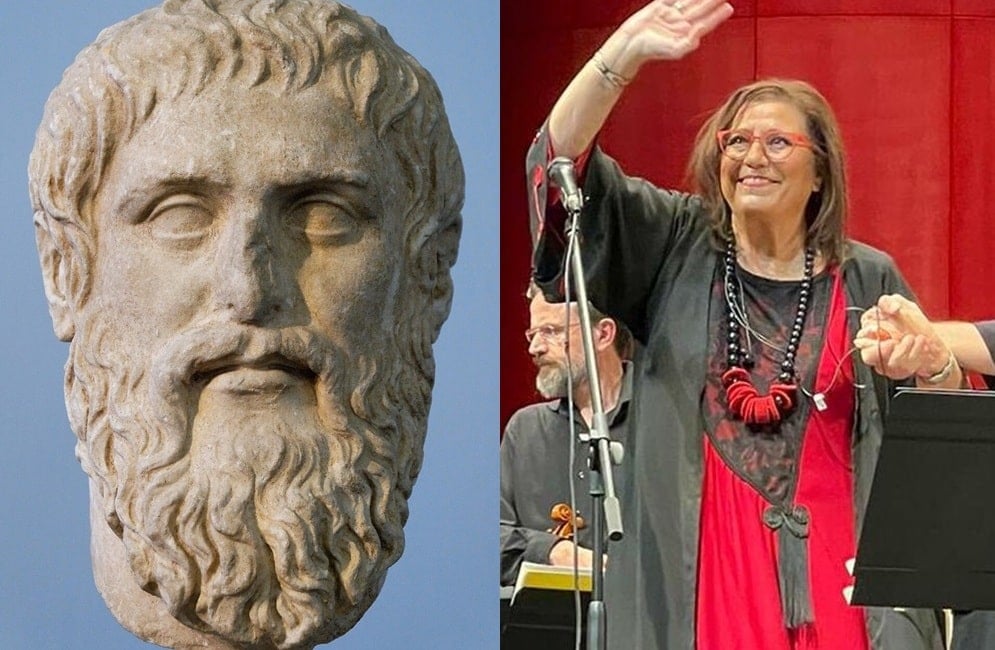
Greek philosopher Plato
Plato criticized the sophists in his work “Gorgias.” Credit: Sebastian Bertrand. flickr

“Grandeur” as one of the most significant rhetorical qualities

Grandeur introduces elevation, dignity, and majesty into speech. This style suits heroic themes, political crises, moral exhortation, and public ceremonies. A grand style expands language through emotional intensity, powerful imagery, and elevated rhythm. Speakers using grandeur aim to inspire awe and admiration. Demosthenes often exemplified this quality in his speeches against Philip of Macedon. His rhetoric combined patriotic urgency with emotional force.

However, Hermogenes warned against excess. Grandeur must remain controlled. Otherwise, speech becomes inflated and artificial. True grandeur emerges from harmony between content and expression. Noble themes require compatible, equally noble language, yet authentic emotion must guide rhetorical elevation.

Statue of Ancient Greek god Zeus
Statue of Greek God Zeus. Credit: flickr / Richard Mortel CC BY 2.0

The speech style of “Beauty,” or Omorphia

Beauty in rhetoric concerns elegance, harmony, and aesthetic pleasure. Hermogenes believed that beautiful speech delights audiences through rhythm, imagery, and balanced structure. This quality resembles artistic composition in poetry, sculpture, or music. Beautiful speech flows smoothly and creates emotional resonance through sound and proportion.

Greek culture deeply associated beauty with order and harmony. Philosophers often linked external beauty with inner balance. Hermogenes applies this principle directly to language. A beautiful style does not merely persuade intellectually. It also captivates emotionally and aesthetically.

Writers achieve beauty through careful word choice, graceful transitions, and balanced phrasing. Metaphors, cadence, and musicality all contribute to this effect. Nonetheless, Hermogenes again emphasizes moderation. Excessive ornament weakens rhetorical effectiveness. Beauty must support meaning rather than overwhelm it.

Doryphoros, Roman copy of Ancient Greek statue
Doryphoros statue. Roman copy of the late 1st century BC — early 1st century AD, replica of a Greek bronze original by Polykleitos of the 5th century. Credit: flickr / Sergey Sosnovskiy cc by 2.0

The speech style of “Rapidity,” or Gorgotēs

Rapidity injects speech with energy, movement, and urgency. Hermogenes used the term gorgotēs to describe swift and dynamic expression that propels audiences forward. This style relies upon shorter clauses, quick transitions, and vigorous pacing. Rapid speech creates excitement and emotional momentum.

Orators often utilized this technique during moments of tension or conflict. Fast-moving rhetoric can produce feelings of urgency, danger, or passionate conviction. At the same time, rapidity demands careful control. If speech moves too quickly, audiences lose comprehension. Therefore, speakers must balance speed with clarity.

Hermogenes admired speakers who could accelerate rhythm without sacrificing coherence. Rapidity also reflects psychological intensity. Passionate conviction naturally produces energetic language and movement.
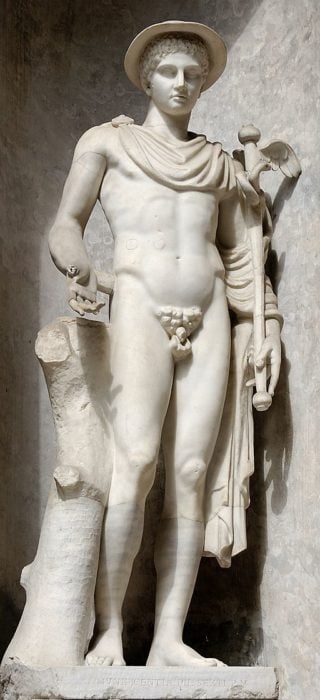
hermes Logios
Hermes Logios was the god that protected rhetoricians. Courtesy of Vatican Museums. Credit: Public domain, via Wikimedia Commons

Styles of speech, “Ethos,” and “Sincerity”

Ethos concerns character and moral presence within speech. Aristotle had already emphasized ethos as one of the three pillars of persuasion. Hermogenes expanded this concept stylistically. A speaker’s language reveals personality, values, and emotional disposition. Audiences trust speakers who appear honorable, wise, and sincere.

Ethos therefore demands moral credibility and emotional authenticity. Differing rhetorical situations also require varying forms of ethos. A judge, philosopher, general, or grieving citizen each projects distinct moral qualities through speech.

Hermogenes understood that persuasion depends heavily upon the audience’s perception of character. Even brilliant arguments fail when listeners distrust the speaker. Thus, rhetorical success involves ethical presence as much as intellectual ability.

Sincerity is another trait that creates emotional truthfulness and human immediacy. Hermogenes recognized that audiences respond deeply to speech that feels genuine. A sincere speaker avoids excessive theatricality or artificial ornament. Instead, sincerity emerges through direct emotional connection and honest expression. This style often appears in personal appeals, lamentations, or moral reflections. Sincere rhetoric results in intimacy between the speaker and audience.

Greek tragedy frequently employed this quality during scenes of grief or confession. Philosophers also valued sincerity because truth required alignment between speech and inner conviction. Hermogenes therefore treated sincerity as a rhetorical strength rather than weakness. Genuine emotion can persuade more powerfully than technical brilliance alone. Nonetheless, sincerity still requires artistic control. Raw emotion without structure can become chaotic or ineffective.
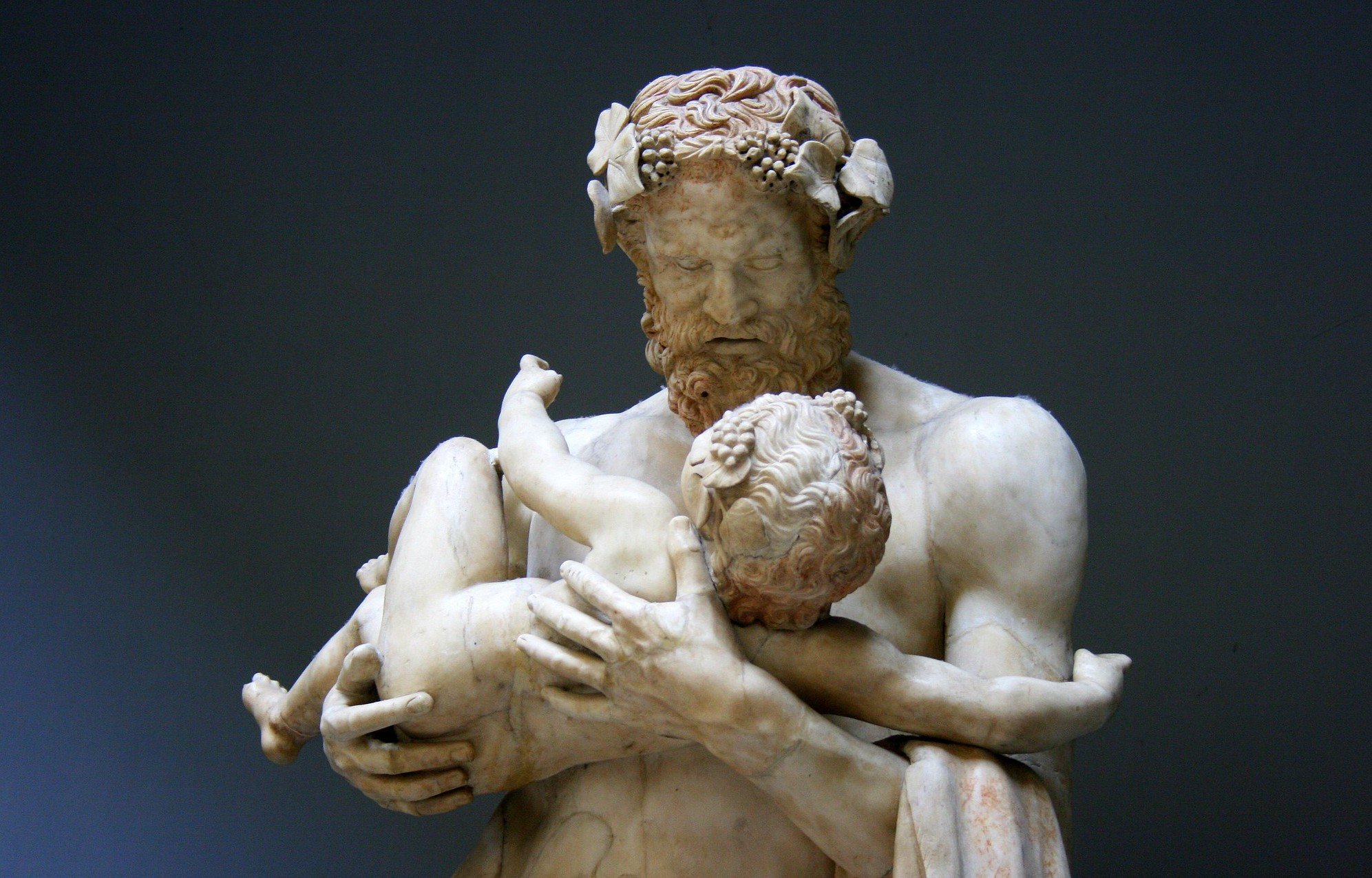
Silenus holds infant Dionysus
According to the philosopher Plutarch, Dionysus was also the god of sincerity. Credit: just.Luc / Flickr CC BY 2.0

“Force,” or Deinotēs, as the seventh of the major Ancient Greek styles of speech

Force represents the culmination of rhetorical power. Hermogenes viewed deinotēs as the ability to overwhelm audiences through intensity, authority, and commanding presence. This style combines emotional energy, intellectual precision, and persuasive momentum. Forceful rhetoric strikes listeners with irresistible impact. Demosthenes often embodied this quality during political speeches. His words carried urgency, moral conviction, and strategic precision simultaneously.

Force differs from mere aggression. True rhetorical force arises from mastery over every dimension of speech. Clarity, grandeur, rhythm, sincerity, and ethos all contribute to it. Hermogenes considered this quality extremely challenging to achieve, and only highly skilled speakers could combine all rhetorical elements harmoniously. Force therefore represented the highest form of rhetorical excellence.
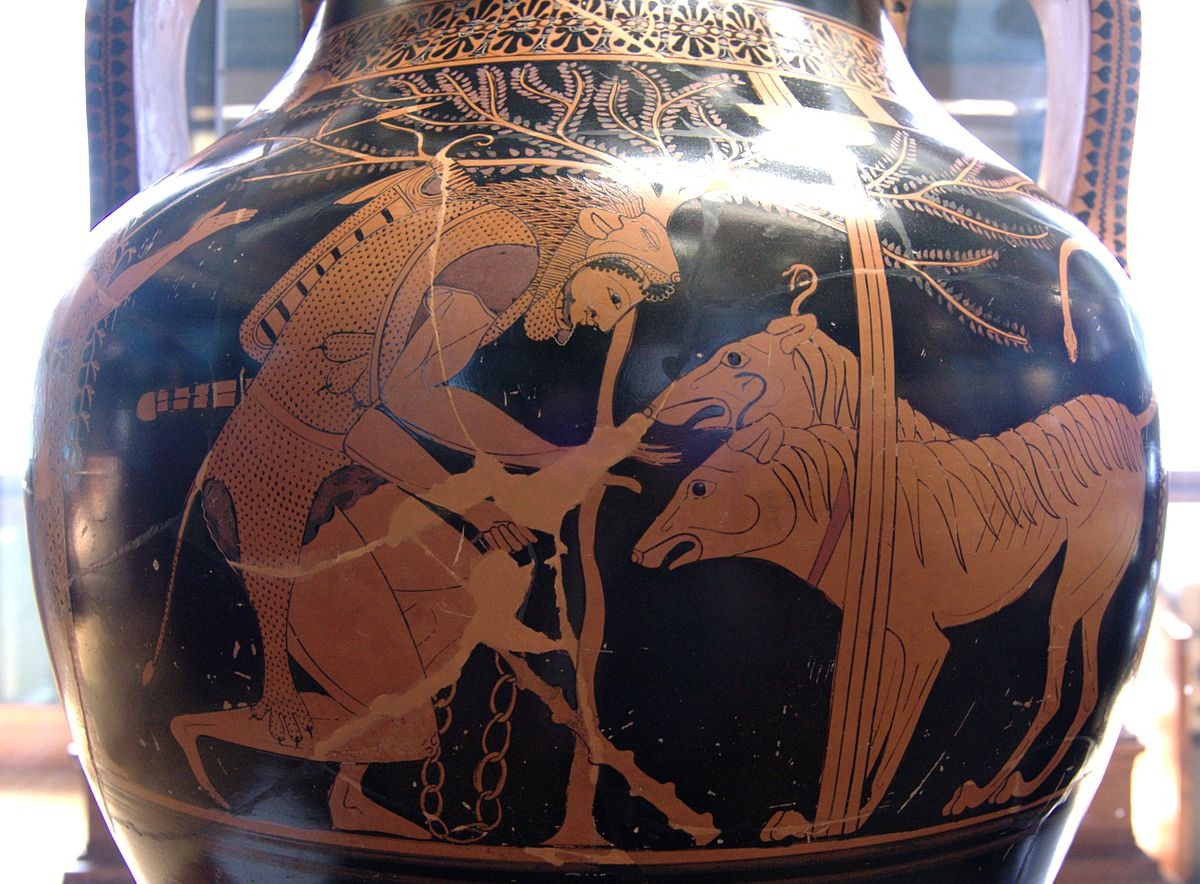
Cerberus and Heracles
Heracles, the strongest hero depicted on red-figure style Ancient Greek pottery. Credit: Louvre Museum / Public domain / Wikimedia Commons

The unity of the seven styles of speech

Hermogenes never intended these categories to function separately. Great rhetoric combines multiple styles according to circumstance. A political speech may require grandeur during patriotic appeals, clarity during argumentation, sincerity during emotional moments, and force during conclusions. This flexibility explains the lasting influence of Hermogenes. His system recognized the complexity of human communication.

Hermogenes of Tarsus shaped rhetorical education for more than a thousand years. Byzantine scholarship practically treated his works as sacred manuals of eloquence. Renaissance humanists later read his theories and incorporated them into European education. His influence extended beyond rhetoric into theology, literature, and philosophy. Christian preachers especially valued his understanding of emotional and ethical persuasion.

Even today, modern communication still reflects principles Hermogenes identified centuries ago in his seven styles of speeches. Political speeches, courtroom arguments, literature, and public debates all rely upon clarity, emotional force, sincerity, and character.
  •  

The History of Wine in Ancient Greece

wine Ancient Greece
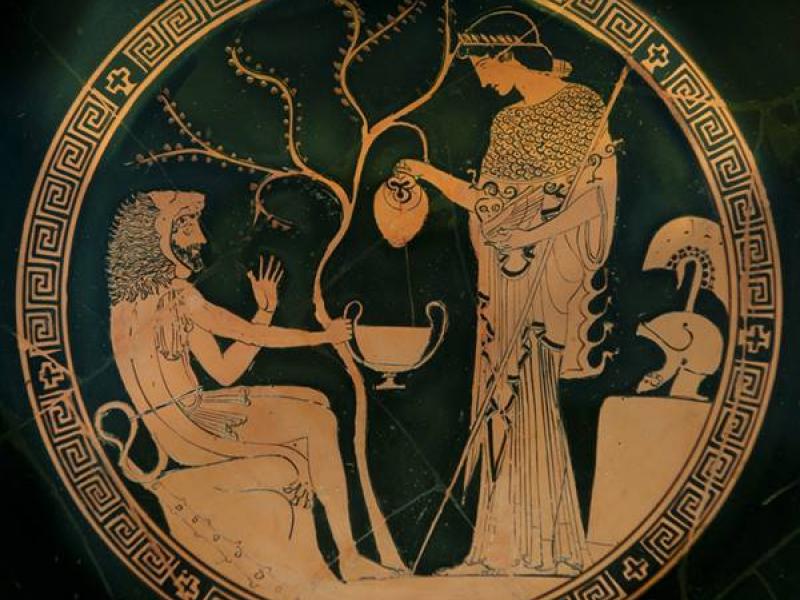
Hercules is offered wine in this depiction of a scene from his Twelve Labors. Public Domain

The recorded history of wine in Ancient Greece begins around the 15th century BC, while viticulture appears to have existed as early as the Neolithic era, 6,500 years ago.

Ancient Greece is also the place where modern wine culture began, as wine consumption stopped being solely a sacred act, as it had been when priests and rulers controlled the vineyards.

By the early Bronze Age, vineyard cultivation of grapes was widespread in ancient Greece, and by the time of the rise of the Minoan and Mycenaean civilizations, wine was part of everyday life, for consumption and/or production.

By that time in Greek society, wine was an economically important business.

Wine and commerce in ancient Greece

There was substantial interaction between the Mycenaean and Minoan cultures, based mainly on commerce.

Around 1200 BC, people from northern Greece invaded the southern Mycenaean area, which was a monarchy.

wine Ancient Greece
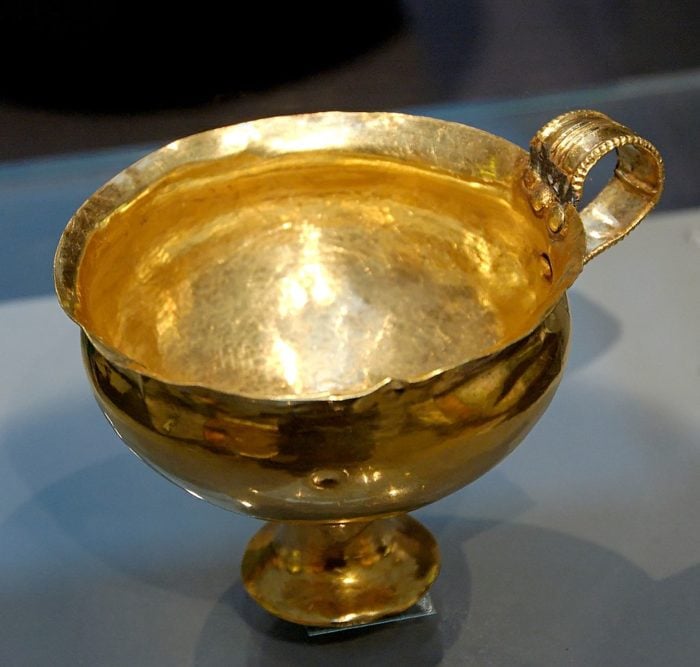
Golden goblet from the Mycenaean period. Public Domain

The war devastated the Mycenaean lands, generating thousands of poor refugee families who escaped to fortified cities for protection.

In order to consolidate their powers, the invaders gave more privileges to the common people, thus undermining the power of monarchs and aristocrats.

The new, democratic city-states were slowly created over time with the common people having more freedoms and opportunities.

Gradually, the common people started cultivating plots of land, with vineyards and olive groves being the most plentiful and lucrative.

People could thus own vineyards, cultivate them, and trade and drink their own wine. A new class of merchants, albeit a small one, was born.

At the same time, more and more people in ancient Greece began to drink wine for pleasure rather than as a sacred ritual.

Colonization and trade expansion

The Greek city-states then began to establish colonies throughout the Mediterranean. The settlers, already experienced in vine cultivation, brought grapevines with them and were able to better cultivate already-existing vineyards.

Moving west, Sicily and southern Italy were the first colonies established by ancient Greeks. Greeks even called the southern part of the Italian Peninsula Oenotria (“the land of vines”).

Other Greeks settled in Massalia (Marseille) in southern France while others moved east all the way to the shores of the Black Sea.

The colonies provided more opportunities for wine merchants. The Greeks could now introduce their wines as far as the western part of France and to the Black Sea in the east.

Athens was a large and lucrative market for wine, as the climate in the Attica region was ideal for vines, and production was substantial. Wine from Attica was traded in all the lands along the eastern Mediterranean Sea.

Other areas famous for wine in ancient Greece were the islands of Santorini and Thasos. This is especially true in Santorini, where the rich volcanic soil produced exceptional grapes. Ancient Greeks were very particular about the origin of their wines.

Major trading partners for wine in ancient Greece were Crimea, Egypt, Scythia, and Etruria among others, as the Greeks traded their knowledge of viticulture and winemaking.

Indicative of the lucrative trade of wine from Greece is a shipwreck discovered off the coast of southern France that held nearly 10,000 amphorae containing almost 300,000 liters (79,000 US gallons) of Greek wine.

Diluted wine

The wine in ancient Greece was unlike what we know today. It was not left undiluted but was mixed with water in precise proportions in a vessel called a krater.

In certain seaside areas or islands, such as Santorini, Greeks used to mix wine with salt water as a preservative and for the taste it imparted. Honey was sometimes added to sweeten the wine.

The mixing of water and wine was for the drinker to enable him or herself to maintain composure and self-control, traits that were highly valued in ancient Greek society.

In fact, ancient Greeks seemed to believe that only barbarians—in most cases that simply meant non-Greeks—drank unmixed wine, got drunk and behaved like…barbarians.

Modern wine culture begins in Greece

Along with their wine, Greeks had exported their way of life, including vine-growing, winemaking, and enjoying wine, to almost every port in the Mediterranean basin.

Socrates praised wine in the following quote:

“Wine moistens and tempers the spirit and lulls the cares of the mind to rest. It revives our joys and is oil to the dying flame of life.”

Plato also praised the fruit of the vine:

“What is better adapted than the festive use of wine in the first place to test, and in the second place to train, the character of a man, if care be taken in the use of it? What is there cheaper or more innocent?

The ubiquitousness of the word “symposium” in ancient Greece, which literally means “drinking with others”—meant that ancient Greeks loved to get together, eat, drink, and converse during and after the meal.

wine Ancient Greece
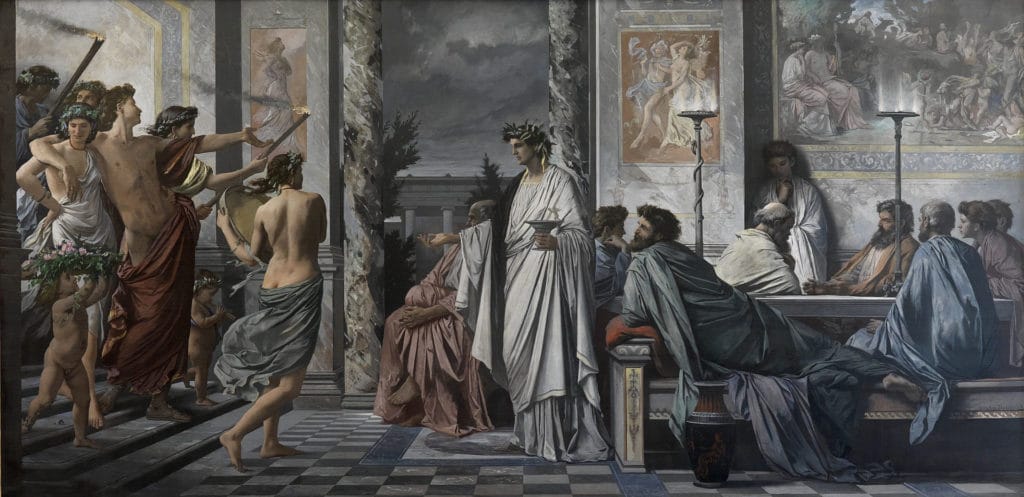
Plato’s Symposium, by Anselm Feuerbach (1829-1880). Public Domain

It was a favorite pastime for well-to-do ancient Greeks to eat, drink, discuss, and, occasionally, philosophize, at these symposia.

Such convivial get-togethers have been illustrated on many types of Greek vases and sculptures. Examples of discussions that took place in symposia can be found in Plato’s Symposium and Xenophon’s Symposium.

Usually, symposia were hosted by aristocratic men for their peers. They would relax in recliners called klinai and drink from terracotta or, depending on how rich the host was, from bronze, silver, even gold, cups.

Wine was also used for medicinal purposes in ancient Greece. The great  physician Hippocrates prescribed different wines depending on the disease.

Ancient Greeks also had a god of wine, the mischievous Dionysus. The god of the grape harvest, winemaking, fertility, orchards, fruit, vegetation, insanity, and ritual madness, he was also the god of religious ecstasy and festivity; overall, it was he who embodied the colorful, vibrant life of ancient Greece.


  •  

Ioannis Sykoutris: A Teacher of the Ancient Greek Heroic Ideal in a Conservative Age

A historic photograph of Ioannis Sykoutris from around 1935.
Sykoutris viewed the heroic ideal not as blind defiance but as a conscious affirmation of meaning in the face of suffering. Credit: Photo Credit: Ioannis Sykoutris, c. 1935 – ELIA / Hellenic Literary and Historical Archive. Source: SearchCulture.gr. CC BY 4.0.

Ioannis Sykoutris, born in Smyrna in 1901, is one of the most tragic yet heroic figures of 20th-century Greek intellectual history. His life was marked by brilliance, deep philosophical inquiry, and, ultimately, a heartbreaking end.

On September 21, 1937 at the young age of 36, Sykoutris took his own life in Corinth. It was a tragic event that sent shockwaves through the Greek intellectual community. Though his life was cut short, his intellectual legacy and philosophical views continue to resonate to this day.

Philosophical views and his interpretation of Plato

Sykoutris was born into a humble family of Chios descent, and his early years were shaped by the struggles of a post-Ottoman world. After completing his studies at the University of Athens, he moved to Germany. There, he further honed his intellectual capabilities at universities such as Leipzig and Berlin.

Upon returning to Greece in 1929, Sykoutris took up a position as a lecturer at the University of Athens, where he made significant contributions to Greek philosophy and literature. His work spanned various areas, including the translation and analysis of classical texts, most notably Aristotle’s Poetics and Plato’s Symposium. These works established him as one of Greece’s leading intellectuals, and his translations, in particular, gained international recognition.

Sykoutris was deeply drawn to the works of the Greek philosopher Plato, particularly to The Symposium. His interpretation of the dialogue explored the nature of love and eroticism in Ancient Greek society. He especially focused on the acceptance of homosexuality as a cultural and social phenomenon in classical Greece.

While his intellectual rigor and deep insight into these themes were recognized, his perspectives also invited controversy. Conservative circles, for instance, tended to criticize his ideas on love and relationships. Sykoutris emphasized the philosophical and intellectual aspects of love, challenging the moralistic views of his time and revealing his progressive stance on issues considered taboo in his era.

His work on Plato was not limited to translations. Sykoutris believed that Plato’s philosophical ideas held the key to understanding the soul and the nature of human existence. He viewed Plato’s dialogues as a guide to achieving higher states of being through philosophical contemplation.

The heroic ideal: Sykoutris and the heroic human

Sykoutris drew on German idealism to shape his understanding of Greek thought, insisting that philosophy must transform the moral and intellectual character of individuals and society. He grounded his philosophical framework in the concept of the heroic human, which he identified as a central idea in both Greek philosophy and the modern intellectual landscape.

He viewed the “heroic human” as one who transcends conventional societal norms, embracing personal suffering and intellectual struggle in pursuit of higher ideals. For Sykoutris, the heroic individual was not just a figure of physical strength or military prowess. Instead, this was a person of profound philosophical depth who embodied the struggle for self-perfection.

In many ways, Sykoutris viewed philosophy as a means of rebellion against the oppressive social structures of his time. He admired the courage of individuals who resisted conformity. This theme echoes in his interpretation of ancient Greek heroes who defied the gods and societal expectations.

His vision of the heroic ideal was also influenced by his reading of Nietzsche and German idealism, which placed the individual at the center of philosophical inquiry and moral struggle. Sykoutris’ own life can be seen as an embodiment of such a heroic ideal. He was an intellectual who chose to live authentically, confronting both external social pressures and his own inner demons.

An artistic representation of Plato's Symposium.
An artistic representation of Plato’s Symposium. Credit: Anselm Feuerbach, Wikimedia Commons, Public Domain

The tragedy of his death

A complex interplay of personal, professional, and societal factors marked the circumstances surrounding Sykoutris’ suicide. Despite his intellectual achievements, Sykoutris felt a profound sense of isolation and disillusionment, particularly due to the fierce criticism he faced from religious and conservative factions in Greek society.

His progressive ideas were at odds with the prevailing norms, and this conflict led to personal and emotional strain. The attacks against him, especially concerning his views on love and sexuality, likely contributed to his feelings of alienation.

Sykoutris’ death was not just a personal tragedy but a cultural one, as well. It marked the loss of one of Greece’s most promising philosophers at a time when the country was undergoing significant political and social transformation. His suicide raised questions as to the psychological toll of intellectual rebellion and the cost of living as an outsider in a society unwilling to embrace change.

Trojan war hero ajax ancient greece
Sykoutris chose to end his life like the Trojan war hero Ajax. Credit: Wikimedia Commons, Public Domain

Legacy and influence

Despite his short life, Ioannis Sykoutris left behind a profound intellectual legacy that continues to shape modern Greek thought. His writings on Plato, Greek philosophy, and the nature of love continue to be studied and discussed in academic circles, and his work offers valuable insights into the tensions between tradition and modernity, on the one hand, and intellectualism and societal conformity on the other. He remains a symbol of intellectual courage, a figure who dared to challenge the status quo in the pursuit of truth.

Sykoutris’s tragic death only added to his mystique, transforming him into a martyr for the intellectual and cultural causes he championed. His legacy is not just one of academic achievement but also of moral and philosophical courage. These qualities remain an inspiration for those who seek to transcend the limitations of their time and pursue a higher, more meaningful life.

Ioannis Sykoutris was a man ahead of his time, whose intellectual journey continues to inspire scholars and philosophers alike. His views on Plato and the heroic ideal reflect a deep commitment to the power of philosophy as a tool for personal and societal transformation. While his life ended in tragedy, his philosophical contributions endure, and his legacy as a heroic intellectual remains a vital part of Greece’s cultural history.

  •  

How the Ancient Greeks Saw Virtue: A Journey from Homer to the Stoics

ancient Greek virtue
Ancient Greek philosophers emphasized the importance of virtue in life. Photo of bronze door detail at the National Academy of Sciences building in Washington, DC. Credit: Carol M. Highsmith. Public Domain

For the Ancient Greeks, virtue was regarded as the highest quality a person could possess, and living virtuously was considered the ultimate goal of life.

Virtue was not merely a philosophical concept but a moral guide to be followed. Living a virtuous life was the greatest achievement for an Ancient Greek, but beyond moral virtue, the word itself also conveyed meanings of excellence, purpose in life, goodness, and happiness (eudaimonia, ευδαιμονία)—the fulfillment of human nature itself.

Reference to virtue (aretē, αρετή) first appeared in Homer’s epics, the Iliad and the Odyssey, and later evolved into a central ideal for Greek philosophers such as Socrates and Aristotle. In the Iliad, Homer exalted the virtue of bravery, placing Achilles at the forefront as the model of an excellent warrior. Achilles fought and triumphed for the sake of honor but accepted the fate destined for him.

In the Odyssey, Homer praised the virtues of intelligence (or cunning) and the endurance of Odysseus. His loyalty to Penelope is also celebrated, reflecting the virtue of loyalty to family and home. Upon returning to Ithaca, Odysseus declared that “there is nothing nobler than a man and wife who share their minds and hearts in harmony.”

The Ancient Greeks, Socrates, and virtue

Socrates, the Ancient Greek philosopher regarded by most as the father of philosophy, believed that knowledge and virtue were inseparable. The pursuit of virtue was of great importance, as Socrates viewed it as synonymous with knowledge of the good: to know what is good is to do what is good. “Virtue does not come from wealth, but wealth and every other good thing which men have comes from virtue, both to the individual and to the state” Socrates said.

By the time of the classical philosophers, the Ancient Greek world had evolved. The city-state (polis) had replaced the heroic household as the center of life, and the question was no longer how to be a great warrior but how to be a good citizen and a good person. Socrates emerged as the first great moral philosopher. “No one errs willingly,” he insisted in Plato’s Protagoras—meaning that moral failure arises from ignorance, not malice. He believed that virtue could be taught.

Socrates’ famous elenchus was a dialectical method of questioning, testing, and refining ideas. Through a series of probing questions, the method sought to expose contradictions in a person’s beliefs and systematically guide them toward a clearer, more consistent understanding of truth. By revealing these contradictions, Socrates led people toward self-knowledge.

When he was arrested and tried for disrespecting the gods and corrupting Athenian youth with his teachings, he famously declared, “The unexamined life is not worth living” (Apology 38a). For Socrates, the pursuit of virtue was the same as the pursuit of wisdom. Courage, justice, temperance, and piety were not separate traits but expressions of a unified understanding of the good. Thus, Socrates transformed virtue from heroic excellence into a philosophical and ethical ideal grounded in reason and self-knowledge.

Plato and the soul

Plato, Socrates’ most famous pupil and the philosopher who became his master’s voice, once remarked: “Consider your origins: you were not made to live as brutes, but to follow virtue and knowledge.” He developed this vision of virtue further, seeking to define its nature and role in human life. In his dialogues, especially The Republic, he explored the essence of virtue in both the individual and the state.

For Plato, the human soul was composed of three parts: the rational, spirited, and appetitive. Virtue, he taught, consisted of harmony among these elements, with reason guiding spirit and desire. Justice was this inner balance made visible in action. As he wrote, “Justice is doing one’s own work and not meddling with what is not one’s own” (Republic IV.433a). The just person, therefore, is one whose reason governs, whose spirit supports, and whose desires obey.

Plato identified four cardinal virtues that reflected this harmony: wisdom, courage, temperance, and justice. Wisdom was the virtue of reason; courage, that of the spirited part; temperance, the balance among all desires; and justice, the overarching order of the soul. These four virtues became the foundations of Western moral philosophy and profoundly influenced Christian ethical thought.

For Plato, virtue also had a transcendent dimension. True virtue was likeness to God, aimed at the Form of the Good—the ultimate reality that gives meaning and value to all things. As he wrote, “The Good is the cause of all that is right and beautiful” (Republic VI.517b). The virtuous person, through philosophical contemplation, seeks to align the soul with this divine Good, just as the sun illuminates the visible world. Thus, virtue is not only inner harmony within the self but also participation in a higher cosmic order.

Aristotle and practical virtue

For Aristotle, the concept of virtue was practical wisdom (phronēsis). He believed that ethical virtue, rather than mere self-control, is required for practical wisdom. In the Nicomachean Ethics, Aristotle defined virtue as a disposition to act correctly, formed through habit and guided by reason. Virtue was not innate, nor purely intellectual; it was something cultivated through action. “We become just by doing just acts, temperate by doing temperate acts, brave by doing brave acts” (Ethics II.1), he explained. In other words, virtue is learned by living it. As he also said, “We are what we repeatedly do. Excellence, then, is not an act but a habit.”

Aristotle’s famous doctrine of the mean illustrates the balanced nature of virtue. Every virtue lies between two extremes of excess and deficiency. Courage, for example, lies between cowardice (too little fear) and recklessness (too much). Generosity lies between stinginess and extravagance. “Virtue, then, is a state of character concerned with choice, lying in a mean,” he writes, “this being determined by reason and as the prudent person would determine it” (Ethics II.6).

For Aristotle, the goal of life was eudaimonia, often translated as “happiness” but more accurately “flourishing.” This state is achieved not through pleasure or wealth but through the full realization of one’s potential as a rational and social being. “The good for man is an activity of the soul in accordance with virtue,” he said (Ethics I.7). Virtue, then, is not a single act or rule but the lifelong practice of living wisely, courageously, and justly within a community. It requires both intellectual virtues (like wisdom and understanding) and moral virtues (like courage and moderation), harmonized under the guidance of practical wisdom.

Aristotle’s conception of virtue was purpose-driven. He believed that everything in nature has an end (telos). The eye’s purpose is to see, the seed’s to grow into a tree, and the human’s to live rationally and ethically. Virtue is the perfection of this natural purpose. Hence, for Aristotle, ethics was not about obeying rules but about fulfilling one’s nature as a rational being in society.

Quotes on virtue from Aristotle

Aristotle’s work on virtue and knowledge is unparalleled. A student of Plato and tutor to Alexander the Great, he established his own school, the Lyceum, where he explored topics ranging from biology to metaphysics. His reflections on virtue and the cultivation of character remain influential. Below are some of his most notable insights:

  • Aristotle emphasized the importance of educating both mind and character, stating that “educating the mind without educating the heart is no education at all.” He highlighted self-knowledge as the foundation of wisdom: “Knowing yourself is the beginning of all wisdom,” and courage and freedom were intertwined in his thought as is evident in his statement, “He who has overcome his fears will truly be free.”
  • Aristotle also emphasized the role of habit in shaping virtue: “Good habits formed at youth make all the difference.” For Aristotle, wisdom involved understanding life beyond immediate pleasure: “The aim of the wise is not to secure pleasure, but to avoid pain.” Cultivation of the mind and spirit was central to a flourishing life: “The energy of the mind is the essence of life,” and “The ideal man bears the accidents of life with dignity and grace.”
  • Aristotle also reflected on honor, leadership, and moral excellence: “Dignity does not consist in possessing honors, but in deserving them,” and “He who cannot be a good follower cannot be a good leader.” Finally, he distinguished the cultivated from the uncultivated, stating that “the educated differ from the uneducated as much as the living from the dead.”

Through these statements, Aristotle encapsulated his enduring vision of virtue as a combination of wisdom, moral character, and practical living.

The Stoics, moral worth, and virtue in Ancient Greece

The Stoics believed that the goal of all philosophical inquiry was to provide a mode of conduct characterized by tranquility of mind and certainty of moral worth. Flourishing during the Hellenistic period after Aristotle’s death, Zeno of Citium founded Stoicism around 300 BC, building on and radicalizing the moral insights of earlier philosophers. For the Stoics, virtue was not merely the highest good—it was the only good.

All external things—wealth, pleasure, health, even life itself—were morally indifferent. What mattered was the state of one’s soul: one’s rational and moral integrity. As the Stoic philosopher Epictetus later observed, “It is not things themselves that disturb men, but their opinions about things” (Enchiridion 5).

The Stoics saw virtue as living in accordance with nature, which meant acting in accordance to reason and accepting fate. Since the universe was governed by divine reason (logos), the wise individual aligns with it, remaining tranquil amid the changes of fortune. Courage, justice, temperance, and wisdom remained the core virtues, but now they were expressions of a single rational attitude toward life. As Seneca, the Roman Stoic, wrote, “Virtue is the only good, and vice the only evil; everything else is indifferent” (Letters 76). Even suffering or poverty could not harm the virtuous person because virtue itself was self-sufficient.

In this way, Stoicism universalized the Greek idea of virtue. It was no longer the privilege of citizens or philosophers but the potential of every human being. The Stoic sage, like Socrates before him, embodied moral freedom through inner mastery and reason. Marcus Aurelius, emperor and Stoic, summarized this ideal succinctly: “A man’s worth is measured by the things he pursues” (Meditations VII.3). To pursue virtue was, therefore, to live fully in harmony with the divine order of the world.

Influence of the Ancient Greek conception of virtue

The ancient Greek concept of virtue has had a profound influence on Western civilization. Ideas of moral inquiry, a virtuous life, practical wisdom, and moral worth were later adopted by Christian theology and continue to resonate today. Thomas Aquinas, for example, integrated Aristotle’s virtues with Christian faith in his writings.

In their exploration of virtue, the Ancient Greek philosophers offered no simple answers to questions such as, “How can I become virtuous?” Yet they left behind a framework for thinking, questioning, and appreciating the importance of a moral life for Western civilization.

For the Ancient Greeks, to live a virtuous life was to live well, to become the best version of oneself, and to align human nature with the rational order of the cosmos. They believed that this path led not only to moral goodness but also to true happiness.

  •  

Plato’s “Republic” Meets Techno in Maria Farantouri’s Concert

Farantouri Plato Republic
Farantouri shared details about her highly-anticipated concert alongside electronic music pioneer Lena Platonos. Illustration: Greek Reporter

Legendary Greek vocalist Maria Farantouri has teased a groundbreaking upcoming performance, revealing that she will be singing passages from Plato’s Republic set to techno music.

Speaking to the camera on the morning show Buongiorno, Farantouri shared details about her highly anticipated concert alongside electronic music pioneer Lena Platonos, scheduled for June 19 at the historic Odeon of Herodes Atticus.

The ambitious program will feature three major works that bridge ancient text, contemporary composition, and electronic soundscapes. Farantouri noted that the performance will seamlessly blend modern musical elements guaranteed to thrill younger audiences.

“Lena Platonos and I are preparing a truly historic concert,” Farantouri said. “It connects the past with the present using very modern, electronic rhythms. I will also be singing Plato’s Republic. Lena has taken the myth of the Three Fates and set it to music—and it’s going to be techno! Young people will literally be dancing to it. It’s absolutely thrilling.”

Plato’s Republic: Cornerstone of philosophy and politics

Written around 375 BC, Plato’s Republic is arguably the most influential work of philosophy and political theory in Western history. Structured as a Socratic dialogue, it explores the definition of justice, the character of the just city-state, and the nature of the human soul. It is the very text that gave the world the famous “Allegory of the Cave”—Plato’s metaphor for how humanity mistakes the shadows of illusion for reality and how the pursuit of truth requires breaking free from those chains.

What makes Platonos and Farantouri’s techno adaptation so brilliantly ironic is Plato’s own complicated relationship with music. In the Republic, Plato devoted significant time to discussing the role of the arts in society, famously arguing that certain musical scales and rhythms should be banned because they could corrupt the soul or incite chaotic emotion.

  •  
❌