
Reading view

‘Family values’ African charter condemned by rights groups as regressive and dangerous

Draft treaty claims sexual and reproductive health and rights are an existential threat to the African family

An African treaty that rejects longstanding international human rights obligations moved a step closer to becoming policy this week as governments across the continent met in Ghana.

The draft African charter on family, sovereignty and values, seen by the Guardian, asserts that African values and culture are under attack from “foreign ideologies” and urges states to withdraw from any agreements that do not align with the principles of the charter, including the 2003 Maputo protocol, which promotes gender equality and protects the reproductive and health rights of women and girls.

Continue reading...

© Photograph: Francis Kokoroko/Reuters
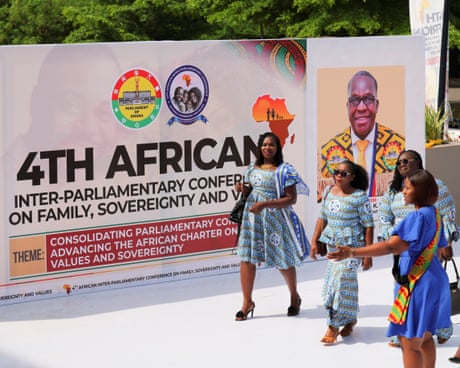
© Photograph: Francis Kokoroko/Reuters
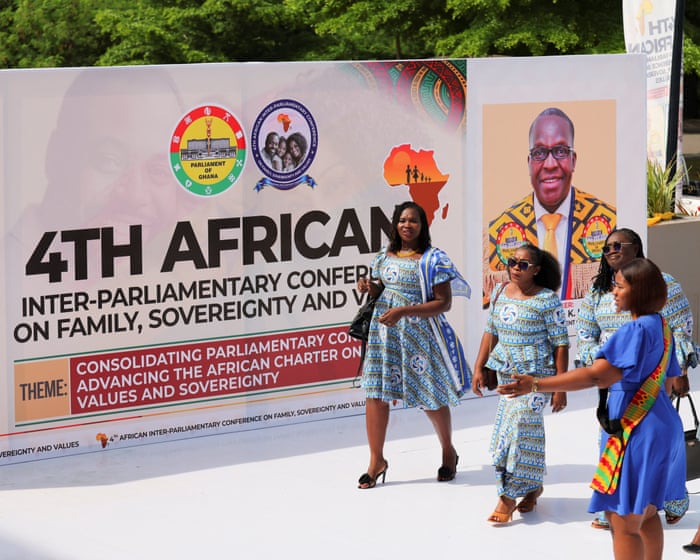
© Photograph: Francis Kokoroko/Reuters

  •  

Rights groups renew call to free jailed Cambodian environmental activists

BANGKOK — Seven hundred days after activists from the environmental group Mother Nature Cambodia were imprisoned on charges widely regarded as retaliatory for their activism, 73 international and Cambodian civil society organizations have renewed calls for their unconditional release. After a trial lasting just over a month, 10 activists from Mother Nature Cambodia were sentenced on July 2, 2024, to between six and eight years in prison. Only five of the defendants attended the hearings, which saw Long Kuntha, 28, Ly Chandaravuth, 26, Phuon Keoraksmey, 25, and Thun Ratha, 34, each sentenced to six years behind bars for plotting against the government; fellow activist Yim Leanghy, 36, received an eight-year sentence for both plotting against the government and insulting the king. The five activists who did not attend the trial were sentenced in absentia. The appeals hearing for all 10 convicted activists was slated to take place on June 2, but has been postponed indefinitely by the Phnom Penh Court of Appeals. “The MNC5 are incarcerated in prisons in overcrowded and harsh living conditions, separated from each other and spread out all across Cambodia, hundreds of kilometers away from their families and legal counsel,” wrote the 73 NGOs in an open letter addressed to Prime Minister Hun Manet. “The … NGOs who have signed this letter sincerely request you take immediate action to ensure the unjust convictions of these five activists are reversed either prior to or at their upcoming appeals court hearing in Phnom Penh, and that their freedom…This article was originally published on Mongabay

  •  

Bengal tigers in Cambodia? Reintroduction plan raises questions

Sat Born, 56, recalls freezing at the forest’s entrance when he first saw it. “Its head was this big,” he says, wide-eyed, spreading his hands to show the animal’s size. Recollecting that eventful morning in 2001, Born, who now farms bananas and durians, retraces his steps from his home in Trapeang Chheu Trav village in the rainforests of the Cardamom Mountains in southwestern Cambodia. As he walks up a hill rising above the forest canopy, he points to a spot on the road. “It’s over here. When I saw the tiger, it was 9 a.m.,” he says. “I was really shocked … I couldn’t tell if the tiger was coming towards me.” In 2007, just six years after this fleeting encounter, Cambodia’s last confirmed tiger sighting was logged by a camera trap. In the 1990s, the country was estimated to host hundreds of wild Indochinese tigers, but decades of poaching pressure took a heavy toll. In 2016, tigers (Panthera tigris) were formally declared extinct in Cambodia. That may be set to change with the imminent translocation of a small population of Bengal tigers from India. Although many reintroductions are success stories, this one raises some serious concerns. Why would Cambodia bring in a nonnative tiger? Have the people living in these areas been adequately consulted? Will these translocated tigers be able to adapt to this new habitat? Is there enough prey to sustain them, and if not, how will the government address predation when hungry cats feed on livestock? With…This article was originally published on Mongabay

  •  

Secretário de Trump diz que Brasil não é um país amigável aos EUA, assim como Cuba e Venezuela

O secretário de Estado dos Estados Unidos, Marco Rubio, afirmou nesta terça-feira (2), durante uma audiência no Senado, que o Brasil não faz parte do grupo de nações consideradas amigáveis aos interesses dos EUA no hemisfério Ocidental e destacou que o país está "no meio de um ciclo eleitoral". Leia mais (06/02/2026 - 14h26)
  •  

Comparativa de placas de inducción 2026: cuáles son las mejores para cocinar a diario

<![CDATA[

Elegir una placa de inducción no es tan sencillo como parece, sobre todo si cocinas a diario, tienes poco espacio o buscas aprovechar mejor cada euro. Entre formatos portátiles, modelos dominó y placas de 60 cm, la diferencia real no está solo en la potencia, sino en cómo se adapta cada una a tu cocina y a tu forma de cocinar.

Seguir leyendo...

  •  
❌