Login
Login
Ukraine’s drones now have Russian convoys riding out with four gun trucks and a prayer
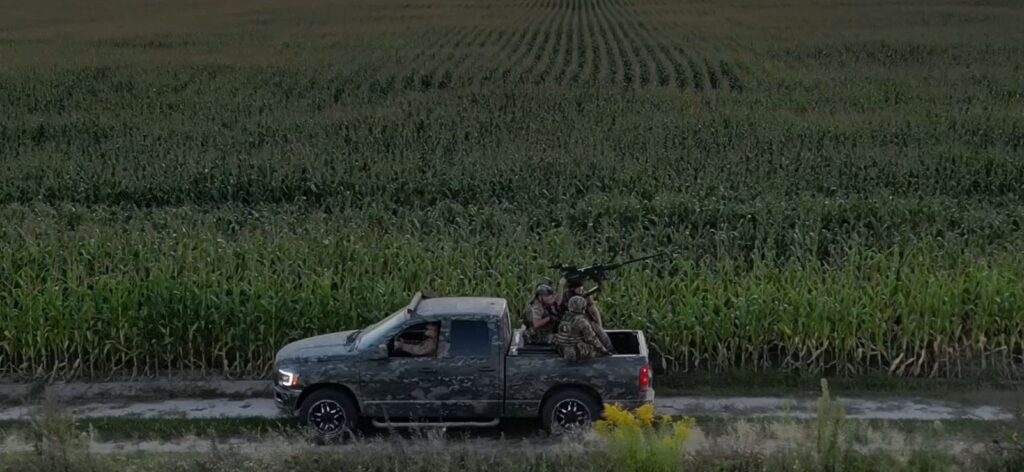
- Ukraine's middle-strike drones are forcing Russian commanders to reroute and harden their supply convoys
- Now some Russian truck convoys are rolling out with air defense gun trucks as escorts
- Can the Russian gunners shoot down enough drones to make a difference?
Russian logisticians are desperately scrambling to save their truck convoys from Ukrainian drones. Besides rerouting convoys away from the most vulnerable highways, some commanders are also deploying mobile gun teams to escort the cargo trucks.
Whether those gun teams can shoot down enough drones to turn the tide of the escalating logistics war remains to be seen. How high the drones fly before they strike could make all the difference.
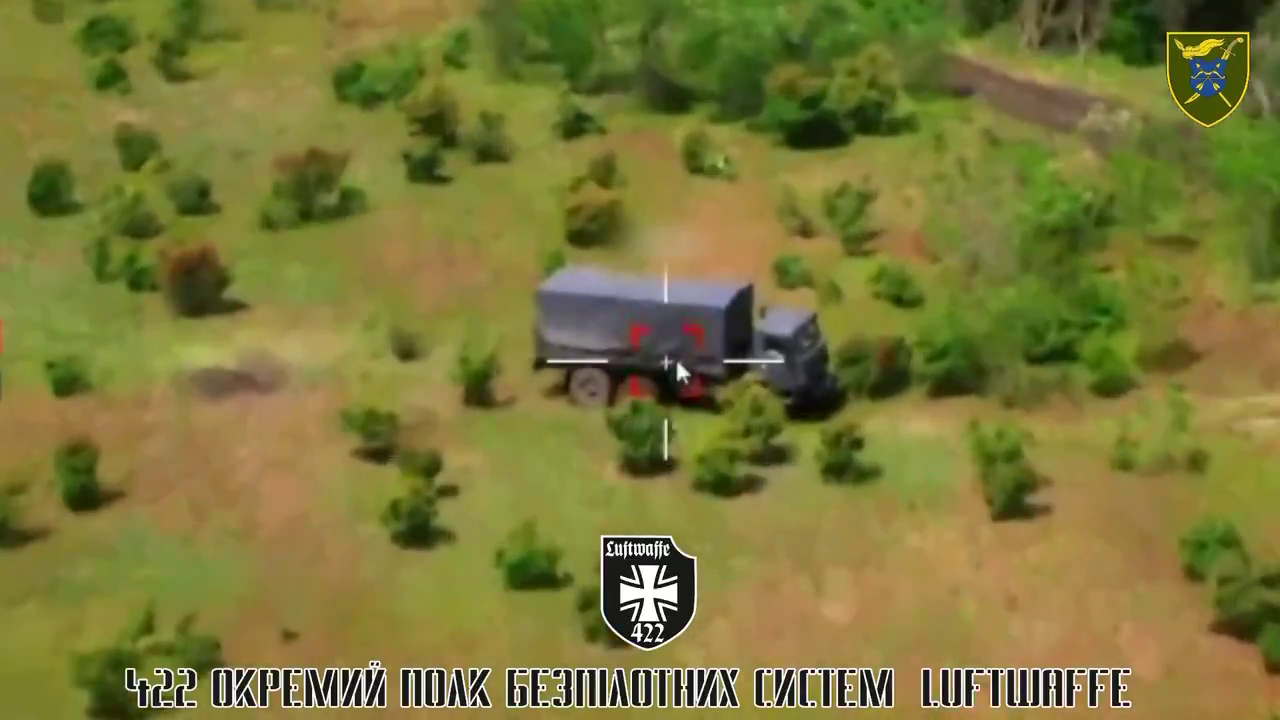
This spring, Ukrainian drone units launched an intensive campaign of strikes targeting the thousands of Russian trucks that, every day, shuttle supplies and reinforcements from depots deep in the rear area to front-line field armies. The aim: to weaken Russian regiments before they can launch an assault across the gray zone.
"We are launching a 'logistics lockdown' for the Russian army," Ukrainian defense minister Mykhailo Fedorov announced. "We are scaling middle-strike operations to systematically destroy enemy logistics and supply lines, stripping them of their capacity to mount offensive actions."
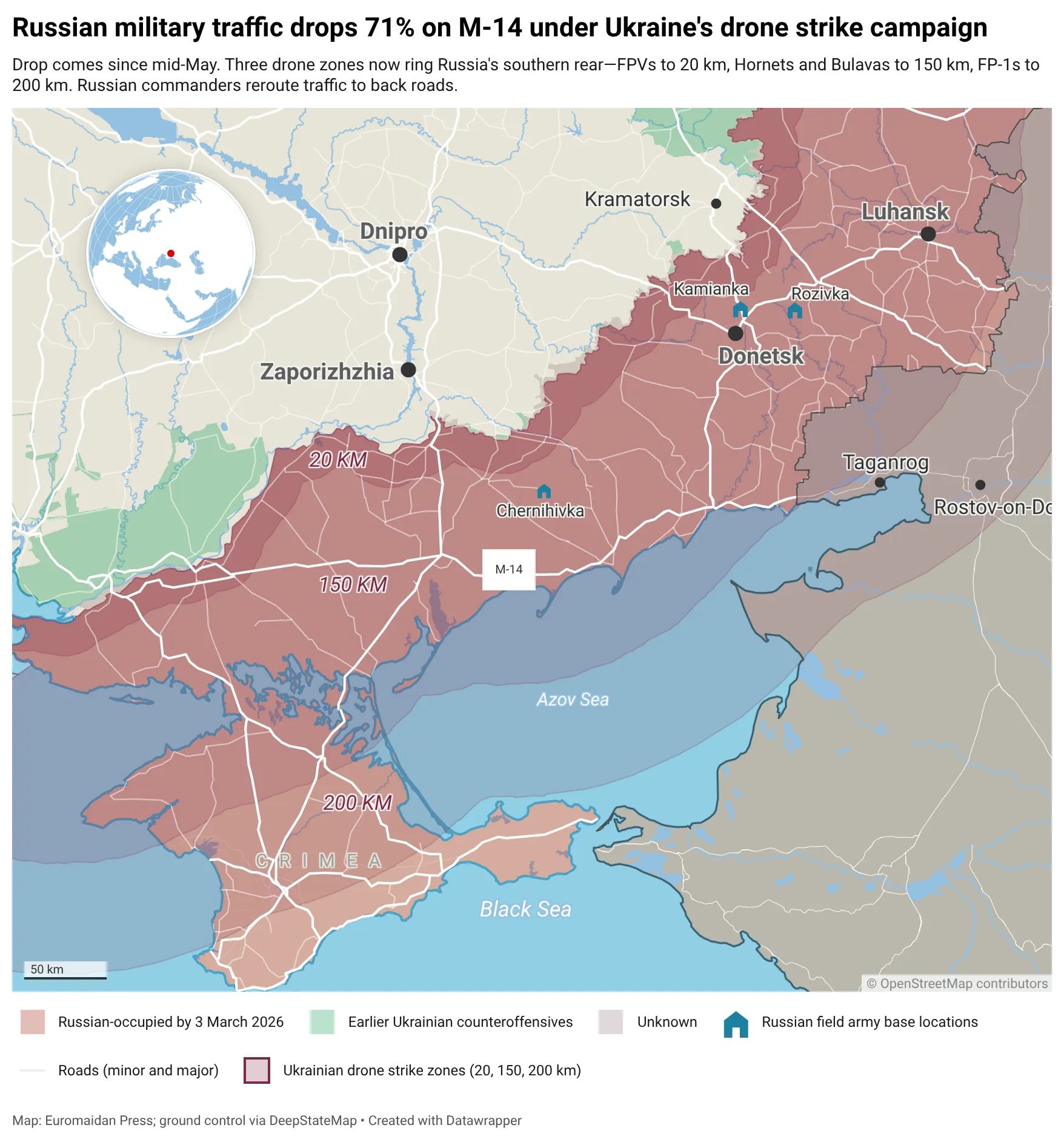
Russia keeps four field armies fed through three southern towns. Ukraine’s drones just arrived.
The counterlogistics campaign, mostly carried out by Ukrainian drone units flying jam-resistant middle-strike drones with AI-assisted targeting—the $5,000 Swift Beat Hornet is one of the most common—initially targeted convoys traveling along the most obvious routes, including the west-to-east M-14 highway connecting southern Russia to occupied Crimea. The M-14 is the Ukrainian portion of the wider European E-58 highway.
By late May, the Ukrainian defense ministry was tallying hits on nearly 500 Russian trucks every day, a ninefold increase on the overall average of daily truck strikes since Russia widened its war on Ukraine in February 2022. Just 3,500 Russian cargo trucks plied the M-14 every day, so the losses were significant. For now, the Kremlin is able to make good its truck losses by redeploying vehicles from the active fleet.
But soon, it may have to tap the tens of thousands of older trucks sitting in long-term storage. And those decades-old trucks are in pretty bad shape. "Most of them are scrap metal husk, utterly impossible to reactivate," analyst Jompy noted.
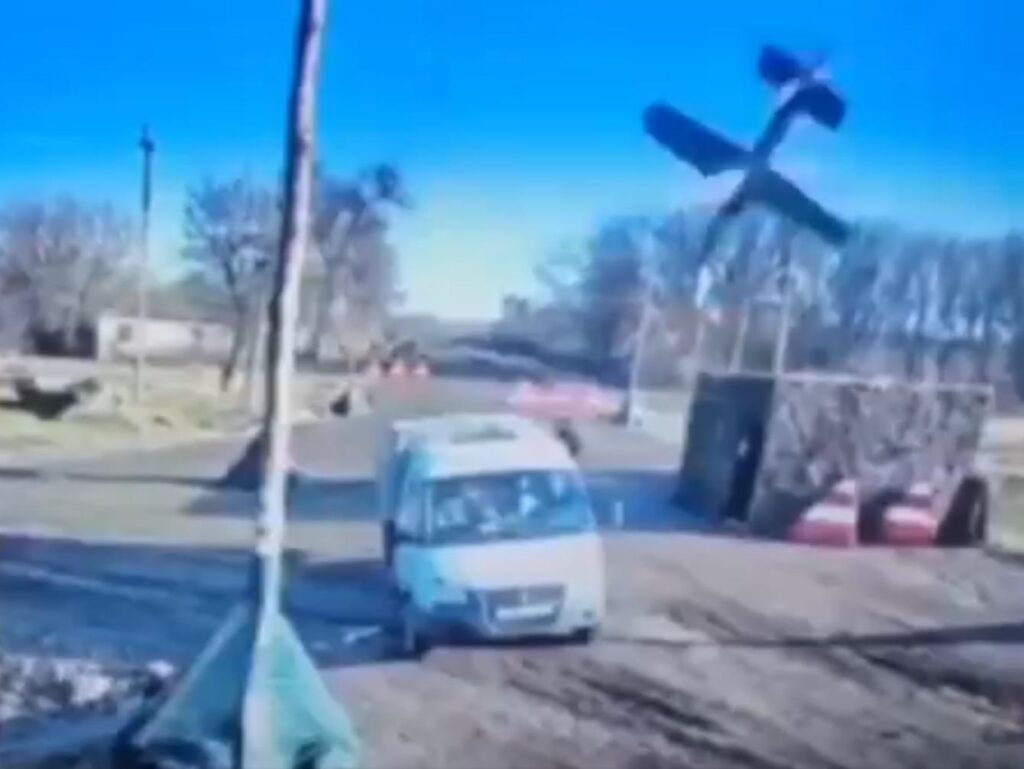
Hardening the convoys
Clearly realizing they can't sustain the loss of 500 trucks a day, Russian commanders are getting creative. They've begun rerouting trucks away from the M-14 and sending them along back roads instead in order to spread them out and complicate the Ukrainians' drone sortie planning. Military traffic along the M-14 has dropped by 71% since late May as trucks follow alternate routes to forward bases, according to Robert Brovdi, commander of the Ukrainian Unmanned Systems Forces.
But the Russians are also arming the truck convoys, which previously traveled without any defensive weapons. Observer Kim Hovik claimed they recently saw videos depicting Russian convoys that included as many as four trucks and utility vehicles carrying gunners.
Guns aren't the best defenses against drones, but the Russians don't have many other options. Electronic warfare systems that scramble drones' control signals don't work against drones with self-contained AI targeting systems that can spot and home in on trucks without any input from a remote operation.
And Russia's longer-range air defense systems, its fixed and mobile surface-to-air missile systems, have been ravaged by a parallel Ukrainian drone campaign specifically targeting air defenses. Between June 2025 and March 2026, Ukrainian drones blew up more than 400 radars and SAM systems: far more than Russia can replace in just nine months.
How well the gunners work against Hornets and other Ukrainian drones might depend on how high the drones fly while patrolling for trucks. Ukraine's own mobile gun teams were effective against Russian Shahed drones until the Shaheds began flying thousands of feet in the air. Now the Ukrainian gunners are "largely ineffective," according to a Ukrainian electronic warfare officer who goes by "Alchemist."
It's unclear how high a Hornet drone can cruise while still effectively scanning for trucks. Higher flights might be necessary, however. Ukrainian drone forces must adapt to Russian adaptation as the counterlogistics drone war grinds on.