Reading view

Mike Waltz says Gulf allies back Trump’s Iran pressure campaign after regional trip: ‘Zero daylight’

U.S. Ambassador to the United Nations Mike Waltz said Gulf allies are backing President Donald Trump’s blockade and economic pressure campaign against Iran, telling Fox News Digital after a trip to Bahrain, the United Arab Emirates and the United Kingdom that regional leaders believe Tehran is feeling the pain.

Waltz spoke to Fox News Digital on Thursday evening shortly after landing back in the United States, as reports of a possible deal with Iran began to emerge. He said the situation was still shifting by the hour, noting that Iran had launched another strike on Bahrain shortly after he left the region.

Waltz, the highest-level U.S. official to visit the region since the war began, said Gulf partners strongly support the administration’s efforts to keep pressure on Iran through both the blockade and Treasury Secretary Scott Bessent’s "Operation Economic Fury."

SCOTT BESSENT SAYS IRAN UNDERSTANDS 'BRUTE FORCE' AS TRUMP WEIGHS OPTIONS AMID NUCLEAR STANDOFF

"They very much support the blockade," Waltz said, adding that allies shared with him "in a number of ways" how Bessent’s economic campaign is affecting the regime. The pressure campaign, Waltz said, is designed to squeeze Tehran while Trump continues negotiations aimed at preventing Iran from obtaining a nuclear weapon.

On Friday, an unnamed U.S. official told reporters in a briefing: "We do expect to be signing this agreement with Iran over the next few days. We assess it at 85%, but not 100%. We feel very good about the deal. We are not quite at the finish line, but we are very close"

Waltz said, "The UAE, in particular, believes that you have to keep that pressure and a very credible pressure," he told Fox News Digital. "That’s what the Iranians understand and respond to."

Waltz said leaders in the region validated U.S. assessments that Iran’s economy is deteriorating under the combined weight of sanctions, military pressure and isolation. He said Iran’s currency is "tanking," foreign currency reserves are running out, inflation is continuing to rise and the regime is struggling to pay the military, government employees and police.

TRUMP’S 'ECONOMIC FURY' SQUEEZES IRAN — BUT CAN TEHRAN OUTLAST THE PRESSURE?

"I think the regime is going to be increasingly desperate," Waltz said, adding that Trump, Secretary of State Marco Rubio, Scott Bessent, Steve Witkoff and Jared Kushner would use that pressure "to their advantage."

In the UAE, Waltz met with President Sheikh Mohammed bin Zayed and the foreign minister, describing the Emiratis as among the most active regional partners against Iran. "There is zero daylight," Waltz said.

Waltz added the UAE has "both the capability and the will" to act, and said the Emiratis are prepared to take "short-term pain" to achieve the longer-term goal of blocking Iran from obtaining a nuclear weapon.

The UAE has been hit hard during the war. Waltz said the country had taken "by far the most missiles, the most drones, the most hits," but had moved quickly to repair damage and restore operations. 

Waltz also pointed to the Abraham Accords as a major factor in the UAE’s posture, saying the country’s growing partnership with Israel has become an "important shift" in the regional alignment against Iran.

Bahrain was another central stop on Waltz’s trip. The country hosts the headquarters of the U.S. Fifth Fleet and has been directly exposed to Iran’s attacks and threats around the Strait of Hormuz.

MIKE WALTZ PUSHES UN RESOLUTION TO STOP IRAN MINING KEY GLOBAL SHIPPING ROUTE

"Until you go and really sit with them, you can’t appreciate what a strong ally they are," Waltz said.

He said U.S. and allied teams in Bahrain are working with global shipping companies, local shipping officials, insurance companies and other maritime actors as the U.S. seeks to keep vessels moving through the Strait of Hormuz, one of the world’s most important energy chokepoints.

Waltz accused Iran of making a "phenomenally bad decision" by attacking its neighbors, including hotels, port facilities and energy infrastructure. During one visit to a petroleum site, he said he saw evidence that Iran had targeted fire suppression systems and first responders before striking storage tanks, in an apparent effort to maximize damage.

"The Iranians were deliberately targeting fire suppression systems," Waltz said. "They were deliberately targeting first responders first."

Despite the strikes, Waltz said allied air defenses have had "over a 90% success rate" in shooting down Iranian missiles and drones, with U.S. forces working "hand in glove" with Gulf partners.

CLICK HERE TO DOWNLOAD THE FOX NEWS APP

Waltz ended his trip in the United Kingdom, where he said officials have been strong partners at the U.N. Security Council on Iran. He acknowledged "hiccups" and "speed bumps" over basing and access issues, but said many of those concerns had been "smoothed over."

"When we’re working to keep the Iranians isolated diplomatically," Waltz said, "they’ve been very good to work with."

  •  

Expert warns of 'general escalation' of fighting if Houthis resume Red Sea campaign

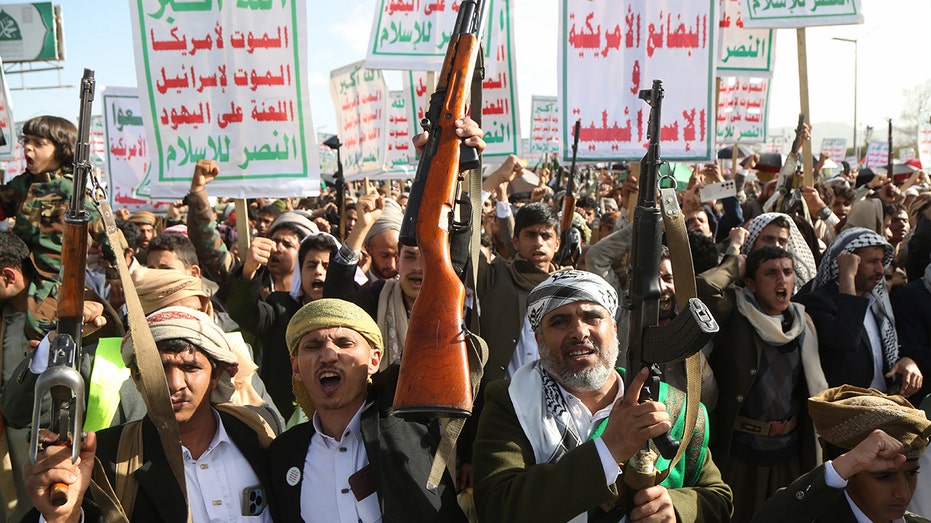
The U.S. has hit back against threats to now block another Middle East waterway by Iranian terror proxy, the Houthis.

Earlier this week, the group declared a complete ban on Israeli-owned ships using the Red Sea, declaring them to be "legitimate targets."

The Red Sea and the waterway through its narrow Bab-el Mandeb Strait has become the main route for oil to ship out of the Middle East to Asia since the Strait of Hormuz has effectively stopped functioning as the main route of navigation for shipping.

IRAN'S AFRICA ACTIVITIES POSE 'SIGNIFICANT THREATS TO US NATIONAL SECURITY'

Houthi spokesperson Yahya Saree posted on Monday, "We declare a complete and total ban on Israeli maritime navigation in the Red Sea, and we consider all enemy movements to be legitimate targets."

In a statement to Fox News Digital, a State Department spokesperson struck back: "The escalatory actions of Iran and their Houthi proxies are unacceptable. These dangerous actions only serve to further enflame tensions and further disrupt global supply chains. We will continue to work with our partners to ensure freedom of navigation in the Red Sea and the Strait of Hormuz." 

Edmund Fitton-Brown, a senior fellow at The Foundation for Defense of Democracies, told Fox News Digital, "The Houthis have indeed risen to the challenge, at least verbally. In common with much ‘Axis of Resistance’ rhetoric at present, the intention appears to be to leverage U.S. political nervousness and market volatility, and to drive a wedge between the Americans and the Israelis."

Fitton-Brown, a former U.K. ambassador to Yemen, added, "Provided the allies keep talking to each other, the Israelis respond proportionately, as they have done, and the Iranians continue to provoke President Trump with actions like the downing of the helicopter, these tactics are unlikely to achieve significant success."

"It will be interesting if the Houthis do go all in, and resume their campaign against Red Sea shipping with full intensity," Fitton-Brown said, adding, "This will draw international anger and likely result in Israeli and U.S. strikes on Sana'a and Hodeida. There is potential for a general escalation if this happens, albeit one in which the allies have a clear military advantage."

US STRIKES ON YEMEN CONTINUE AFTER HOUTHI MISSILE HITS BY ISRAELI AIRPORT; TERROR GROUP VOWS 'AERIAL BLOCKADE'

Landlocked Ethiopia acts as regional anti-terrorism buffer

Such actions come as reports emerge that Ethiopia, the Red Sea region’s most populous country, is stepping up as a major U.S. ally against Islamic terrorism.

While landlocked, Ethiopia has a population of some 130 million, making it the largest nation in the Horn of Africa. Located near parts of the Red Sea corridor, the country is roughly 60% Christian, according to a recent report by the Association of Religion Data Archives.

And despite it being landlocked, Ethiopian researcher Blen M. Diriba told Fox News Digital that the country acts as a strategic roadblock or "a keystone state" on the Islamist expansionist "highway" that has formed all the way from Iran to Sudan.

Diriba, executive director of the Horn Review — an Addis Ababa-based research and publication think tank — told Fox News Digital that "Ethiopia, long a frontline U.S. security partner, now sits at the center of an expanding pressure zone where maritime disruption, insurgent violence, terrorist threats, and proxy competition converge."

Diriba added. "Iran’s Bab el-Mandeb threat transforms the Horn of Africa into a militarized frontline, placing Ethiopia at the center of a choke point crisis. With Iranian influence radiating through conflict ecosystems in Sudan, Eritrea and Somalia, the region is beginning to resemble a continuous arc of instability stretching from the Arabian Peninsula into East Africa."

"Ethiopia sits at the center of one of the world's most combustible security corridors," Diriba continued. "And in strategic terms, its relevance to the United States is amplified, not diminished, by that reality: From the Red Sea disruptions driven by the Houthis to the persistent insurgency threat of al-Shabab in Somalia, Ethiopia functions as a massive inland security buffer whose stability directly shapes whether these threats expand or are contained."

IRAN’S KILLER DRONES INCREASE SLAUGHTER IN SUDAN AMID WORLD’S FORGOTTEN WAR

But in addition to being pro-U.S., Ethiopia also has relations with Iran.

Fitton-Brown believes to some extent Ethiopia can be accused of playing both sides, as he said Tehran "has helped Ethiopia with its internal conflicts, giving drone support and military aid to the Ethiopian government during the recent Tigray War."

He added, "There is a new memorandum of understanding built upon that basis, with Iran gaining influence in Ethiopia, while Ethiopia receives military, police and intelligence support to counter its domestic ethnic insurgencies."

 However, Diriba said, "Ethiopia’s engagement with Iran is neither affinity nor alignment, it’s strategic awareness: keeping channels open to engage where necessary, cooperate selectively, and strategically manage its relations with a complex regional actor, while firmly anchoring its core partnerships with its emerging and long-standing partners — the United States being on the top of that list."

"Ethiopia has pursued a flexible multi-alignment strategy, Diriba said, "prioritizing its entrenched security partnership with Washington while keeping open channels with Tehran to preserve diplomatic room to maneuver in an increasingly fragmented Horn of Africa–Red Sea order."

CLICK HERE TO DOWNLOAD THE FOX NEWS APP

Fitton-Brown said relations between the U.S. and Ethiopia "are good, especially in the field of counterterrorism. Both countries use Somaliland to their advantage without having gone so far as to recognize it as an independent state."

Fox News Digital reached out to both the Department of War and the Ethiopian government for comment, but received no response by the time of publication.

  •  

Israeli official says EU sanctions reveal antisemitism hiding behind 'socially acceptable mask'

Israel's deputy foreign minister accused the European Union of weaponizing a "socially acceptable mask" of anti-Zionism to target Israel— after it sanctioned Israeli civil society groups that oppose a Palestinian state. It also sanctioned several individuals.

"We are witnessing a deeply troubling trend where traditional antisemitism has simply put on a new, socially acceptable mask: anti-Zionism," Deputy Foreign Minister Sharren Haskel told Fox News Digital. "Where prejudice once targeted the individual Jew, it is now directed at the collective Jewish state and our fundamental right to live in our ancestral homeland. But make no mistake, the political targeting of Israel always bleeds into an assault on Jewish life itself," Haskel added. 

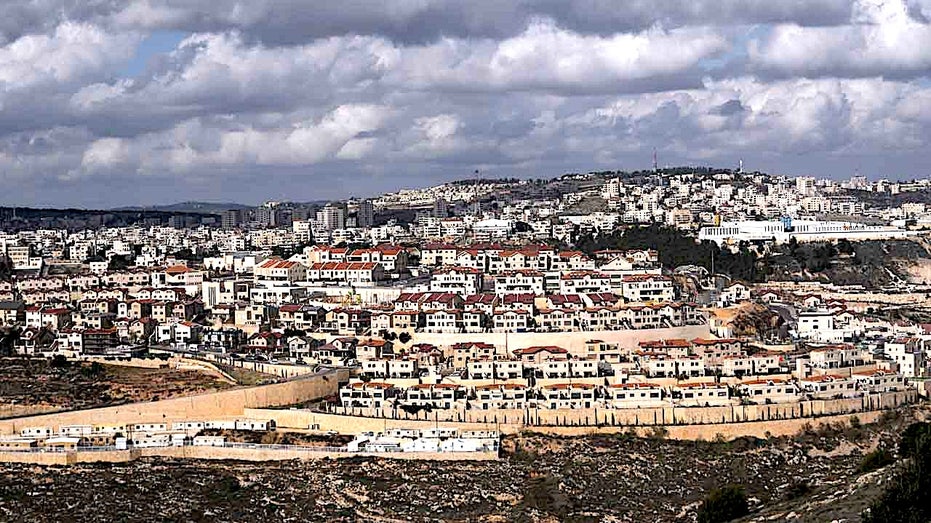
The European Union imposed the sanctions on four Israeli civil society organizations and three of their senior figures, alleging support for "settler violence" and claiming they undermine prospects for a Palestinian state — a move that Regavim, one of the groups targeted, described as an infringement on Israeli sovereignty.

LEADING EVANGELICALS IN PUSH TO HAVE PRESIDENT TRUMP RECOGNIZE ISRAELI SOVEREIGNTY OVER ‘BIBLICAL HEARTLAND’

"Our entire activity consists of legal and parliamentary work. We collect and analyze information and policies and go to court and the legislature to highlight areas where Israel’s policy is either lacking or misguided," Naomi Kahn, Regavim’s director of international division, told Fox News Digital.

"The European Union is trying to control the internal political system and policies of an independent state that is supposed to be an ally. When we point out the absurdity of the situation, they don’t like it," she said.

In its announcement, the European External Action Service (EEAS) stated that "extremist settlers and the organizations supporting them contribute directly to violence, forced displacement and dispossession across the West Bank."

The sanctions, according to the EEAS, "target entities and individuals that facilitate, finance or support activities contributing to settler violence and serious human rights abuses against Palestinians."

The statement also accused Regavim of lobbying for "the demolition of Palestinian property" and referenced an EU-funded school in Jabbet al-Dhib near Bethlehem.

'SQUAD' MEMBERS 'DECIDE TO LIE AND TWIST FACTS' ABOUT ISRAEL'S HISTORY, SAYS PROMINENT ARAB ACTIVIST

Kahn said the school was constructed illegally on Israeli state land in Area C, within a nature reserve connected to the Herodian complex. She said legal proceedings were carried out regarding the structure and that it was ultimately demolished.

Under the 1993 Oslo Accords, negotiated during the Clinton administration, the West Bank was divided into three areas: Area A, under full Palestinian control; Area B, under Palestinian civil authority with Israeli security control; and Area C, under full Israeli administrative and security control.

Kahn added that an engineering assessment found the school unsafe for use, arguing that placing students and teachers inside it posed "downright dangerous" conditions.

"We pointed out that the EU and the Palestinian Authority are simply violating the law in a very purposeful, systematic way to take control of Area C using structures like schools, sometimes mosques, and homes of innocent people that they push into those areas," she added.

Regavim has published a report claiming there are 100 illegal schools in Area C that it says are being used by the P.A. as part of a broader strategy of de facto annexation.

Separately, a 2023 mapping study by Regavim estimated that roughly 103,000 unauthorized Arab-built structures exist across the West Bank, asserting that the P.A.— often with external support — has facilitated extensive illegal construction activity.

SIGN UP FOR ANTISEMITISM EXPOSED NEWSLETTER

In response, Israel’s cabinet last month approved a set of broad measures aimed at countering efforts by the P.A. to establish de facto control over disputed territories.

Under the resolution, initiatives attributed to Ramallah to create a parallel land registry in Area C were declared to have no legal validity or standing.

"The real target here is not violence, but legitimate political opposition. The sanctioned organizations do not support violent action; rather, they have consistently challenged the concept of a two-state solution and exposed how the EU actively builds illegal structures in Judea and Samaria," Haskel said, referring to the biblical names of the territories.

She accused the EU of disregarding the Oslo Accords and "attempting to unilaterally alter facts on the ground to steal Israeli land."

Haskel acknowledged there was an issue, as in any society, with some individuals who break the law, but emphasized they represent a small minority and that Israel investigates and prosecutes them. She said grouping hundreds of thousands of law-abiding Israeli residents in the West Bank together with Hamas — a genocidal terror organization responsible for mass murder — distorts moral distinctions.

CLICK HERE TO DOWNLOAD THE FOX NEWS APP

She said, "This creates a false and dangerous symmetry that minimizes the exceptional threat of global terrorism while politically targeting individual Israelis. It is an unacceptable moral equivalence that blurs the line between a sovereign democracy defending its people and the savage terror apparatus trying to destroy it."

Following several requests for comment, EEAS referred Fox News Digital to its original sanctions statement.

  •  

US military attacks Iran in 'self-defense strikes' over weekend

U.S. Central Command (CENTCOM) announced that it carried out "self-defense strikes" against Iran over the weekend.

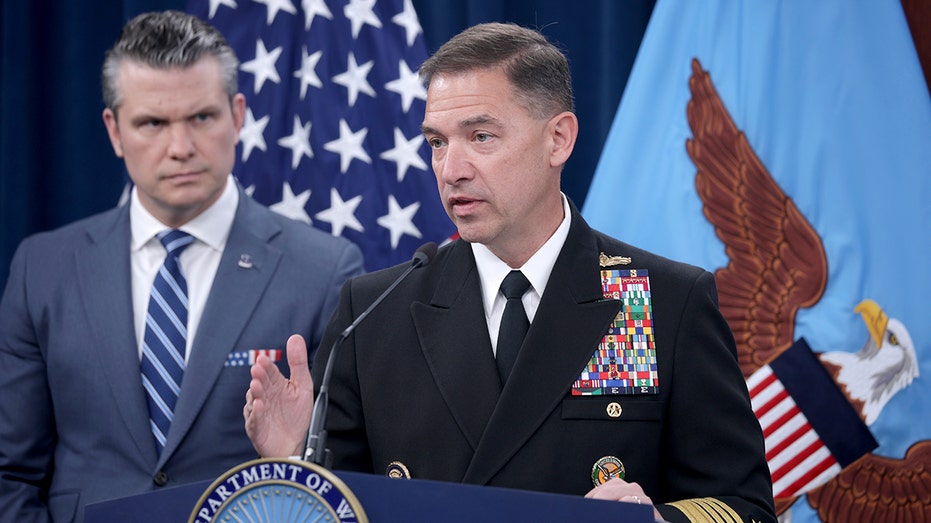
"U.S. Central Command (CENTCOM) conducted self-defense strikes on Iranian radar and command and control sites for drones in Goruk, Iran and Qeshm Island this weekend," a press release noted.

"The measured and deliberate strikes occurred on Saturday and Sunday in response to aggressive Iranian actions that included the shootdown of a U.S. MQ-1 drone that was operating over international waters. U.S. fighter aircraft swiftly responded by eliminating Iranian air defenses, a ground control station, and two one-way attack drones that posed clear threats to ships transiting regional waters," CENTCOM continued.

TRUMP WARNS IRAN US WILL 'FINISH THE JOB' IF DEAL COLLAPSES AS ISRAEL EXPANDS LEBANON OFFENSIVE

"No American service members were harmed. CENTCOM will continue to protect U.S. assets and interests in response to unwarranted Iranian aggression during the ongoing ceasefire," the release added.

The Associated Press reported that Kuwait noted its air defenses opened fire on Monday to intercept drone and missile attacks. Around the same time, Iran’s paramilitary Revolutionary Guard said it responded to an American attack without saying where, likely referring to the attack on Kuwait. The Guard, via a statement reported by the state-run IRNA news agency, indicated that America targeted a telecommunications tower, according to the AP.

U.S. Central Command (CENTCOM) said in a Monday post on X, "Last night at 11 p.m. ET, U.S. forces successfully intercepted two Iranian ballistic missiles targeting American forces based in Kuwait. These missiles were immediately defeated and no American personnel were harmed. U.S. Central Command remains vigilant and will continue to protect our forces from Iranian aggression while supporting the ongoing ceasefire."

Asserting that Iran "really wants" to strike an agreement, President Donald Trump declared in a Monday morning Truth Social post that chattering critics are making it more difficult for him to negotiate. 

MOJTABA KHAMENEI TOUTS NEW ANTI-US ALLIANCE AS GULF BACKCHANNELS SEEP INTO TEHRAN: ANALYST

He urged people to "sit back and relax," claiming that the issue will ultimately turn out "well."

"Iran really wants to make a deal, and it will be a good one for the U.S.A. and those that are with us. But don’t the Dumocrats, and various seemingly unpatriotic Republicans, understand that it is MUCH tougher for me to properly do my job and negotiate, when political hacks keep negatively ‘chirping,’ at levels never seen before, over and over again, that I should move faster, or move slower, or go to war, or not go to war, or whatever," he declared in a Truth Social post early on Monday.

"Just sit back and relax, it will all work out well in the end - It always does!" he declared.

TRUMP REVEALS KEY IRAN CONCESSION, WARNS US WILL 'FINISH IT OFF MILITARILY' IF DEAL FAILS

CLICK HERE TO DOWNLOAD THE FOX NEWS APP

The U.S. is continuing to conduct a blockade against Iran.

"U.S. forces operating in the Gulf of Oman enforced blockade measures by disabling a Gambia-flagged maritime vessel attempting to sail toward an Iranian port, May 29," CENTCOM announced in a Saturday press release.

The Associated Press contributed to this report

  •  

Hezbollah's 'game changing' night-hunting weapon punches through Israel's defenses: expert

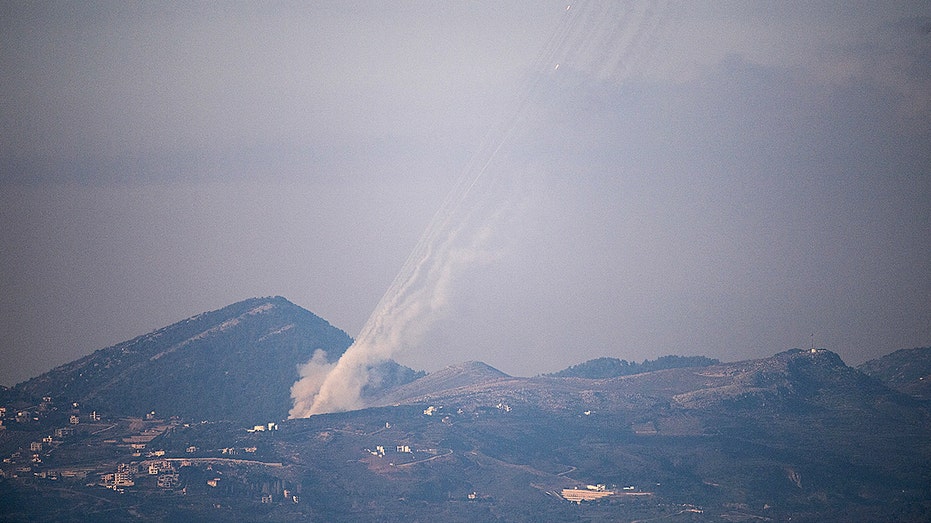
Hezbollah has begun unleashing "game changing" waves of "lethal" nighttime drones against Israel, a defense expert warns, with the attacks contributing to casualties, defense breaches and plunging parts of the border region into chaos, according to reports.

Escalating deployments by Hezbollah had also prompted Prime Minister Benjamin Netanyahu to convene an emergency security meeting on May 30 following a surprise Hezbollah strike, amid reports of "utter chaos" as Israeli forces scrambled to respond.

"These nighttime drones are the very small Category 1 and Category 2 drones," defense expert and Draganfly CEO Cameron Chell told Fox News Digital.

"They are generally used by squads on the ground to go and conduct tactical lethal missions or surveillance missions right in theater immediately. What they are able to do is use thermal sensors to be able to fly at night and use heat signatures to spot IDF troops," he said.

ISRAEL SAYS IT IS STRIKING HEZBOLLAH TARGETS IN LEBANON

"Hezbollah now has nighttime capabilities, which is game changing," Chell added.

"What you will see is an escalation of the use of drones and the innovation of asymmetric warfare in that particular area by Hezbollah," he warned.

Chell’s comments came amid reports of makeshift defenses with nets being deployed against the backdrop of a significant shift in the conflict.

Israeli soldiers have resorted to buying commercial fishing and soccer nets to entangle the incoming aerial threats, according to reports.

"This means that there is a whole other set of countermeasures that the IDF has to put in place, whether it is electronic jamming, net guns or the use of netting just to put in front of installations or in front of vehicles to try to stop the final impact of the drone if it is a strike drone," Chell added.

HEZBOLLAH DISARMAMENT DEADLOCK RISKS CIVIL WAR, ANALYSTS SAY, AS US PREPARES FOR ISRAEL–LEBANON TALKS

"The IDF will have to change a lot of their tactics regarding their ability to move around and conduct operations at night. Now they will have to factor in the fact that Hezbollah has nighttime capabilities to at least do observation using thermal cameras, as well as strike capabilities."

Netanyahu called a meeting with top officials following an intense Hezbollah rocket and drone blitz that caught the military off guard on Saturday.

According to a report by Channel 13, the Israeli army was surprised by the scale of the fire as well as Hezbollah's decision to shift its operational policy in response to the expansion of Israel’s ground operations beyond the Litani River.

IDF SOLDIERS ACCUSE UN PEACEKEEPERS OF ENABLING HEZBOLLAH TERRORISTS AMID INCREASING CEASE-FIRE VIOLATIONS

Reports from the ground described "utter chaos" in parts of the north. While rockets were said to have hit the cities, Hezbollah simultaneously launched waves of drone strikes.

Hezbollah leader Naim Qassem has also touted the militant group’s drone capabilities, calling them an effective weapon against Israeli forces operating near and inside southern Lebanon

Netanyahu has also described Hezbollah's drone capabilities as a major threat given the difficulty in detecting them.

"Hezbollah have got a supply line or supply chain of some sort set up," Chell added before stating that they are not "using stuff that is groundbreaking; this is very old technology and tactics that they are using."

CLICK HERE TO DOWNLOAD THE FOX NEWS APP

"That said, somebody is making the equipment available to Hezbollah — whether it is coming via Iran, China, Russia, Afghanistan or the black market, someone is getting enough product and feeding it into their supply chains," Chell warned.

  •  

Mojtaba Khamenei touts new anti-US alliance as Gulf backchannels seep into Tehran: analyst

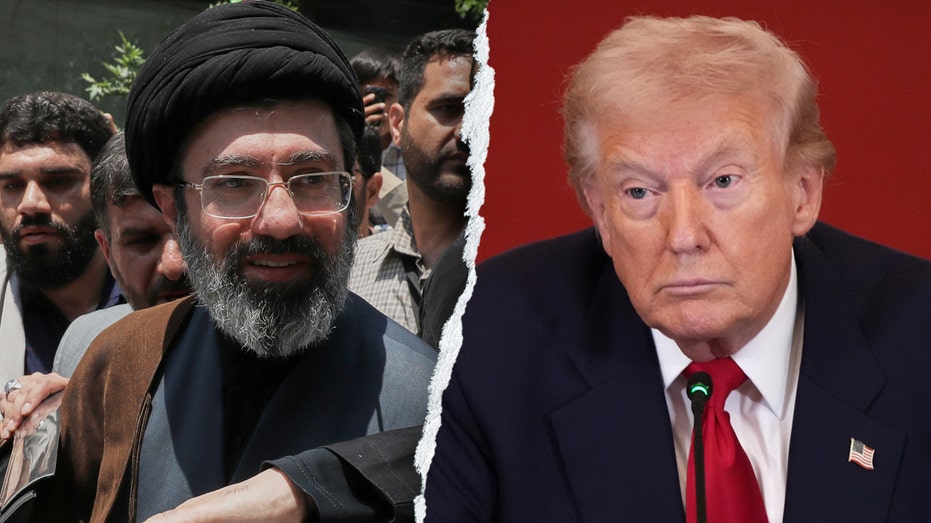
Iran's supreme leader has launched a sweeping counteroffensive against President Donald Trump, attempting to rally Middle Eastern nations into an anti-American alliance, an analyst warned Sunday.

The aggressive maneuvering came hours after Trump pitched an expansion of the Abraham Accords, as an analyst said Tehran is seeking to position itself as the region’s "new sheriff" while forcing Gulf states with backchannels to Iran to choose between Washington’s security umbrella and a "New Islamic Civilization."

On Sunday, negotiations between Iran and the United States appeared to be ongoing, with Trump not yet signing off on a potential peace agreement.

Trump recently held a phone call with leaders from Saudi Arabia, the United Arab Emirates, Qatar, Turkey, Pakistan, Egypt, Jordan and Bahrain to discuss expanding the 2020 Abraham Accords, followed by a May 25 post on Truth Social.

IRAN'S KHAMENEI LAUNCHES BLISTERING ATTACK ON TRUMP AFTER MIDDLE EAST VISIT

Mojtaba Khamenei issued a direct counter-response on X on May 26, issuing a call for a "New Islamic Civilization" aimed at those same regional capitals.

"I, with sincerity and purity of intention, invite all Islamic countries and governments to friendship and cooperation in goodness, so that by working together we may take steps toward the advancement of the Islamic Ummah and the resolution of the Islamic world's problems," Khamenei posted.

Highlighting "the nations of the region" and "common interests that will shape the new order and the future architecture of the region and the world," he spoke of "the Islamic Ummah and the #New_Islamic_Civilization."

"The United States will no longer have a safe haven for its mischief and for establishing military bases in West Asia," he also warned.

"Mojtaba Khamenei's statement is that the Muslim world should consolidate under Iran's leadership — the 'Ummah,' the 'new Islamic civilization' — against the American-led order," Dr. Omar Mohammed told Fox News Digital.

"That is the theme, and it runs straight into the Accords narrative. This is a bid to build an alliance against the Abraham Accords," said Mohammed, director of the Antisemitism Research Initiative Program on Extremism at George Washington University.

TOP ISRAELI MILITARY OFFICIAL REVEALS OPERATION AGAINST IRAN INVOLVED 'STRATEGIC AND OPERATIONAL DECEPTION'

"In his statement, he also frames American bases on Muslim soil as an occupation to be expelled while wrapping it in religious language that casts the regime as God's instrument."

The counterterrorism expert noted that while the "Ummah" doctrine itself is not new — having been used by Mojtaba's father for years — the timing and targeted nature of the pitch represent a major escalation.

"This came into the Ummah with Iran, not into normalization with Israel under Washington," Mohammed explained. "Same audience, opposite frame, 24 hours apart, and a bid to assemble that alliance."

"The statement was published in full and carried by Iranian state media. It also tracks with his first statement as leader on March 12, when he demanded that U.S. bases in the region close."

"This was not a stray post," the expert warned. "While the doctrine is old, aiming it at these regions the day after Trump's pitch is what is new."

The posturing comes as Khamenei establishes his footing on the world stage, though his hidden nature complicates traditional diplomacy.

IRAN’S ‘STUNNING STRATEGIC MISCALCULATION’ COULD ACCELERATE GULF TIES TO ISRAEL, EX-CENTCOM DIRECTOR PREDICTS

"Tehran is selling itself to the region as the new sheriff of the neighborhood," Mohammed warned. 

"The Saudis, Qataris and Omanis have channels into the Iranian state, but you can't open a back channel to a man no one can locate. This has all been running through Pezeshkian and Araghchi."

Despite Iran's sudden rhetoric of "friendship," regional reality is defined by months of Iranian aggression against its neighbors.

Tehran's forces have actively fired upon Bahrain, Qatar, the UAE and Kuwait.

Mohammed added that Tehran wants to peel Gulf states away from Washington, while its threats remain aimed at both the United States and the countries that host American forces.

"Iran spent this war firing on them — it hit Bahrain, Qatar, the UAE and Kuwait, the same capitals it's now inviting to brotherhood, and the UAE alone reported intercepting close to 2,000 drones and hundreds of ballistic missiles since Feb. 28," Mohammed said. 

"These are the states that host our forces: the Fifth Fleet in Bahrain, Al Dhafra in the UAE and Al Udeid in Qatar. You don't take three months of Iranian fire and then sign onto its alliance."

CLICK HERE TO DOWNLOAD THE FOX NEWS APP

Ultimately, Gulf capitals remain deeply skeptical of Tehran, Mohammed said, but they are equally watchful of American resolve.

"What actually worries the Gulf isn't Mojtaba's invitation — it's the deal Washington might sign," Mohammed noted, "one that hands Iran its money back with its missiles intact and reads as rewarding the regime that just attacked them."

  •  
❌