Reading view

Ancient Greek Scientist Erasistratus Was the King’s Lie Detector
Erasistratus
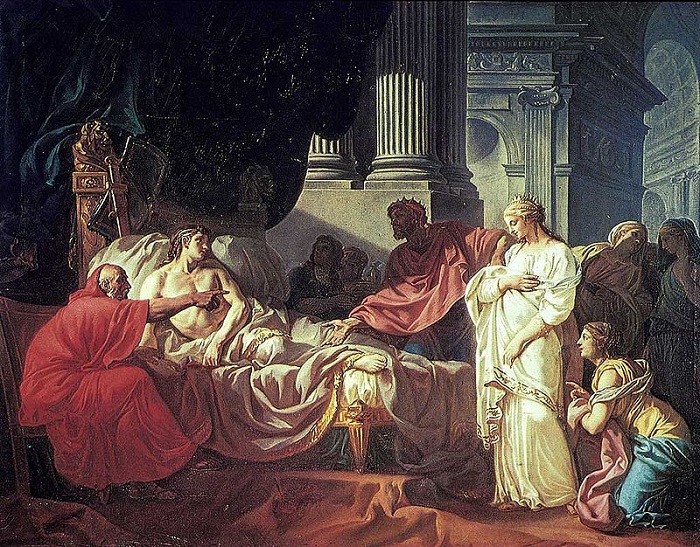
Erasistratus discovers the cause of the illness of Antiochus. Painting by Jacques-Louis David. Public Domain

Ancient Greek scientist Erasistratus (300-250 B.C.) is credited with being among the first human lie detectors. He devised a specific technique to read a person’s physical response so as to spot when an individual was lying.

While in Alexandria, Egypt, he is said to have proven Prince Antiochus was desperately in love with his father’s new wife, Stratonice. He noted how his pulse increased significantly whenever the queen’s name was mentioned, despite his insistence that he did not have the hots for his stepmother.

Love-struck, he fell ill with passion and chose to pine away in silence. The physicians were unable to discover the cause and nature of his disease.

Erasistratus himself was at a loss at first, until, finding nothing amiss about his body, he began to suspect that it must be the man’s mind that was diseased and that he might perhaps be in love.

Erasistratus confirmed his conjecture when he observed that the skin of Antiochus grew hotter, his color deeper, and his pulse quicker whenever Stratonice came near him, while none of these symptoms occurred on any other occasion.

The Greek physician eventually told the father, King Seleucus, that his son’s disease was incurable, for he was in love with the monarch’s wife and that he chose to die rather than to disclose his secret.

According to the anecdote, Seleucus not only gave up Stratonice, but also resigned to his son several provinces of his empire.

Erasistratus founded school of anatomy in Alexandria

Erasistratus, along with fellow physician Herophilus, founded a school of anatomy in Alexandria where they carried out anatomical research.

He is credited for his description of the valves of the heart. He also concluded that the heart was not the center of sensations. Instead, he said, it functioned as a pump. He was among the first to distinguish between veins and arteries, believing that arteries were full of air and carried the “animal spirit” (pneuma).

Together with Herophilus, he is credited by historians as the potential founder of neuroscience due to his acknowledgment of nerves and their roles in motor control through the brain and skeletal muscles.

Furthermore, Erasistratus is seen as one of the first physicians/scientists to conduct recorded dissections and potential vivisections alongside Herophilus.

The two physicians were said by several Roman authors, notably, Augustine, Celsus, and Tertullian, to have performed controversial vivisections on criminals to study the anatomy and possible physiology of human organs while they were in Alexandria.

Related: Ancient Library of Alexandria One of Greatest Treasures of Mankind
  •  

How Roman Emperor Julian Fought Christianity to Save the Ancient Greek Gods

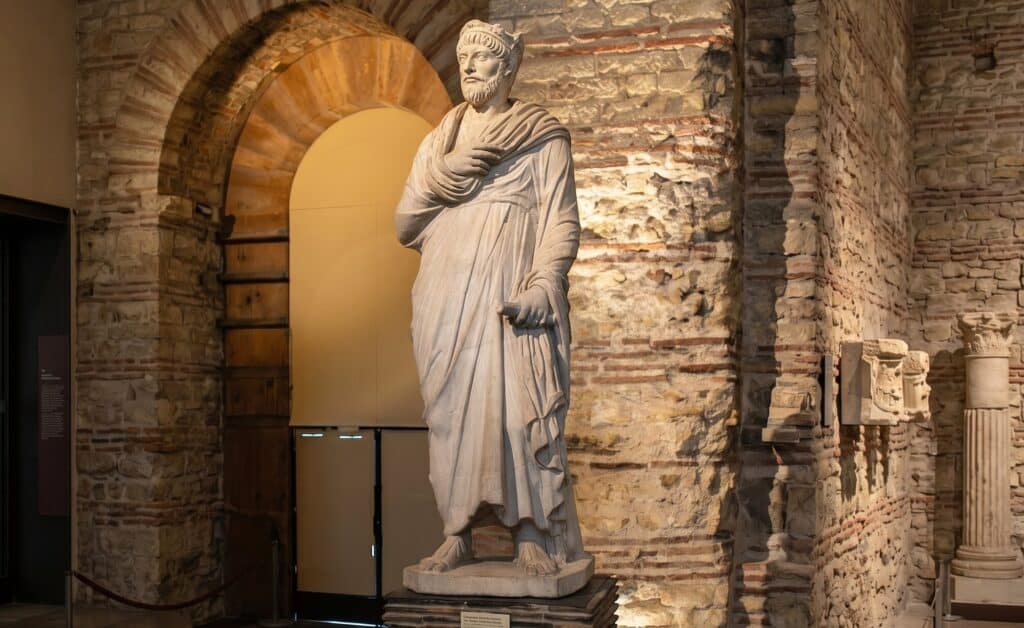
A full-length marble statue of a bearded man draped in a traditional Roman cloak and holding a scroll stands within a stone gallery.
The depiction of Julian in this classical guise shows his commitment to Neoplatonism and Greek culture over the rapidly spreading Christian faith. Credit: Ash Crow, Wikimedia Commons, CC BY-SA 4.0

Few figures in late antiquity present as compelling a historical debate as Julian the Apostate’s attempt to restore the Greek gods in opposition to Christianity in the Roman Empire.

During his brief but highly consequential reign in the fourth century AD, the Roman Empire stood at a profound religious crossroads. For a short period, Julian attempted to slow the empire’s accelerating Christianization, launching a sweeping effort to revive the ancient Olympian pantheon and return Rome to its traditional pagan practices. His sudden death on the battlefield has led historians to debate how dramatically the cultural trajectory of Western civilization might have shifted had his reforms endured.

Julian was born into the heart of the Constantinian dynasty, a family that had only recently converted to Christianity. Nonetheless, he became the last Roman emperor to openly support and worship the traditional Greek gods. He ruled for only about two years from 361 to 363 AD, but he acted with urgency and purpose. Julian the Apostate initiated an extensive program of philosophical and religious reform, aiming to reverse the Christian expansion advanced by his predecessors. To the growing Christian population, he was seen as a traitor to the new religious order, but to those who still admired the intellectual and cultural legacy of the classical world, he appeared as a philosopher-king attempting to restore an older vision of Rome.

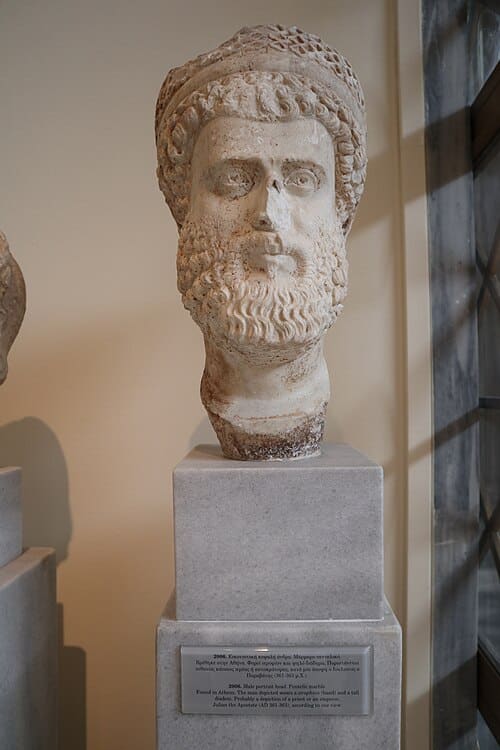
A sculpted marble portrait head of a bearded man wearing a diadem rests upon a stone pedestal inside a museum.
This marble head from Athens is widely believed to be a rare surviving portrait of the Roman Emperor Julian the Apostate. Credit: George Koronaios, Wikimedia Commons, CC BY-SA 4.0

Julian the Apostate’s early life

Julian did not experience the typical sheltered upbringing of an imperial heir. He grew up constantly looking over his shoulder, surviving political purges that eliminated many members of his own family. Although he was raised in a strict Christian environment under the supervision of powerful bishops, he is often understood to have developed a private intellectual attraction to classical texts and traditions associated with the ancient world.

His life took a decisive turn when he went to study in Athens. There, he was secretly initiated into the Eleusinian Mysteries, an experience that deeply shaped his philosophical outlook and strengthened his commitment to rejecting Christianity in favor of Neoplatonism. This forced dual existence helped form a uniquely strategic mindset. He became familiar with the inner workings of the Church, knowledge he later leveraged in support of his own religious and philosophical aims. By the time his troops in Gaul unexpectedly proclaimed him emperor, Julian was convinced that the gods themselves had chosen him to restore the ancient order.

Julian the Apostate as Emperor and the worship of the Ancient Greek gods in the Roman Empire

When he finally took power, Julian did not launch the kind of widespread, violent persecutions often associated with earlier periods of religious conflict. Instead, he pursued a more calculated cultural strategy. His approach focused on weakening Christian influence within imperial institutions while strengthening traditional religious structures. Julian the Apostate reduced the privileges and state support enjoyed by Christian clergy and redirected resources and prestige toward the priesthood of the traditional Greco-Roman religion centered on the Greek gods.

In a particularly controversial move, he restricted Christians from teaching classical literature. His reasoning was that those who rejected the traditional religious framework of Homer and Hesiod should not profit from instructing it. At the same time, Julian sought to make traditional religion more socially competitive by encouraging pagan priests to adopt public charitable functions, including aid for the poor and the establishment of hospitals—areas in which Christianity had been especially successful in gaining support. He appears to have believed that traditional worship had declined not because of its inherent weakness but because its institutions had failed to match the organizational and charitable presence of Christianity.

In practice, many historians argue that this cultural and intellectual strategy posed a different kind of challenge to early Christianity than outright violence. While persecution could strengthen Christian identity through martyr narratives, Julian the Apostate’s policies instead aimed to limit the social structures that supported its continued expansion while restoring the worship of the Ancient Greek gods within the broader Greco-Roman religious tradition.

A weathered page from an illuminated manuscript features three stacked, colorful panels showing medieval figures in royal and religious garments amidst dramatic interactions.
This illuminated manuscript page depicts vivid scenes of Emperor Julian ordering the arrest of a Christian bishop and overseeing acts of persecution. Credit: Wikimedia Commons, Public Domain

Unfortunately for his beliefs, that grand vision of such a revived Greco-Roman empire came to an abrupt end in the arid regions of Persia. During a military campaign, Julian was struck in the side by a spear, cutting his reign tragically short. Ancient sources and later traditions continue to debate the circumstances of his death, with some attributing the blow to a Persian soldier and others speculating—without evidence—that it may have come from within his own ranks. The true origin remains uncertain.

A well-known tradition holds that, as he lay dying, Julian the Apostate is said to have declared, “Thou hast conquered, O Galilean,” acknowledging the perceived triumph of Christianity. Whether or not he actually spoke these words, his brief reign left a lasting imprint on Roman and Western history. His efforts to restore the Ancient Greek gods within the Roman world continue to be discussed by historians as a striking moment in the empire’s religious transformation. Even in modern Greek cultural memory, echoes of this tension can still be felt in the broader contrast between the rational legacy of ancient philosophy and the spiritual tradition of Orthodox Christianity.

  •  

World’s Oldest Toothpaste Recipe Found in Egypt Reveals Ancient Greek Dental Secrets

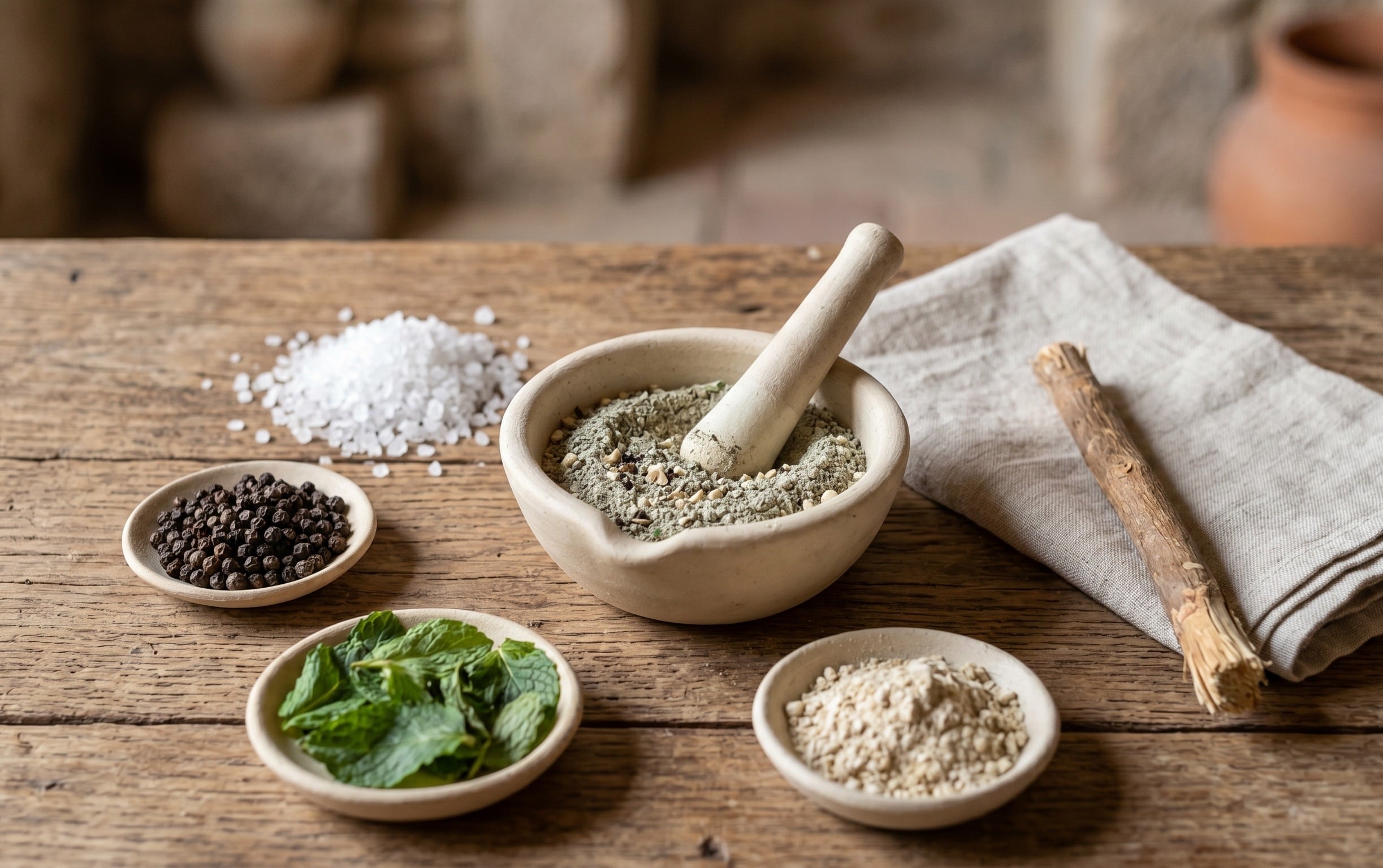
A variety of ingredients, including herbs, coarse salt, and peppercorns, are arranged on a rustic wooden table alongside a mortar and pestle for making ancient-style toothpaste.
The natural, abrasive components used by Ancient Greeks to maintain oral hygiene, such as crushed oyster shells, charcoal, and mint. Credit: Greek Reporter archive

Most of us assume that looking after our teeth is a modern habit shaped by supermarket shelves, mint-flavored ads, and childhood dentist scares, but a surviving Ancient Greek toothpaste recipe suggests otherwise.

Sitting quietly in the Austrian National Library in Vienna is one of the most remarkable documents in the history of medicine: a small, faded papyrus from the fourth century AD containing what is widely considered the world’s oldest surviving, precise toothpaste formula.

The existence of this Ancient Greek toothpaste recipe points to something larger at work. By the time it was copied onto papyrus, Greek had long since become the language of science, medicine, and intellectual life across the Mediterranean. This linguistic dominance was a legacy of the conquests of Alexander the Great and, above all, of Alexandria, the city his successors transformed into the ancient world’s foremost hub of knowledge. Even in Roman Egypt, centuries after the Ptolemies had given way to the Caesars, Greek remained the language a physician used when he wanted to be taken seriously.

When was the toothpaste recipe written in Ancient Greek discovered?

The papyrus first came to the attention of modern researchers in 2003, when curators at the Austrian National Library in Vienna identified it while preparing for an international dental congress. It had likely been sitting in the collection for years, its significance unnoticed and largely forgotten. Once translated, however, scholars quickly realized what they were looking at—a toothpaste formula that predates the first commercially marketed toothpaste, Colgate, launched in 1873, by well over fifteen hundred years.

The formula itself is strikingly systematic. The scribe prescribes “a powder for white and perfect teeth” composed of four ingredients: one drachma of rock salt, two drachmas of mint, one drachma of dried iris flower, and twenty grains of pepper. The drachma in this context was a standard unit of Greek medical weight, roughly equivalent to one-eighth of an ounce (about 3–4 grams), part of the same measurement system used throughout the major pharmacological texts of the ancient world. Taken together, the recipe reads less like folklore and more like a physician’s deliberate prescription, carefully calibrated for a patient.

But one might wonder if it actually worked. In 2003, Austrian dentist Dr. Heinz Neuman decided to test it for himself by recreating the formula. His conclusion was cautious but intriguing: the mixture was mildly abrasive and caused slight gum bleeding, yet it also produced a noticeable sensation of cleanliness and freshness. Modern dental science helps explain why. Dried iris flower, or orris root, is now known to contain antibacterial compounds that target the pathogens responsible for gum disease. What might once have looked like ancient guesswork increasingly appears to be empirical knowledge derived through observation and practice. In this sense, modern pharmaceutical science is only now arriving at conclusions the Greeks and Egyptians had already explored more than a thousand years earlier.

Ancient Greek father of pharmacology
Dioscorides is considered the father of pharmacology. Painting of unknown artist depicting Heuresis (the personification of discovery) presenting Dioscorides with a mandrake root. Credit: Unknown artist. Wikipedia Public Domain

None of this should entirely surprise us when we consider the world from which this recipe emerged. Ancient Greece had produced Pedanius Dioscorides, whose monumental work on medicinal plants shaped medical practice for more than a millennium. It had also produced physicians, botanists, and scholars who approached the human body with a level of rigor and curiosity that few ancient traditions matched. The anonymous scribe who recorded this formula was working squarely within that intellectual lineage, effectively encoding practical medical knowledge in Greek because it was the language in which serious medicine was conducted at the time.

The paste itself would have been applied without anything resembling a modern toothbrush. A folded linen cloth or a frayed chew stick—a fibrous twig worn soft at the tip through repeated use—would have served the purpose well enough. The tools were simple, but the intention was essentially the same as ours.

There is a quiet continuity in that detail. The next time you reach for mint toothpaste in the morning, you are participating in a ritual that a Greek-speaking scribe in Roman Egypt thought important enough to preserve on papyrus seventeen centuries ago. The ingredients have been refined, the packaging has changed beyond recognition, and no one is applying the mixture with linen anymore. Still, the impulse behind it—the very human desire for clean, white teeth—remains as old as the ancient world itself, and in many ways, the Ancient Greek world had already put the first working version of the answer into writing.

  •  
❌