In 2016, when Peter Thiel killed Gawker, he insisted that he wasn’t attacking journalism writ large.
On the contrary, he told the New York Times, he’d spent $10 million secretly backing Hulk Hogan’s lawsuit against the news outlet because: “I saw Gawker pioneer a unique and incredibly damaging way of getting attention by bullying people even when there was no connection with the public interest… if I didn’t think Gawker was unique, I wouldn’t have done any of this. If the entire media was more or less like this, this would be like trying to boil the ocean.”
10 years later with the aid of an “AI tribunal,” a team of intelligence and law enforcement veterans, and a political climate vastly more hostile to press freedom, he is trying to do exactly that, bypassing the courts, short-circuiting the first amendment, and making it much, much cheaper to indulge in the quasi legal harassment of journalists.
Objection.ai is a new startup funded by Thiel, and cofounded by Aron D’Souza, who worked closely with him on the Gawker case. It promises “a fast affordable way to challenge statements in the media.” Anyone can file an objection, which will trigger an investigation by a team hired, the company says, from the CIA, FBI, and British intelligence agencies. Targeted outlets and reporters will have an opportunity to respond, and the results will be fed to an AI model, which will render a verdict. The complainant, and the target, are asked to agree to binding arbitration, with an unspecified range of potential consequences. Financial details are vague, but the company has said the process will cost around $2,000 — far less than the retainer of a crisis communications expert.
An initial slate of cases includes objections against the New York Times, for reporting on how Thiel’s fellow traveller David Sacks, former PayPal chief operating officer and Donald Trump’s former “AI and Crypto Czar,” uses his White House position to benefit Silicon Valley connections; The Wall Street Journal for its revelations about the doodle contributed by Donald Trump to Jeffrey Epstein’s birthday book (a case recently dismissed by a federal judge); and British reporter Hannah Broughton for an aggregated story in the UK tabloid the Mirror about allegations that Amazon workers were told to continue working while a colleague lay dead on the warehouse floor. A smattering of social media provocateurs (Candace Owens) and politicians (Bernie Sanders) round out the roster, but the aggregate effect is indisputable: Thiel’s animus was about journalism all along. Indeed, the Objection.ai team couldn't be clearer about that.
“Gawker was not unique,” writes D’Souza on the company’s website. “It was simply the first large media company to be tested against reality in the age of clicks, outrage, and algorithmic amplification. Since then, the same structural failure has spread everywhere.”
“Peter Thiel and I … did not just fight Gawker,” he goes on. “ — We demonstrated that facts still mattered if someone was willing to enforce them.”
This is worse than revisionism. D’Souza is banking on everyone having forgotten that the Hulk Hogan case had nothing to do with “reality.” It was undisputed that the sex tape published by Gawker was real. The original suit, which failed, was for copyright infringement and the ultimate $140 million award that bankrupted the company was for invasion of privacy and intentional infliction of emotional harm.
This foundational lie is important, because it is a warning against the temptation to engage Objection.ai on the merits. It would be easy enough to conduct a good faith debate to take at face value D’Souza’s argument that tech platforms and algorithms amplify false claims to millions, that courts are expensive and slow, media ombuds toothless, and fact-checkers partisan. And it would not be hard to demonstrate that he is harnessing widely shared concerns about a disordered information environment to mobilize support for an AI powered justice system controlled by a hyperpartisan private company with a track record of attacking the very institutions that are holding the line on consensus reality.
It would also be a mistake. There is nothing good faith about this effort. Rather, it is classic Thiel: an attempt to hack the principles of accountability, and turn them against journalism. Leave it to his less sophisticated Silicon Valley peers to rail against the media, create in house news outlets or buy them. The PayPal co-founder is going for the heart of the system, and financing infrastructure that will enable anyone who can afford a used Honda Civic to launch a harassment campaign, cloaked in the language of legitimate investigation. James O’Keefe, but with the judicial rather than journalistic process as its governing metaphor.
It will be tempting, too, to question the likely financial sustainability of Objection. That will be the least of its founders' concerns. The for-profit structure supports a story about the company’s purpose. It may work, or not, but its goals are nonfinancial. We reached out to Thiel for comment on Objection.ai before publication and will update this article as soon as he responds.
Providing funding, alongside Thiel, is Balaji Srinivasan, the investor and author of “The Network State,” a book about social networks with “a sense of national consciousness” replacing the nation state. He once outlined an early version of the Objection.ai model in an email to the far right theorist Curtis Yarvin about dealing with critical coverage. "If things get hot,” he suggested “it may be interesting to sic the Dark Enlightenment audience on a single vulnerable hostile reporter to dox them and turn them inside out with hostile reporting sent to *their* advertisers/friends/contacts."
These men understand the limits of the Gawker verdict’s impact. It bankrupted the company, a personal victory for Thiel, but perhaps the least important outcome of the case. At a more systemic level, it struck fear into the hearts of media insurers and newsroom counsel, focusing attention on third party litigation finance as potential threat.
If people with limitless resources could sponsor litigation against news organizations they disliked, constitutional protections would be no match for the sheer cost and complexity of defense.
Now, they’ve found an AI-assisted way to supercharge those effects.
The Gawker case routed around the First Amendment by relying on a privacy claim. Objection.ai does so by building a hallucination of the legal process. Any journalist foolish enough to agree to binding arbitration by the company probably deserves what they get, but that will be a vanishingly small minority. For those who don’t, a phone call, or a knock on the door from a former FBI agent, or defense intelligence operative, will be chilling, and an ex-parte verdict rendered by Thiel’s custom-tuned AI will act as a cudgel on social media and via traditional PR. Journalists will be assigned a “trust score” to act as an additional goad.
In an environment of less peril for press freedom, it might be easy to laugh off Objection.ai as the confection of a thin-skinned millenarian. Right now, with the crony capture of broadcast news far advanced, swathes of the tech community openly hostile to journalism, and the White House onside, it would be wise to take it seriously. That starts with seeing it for what it is, and refusing to engage with a process which, unlike the real courts, Peter Thiel has no legal power to compel.
Viktor Orbán, Hungary’s prime minister since 2010, faces an election dogfight. Behind in the polls, he has been effectively endorsed by both the Kremlin and the White House, and a host of conservative world leaders. As wars in Iran and Ukraine exacerbate the fissures that have weakened NATO, as well as the U.S.’s relationship with the European Union, this is an election that is being followed with bated breath in Washington, Moscow, Kyiv and Brussels.
Before the elections on April 12, a scandal engulfed the Hungarian government. On leaked recordings, foreign minister Péter Szijjártó can be heard deferentially acquiescing to his Russian counterpart Sergey Lavrov and passing on information from EU meetings. Szijjártó appeared willing to help the Kremlin’s cause in Brussels, to remove oligarchs and their relatives from the EU blacklist, and to block efforts to aid Ukraine. Hungary’s advocacy for the Kremlin’s agenda culminated in its recent veto of fresh sanctions on Russia and over $100 billion in loans to Ukraine. On X, Polish prime minister Donald Tusk wrote that while “Hungary is and will be in the European Union, Victor Orbán and his foreign minister left Europe long ago.” And the Irish taoiseach Micheál Martin described Szijjárto’s calls with Lavrov as both “sinister” and “alarming.”
Szijjárto alleged that “foreign intelligence services, with the active involvement of Hungarian journalists, have been intercepting my phone calls.” It is a plot, the Hungarian government claims, to influence the upcoming polls. Orbán directly blames Ukraine for seeking to unseat his government. The opposition, led by Peter Magyar, has a healthy lead in the polls and describes the Hungarian government’s closeness to the Kremlin as “treason.” According to European intelligence reports, Moscow sent a three-person team to Hungary, overseen by Putin confidant Sergei Kiriyenko who ran an operation to interfere in the Moldovan election back in September. His tactics encompassed “vote-buying networks, troll farms, and on-the-ground influence campaigns.” A Kremlin-linked media consultancy, facing EU sanctions, was hired to dismiss Magyar as a Brussels stooge and portray Orbán as the only candidate strong enough to to be treated as an equal by world leaders, as evidenced by the strength of his relationship with Trump.
Despite a war with Iran that doesn’t appear to be going entirely to plan, the U.S. president took time out to back Orbán with enthusiasm and at considerable length on Truth Social. Trump said Orbán was “a true friend, fighter, and WINNER.” JD Vance, the vice president, is scheduled to visit Hungary on April 7, just five days before the election. And secretary of state Marco Rubio went to Hungary in February. It is now part of the U.S. National Security Strategy to work towards “cultivating resistance to Europe’s current trajectory within European nations.” To that end, notes the U.S. government, “the growing influence of patriotic European parties indeed gives cause for great optimism.” Orbán speaks MAGA’s language on immigration, traditional values and the Christian essence of Western societies. He is, like Putin and Trump, in MAGA’s view, an implacable opponent of secular, progressive, globalist politics as symbolised by Brussels.
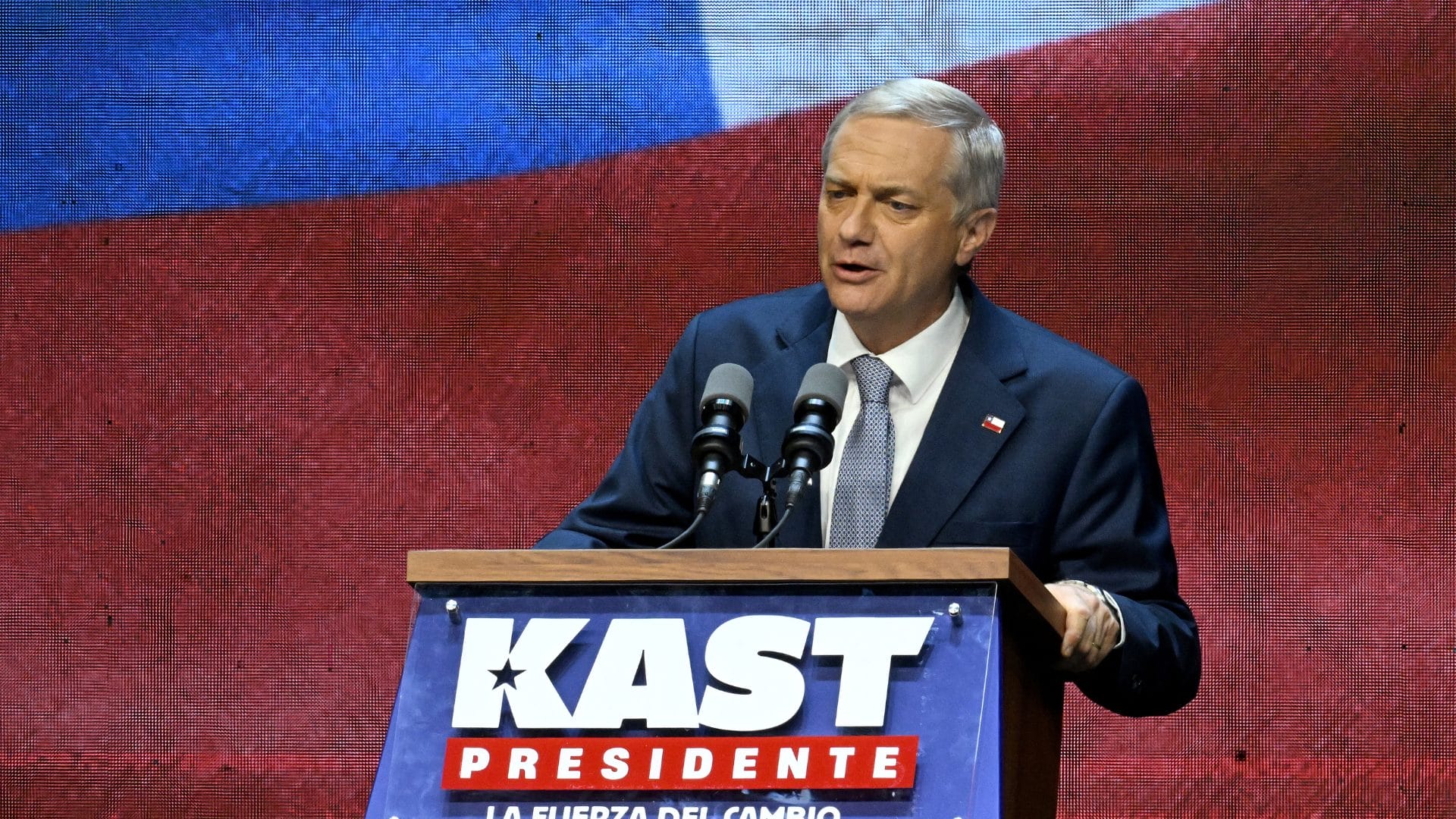
Orbán, the longest serving current head of government in the EU, has become a figurehead for populist, nationalist movements across the world. The recent CPAC Hungary summit was attended by several of these leaders including France’s Marine Le Pen, Italian deputy prime minister Matteo Salvini, and the Netherlands’ Geert Wilders,who called Orbán “a lion on a continent led by sheep.” Latin American leaders close to Trump , including Javier Milei of Argentina and Jose Antonio Kast of Chile, also attended. Milei, who gave the longest speech at the summit, said Orbán was “a beacon for all… who refuse to accept that the West's destiny is one of managed decline.” This international network, with the United States and Russia included, has a vested ideological interest in seeing Orban continue to remain a thorn in the EU's side.
But what can Brussels do? The answer, it appears, is not much. The EU is consensus driven; it needs all its parts to act in concert, giving holdouts like Orbán considerable power to hold the whole bloc hostage. But given Orbán’s prominence as an ideologue, when Hungary blocks sanctions or delays support for Ukraine, it is more than a single nation going rogue. Alice Weidler, co-chair of the far-right AfD, the largest opposition party in the German Bundestag, was among those who spoke at the CPAC Hungary conference last month. Robert Fico, prime minister of Slovakia, is an Orbán ally. On April 19, Bulgaria will have its eighth general election in just five years. Former president Rumen Radev’s new Progressive Party leads the polls and shares Orbán’s pro-Kremlin, anti-EU inclinations.
So polarized is the Hungarian election, that right wing groups are deploying their own observers from Argentina, Austria, the Czech Republic, Kenya, Poland, Germany, Italy, Spain, Serbia, Tanzania and the United States to monitor proceedings. EU observers have said the Hungarian government controls the national media and a recent documentary alleges that a desperate government is resorting to vote-buying, gerrymandering and intimidation tactics. It’s hard to see how either Orbán or Magyar will accept the election result without protest, unless the margin is crushing. But, given Trump’s disdain for NATO allies and the EU, an Orbán election defeat would be a much-needed victory for European unity.
A version of this story was published in this week’s Coda Currents newsletter. Sign up here.
 Login
Login