
Reading view

Olympias: The Mysterious Queen Who Shaped Alexander the Great Into a World Conqueror
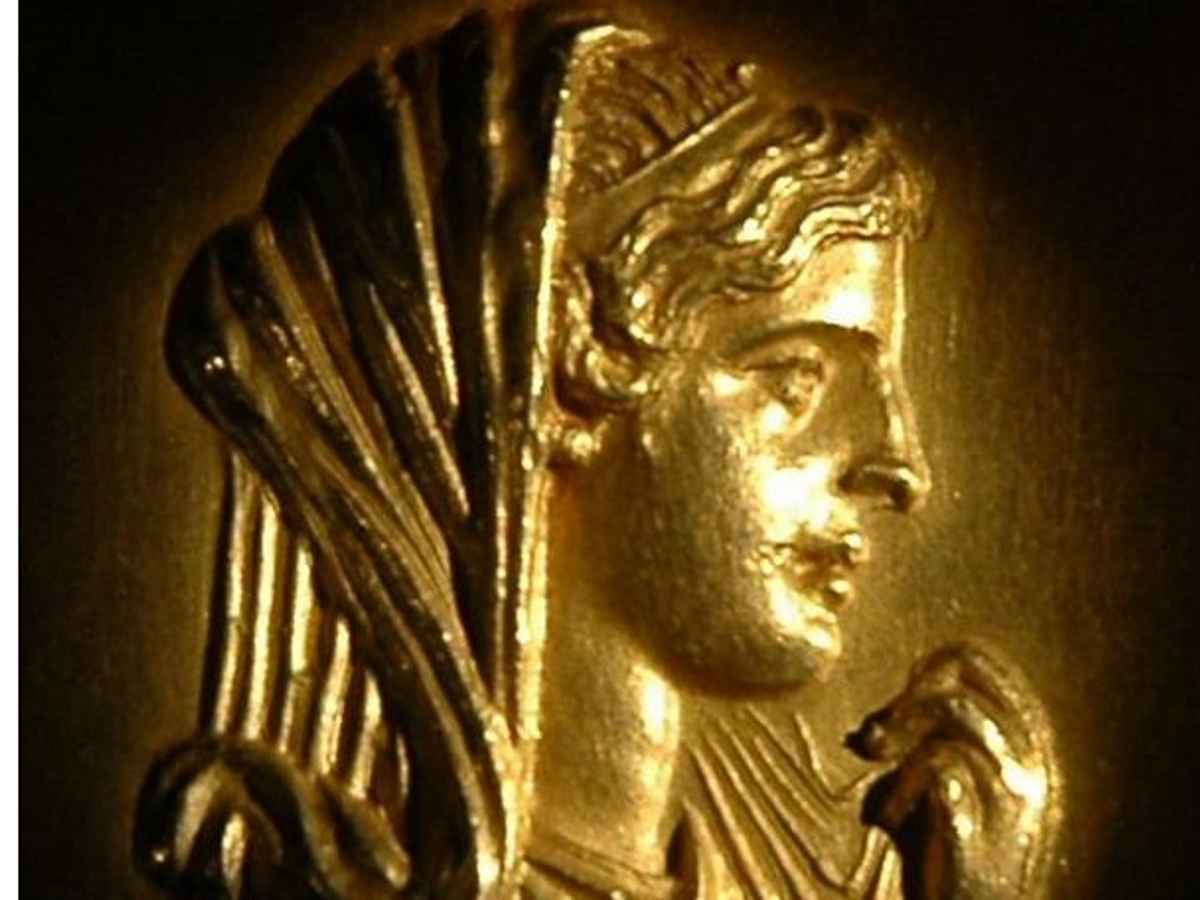
Portrait of Olympias, mother of Alexander the Great, on ancient medallion, 225-250 AD: Exhibition CE.2017, Archaeological Museum of Thessaloniki
Olympias, the mother of Alexander the Great, who shaped his course and the fate of the Macedonian Kingdom. Credit: Fotogeniss, CC by sa 3.0.

No other woman in Ancient Greek history inspired as much fascination, fear, and controversy as Olympias, the mother of Alexander the Great. She is described as passionate, intelligent, ruthless, and deeply religious. Enemies portrayed her as dangerous and manipulative, while supporters viewed her as a fiercely loyal mother and protector of Alexander’s destiny.

Behind the legends and accusations, however, stood a woman who exercised enormous political influence during one of history’s most transformative periods. Olympias shaped Alexander from childhood, influenced the succession crisis after Philip II’s death, and later played a decisive role in the violent struggles that followed Alexander’s empire.

Her presence loomed over Macedon for decades. Even after Alexander conquered much of the known world, Olympias continued to influence the royal court and the fate of the Argead dynasty.

Alexander the Great’s mother, Olympias, and her Molossian origins

Olympias came from Epirus, a Greek kingdom west of Macedonia. She belonged to the royal Molossian dynasty, which claimed descent from Neoptolemus, the son of Achilles. This heroic ancestry carried enormous symbolic value in the Greek world. Her original name may have been Polyxena or Myrtale. The biographer Plutarch suggests she later adopted the name Olympias after Philip achieved victory at the Olympic Games.

From an early age, Olympias displayed strong religious devotion.They initiated her with mystery cults and ecstatic rituals connected with Dionysus and the mysteries of the Cabeiri to whom she became a high-ranking priestess. These cults emphasized sacred initiation, hidden knowledge, and intense spiritual experiences. Her religious identity later became central to the legends surrounding Alexander’s birth.

The snakes and the divine birth of Alexander

Ancient authors repeatedly connect Olympias with snakes and mystery rituals. Plutarch wrote that Philip once saw a serpent lying beside Olympias while she slept. Legends claimed that she begot Alexander with Zeus through intercourse with snakes. According to later traditions, this event contributed to the belief that Zeus himself fathered Alexander.

These stories shaped Alexander’s image ever since childhood. Olympias appears to have encouraged the belief that her son possessed divine ancestry. Such ideas naturally fit within the heroic traditions of the Greek world in which exceptional rulers often claimed descent from gods. The symbolism of Zeus held enormous political importance. Alexander did not simply present himself as a king but increasingly viewed himself as a chosen figure with a cosmic mission. Of course, Olympias likely played a major role in nurturing this mindset.

Ancient religion did not sharply separate politics from divine legitimacy. A ruler with sacred ancestry possessed more potent authority and prestige. Olympias therefore strengthened Alexander’s position both psychologically and politically. The stories involving snakes also reflected the mystical atmosphere surrounding cults. Serpents symbolized rebirth, divine wisdom, chthonic forces, and sacred power in many Greek traditions. As a priestess connected with such cults, Olympias cultivated an aura of mystery that impressed supporters and frightened enemies.

Alexander the Great according to Euphranor
The turbulent relationship between Alexander the Great and his father, Philip II of Macedon, was one of the most complex and layered family dynamics in ancient history. Credit: Egisto Sani. CC BY-2.0/flickr

Olympias’ relationship with Philip II, the father of Alexander the Great

The marriage between Olympias and Philip II began as a political alliance, yet tensions soon emerged between them. Philip married several women during his reign, partly for diplomatic reasons. However, these marriages threatened Alexander’s position as heir. Olympias fiercely defended her son’s claim to the throne and distrusted rival factions within the Macedonian court.

Conflict intensified after Philip married Cleopatra Eurydice, a Macedonian noblewoman. Her marriage resulted in the possibility of a fully Macedonian heir, which endangered Alexander’s succession. Plutarch describes a famous banquet confrontation during which insulted Alexander by implying doubts concerning his legitimacy. The quarrel severely damaged relations within the royal family.

Olympias soon withdrew from Macedon temporarily and returned to Epirus. Alexander also left for a period before reconciliation occurred. These events led to an atmosphere of suspicion and instability that surrounded Philip’s final years.
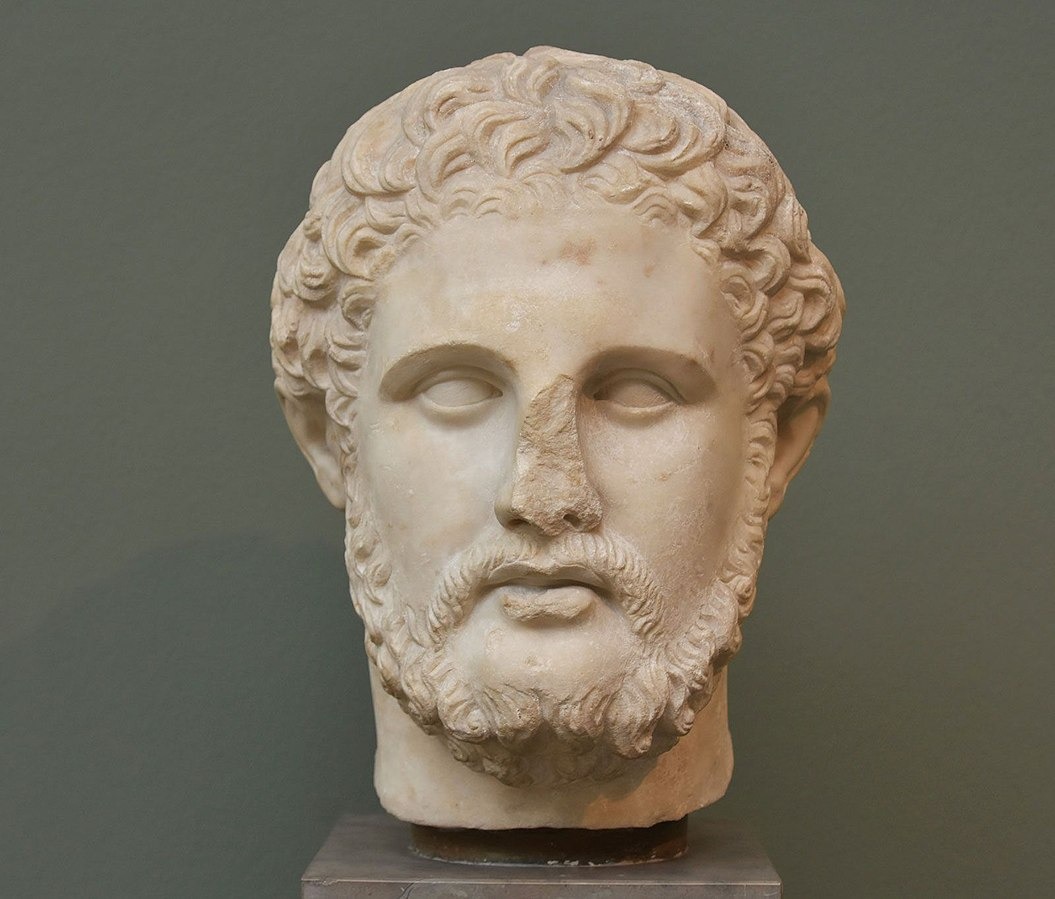
Marble bust thought to depict Philip II of Macedon.
Marble bust portrait thought to depict Philip II of Macedon. Credit: Richard Mortel / CC BY 2.0 / Wikimedia Commons

The assassination of Philip and Alexander’s accession

Philip II passed away in 336 BC after assassination during a public celebration at Aegae. His bodyguard, Pausanias, killed him before guards immediately cut the assassin down. The assassination remains one of antiquity’s great mysteries. Plutarch and the historian Arrian often suspected Olympias of involvement. Some even claimed she honored Pausanias afterward or placed a crown upon his corpse. Other traditions accuse Alexander indirectly as well.

No definitive evidence proves these accusations. However, Olympias clearly benefited politically from Philip’s death because Alexander immediately became king. She acted quickly afterward to eliminate threats against her son’s rule. The geographer Pausanias accuses her of orchestrating brutal acts against Cleopatra Eurydice and her child. Whether entirely accurate or exaggerated by hostile writers, these accounts reveal Olympias’ fierce determination to secure Alexander’s position. In the brutal world of Macedonian succession politics, hesitation often meant destruction.

Even after Alexander launched his campaigns into Asia, Olympias continued influencing Macedonian affairs from afar. Alexander maintained regular correspondence with her and respected her opinions deeply. Both Arrian and Plutarch suggested that Olympias frequently warned him about political rivals and court intrigues. At times, her intense personality resulted in tension with Antipater, whom Alexander left in charge of Macedon during the eastern campaigns. Their rivalry became one of the defining political conflicts of the period.

Olympias viewed herself not merely as the king’s mother but also as guardian of the Argead dynasty and protector of Alexander’s divine mission. Meanwhile, Alexander’s own behavior increasingly reflected the heroic and semi-divine identity cultivated since childhood. His visit to the oracle of Zeus-Ammon in Siwa of Egypt supported these beliefs further when the Egyptian priest proclaimed him as “child of Ammon.” The foundations of this worldview likely originated partly through Olympias’ influence, as previously mentioned.

Alexander the Great before the Oracle at Siwa.
Alexander the Great before the Oracle at Siwa. Credit: Francesco Salviati (Italy, Florence, 1510-1563) Wikimedia Commons, Public Domain

The chaos after Alexander’s death

Alexander’s death in 323 BC plunged the empire into chaos. Without a clear successor, powerful generals fought for control over the vast territories he conquered. Olympias returned to political life aggressively during this turbulent period, supporting the rights of Alexander IV, Alexander’s young son by Roxana. Olympias viewed him as the legitimate continuation of the Argead dynasty.

In order to defend her grandson’s claim, she entered the brutal wars of the Successors. During this struggle, Olympias captured and executed Philip III Arrhidaeus and his wife Eurydice. These actions shocked many Macedonians and intensified divisions within the kingdom.

Nevertheless, Olympias believed she acted to preserve Alexander’s bloodline and royal legitimacy. Her enemies, however, saw only cruelty and vengeance.

Agamemnon's initiation to the Samothracean Cabeiri mystery cult. Marble, Greek archaic artwork, ca. 560 BC.
Agamemnon’s initiation to the Samothracean Cabeiri mystery cult. Marble, Greek archaic artwork, ca. 560 BC. Credit: Jastrow, Wikimedia Commons, Public Domain

The fall of Olympias

Cassander, one of the most powerful Successors, eventually marched against Olympias. Many Macedonians abandoned her cause as political exhaustion, and civil war consumed the kingdom. After siege and defeat, Olympias surrendered.

Cassander condemned her to death in 316 BC. Plutarch claims that soldiers initially hesitated to execute her because of her royal status and dominant personality. Eventually, however, relatives of her victims carried out the killing. With Olympias’ death, the final collapse of the Argead dynasty was all the more imminent. Soon afterward, Cassander eliminated Alexander IV and Roxana, as well, and thus ended the bloodline of Philip and Alexander.

Olympias remains one of antiquity’s most complex female figures, having shaped Alexander psychologically ever since childhood and having encouraged his belief in divine destiny. She defended his succession fiercely during critical political crises and later fought relentlessly to preserve the dynasty after his death. Without Olympias, Alexander’s rise may have unfolded quite differently.

At the same time, her actions contributed to the violence and instability that destroyed Macedon after Alexander’s empire fragmented. She therefore stands both as creator and destroyer: a queen, priestess, mother, and political strategist whose influence changed the ancient world forever.
  •  

Trireme Ships Enabled the Rise of Athens as a Great Power

Trireme
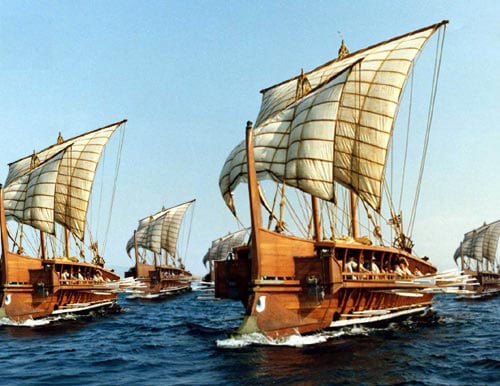
A “Fleet” of Greek triremes is shown in a multiple image of the reconstructed ship “Olympias,” a faithful recreation of the Ancient Greek trireme that enabled the rise of Athens as a great power. Credit: EDSITEment-reconstructed /Perseus /Creative Commons Attribution-ShareAlike License;Project./Public Domain

Few things on this earth are as lovely as a wooden ship with its sails unfurled, sailing on the open sea; the Ancient Greek trireme ships are no exception to this rule, but of course, they were once warships that were so deadly they enabled the rise of Athens as a great power.

The graceful ships, which were propelled not only by two large sails but by three ranks of men pulling on oars, may have originated in Corinth or perhaps further afield in Phoenicia. Wherever they were first created, triremes were used by all the ancient maritime civilizations around the Mediterranean Sea, including the Phoenicians and Romans as well as the ancient Greeks.

The trireme derives its name from its three rows of oars, with one man working each oar. The early trireme was a further development of the penteconter, an ancient warship with a single row of 25 oars on each side, and the bireme, a warship with two banks of oars, from Phoenicia.

Triremes played an integral role in the rise of Athens as a great power

Known for its speed and agility in battle, the trireme was the dominant warship in the Mediterranean from the 7th to the 4th centuries BC, after which it was largely superseded by the larger quadriremes and quinqueremes, with four and five banks of rowers.

Triremes played a vital role in the history of Ancient Greece during the Persian Wars and the creation of the Athenian maritime empire — as well as its downfall in the Peloponnesian War.

Modern scholarship is divided on the provenance of the trireme — although it was either Greece or Phoenicia — and the exact time it developed into the foremost ancient fighting ship. The Greek writer Clement of Alexandria, drawing on earlier works, explicitly attributes the invention of the trireme to Sidon, the great Phoenician city.

According to the great historian Thucydides, the trireme was introduced to Greece by the Corinthians in the late 8th century BC; the Corinthian Ameinocles was recorded as building four such ships for the Samians.

In the ancient world, naval combat relied on two methods: boarding and ramming. Rams (embolon) were fitted to the prows of warships and were used to rupture the hull of the enemy ship.

The first definitive reference to the use of triremes in naval combat dates back to approximately 525 BC, when the historian Herodotus wrote that the tyrant Polycrates of Samos was able to contribute 40 triremes to a Persian invasion of Egypt for the Battle of Pelusium.

Thucydides meanwhile clearly states that in the time of the Persian Wars, the majority of the Greek navies consisted of (probably two-tiered) penteconters and ploia makrá (“long ships”). In any case, by the early fifth century, the trireme was becoming the dominant type of warship in the eastern Mediterranean,

The first large-scale naval battle in which triremes participated was the Battle of Lade during the Ionian Revolt, where the combined fleets of the Greek Ionian cities were defeated by the Persian fleet, composed of squadrons from their Phoenician, Carian, Cypriot, and Egyptian subjects.

It was 483/2 BC, however, that saw the pivotal moment in the development of the trireme, when the Athenian statesman Themistocles persuaded the Athenian assembly to begin the construction of 200 triremes, using the income of the newly discovered silver mines at Laurion.

Triremes sail to the rescue of Greece at Salamis

The decisive naval clash of the Second Persian War occurred at Salamis just two years later, in September of 480 BC, where the fleet under Persian leader Xerxes was decisively defeated.

This naval battle is considered by many historians to be one of the most decisive in history, bringing an end to the threat of the Persian invasion of the West.

Much like the earlier battle at Thermopylae, the heroics at the Battle of Salamis have risen to legendary status, as the allied Greek city-states used approximately 370 trireme ships, and the Persians had over 1,000, according to ancient sources.

The Persians planned to crush the outnumbered Greeks with the sheer force of their massive fleet.

The leader of the Greek naval force, Themistocles, aware of the great number of Persian ships, used that fact against the enemy, luring the Persians to the narrow Strait of Salamis, where the Greek ships were waiting.

Since the massive Persian fleet could not fit in the strait, they quickly became disorganized, opening up a possibility for a Greek victory.

Triremes enabled the creation of Athens’ thalassocracy

The source and foundation of Athens’ lasting political power was her strong fleet, which historians believe was composed of over 200 triremes. It not only secured control of the Aegean Sea and the loyalty of her allies but also safeguarded trade routes and the all-important grain shipments from the Black Sea, with the help of its standing navy of triremes.

Athenian maritime power is the first example of what historians refer to as a “thalassocracy,” or complete dominion over the seas, in world history.

For the crew of Athenian triremes, the ships were an extension of their democratic beliefs.

In thinking of these gigantic ships propelled by manpower, we all can recall the iconic scene of slaves manning the oars of a Roman galley in the movie Ben Hur, with men struggling to keep up with the frenetic pace that was called for in order to ram other naval ships during battle.

And indeed many of the men in such Roman galleys in reality were slaves — but this was emphatically not the case with the Greek triremes. In fact, serving aboard such a vessel was seen as an honor and the oarsmen were from all ranks of life, with rich and poor rowing alongside each other.

Historian Victor Davis Hanson argues that this “served the larger civic interest of acculturating thousands as they worked together in cramped conditions and under dire circumstances.”

Service on Athenian ships was an integral part of the military service although hired foreigners were also accepted. A typical Athenian trireme crew during the Peloponnesian War consisted of 80 citizens, 60 metics (freed slaves), and 60 foreign hands. Indeed, historians say that in the few emergency cases where slaves were used to crew ships, these were deliberately set free, usually before being employed.

Experts say that the design of the trireme most likely pushed the technological limits of the time. The three files of oarsmen on each side worked as one, with each man outboard of, and in height overlapping, the other.

While well-maintained triremes would last up to 25 years, during the Peloponnesian War, Athens had to build nearly 20 triremes a year to maintain their fleet of 300.

Athenian triremes had two great cables called hypozomata (undergirding), stretching from end to end along the middle line of the hull just under the main beams, adding the needed support for ramming during battle.

Triremes decorated with evil eyes, sculptures of deities

Its draft was relatively shallow, about 1 meter, which, in addition to the relatively flat keel allowed a trireme to be beached easily — a great advantage for amphibious operations. The construction of a trireme was expensive and required approximately 6,000 man-days of labor.

The three principal types of wood used were fir, pine, and cedar. Oak was primarily used for the hulls in order that they could withstand the force of being hauled ashore.

In the case of Athens, since most of the fleet’s triremes were paid for by wealthy citizens, there was a natural sense of competition among the patricians to create the “most impressive” trireme, both to intimidate the enemy and, perhaps surprisingly, to attract the best oarsmen.

Triremes made a fearsome and beautiful sight, as we can see from ancient depictions and reproductions of the ships today. They were highly decorated with representations of the evil eye, or mati, and had nameplates, and painted figureheads.

These decorations were used both to show the wealth of the patrician and to make the ship frightening to the enemy. The home port of each trireme was shown with pride by the wooden statue of a deity placed above the bronze ram on the front of the ship.

The resurrection of the trireme in Greece

Triremes had two masts, a main (histos megas) and a small foremast (histos akateios), with square sails, while steering was provided by two steering oars at the stern, with one at the port side and one to starboard.

Classical sources indicate that the trireme was capable of sustained speeds of about 6 knots at a relatively leisurely pace of rowing. There is also a reference by Xenophon to a single day’s voyage from Byzantium to Heraclea Pontica, which translates as an average speed of 7.37 knots.

In Athens, the ship’s captain, known as the trierarchos, would have been a wealthy Athenian citizen. He alone was responsible for manning, fitting out, and maintaining the ship for his liturgical year at least; the ship itself belonged to Athens.

During the Hellenistic period, the relatively lightweight trireme was supplanted by larger warships in dominant navies, especially the quinquereme, while triremes continued to be the mainstay of smaller navies.

Although the Hellenistic kingdoms did develop the quinquereme and even larger ships, most navies of the Greek mainland and the smaller colonies could only afford triremes. They were used by the Diadochi Empires and sea powers like Syracuse, Carthage, and later Rome.

In 1985–1987 a shipbuilder in Piraeus, advised by historian J. S. Morrison and naval architect John F. Coates and informed by evidence from underwater archaeology, built an Athenian-style trireme, Olympias.

The work was also advised by the classics teacher Charles Willink and drew on evidence gained from Greek literature, history of art, and archaeology above and below water.

The Olympias’ bronze bow ram, a copy of an original ram now in the Piraeus archaeological museum, weighs 200 kg. The ship was built from Douglas fir and Virginia oak while its keel is of iroko hardwood.

During its sea trials, in 1987, the Olympias was crewed by 170 volunteer oarsmen and oarswomen. She achieved a speed of 9 knots (17 km/h). These results, achieved with an inexperienced, mixed crew, suggest that ancient historians like Thucydides were not exaggerating about the capabilities of triremes.

Olympias was transported to Britain in 1993, to take part in events celebrating the 2,500 years since the beginning of democracy. In 2004 she was used to transport the Olympic Flame ceremonially from the port of Keratsini to the main port of Piraeus, as the Olympic Torch Relay approached Athens for the 2004 Summer Olympics.

  •  
❌