Reading view

The Lost Plant Ancient Greeks Used for Medicine, Food and Contraception

silphium
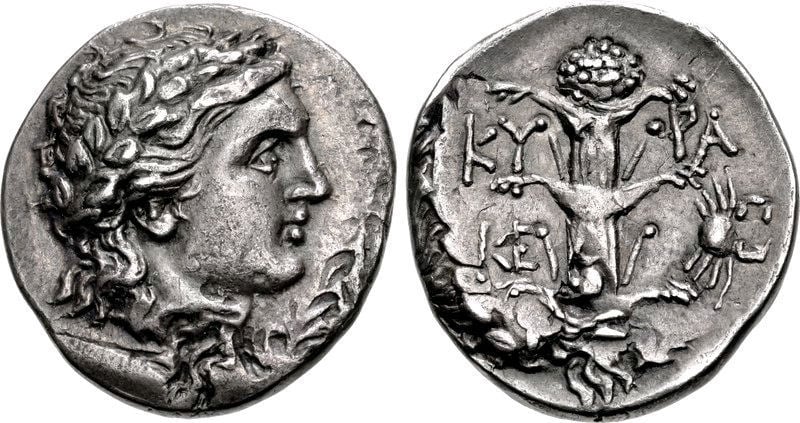
A plant used by the ancient Greeks for medicine, food and even contraception was one of the most sought-after goods in the ancient world. Credit: Classical Numismatic Group/Wikimedia Commons/CC BY-SA 3.0

An ancient Greek plant, now extinct, called Silphium, was used by the ancient Greeks and Romans for perfume, seasoning, medicine, and even contraception. It was one of the most sought-after goods in the ancient world.

The plant was so useful that Julius Caesar himself was said to have a large stash of silphium on hand at all times.

Silphium only grew in a narrow strip of land near the North African city of Cyrene in modern-day Libya and was essential to the city’s economy. The cultivation and trade of the plant transformed Cyrene into the richest region of Africa at the time.

Its widespread use in the ancient world allowed Cyrene’s economy to flourish, which in turn transformed the city into a center of art, culture, and medicine in the ancient Greek world.

In fact, it was home to a famous medical school and even a philosophical movement based around happiness whose members were called the Cyrenaics. Eratosthenes, the famous Greek mathematician, was a native of the city.

Although now extinct, researchers have determined, through studying ancient drawings and descriptions of the plant’s taste and appearance, that silphium likely belonged to the genus Ferula, which includes existing plants like giant fennel and asafoetida.

This theory is bolstered by the fact that asafoetida, which is still widely used today in Indian and central Asian cooking, was used as a cheaper substitute for silphium in antiquity, meaning that it was either related to the plant or had a very similar flavor.

The extinct plant silphium had many uses for ancient Greeks

Plants of the genus tend to resemble ancient depictions of the plant, which was widely found on coins from Cyrene due to its economic importance to the city.

It seems to have been a tall, flowering plant with a heart-shaped seedpod on the top. In fact, some theories about the origins of the modern symbol for love point to the shape of silphium’s seedpod, as the plant was widely used as an aphrodisiac.

Silphium was long used throughout the ancient Mediterranean. Both the Minoans and ancient Egyptians had specific glyphs to represent the plant, and it was widely lauded in songs and poems across ancient cultures.

According to myth, silphium came from the god Apollo himself. It had a wide variety of medicinal properties and was used to treat cough, pain, warts, fever, and indigestion. Although considered an aphrodisiac, it was also used as a contraception and even as an abortifacient.

The father of medicine Hippocrates himself even prescribed the plant for a protruding gut.

Silphium was likewise found in Greek and Roman cuisine and featured prominently in recipes by Apicius, who compiled one of the most well-preserved collections of ancient recipes in existence today.

Its earthy scent and medicinal properties also made it an important ingredient in perfume, as well as in ancient lotions and creams.

Why did silphium go extinct?

Due to its varied uses, silphium was in very high demand. Yet, by the time of the Roman emperor Nero, who lived from 37 to 68 AD, the plant was virtually extinct. According to Pliny, when the last remaining silphium plant was found, it was given to Nero.

Scholars theorize the plant was over-harvested and over-farmed due to its popularity, causing the soil in the limited area where the plant grew to become devoid of nutrients.

Additionally, shepherds used to feed silphium to their flocks, as the plant would transform the meat, making it tender and delicious. Scholars theorize that overgrazing of the plant likely contributed to its demise.

Others claim that regional climatic changes, which caused once green fields to turn into an arid desert, resulted in the plant’s extinction.

Ancient writers, such as Theophrastus, noted that silphium was very sensitive to changes in soil and therefore could not be cultivated in large  numbers nor in areas outside of Cyrene.

  •  

O Brasil da Revolta da Vacina à vacina de covid em bebês

Brasil tem tradição de “lei que não pega” e resistência passiva, mas elites fracassam. Classe média omissa diante de vacina covid em bebês, caso único no mundo.

Junte-se a nós no Telegram Twitter e VK.

Escreva para nós: info@strategic-culture.su

No último texto, apontei um certo conformismo social brasileiro que às vezes nos impede de lidar com grandes problemas nacionais sem constrangimento estrangeiro. Neste eu queria nuançar um pouco essa questão, mostrando a importância das classes intermediárias entre o governo e o povo.

Comecemos com o aspecto conformista: desde o advento da propaganda republicana, o povo brasileiro tem fama de passivo. Em tese, a República é o governo do Povo, ao passo que a Monarquia é o governo na nobreza. Com essas definições, o simples fato de o povo não se entusiasmar com a República já o torna besta. E como o Brasil era a única monarquia nas Américas, cercada por repúblicas de língua espanhola fundadas em ideais maçônicos e iluministas de liberdade, o povo brasileiro era especialmente besta. Até a década passada nós brasileiros olhávamos para os vizinhos argentinos, que sempre estavam fazendo panelaço diante da Casa Rosada, e nos lastimávamos de nossa passividade – como se o “espírito crítico” argentino lhes tivesse dado um bom destino.

Em 1889, com uma revolta militar desengonçada e liderada por um marechal monarquista, proclama-se no Brasil a República à revelia do povo. Um grande historiador brasileiro, José Murilo de Carvalho (1939 – 2023), usou a memória de um militante republicano para dar um título ao seu livro sobre os primeiros anos da República: Os Bestializados. O povo assistia à proclamação da República bestializado, sem entender o que acontecia, achando que se tratava de uma parada militar. E a raia miúda – os vadios, as prostitutas, os capoeiras – eram maciçamente monarquista nas décadas seguintes à implementação da República. A Abolição da escravidão fazia o Imperador deposto ser amado sobretudo pelos pretos pobres do Brasil.

Segundo constava nos livros e panfletos, a República era para ser a apoteose do Povo, mas o povo não estava nem aí. Tornou-se comum, então, a classe jornalística reclamar da passividade do povo brasileiro. Houve um grande evento que fez com o povo brasileiro mostrar o seu valor – e os manifestantes iletrados ouvidos pelos jornalistas se expressavam nesses termos. Tal evento foi a Revolta da Vacina, ocorrida no Rio de Janeiro em 1904.

Segundo explica José Murilo de Carvalho, essa revolta tem causas sociais que são diferentes da vacina em si, ou de seus efeitos colaterais. Há uma instituição que dizem ser especificamente brasileira: a da lei que pega ou que não pega. O governo pode passar uma lei e a lei “não pegar”. No caso do tráfico de escravos, que vimos no último texto, o governo pode até passar uma lei com a finalidade de não aplicá-la – a lei “pra inglês ver”. No caso da lei que não pega, há uma resistência ao governo que é difusa, tácita e anônima. Ninguém entra em confronto aberto com a autoridade, nem se responsabiliza. A lei simplesmente “não pegou”, como se fosse um dado da natureza, uma planta que poderia nascer e não nasceu. Todos dizem “tá bom” ao Estado, mas ninguém obedece. Ou obedece só um pouquinho, por cinco minutos, “pra inglês ver”. E o governante não faz nada, porque não quer ficar impopular.

Isso explica muito da vida pública brasileira até os dias de hoje: o brasileiro está acostumado a ver o governo passar leis malucas, mas não se preocupa até constatar que a lei pegou. Um exemplo do descaso brasileiro com a lei é que, de 1894 até 2025, os habitantes do município de Rio Claro, São Paulo, estavam vendendo e comprando melancias na ilegalidade. Em 1894, os sanitaristas estavam certos de que melancia transmitia febre amarela e, em Rio Claro, conseguiram passar uma lei proibindo o comércio de melancia. A lei foi tão rejeitada pelo público que as pessoas se esqueceram dela, e só em 2025 um vereador tomou a iniciativa de revogá-la.

No caso da Revolta da Vacina, o governo insistiu em impor de maneira radical uma lei que não pegava de jeito nenhum. Conforme relata José Murilo de Carvalho em Os Bestializados, a vacina Jenner, contra a varíola, era aplicada no Brasil desde 1801. Em 1831, o Império tornou-a obrigatória para crianças em sua sede, o Rio de Janeiro. Em 1884, a vacina tornou-se obrigatória para todos em todo o Império; no fim de 1889, logo após a proclamação da República, o governo tornou-a obrigatória para todas as crianças, e em 1903 uma porção de decretos ampliava a exigência de vacinação para uma série de categorias. Em 1904, o sanitarista Oswaldo Cruz fez um projeto de lei, vazado à imprensa, no qual se decretava aquilo que na pandemia chamamos de passaporte vacinal. Até para se hospedar em hotéis ou ser empregada doméstica seria necessário apresentar o comprovante de vacinação.

Havia mais componentes sociais importantes. O povo já estava incomodado com a intrusão dos sanitaristas do governo. Desde 1903, eles organizavam brigadas para vistoriar a higiene e a salubridade das casas dos pobres. Durante a vistoria, o morador era obrigado a esperar do lado de fora e depois recebia ordens para pôr azulejos na cozinha, ou outras coisas. Isso era ofensivo ao povo.

Como a República era incipiente e mal-ajambrada, os positivistas, que contavam com muitos quadros no Exército, queriam dar outro golpe de Estado. Assim, por meio de discursos públicos e jornais, eles jogaram gasolina nesse descontentamento. A inviolabilidade do lar era muito importante e popular. Nessa toada, um político chegou a discursar dizendo que só as messalinas desnudariam o braço para o agente sanitário, nunca as esposas e as filhas da gente de bem. Segundo relata José Murilo de Carvalho, a opinião dos jornais positivistas atingia até mesmo as velhinhas pretas e analfabetas, que diziam que deu no jornal que a vacina era uma pouca vergonha. Durante a revolta, a taxa de vacinação despencou: a vacina contra varíola era uma velha conhecida, mas, com a sua politização e efetiva imposição, ela passou a ser rejeitada por aqueles que a tomavam. No fim, os revoltosos populares foram vitoriosos, pois Oswaldo Cruz não insistiu no projeto de lei.

Podemos supor, então, que a maior revolta popular brasileira se deveu a uma rara conjunção entre o sentimento popular e a instigação de poderosas lideranças de classe média contra uma ação do governo. Se os positivistas não tivessem feito da questão um cavalo de batalha, era bem possível que o ímpeto vacinador de Oswaldo Cruz tivesse a mesma sorte da fúria anti-melancia em Rio Claro. Entre o poder público e o povo brasileiro, há uma dinâmica que lembra a do Rei no Pequeno Príncipe que só dava ordens razoáveis: ordenava de manhã cedo que o sol nascesse e ao entardecer que o sol se pusesse. Em caso de ordem irrazoável, temos a lei que não pega.

Balanço

O problema dessa dinâmica é que o povo fica, diante do governo, numa posição sempre reativa, nunca reivindicatória. As obras públicas não entregues, os funcionários públicos que não comparecem, o narcotráfico dominando as cidades: fica tudo por isso mesmo.

Por outro lado, o exemplo argentino mostra que rebelar-se não é garantia de nada. Para averiguar se o brasileiro é especialmente pacífico, José Murilo de Carvalho comparou os números de mortos e feridos das revoltas populares francesas aos da Revolta da Vacina e concluiu que esta é café pequeno diante das francesas. Ora, os franceses até hoje quebram motivos mais aleatórios. Se o Brasil ganha a Copa do Mundo de Futebol, os brasileiros fazem festa. Se a França ganha a Copa do Mundo de Futebol, os franceses tocam fogo nos carros. Por certo, os povos têm psicologias coletivas diferentes entre si, e o povo brasileiro é de índole bem mais pacífica do que o povo francês e o povo argentino. Tende mesmo ao conformismo, salvo quando está ao seu alcance oferecer resistência passiva.

Comparação com os russos

Um brasileiro pode pegar um livro de humor soviético e se identificar com as piadas contra o governo, como “eles fingem que nos pagam, nós fingimos que trabalhamos”. Há tanto em comum no espírito, que essa mesma piada aparece na boca do jogador de futebol Vampeta: “eles me fingem que pagam, eu finjo que jogo”. Ao contrário do que pretendem os tradutores das piadas, isso não quer dizer que o Brasil viva sob um regime similar ao soviético, mas que o brasileiro tem uma disposição parecida com a do russo ao lidar com o Estado. Afinal, russos faziam piadas contra o czar antes de fazer piadas contra os soviéticos; elas só são menos conhecidas porque não houve uma propaganda anticzarista global, mas sim uma propaganda anticomunista disposta a publicar piadas soviéticas em várias línguas. As anedotas mostram que, em vez de quebrar tudo como o francês ou de bater panelas no Kremlin como o argentino, o russo faz corpo mole e conta piada, como o brasileiro. Só não sei se têm “lei que não pega”.

A própria Revolução Comunista sugere uma similaridade maior da Rússia com o Brasil do que com a França. Se os republicanos brasileiros se frustraram com a Proclamação porque tinham uma ideia romântica e afrancesada do povo, Lênin, na Rússia, não alimentou tais expectativas: criou a teoria da revolução feita por uma vanguarda. Na Itália, Mussolini criou um leninismo de direita e também teve um sucesso espetacular. Seria mais fácil concluirmos que a idealização do povo é uma particularidade de povos dados ao romantismo (franceses e alemães) e não deveria ser universalizada.

O problema do Brasil não é que o povo não quebra tudo nem faz panelaço. O problema do Brasil atual é, em primeiro lugar, a má qualidade de suas elites, e, em segundo a omissão das camadas intermediárias. Peguemos um caso concreto: a vacinação de covid obrigatória para crianças (e bebês) a partir de 6 meses. Isso é caso único no mundo inteiro, e só tem explicação com a absoluta imbecilidade das elites políticas brasileiras. Essa lei pegou? Não. A maioria dos pais não quer dar; as escolas, mesmo públicas, via de regra não exigem; os postos de saúde, diante da falta de demanda, não encomendam mais vacinas, então o pai louco que quer dar esse troço pro filho nem consegue – e a TV, alinhada com o governo, denuncia.

Em vez de protestar e se comunicar com o povo, as classes intermediárias do Brasil têm preferido dizer amém ao governo para não ficar mal na fita (mesmo que elas não tomem a vacina, nem a deem aos filhos). É aí que está o maior dos problemas.

  •  

The Breast Cancer ‘Breakthrough’ is a Story of Overtreatment Not a Triumph of Testing

The breast cancer 'breakthrough' is a story of overtreatment, not a triumph of testing, says Dr Clare Craig. The truth is, the genetic test failed, but it's being rolled out anyway.

The post The Breast Cancer ‘Breakthrough’ is a Story of Overtreatment Not a Triumph of Testing appeared first on The Daily Sceptic.

  •  

Brazil: From the Vaccine Revolt to COVID-19 vaccination for babies

Instead of protesting and communicating with the people, the intermediate classes of Brazil have preferred to say amen to the government so as not to look bad.

Join us on TelegramTwitter, and VK.

Contact us: info@strategic-culture.su

In my previous article, I pointed out a certain Brazilian social conformism that sometimes prevents us from dealing with major national problems without foreign pressure. In this one, I want to nuance this issue a bit, showing the importance of the intermediate classes between the government and the people.

Let’s start with the conformist aspect: since the advent of republican propaganda, the Brazilian people, which lived under Monarchy, had a reputation for being passive. In theory, the Republic is the government of the People, while the Monarchy is the government of the nobility. With these definitions, the simple fact that the Brazilian people are not enthusiastic about the Republic already makes them foolish. And since Brazil was the only monarchy in the Americas, surrounded by Spanish-speaking republics founded on Masonic and Enlightenment ideals of freedom, the Brazilian people were especially foolish. Until the last decade, we Brazilians looked at our Argentine neighbors, who were always banging pots and pans in front of the Casa Rosada, and lamented our passivity – as if the Argentine “critical spirit” had given them a good destiny.

In 1889, with a clumsy military revolt led by a monarchist marshal, the Republic was proclaimed in Brazil in spite of the will of the people. A great Brazilian historian, José Murilo de Carvalho (1939 – 2023), used the memory of a republican militant to give a title to his book about the first years of the Republic: Os Bestializados [The Bestialized Crowd]. The people watched the proclamation of the Republic bewildered, without understanding what was happening, thinking it was a military parade. And the common people – the vagrants, the prostitutes, the capoeira fighters – were overwhelmingly monarchist in the decades following the implementation of the Republic. The Abolition of slavery made the deposed Emperor loved above all by the poor blacks of Brazil.

According to what was stated in books and pamphlets, the Republic was supposed to be the apotheosis of the People, but the people didn’t care at all. It then became usual for the journalistic class to complain about the passivity of the Brazilian people. There was a major event that made the Brazilian people show their worth – and the illiterate protesters interviewed by journalists expressed themselves in these terms. This event was the Vaccine Revolt, which took place in Rio de Janeiro in 1904.

As José Murilo de Carvalho explains, this revolt has social causes that are different from the vaccine itself, or its side effects. There is an institution that is said to be specifically Brazilian: that of the law that sticks or doesn’t stick. The government can pass a law and the law “doesn’t stick.” In the case of the slave trade, which we saw in the previous article text, the government can even pass a law with the purpose of not applying it – the law “so that the Englishman can see.” In the case of the law that doesn’t stick, there is a resistance to the government that is diffuse, tacit, and anonymous. No one openly confronts the authority, nor does anyone take responsibility. The law simply “didn’t stick,” as if it were a given of nature, a plant that could have sprouted but didn’t. Everyone says “okay” to the State, but nobody obeys. Or they only obey a bit, for five minutes, “so that the Englishman can see.” And the ruler does nothing, because he doesn’t want to become unpopular.

This explains a lot about Brazilian public life to this day: Brazilians are used to seeing the government pass crazy laws, but they don’t worry until they see that the law sticks. An example of Brazilian disregard for the law is that, from 1894 to 2025, the inhabitants of the municipality of Rio Claro, São Paulo, were illegally buying and selling watermelons. In 1894, sanitary physicians were certain that watermelon transmitted yellow fever and, in Rio Claro, they managed to pass a law prohibiting the sale of watermelon. The law was so rejected by the public that people forgot about it, and only in 2025 did a city councilor take the initiative to repeal it.

In the case of the Vaccine Revolt, the government insisted on radically imposing a law that didn’t stick at all. As José Murilo de Carvalho recounts in Os Bestializados, the Jenner vaccine, against smallpox, had been administered in Brazil since 1801. In 1831, the Empire of Brazil made it mandatory for children in its capital, Rio de Janeiro. In 1884, the vaccine became mandatory for everyone throughout the Empire; at the end of 1889, shortly after the proclamation of the Republic, the government made it mandatory for all children, and in 1903 a series of decrees expanded the vaccination requirement to a number of categories. In 1904, the sanitary physician Oswaldo Cruz drafted a bill, leaked to the press, which decreed what we called a vaccination passport during the pandemic. Even to stay in hotels or to work as a domestic employee, it would be necessary to present proof of vaccination.

There were other important social components. The people were already bothered by the intrusion of the government’s sanitary physicians. Since 1903, they had been organizing brigades to inspect the hygiene and sanitation of the homes of the poor. During the inspection, the resident was forced to wait outside and then received orders to put tiles in the kitchen, or other things. This was offensive to the people.

As the Republic was incipient and poorly organized, the positivists, who had many members in the Army, wanted to stage another coup d’état. Thus, through public speeches and newspapers, they fueled this discontent. The inviolability of the home was very important and popular. In this vein, a politician even gave a speech saying that only a Messalina would bare her arms to the health agent, never the wives and daughters of respectable people. (Brazilians are not special connoiseurs of Roman history; Messalina’s name just became a slur.) According to José Murilo de Carvalho, the opinion of the positivist newspapers even reached the old black ladies, who couldn’t read but said that it was in the newspaper that the vaccine was a naughtiness. During the revolt, the vaccination rate plummeted: the smallpox vaccine was known by the public for long, but, with its politicization and effective imposition, it began to be rejected by those who formerly took it. In the end, the popular rebels were victorious, as Oswaldo Cruz did not insist on the bill.

We can assume, then, that the greatest Brazilian popular revolt was due to a rare conjunction between popular sentiment and the instigation of powerful middle-class leaders against a government action. If the positivists had not made the issue a battle cry, it is quite possible that Oswaldo Cruz’s vaccination impetus would have had the same fate as the anti-watermelon fury in Rio Claro. Between public power and the Brazilian people, there is a dynamic reminiscent of that of the King in The Little Prince, who only gave reasonable orders: he ordered the sun to rise early in the morning and the sun to set in the evening. In the case of an unreasonable order, we have a law that does not stick.

Balance

The problem with this dynamic is that the people, in the face of the government, are always in a reactive position, never demanding anything. Public infrastructure is not delivered, public employees who don’t show up, drug trafficking dominating the cities: everything stays the same.

On the other hand, the Argentine example shows that rebelling is no guarantee of anything. To ascertain whether Brazilians are especially peaceful, José Murilo de Carvalho compared the numbers of dead and wounded in the French popular revolts to those of the Vaccine Revolt and concluded that the latter is small potatoes compared to the French ones. Now, the French still break things for more random reasons. If Brazil wins the World Cup, Brazilians celebrate. If France wins the World Cup, the French set fire to cars. Certainly, peoples have different collective psychologies, and the Brazilian people are of a much more peaceful nature than the French and Argentine people. We even tend towards conformism, except when it is within our reach to offer passive resistance.

Comparison with the Russians

A Brazilian might pick up a Soviet humor book and identify with jokes against the government, such as “they pretend to pay us, we pretend to work.” There’s so much in common in spirit that this same joke appears in the mouth of the soccer player Vampeta: “they pretend to pay me, I pretend to play.” Contrary to what the translators of the jokes intend, this doesn’t mean that Brazil lives under a regime similar to the Soviet one, but that Brazilians have a disposition similar to that of Russians when dealing with the state. After all, Russians made jokes against the Tsar before making jokes against the Soviets; they are just less well-known because there wasn’t a global anti-Tsarist propaganda, but rather an anti-communist propaganda willing to publish Soviet jokes in various languages. The anecdotes show that, instead of breaking everything like the French or banging pots and pans in the Kremlin like the Argentinians, Russians drag their feet and tell jokes, like Brazilians. I just don’t know if they have “laws that don’t stick.”

The Communist Revolution itself suggests a greater similarity between Russia and Brazil than between Russia and France. If Brazilian republicans were frustrated with the Proclamation because they had a romantic and Frenchified idea of ​​the people, Lenin, in Russia, did not nurture such expectations: he created the theory of revolution carried out by a vanguard. In Italy, Mussolini created a right-wing Leninism and also had spectacular success. It would be easier to conclude that the idealization of the people is a particularity of peoples prone to romanticism (French and Germans) and should not be universalized.

The problem in Brazil is not that the people don’t break everything nor bang pots and pans. The problem in present-day Brazil is, firstly, the poor quality of its elites, and secondly, the omission of the intermediate classes. Let’s take a concrete case: mandatory Covid vaccination for children (and babies) from 6 months of age. This is a unique case in the whole world, and can only be explained by the absolute imbecility of the Brazilian political elites. Did this law stick? No. Most parents don’t want to give this vaccine to their kids; schools, even public ones, generally don’t require it; public health centers, due to lack of demand, don’t order more vaccines, so the crazy parent who wants to give this thing to his child can’t even get it – and the TV, aligned with the government, denounces it.

Instead of protesting and communicating with the people, the intermediate classes of Brazil have preferred to say amen to the government so as not to look bad (even if they don’t get the vaccine, nor give it to their children). That’s where the biggest problem lies.

  •  

Can Aging Cells Be Made Young Again? New Human Trial Seeks Answers

A genetic disorder of the nervous system
A genetic disorder of the nervous system. Credit: NIH Image Gallery / Flickr / CC BY-NC 2.0

A highly anticipated gene therapy human trial is now testing whether scientists can make aging cells behave like younger ones, a development that could open a new chapter in regenerative medicine. The study, focused on keeping cells young through a process known as partial reprogramming, has treated its first patient with a form of glaucoma that can lead to blindness.

The trial is being conducted by Life Biosciences, a biotechnology company based in Boston. Researchers are testing a gene therapy designed to activate three specific genes inside cells. The goal is to restore some of the traits of younger cells without changing their identity or normal function.

Scientists have long been interested in the possibility of reversing some effects of aging at the cellular level. The new trial marks one of the first major efforts to test that idea in people.

Scientists test partial reprogramming in humans

Glaucoma was chosen as the first target because the disease damages neurons in the optic nerve, which carries visual information from the eye to the brain. Once injured, these nerve cells normally do not regenerate. Researchers hope the treatment will encourage damaged neurons to repair themselves and restore lost function.

The approach is based on a concept called partial reprogramming. Scientists discovered years ago that four genes could transform adult cells into stem-cell-like cells. While that breakthrough created powerful research tools, it also raised concerns because fully reprogrammed cells lose their specialized roles.

The new strategy takes a more controlled approach. Instead of using all four genes, researchers activate only three. The aim is to roll back some signs of aging while allowing cells to remain the specialized cells they were meant to be.

Mouse studies sparked interest

Interest in the field grew after a 2020 study led by geneticist David Sinclair. His team reported that activating the three genes in mice with damaged optic nerves promoted nerve regeneration and improved vision. The treatment also appeared to reverse vision loss in older mice and animals with glaucoma.

Scientists have launched the first human trial of a gene therapy designed to make aging cells act young again. The treatment uses three genes to partially reprogram cells and is being tested in glaucoma patients. pic.twitter.com/A7nVv2vmdi

— Tom Marvolo Riddle (@tom_riddle2025) June 10, 2026

Those findings generated excitement among scientists studying aging and longevity. They suggested that some effects of aging might not be permanent and that cells may retain the ability to recover youthful functions under the right conditions.

Since then, Life Biosciences has carried out additional studies in rodents and monkeys. According to the company, those experiments did not reveal serious safety problems. The human trial is now intended to determine whether the treatment can be used safely in patients.

Safety concerns remain

Although several animal studies have reported promising results, some researchers worry that changing a cell’s biological age could have unintended consequences. One concern is that reprogrammed cells might begin dividing uncontrollably, increasing the risk of cancer.

Matt Kaeberlein said the technology offers enormous potential if it can be shown to work safely in people. At the same time, he noted that the field remains in its early stages and that researchers must carefully watch for serious side effects.

Experts say the eye may be one of the safest places to begin testing the approach. Any unexpected effects are likely to remain localized, reducing the risk of widespread damage elsewhere in the body.

A key milestone for longevity research

Researchers view the trial as an important milestone for a field that has largely been confined to laboratory and animal studies. Success could eventually lead to treatments for diseases linked to aging and tissue degeneration. Failure, however, could reinforce concerns about the risks of altering cellular identity.

For now, scientists are watching closely as the first participants receive a therapy designed to answer one of medicine’s most ambitious questions: Can aging cells truly be persuaded to act young again?

  •  

World’s First AI-Designed Vaccine Tested in Humans Could Fight Future Pandemics

biden vaccine mandate
Coronavirus vaccine. Credit: Public domain

Researchers have developed an AI-designed vaccine that could protect against a broad range of coronaviruses, including future strains that have not yet emerged.

Scientists at the University of Cambridge say the project marks the first time an Artificial Intelligence-designed vaccine antigen has been tested in human volunteers. They believe the technology could eventually help protect against entire families of viruses rather than individual strains.

AI designs a vaccine for multiple coronavirus threats

Most vaccines are built using versions of viruses that are already circulating. As those viruses mutate, vaccines often need updating to remain effective. The new approach aims to overcome that challenge.

Researchers collected genetic information from a wide range of coronaviruses identified through surveillance programs that monitor viruses with pandemic potential. Artificial intelligence then analyzed the data and designed a “super-antigen,” a vaccine component intended to train the immune system to recognize many related coronaviruses at once.

Antigens are the parts of vaccines that teach the immune system what to attack. Researchers say the AI-designed antigen could potentially protect against current coronavirus variants as well as animal viruses that may one day spread to humans.

Professor Jonathan Heeney of the University of Cambridge described the research as a major shift in pandemic preparedness. He said the goal is to develop vaccines that protect against future threats rather than reacting after outbreaks occur.

Early human trials show encouraging results

The first human trial involved 39 volunteers and was designed to evaluate safety. Researchers reported no major safety concerns. A larger study involving about 200 participants is now underway to better understand how effectively the vaccine stimulates immune responses.

Scientists at the University of Cambridge say AI developed a vaccine’s ‘key component’ for the first time

The vaccine was engineered to work on all coronaviruses, but is in its early stages of work pic.twitter.com/YYt5SGDe5v

— Interesting AF (@interesting_aIl) June 5, 2026

Results published in the Journal of Infection showed that the vaccine generated a measurable, though modest, immune response. Despite the early-stage findings, researchers and independent experts say the technology shows significant promise.

Professor Saul Faust of the University of Southampton, who helped conduct some of the trials, said the approach has strong potential, particularly for rapidly changing viruses that can spark future pandemics.

Researchers expand the technology to other diseases

Researchers are already applying the technology to other diseases. Animal studies are underway on a universal influenza vaccine that could eliminate the need for yearly updates. Scientists are also developing vaccines targeting H5N1 bird flu and viral hemorrhagic fevers, including Ebola.

Professor Andy Pollard, director of the Oxford Vaccine Group, said the findings add to growing evidence that artificial intelligence could transform vaccine research. He noted that future AI systems may help predict how the immune system will respond to vaccine candidates, potentially accelerating development.

Experts see a new era for vaccine development

Professor Marian Knight, scientific director at the National Institute for Health and Care Research, called the trial an important step toward broader and longer-lasting protection against viral diseases.

UK Science Minister Patrick Vallance said the early results demonstrate how artificial intelligence and scientific research can work together to create new medical tools.

Researchers caution that much larger studies are needed before the vaccine can be widely used. However, they believe the technology could help the world prepare for future pandemics before they begin.

  •  

Ancient Greek Warriors Used Spiderwebs to Heal Their Battle Wounds

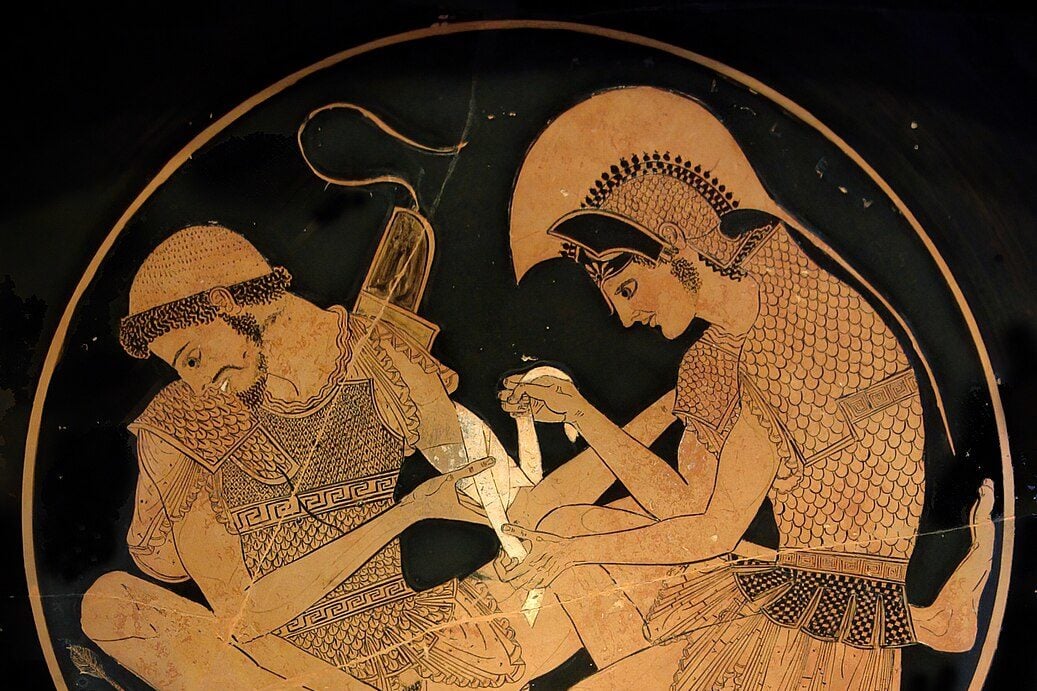
Image of Achilles tending to Patroclus' wound on an Ancient Greek vase from Vulci, 500 BC
Ancient Greeks and Romans used spiderwebs in medicine, believing their natural fibers could stop bleeding and protect wounds from infection. Credit: Wikimedia Commons, public domain

Among the most intriguing practices in Ancient Greek medicine was the use of spiderwebs—and even live spiders—in healing treatments. Ancient medicine often surprises modern readers with remedies that seem unusual at first glance, yet many of these traditional approaches contained a practical logic beneath layers of symbolism and inherited belief.

Greek and Roman physicians placed particular emphasis on controlling bleeding, especially in the context of warfare and surgery. Soldiers frequently sustained deep wounds from swords, spears, and arrows, while physicians had no access to modern antiseptics or advanced surgical instruments. In response, healers continuously experimented with natural materials that could help stop blood flow and protect exposed tissue. One of the more unusual solutions they turned to was spiderwebs.

Ancient Greek and Roman medical writers do, in fact, refer to the use of spiderwebs in medicine. Spider silk was observed to have properties that made it unexpectedly effective for wound care. Physicians noted its ability to absorb blood, cover injuries, and support the clotting process. While they lacked any understanding of modern biochemistry, their meticulous attention to such effects often led them to surprisingly effective medical practices.

Pliny the Elder and natural remedies, such as the use of spiderwebs, in the medicine of Ancient Greece and Rome

The Roman author Pliny the Elder offers some of the clearest references to spider-based medicine in his encyclopedic work Natural History. He describes a range of remedies involving both spiderwebs and actual spiders, noting that the former could help stop bleeding and support healing when applied directly to wounds. He also made mention that spiders were believed to serve as effective remedies for a variety of diseases and injuries in antiquity.

For Ancient Greek healers, spiderwebs appeared naturally suited for wound treatment. Their soft, fibrous texture allowed them to cover cuts with ease, while their adhesive qualities helped seal damaged tissue and protect it. Ancient warfare produced particularly severe injuries. Greek hoplites and Roman soldiers fought in brutal close combat, where swords and spears regularly tore flesh open. Even relatively minor wounds could turn fatal due to blood loss or infection. Physicians accompanying armies therefore required treatments that acted quickly and could be easily carried onto the battlefield.

The use of spiderwebs among the Ancient Romans and Greeks provided several practical advantages in medicine. They were lightweight, widely available in nature, and naturally adhesive when applied to skin. Healers thus collected cobwebs and preserved them for medical use, and soldiers are sometimes described as carrying small containers filled with spiderwebs during military campaigns.

Long before the development of modern antibiotics, healers frequently relied on natural substances that appeared to reduce infection risk and support faster healing.

Galen and Ancient Greek traditions in medicine

The great Greek physician Galen likewise discussed spider cobwebs in his work On the Powers of Simple Remedies in which he refers to their Ancient Greek medicinal applications in the treatment of injuries and the control of bleeding. Because gladiators suffered frequent injuries, Galen gained extensive experience treating wounds and preventing infection. Greek medicine placed strong emphasis on observation and practical effectiveness, so physicians often tested remedies repeatedly under real and demanding conditions.

This connection makes historical sense. Ancient doctors valued materials that combined absorbency, flexibility, and ease of application. Spider silk possessed all three qualities. Furthermore, physicians in antiquity often preferred natural substances that were readily available in military environments, where medical resources were limited.

Modern science helps explain why ancient healers valued spiderwebs. Spider silk is composed of strong protein fibers capable of forming protective coverings over wounds. The silk also absorbs moisture effectively and creates a temporary barrier against dirt and contaminants. Additionally, spiderwebs may exhibit mild antiseptic properties due to natural compounds present within the silk. Although ancient physicians could not observe bacteria, they recognized through experience that some treatments reduced infection more effectively than others.

Many people also associate spiderwebs with clotting because webs can contain traces of vitamin K from insect remains and environmental material. Vitamin K is a nutrient that contributes to blood coagulation in the human body. Most importantly, however, the web itself functions physically as a mesh. When pressed against a wound, the fibers help gather blood and support clot formation.

Modern medicine even studies spider silk for advanced surgical materials due to its exceptional strength and biocompatibility. Ironically, contemporary science now investigates properties that ancient healers observed intuitively thousands of years ago. Thus, ancient healers may have developed practical wound-care techniques through centuries of observation rather than theoretical science.

Greek physician Galen, the pioneering Greek physician who influenced Western medicine through the 1700s. Portrait by Pierre-Roch Vigneron.
Galen, the pioneering Greek physician who influenced Western medicine through the 1700s. Portrait by Pierre-Roch Vigneron. Credit: Wikimedia Commons Public Domain

Ancient medicine and empirical knowledge

The use of spiderwebs highlights a central feature of ancient medicine, namely that Greek and Roman physicians often relied on empirical observation rather than formal scientific theory. They closely observed which remedies appeared effective and preserved those methods within medical tradition.

Greek physicians, in particular, placed great value on careful observation. The Hippocratic tradition encouraged doctors to study symptoms, environments, diets, and physical responses in detail. As a result, treatments survived not because they were theoretically justified but because they produced visible and consistent results. In this context, spiderwebs were valued because their silk fibers formed a natural covering over wounds while also helping to control blood flow. Folk medicine across many cultures likewise used cobwebs as anti-fungal and antiseptic remedies for cuts and open injuries.

Spiderwebs likely entered medical practice through precisely this kind of experiential process. Healers observed reduced bleeding and improved healing following their application, and over time, the practice spread across regions and generations. Cobwebs were part of a much broader landscape of natural medicine in antiquity. Ancient healers regularly used honey, wine, herbs, oils, vinegar, and minerals in wound care and general treatment.

Many of these substances also possessed genuine antibacterial or medicinal properties. Honey, for instance, inhibits bacterial growth and is still used in certain modern wound treatments. Wine and vinegar functioned as early disinfectants due to their alcohol and acid content. Within this framework, spiderwebs would not have seemed unusual to ancient physicians. Instead, they represented another readily available natural material with observable healing potential. Greek and Roman medicine thus consistently explored the relationship between nature and health, making use of natural resources, including even something so peculiar to modern eyes as spiderwebs.

Mad honey, a unique type of honey produced by bees feeding on the nectar of rhododendron flowers, contains toxins that can cause hallucinations and intoxication.
Honey was used by the Ancient Greeks in medicine as well. Credit: The Drug Users Bible, CC BY SA, 2.0

The symbolic dimension of spiderwebs and their silk in Ancient Greece

Ancient cultures attached rich symbolic meaning to spiders and the act of weaving, and in Greek tradition, these associations carried particular weight. Mythology linked weaving to intelligence, fate, and skilled craftsmanship through figures such as Athena and Arachne, embedding it within a broader cultural framework that connected material creation with order, skill, and even divine influence. Spider silk itself likely appeared mysterious and almost otherworldly, given its delicate structure and surprising strength—qualities that blurred the boundary between natural substance and something almost magical.

This symbolic dimension may have reinforced confidence in cobweb-based remedies, since ancient medicine often operated at the intersection of practical treatment and cultural meaning. In battlefield contexts especially, where speed and improvisation were essential, surgeons had to remove arrows, close wounds, cauterize bleeding, and stabilize fractures under extreme conditions with limited equipment, relying heavily on whatever materials were immediately available. Spiderwebs fit this environment well, both practically and symbolically, as soldiers or assistants could gather them quickly from camps, caves, or buildings, requiring no preparation and allowing for rapid application under pressure.

Even when cobwebs were not perfectly effective, they could still provide a basic protective layer that was often better than leaving wounds exposed, which would have only allowed dirt and uncontrolled bleeding to pose immediate risks to survival. In many cases, this simple barrier alone may have made a meaningful difference in outcomes. Today, the same material that once carried symbolic and practical value in antiquity is again attracting scientific interest, as researchers explore spider silk for potential applications in surgery, tissue engineering, and regenerative medicine.

  •  

World’s Oldest Toothpaste Recipe Found in Egypt Reveals Ancient Greek Dental Secrets

A variety of ingredients, including herbs, coarse salt, and peppercorns, are arranged on a rustic wooden table alongside a mortar and pestle for making ancient-style toothpaste.
The natural, abrasive components used by Ancient Greeks to maintain oral hygiene, such as crushed oyster shells, charcoal, and mint. Credit: Greek Reporter archive

Most of us assume that looking after our teeth is a modern habit shaped by supermarket shelves, mint-flavored ads, and childhood dentist scares, but a surviving Ancient Greek toothpaste recipe suggests otherwise.

Sitting quietly in the Austrian National Library in Vienna is one of the most remarkable documents in the history of medicine: a small, faded papyrus from the fourth century AD containing what is widely considered the world’s oldest surviving, precise toothpaste formula.

The existence of this Ancient Greek toothpaste recipe points to something larger at work. By the time it was copied onto papyrus, Greek had long since become the language of science, medicine, and intellectual life across the Mediterranean. This linguistic dominance was a legacy of the conquests of Alexander the Great and, above all, of Alexandria, the city his successors transformed into the ancient world’s foremost hub of knowledge. Even in Roman Egypt, centuries after the Ptolemies had given way to the Caesars, Greek remained the language a physician used when he wanted to be taken seriously.

When was the toothpaste recipe written in Ancient Greek discovered?

The papyrus first came to the attention of modern researchers in 2003, when curators at the Austrian National Library in Vienna identified it while preparing for an international dental congress. It had likely been sitting in the collection for years, its significance unnoticed and largely forgotten. Once translated, however, scholars quickly realized what they were looking at—a toothpaste formula that predates the first commercially marketed toothpaste, Colgate, launched in 1873, by well over fifteen hundred years.

The formula itself is strikingly systematic. The scribe prescribes “a powder for white and perfect teeth” composed of four ingredients: one drachma of rock salt, two drachmas of mint, one drachma of dried iris flower, and twenty grains of pepper. The drachma in this context was a standard unit of Greek medical weight, roughly equivalent to one-eighth of an ounce (about 3–4 grams), part of the same measurement system used throughout the major pharmacological texts of the ancient world. Taken together, the recipe reads less like folklore and more like a physician’s deliberate prescription, carefully calibrated for a patient.

But one might wonder if it actually worked. In 2003, Austrian dentist Dr. Heinz Neuman decided to test it for himself by recreating the formula. His conclusion was cautious but intriguing: the mixture was mildly abrasive and caused slight gum bleeding, yet it also produced a noticeable sensation of cleanliness and freshness. Modern dental science helps explain why. Dried iris flower, or orris root, is now known to contain antibacterial compounds that target the pathogens responsible for gum disease. What might once have looked like ancient guesswork increasingly appears to be empirical knowledge derived through observation and practice. In this sense, modern pharmaceutical science is only now arriving at conclusions the Greeks and Egyptians had already explored more than a thousand years earlier.

Ancient Greek father of pharmacology
Dioscorides is considered the father of pharmacology. Painting of unknown artist depicting Heuresis (the personification of discovery) presenting Dioscorides with a mandrake root. Credit: Unknown artist. Wikipedia Public Domain

None of this should entirely surprise us when we consider the world from which this recipe emerged. Ancient Greece had produced Pedanius Dioscorides, whose monumental work on medicinal plants shaped medical practice for more than a millennium. It had also produced physicians, botanists, and scholars who approached the human body with a level of rigor and curiosity that few ancient traditions matched. The anonymous scribe who recorded this formula was working squarely within that intellectual lineage, effectively encoding practical medical knowledge in Greek because it was the language in which serious medicine was conducted at the time.

The paste itself would have been applied without anything resembling a modern toothbrush. A folded linen cloth or a frayed chew stick—a fibrous twig worn soft at the tip through repeated use—would have served the purpose well enough. The tools were simple, but the intention was essentially the same as ours.

There is a quiet continuity in that detail. The next time you reach for mint toothpaste in the morning, you are participating in a ritual that a Greek-speaking scribe in Roman Egypt thought important enough to preserve on papyrus seventeen centuries ago. The ingredients have been refined, the packaging has changed beyond recognition, and no one is applying the mixture with linen anymore. Still, the impulse behind it—the very human desire for clean, white teeth—remains as old as the ancient world itself, and in many ways, the Ancient Greek world had already put the first working version of the answer into writing.

  •  
❌