Reading view

Amazon’s Elusive “Ghost Dog” Revealed in 594 Camera-Trap Photos
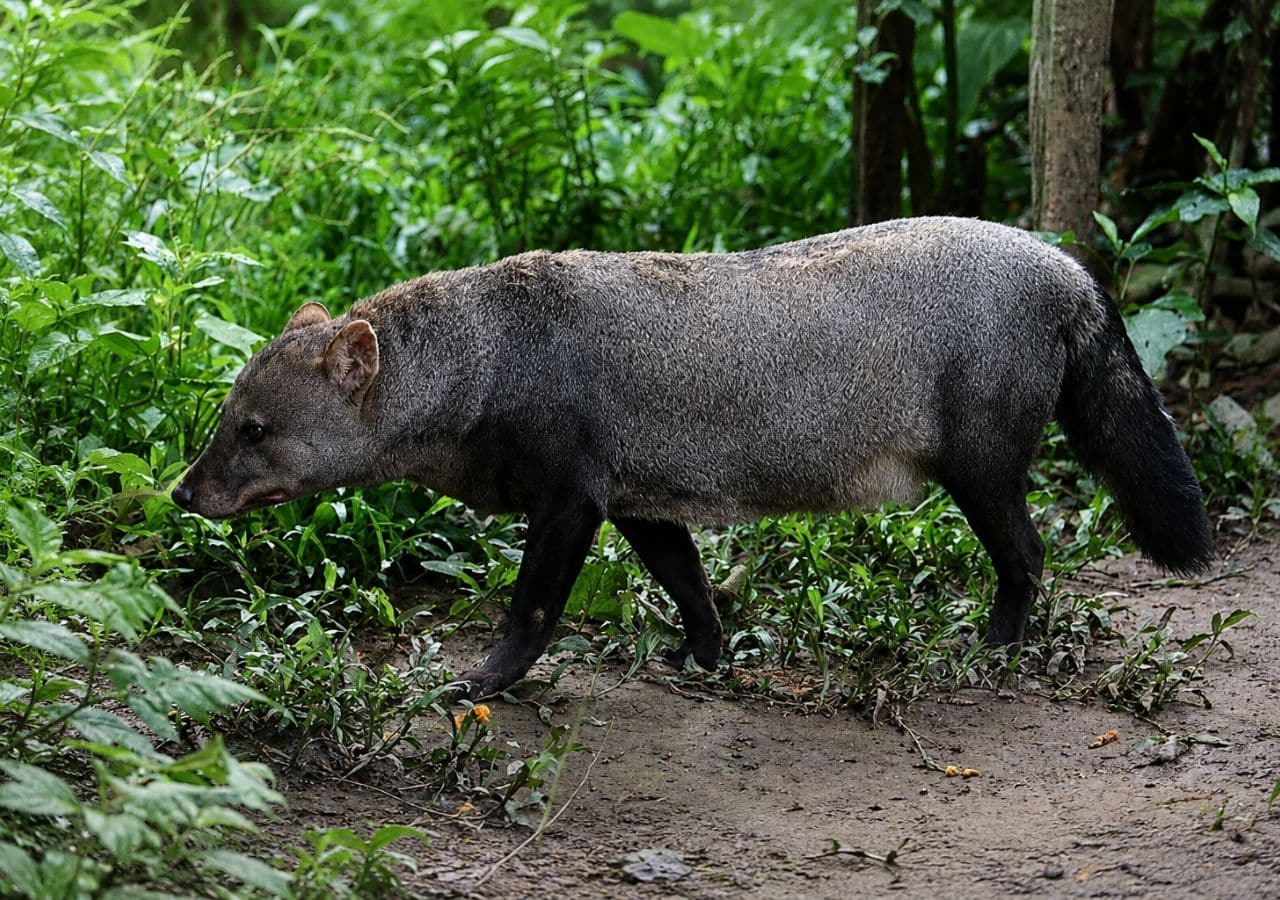
Upscaled image of Amazon's 'ghost dog'
Upscaled image of Amazon’s ‘ghost dog’. Credit: Igor de le Vingne / Wikimedia Commons / CC BY-SA 4.0

Scientists have captured 594 photos of one of the Amazon rainforest’s most mysterious animals, shedding new light on a creature so rarely seen that researchers call it the “ghost dog.”

The short-eared dog, a small and secretive wild canine found only in South America, has puzzled scientists for decades because of how rarely it appears and how little is known about its habits.

The new study, published in the journal Neotropical Biology and Conservation, comes from 25 years of fieldwork led by Robert B. Wallace of the Wildlife Conservation Society in New York.

Wallace and his team reviewed 500 historical sightings across Bolivia and ran 34 camera-trap surveys between 2001 and 2024 in northwestern Bolivia and southeastern Peru.

The cameras recorded 594 confirmed sightings of the animal, making this the largest collection of short-eared dog records ever gathered.

Researchers found the species is mostly active during daylight hours, with most activity happening between 6 a.m. and noon. That pattern surprised some scientists, who had expected the animal to be more active at night.

Rare canine avoids rivers, prefers deep forest

The study also found that short-eared dogs strongly prefer thick, undisturbed forest far from rivers, roads, and human settlements.

Almost every sighting happened deep in the woods, rarely along open riverbanks or grasslands where other predators like jaguars are commonly spotted.

The Amazon's elusive ghost dog was caught on camera 594 times, giving scientists fresh insight into its habits and survival needs. pic.twitter.com/8tv0U2Fiku

— Tom Marvolo Riddle (@tom_riddle2025) June 17, 2026

For the first time, researchers were able to estimate how many short-eared dogs likely live in the region.

By comparing camera results with data on ocelots, a similarly sized wild cat, scientists calculated that short-eared dogs number around 15 animals per 100 square kilometers.

That makes them less common than ocelots but more common than jaguars, according to the findings.

Protected Amazon forests are key to ghost dog’s survival

Researchers also discovered that sightings were far more frequent inside national parks and Indigenous territories than on unprotected land.

In fact, the cameras never recorded a single short-eared dog outside a protected area during the entire study. Scientists say that the pattern shows just how much the species depends on large, intact stretches of forest to survive.

Wallace and his colleagues say the results suggest the short-eared dog may be more common than once believed, though it remains rare and difficult to study.

Still, the team warns that continued deforestation across the Amazon could put the species at risk if protected lands keep shrinking.

The findings give conservationists a clearer picture of where the ghost dog lives and what it needs to survive, offering new hope for protecting one of the Amazon’s least understood predators for years to come.
  •  

Critics say Trump’s opening of public lands to off-road vehicles is ‘reckless and nonsensical’

Move is part of broad effort to open public lands to industry and other uses, threatening wildlife and ecosystems

The Trump administration is executing a controversial plan to allow dirt bikes, ATVs, trucks, snowmobiles and other off-road vehicles to drive through tens of millions of acres of public lands and national parks, which environmental groups warn threatens endangered species and the environment.

The plan’s opponents say the impacts will be wide-ranging and that the vehicles will likely destroy sensitive habitats, harm waterways, drive large predators like grizzly bears into contact with humans, and otherwise damage pristine public lands and parks.

Continue reading...

© Photograph: Patrick Gorski/NurPhoto via Getty Images

© Photograph: Patrick Gorski/NurPhoto via Getty Images

© Photograph: Patrick Gorski/NurPhoto via Getty Images

  •  

Gee, whiz: elephant relieves itself on floor of Texas Republican convention

Four-ton Paige, brought in as surprise for attenders, made gushing debut after governor finished keynote speech

An African elephant weighing roughly 4 tons that was brought to the Texas Republican party’s annual convention to excite attenders ended up drawing widespread attention for the wrong reasons after she urinated on the convention floor and became the focus of animal welfare concerns.

Inside the George R Brown convention center in Houston on Friday, attenders had been told to prepare for a “larger-than-life surprise” after governor Greg Abbott finished his keynote speech. Organizers also displayed a message asking people to keep the aisles clear.

Continue reading...

© Photograph: Houston Chronicle/Hearst Newspapers/Getty Images

© Photograph: Houston Chronicle/Hearst Newspapers/Getty Images

© Photograph: Houston Chronicle/Hearst Newspapers/Getty Images

  •  

Divers Film Great White Shark in the Mediterranean For the First Time

Majestic great white sharks glide through the ocean waters.
Majestic great white shark glides through the ocean waters. Credit: Elias Levy / OpenVerse / CC BY-2.0

Volunteer divers have recorded what researchers believe is the first footage of a great white shark filmed underwater in the Mediterranean, captured during a ghost net removal dive near a shipwreck in the Strait of Sicily.

Derk Remmers, a technical diver with Ghost Diving, was about 40 meters (131 feet) below the surface between Sicily and Tunisia when the shark appeared. He filmed the encounter. The footage and photographs were released on June 8 to mark World Oceans Day.

Remmers said that the odds of meeting such an animal underwater are far lower than winning the lottery, and that his hands were shaking as he filmed.

The shark circled the group, then turned and moved back toward the divers. Remmers said that its behavior appeared calm and curious, not aggressive. When the team released air from their regulators, the shark picked up speed and disappeared from view.

First great white shark sighting in the Mediterranean stuns researchers

Marine biologists who reviewed the footage called the sighting rare and scientifically significant.

Dr. Carlo Cattano, a researcher at the Sicily Marine Centre of the Stazione Zoologica Anton Dohrn, said that most knowledge of great white sharks in the region has come from dead animals caught accidentally in fishing nets, and that direct observations help researchers better understand the species.

A great white shark circled divers in the Mediterranean as they worked to pull deadly ghost nets from a shipwreck in the Strait of Sicily. pic.twitter.com/tdJKJ37TMY

— Tom Marvolo Riddle (@tom_riddle2025) June 9, 2026

He said that prior research had already identified the area as a key location for threatened species and that this sighting reinforces its conservation value. Researchers cautioned that broader conclusions would require further study.

The mission was organized by the Healthy Seas Foundation, along with Ghost Diving and the Society for the Documentation of Submerged Sites. The wreck’s location is being kept confidential.

Ghost nets, fishing gear lost or abandoned at sea, continue killing marine life long after leaving a vessel. Previous dives at the site documented loggerhead sea turtles and large fish species caught in the gear.

Shipwrecks attract marine life, and when ghost nets settle on them, those structures become underwater traps.

Ghost nets turn shipwreck ecosystems into ongoing ocean traps

Veronika Mikos, director of Healthy Seas, said that the sighting is a reminder of how much marine life still exists in offshore Mediterranean waters and how much is at risk from discarded gear and overfishing.

Remmers said that between 1% and 10% of all fishing gear worldwide is lost each year, possibly adding more than 500,000 metric tons of abandoned nets to the ocean annually.

He said that the shark’s presence near the wreck signals an abundance of prey, and that those same animals face entanglement risk. Volunteer cleanups alone cannot resolve the problem, he said, and stronger action against industrial and illegal fishing is needed.

The mission also included environmental DNA sampling and underwater monitoring. Healthy Seas said that it plans to release additional footage and scientific material in the coming weeks.

  •  
❌