
Reading view

Russia recycles its Moldova script to brand Armenia’s election illegitimate, ISW says
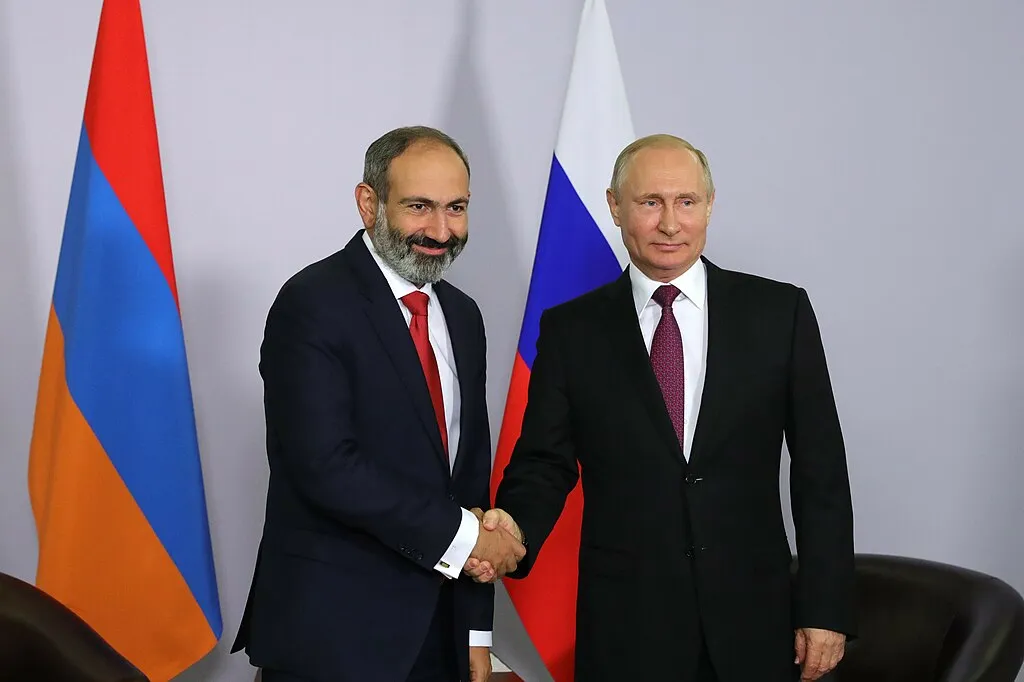
Armenian Prime Minister Nikol Pashinyan shakes hands with Russian President Vladimir Putin in front of Armenian and Russian flags during a bilateral meeting.

Russia began delegitimizing Armenia's election within hours of Nikol Pashinyan's 8 June 2026 victory. The Institute for the Study of War said so in its 9 June assessment. ISW identified three coordinated false narratives advanced by Russian government officials and pro-Kremlin commentators since the result.

One narrative claims Pashinyan "lost" because Civil Contract took less than 50% of the vote. A second says the election unfolded under Western pressure and domestic opposition suppression. A third alleges mass electoral fraud. ISW wrote that Moscow "continues spreading false narratives of stolen elections in post-Soviet states when those results do not favor Russian interests."

The narratives ISW found in Armenia's election

Foreign Ministry spokeswoman Maria Zakharova led Moscow's reaction to Armenia's election on 8 June. She alleged the vote unfolded under "unprecedented pressure on the opposition and interference from the West, primarily the EU." Zakharova said Civil Contract "did not receive a monopoly on power." The campaign featured "harsh repression" of opposition activists and attacks on the Armenian Apostolic Church, The Armenian Mirror-Spectator reported.

Kremlin spokesman Dmitry Peskov declined to congratulate Pashinyan. He told reporters Moscow is "waiting for the final results" and "recording numerous irregularities." The Central Election Commission's final tally put Civil Contract at 49.81%—727,160 votes. That left Samvel Karapetyan's pro-Russian "Strong Armenia" a distant second at 23.29%, Al Jazeera reported. Turnout topped 58%.

The Moldova precedent ISW cites

ISW pointed to Maia Sandu's 2024 Moldovan presidential victory as the direct precedent. The think tank wrote that Moscow had alleged "election fraud, suppression of opposition, and 'illegitimate' results." The Kremlin suggested "Sandu's victory materialized only after counting Western diaspora ballots," ISW added.

Sandu's Party of Action and Solidarity went on to win 50.14% in the September 2025 parliamentary vote anyway. Moldovan Prime Minister Dorin Recean said the Kremlin spent approximately €200 million on the 2024 cycle. That equals nearly 1% of Moldova's GDP, Reuters reported.

Economic coercion runs alongside the narrative

ISW also flagged a parallel economic threat. On 8 June, the head of the Federal Agency for Fisheries, Ilya Shestakov, warned at the St Petersburg International Economic Forum. He vowed "further steps will certainly follow" against Armenian exports if "veterinary risks" arise, Kyiv Post reported.

The warning compounded restrictions imposed since May on Armenian mineral water, alcohol, flowers, fruits, vegetables, and fish. ISW described the move as economic punishment for Armenia "distancing itself from Russia." That distancing is precisely what Armenia's election ratified — Pashinyan's government has reduced participation in the Russia-led CSTO and reoriented Civil Contract's policies toward the EU.
  •  

Germany was late to grasp Russian hybrid attacks, Bundeswehr colonel tells defence forum

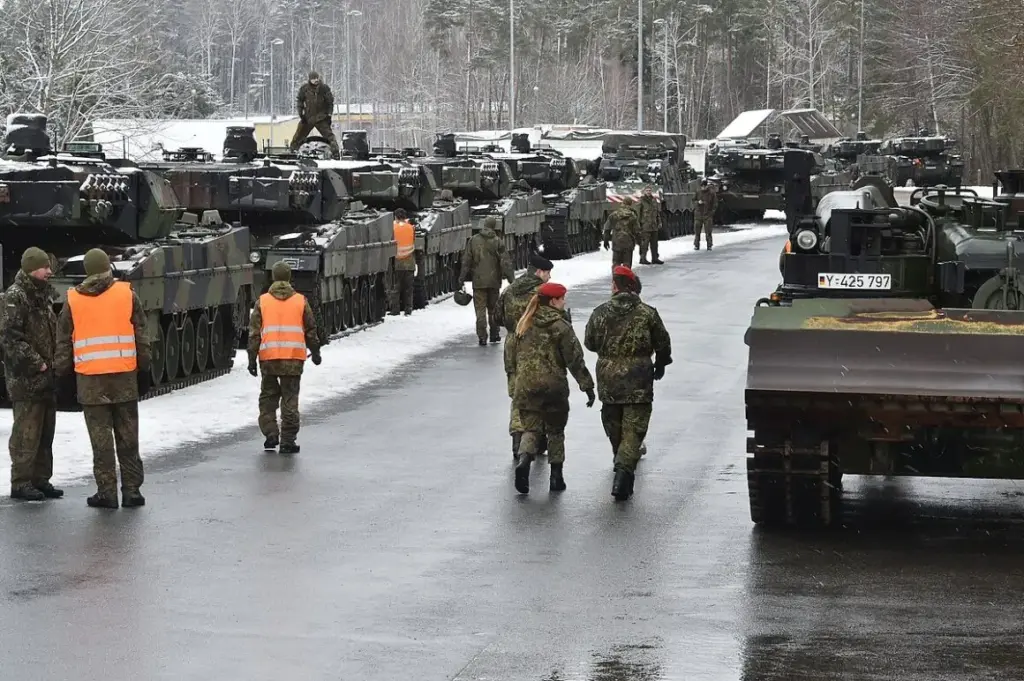
Bundeswehr troops and armored vehicles support NATO's eFP Battlegroup in Lithuania, part of Germany's posture against Russian hybrid attacks.

Hybrid threats span both hardware and politics, said Colonel Sönke Marahrens. The list of methods includes overflights, the cutting of undersea cables, and a concerted disinformation campaign. It also reaches into political and judicial systems, including what he called the "disposable agent" model —civilians recruited online for one-off sabotage or surveillance. As a model for how the state should respond, Colonel Marahrens pointed to Finland. Authorities there detained a suspected sabotage vessel within an hour of Baltic Sea cable damage.

Russian hybrid attacks: a political shift acknowledged late

Recognition had arrived slowly, Marahrens told the New Age Defence forum in Berlin on 8 June, Ukrinform reported. "Germany recognized rather late that we are being attacked by such hybrid methods," the colonel said. "But I would say that in the last year and a half to two years, we see a shift at the political level as well."

The colonel heads a department at the Bundeswehr's Center for Digitalization and Capability Development. The center reports to the Cyber and Information Domain Command in Bonn. German intelligence services and state institutions are increasingly informing citizens of the changing security environment, he said.

Drones, cables, and courts

Russian pressure now reaches beyond physical sabotage, Marahrens said. "It's not just drones and not just undersea cables, it's also disinformation within our society. It's the use of the political and judicial systems, the concept of 'disposable agents,'" he said.

Unidentified drones over European critical infrastructure, including German sites, had a primarily psychological effect, the colonel said. The impact was not military. Germany's National Security Council should receive real powers for rapid decision-making, he argued. The colonel cited Finland's response time of less than an hour after the Baltic Sea cable damage.

"Creating societal resilience is something we in Germany have yet to learn." — Col. Sönke Marahrens, Bundeswehr Center for Digitalization and Capability Development

Kyiv's resilience is something Berlin lacks

Germany draws on Ukrainian wartime experience through financing, joint training, and front-line exchanges, Marahrens said. "We support Ukraine financially," he said. "We also adopt the experience gained from the battlefield. We provide training for them, and we also adopt experience from them during joint exercises at our training grounds."

The most important Ukrainian lesson, the colonel said, is societal resilience under wartime conditions. "Creating societal resilience is something we in Germany have yet to learn," Marahrens said. The Kremlin coordinates large-scale hybrid operations across Europe, the agency added. These campaigns aim to discredit Kyiv and inflame internal conflicts in EU states amid Russia's war on Ukraine.

  •  
❌