Reading view

Russia recycles its Moldova script to brand Armenia’s election illegitimate, ISW says
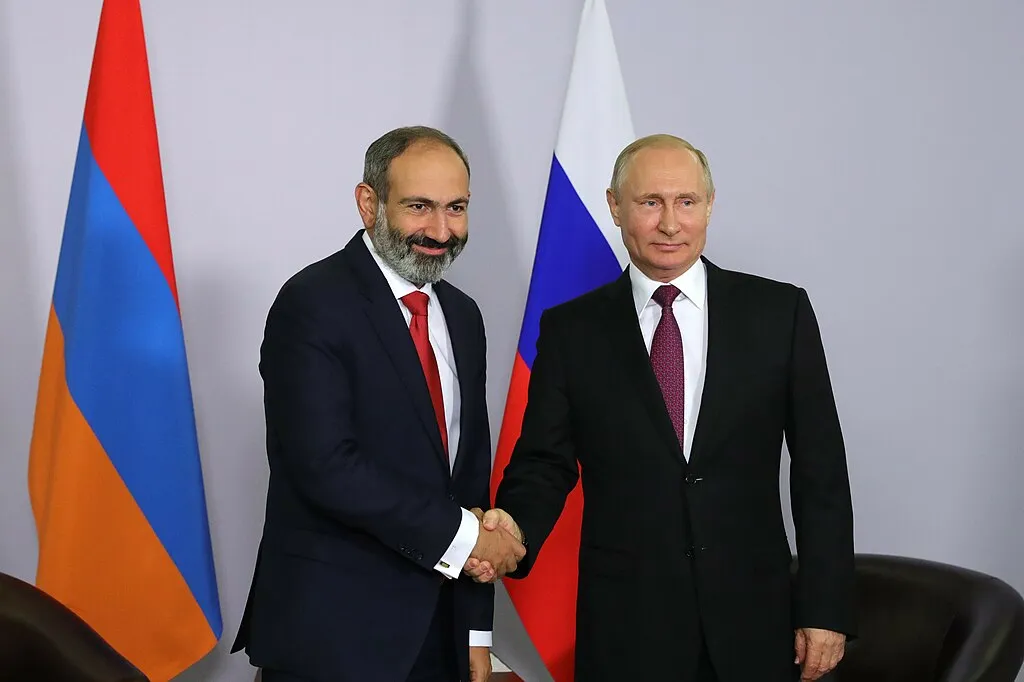
Armenian Prime Minister Nikol Pashinyan shakes hands with Russian President Vladimir Putin in front of Armenian and Russian flags during a bilateral meeting.

Russia began delegitimizing Armenia's election within hours of Nikol Pashinyan's 8 June 2026 victory. The Institute for the Study of War said so in its 9 June assessment. ISW identified three coordinated false narratives advanced by Russian government officials and pro-Kremlin commentators since the result.

One narrative claims Pashinyan "lost" because Civil Contract took less than 50% of the vote. A second says the election unfolded under Western pressure and domestic opposition suppression. A third alleges mass electoral fraud. ISW wrote that Moscow "continues spreading false narratives of stolen elections in post-Soviet states when those results do not favor Russian interests."

The narratives ISW found in Armenia's election

Foreign Ministry spokeswoman Maria Zakharova led Moscow's reaction to Armenia's election on 8 June. She alleged the vote unfolded under "unprecedented pressure on the opposition and interference from the West, primarily the EU." Zakharova said Civil Contract "did not receive a monopoly on power." The campaign featured "harsh repression" of opposition activists and attacks on the Armenian Apostolic Church, The Armenian Mirror-Spectator reported.

Kremlin spokesman Dmitry Peskov declined to congratulate Pashinyan. He told reporters Moscow is "waiting for the final results" and "recording numerous irregularities." The Central Election Commission's final tally put Civil Contract at 49.81%—727,160 votes. That left Samvel Karapetyan's pro-Russian "Strong Armenia" a distant second at 23.29%, Al Jazeera reported. Turnout topped 58%.

The Moldova precedent ISW cites

ISW pointed to Maia Sandu's 2024 Moldovan presidential victory as the direct precedent. The think tank wrote that Moscow had alleged "election fraud, suppression of opposition, and 'illegitimate' results." The Kremlin suggested "Sandu's victory materialized only after counting Western diaspora ballots," ISW added.

Sandu's Party of Action and Solidarity went on to win 50.14% in the September 2025 parliamentary vote anyway. Moldovan Prime Minister Dorin Recean said the Kremlin spent approximately €200 million on the 2024 cycle. That equals nearly 1% of Moldova's GDP, Reuters reported.

Economic coercion runs alongside the narrative

ISW also flagged a parallel economic threat. On 8 June, the head of the Federal Agency for Fisheries, Ilya Shestakov, warned at the St Petersburg International Economic Forum. He vowed "further steps will certainly follow" against Armenian exports if "veterinary risks" arise, Kyiv Post reported.

The warning compounded restrictions imposed since May on Armenian mineral water, alcohol, flowers, fruits, vegetables, and fish. ISW described the move as economic punishment for Armenia "distancing itself from Russia." That distancing is precisely what Armenia's election ratified — Pashinyan's government has reduced participation in the Russia-led CSTO and reoriented Civil Contract's policies toward the EU.

  •  

Germany was late to grasp Russian hybrid attacks, Bundeswehr colonel tells defence forum

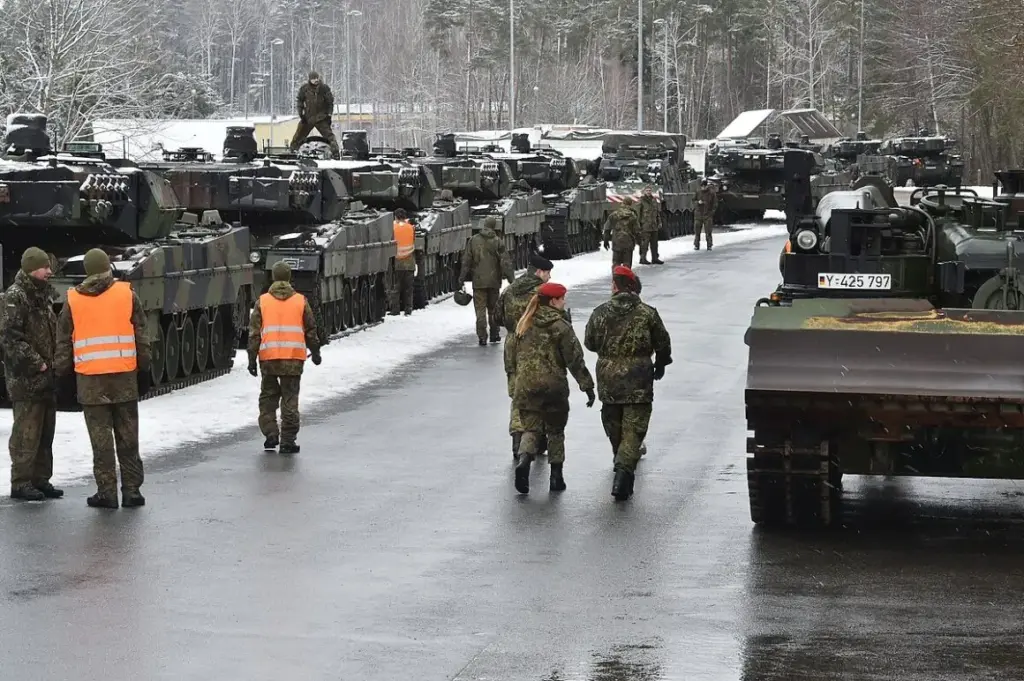
Bundeswehr troops and armored vehicles support NATO's eFP Battlegroup in Lithuania, part of Germany's posture against Russian hybrid attacks.

Hybrid threats span both hardware and politics, said Colonel Sönke Marahrens. The list of methods includes overflights, the cutting of undersea cables, and a concerted disinformation campaign. It also reaches into political and judicial systems, including what he called the "disposable agent" model —civilians recruited online for one-off sabotage or surveillance. As a model for how the state should respond, Colonel Marahrens pointed to Finland. Authorities there detained a suspected sabotage vessel within an hour of Baltic Sea cable damage.

Russian hybrid attacks: a political shift acknowledged late

Recognition had arrived slowly, Marahrens told the New Age Defence forum in Berlin on 8 June, Ukrinform reported. "Germany recognized rather late that we are being attacked by such hybrid methods," the colonel said. "But I would say that in the last year and a half to two years, we see a shift at the political level as well."

The colonel heads a department at the Bundeswehr's Center for Digitalization and Capability Development. The center reports to the Cyber and Information Domain Command in Bonn. German intelligence services and state institutions are increasingly informing citizens of the changing security environment, he said.

Drones, cables, and courts

Russian pressure now reaches beyond physical sabotage, Marahrens said. "It's not just drones and not just undersea cables, it's also disinformation within our society. It's the use of the political and judicial systems, the concept of 'disposable agents,'" he said.

Unidentified drones over European critical infrastructure, including German sites, had a primarily psychological effect, the colonel said. The impact was not military. Germany's National Security Council should receive real powers for rapid decision-making, he argued. The colonel cited Finland's response time of less than an hour after the Baltic Sea cable damage.

"Creating societal resilience is something we in Germany have yet to learn." — Col. Sönke Marahrens, Bundeswehr Center for Digitalization and Capability Development

Kyiv's resilience is something Berlin lacks

Germany draws on Ukrainian wartime experience through financing, joint training, and front-line exchanges, Marahrens said. "We support Ukraine financially," he said. "We also adopt the experience gained from the battlefield. We provide training for them, and we also adopt experience from them during joint exercises at our training grounds."

The most important Ukrainian lesson, the colonel said, is societal resilience under wartime conditions. "Creating societal resilience is something we in Germany have yet to learn," Marahrens said. The Kremlin coordinates large-scale hybrid operations across Europe, the agency added. These campaigns aim to discredit Kyiv and inflame internal conflicts in EU states amid Russia's war on Ukraine.

  •  

“The enemy counts on our disunity”—Ukrainian diaspora answers with Bern Declaration

Delegates at the Global Ukrainian Summit in Bern pose for a group photograph after adopting the Bern Declaration on 7 June 2026. Many participants wear traditional Ukrainian vyshyvanky. A Ukrainian flag is visible at lower left.

"The enemy is counting on our disunity," Ukraine's Deputy Foreign Minister Mariana Betsa told more than 350 diaspora leaders gathered in Bern on 7 June 2026. The answer came in the form of the Bern Declaration—a document committing Ukrainian communities across more than 50 countries to coordinated defense support, territorial restoration, and postwar recovery, the Ukrainian World Congress reported.

The declaration lands at a turning point for Ukraine's global community. An estimated 5.9 million Ukrainians now live abroad, yet only 43% of refugees say the war's end would be enough to bring them home.

The Bern Declaration reframes that reality: if millions of Ukrainians remain dispersed for years, their energy must be channeled into something more than candlelight vigils and flag-waving. The document calls global unity "not a symbol" but "a strategic prerequisite for the success of Ukraine and the Ukrainian people."

What the Bern Declaration demands

The Global Ukrainian Summit, held 5–7 June at the Yehudi Menuhin Forum next to Ukraine's embassy in the Swiss capital, was organized by the Ukrainian World Congress (UWC) in cooperation with the Ukrainian Society of Switzerland—an organization that has built ties between the two countries since 1945—and in partnership with Ukraine's Ministry of Foreign Affairs.

The declaration set out three priorities: Ukraine's victory through a just and lasting peace that restores territorial integrity and holds Russia accountable; the recovery of a strong, independent state free from Russian influence; and the cultivation of future generations of Ukrainian patriots worldwide.

It then issued seven calls to action. Diaspora communities pledged to fund Ukraine's defense forces, engage in political advocacy, take leading roles in reconstruction, protect Ukrainian identity and heritage, strengthen cross-border community networks, resist attempts to divide the Ukrainian people, and amplify Ukraine's global voice.

"Our goals remain unchanged: Ukraine's victory and Russia's defeat, the reconstruction of Ukraine, and a strong global Ukrainian community," UWC President Paul Grod told delegates at the summit's opening session.

Why Bern, and why now

The summit opened with a minute of silence for fallen defenders and all victims of Russia's war on Ukraine. In addition to Betsa, speakers included Deputy Minister of Social Policy Ilona Havronska, Central Election Commission head Oleh Didenko, Ukraine's Ambassador to Switzerland Iryna Venediktova, and former Russian prisoner of war Yuliia Paievska, known as "Taira."

Security remains the prerequisite for the return of millions of displaced Ukrainians, and the government is developing long-term solutions, Deputy Minister of Social Policy Havronska told delegates, according to SWI swissinfo.ch. Venediktova called for coordinated international measures—from sanctions enforcement to the deployment of frozen Russian assets and international criminal prosecution.

Swiss Federal Council Delegate for Ukraine Jacques Gerber attended the opening, underscoring Switzerland's growing role in humanitarian aid and reconstruction in Ukraine, SWI swissinfo.ch noted. Publicist Mykola Riabchuk delivered the keynote on unity within the global Ukrainian community, the UWC reported.

"Ukraine is already proving that it is a strong European nation that is fighting for its sovereignty and for the future of freedom around the world," Betsa told the summit.

From gestures to coordination

The Bern Declaration is the latest in a series of moves that trace a diaspora increasingly organized around concrete objectives. One month ago, Ukraine's women's diaspora gathered at the European Parliament in Brussels to debate the future of temporary protection for 4.4 million refugees.

Four months before that, the UWC coordinated nearly 1,000 events in 78 countries to mark the fourth anniversary of Russia's full-scale invasion. The Bern Declaration converts that momentum into a standing set of commitments.

The document, as Ukrinform reported, closed with three guiding principles: "Ukraine defines our unity. Responsibility before the Ukrainian people defines our unity. National action defines our unity."

"The enemy is counting on our disunity. Ukraine is already proving that it is a strong European nation that is fighting for its sovereignty and for the future of freedom around the world." — Deputy Foreign Minister Mariana Betsa, Bern, 7 June 2026


  •  

Food shortage in occupied Rubizhne: Russia blocks civilian deliveries, blames drones

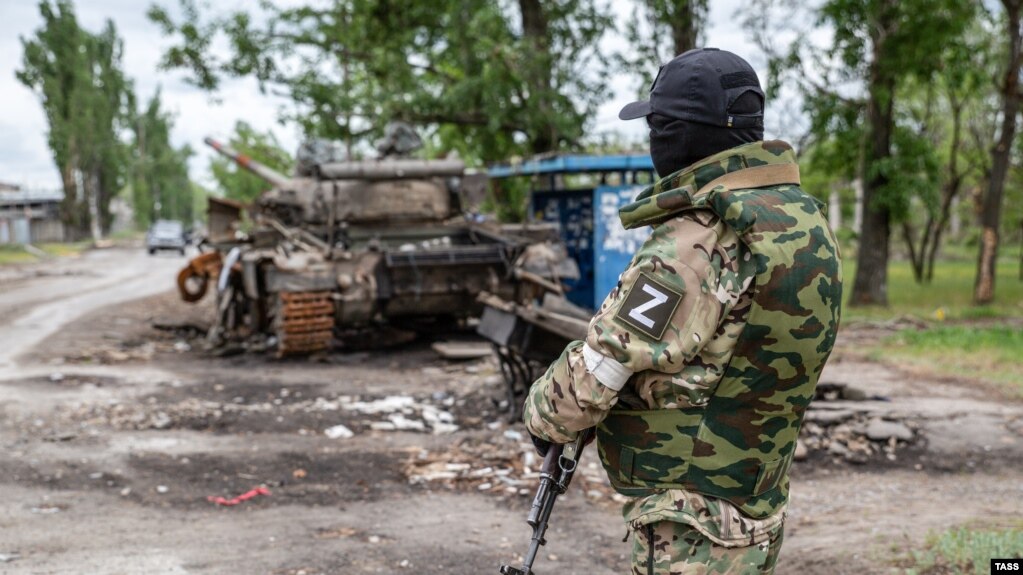
Russian soldier with Z insignia stands near a destroyed armored vehicle on a street in occupied Rubizhne, Luhansk Oblast, where occupation authorities have now manufactured a food shortage by blocking civilian deliveries

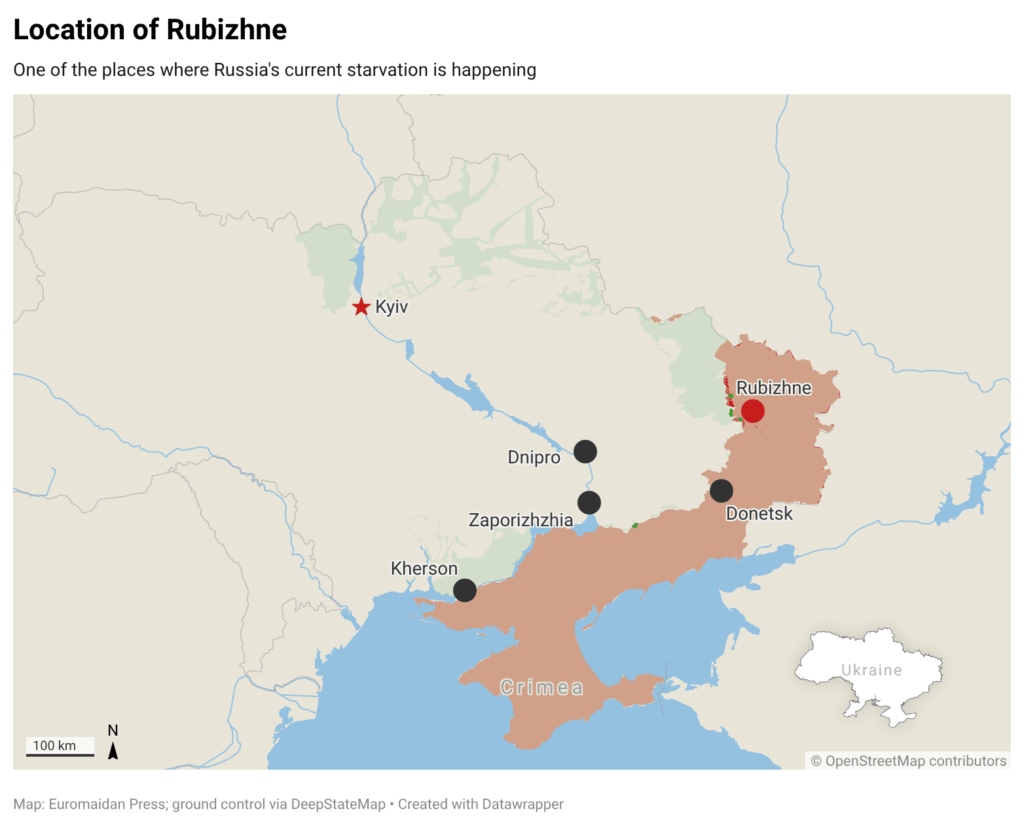
Russian occupation forces have deliberately manufactured a food shortage in occupied Rubizhne, cutting civilian food deliveries to the Luhansk Oblast city even as military supply convoys continue to flow, the head of the Luhansk Regional Military Administration reported on 8 June.

Shelves in the city's stores are emptying rapidly, Kharchenko said. Russian propaganda blames disrupted transport links, citing an alleged drone threat. Yet the occupiers have had no difficulty maintaining their own logistics routes to resupply military units stationed across the region, he noted.

"They need to make the next victim for Russian television out of local residents. They chose Rubizhne."—Luhansk governor Oleksii Kharchenko

A city turned into a propaganda prop

The official accused Russia of weaponizing hunger for television cameras. He said the occupiers intend to film bare shelves and hungry residents, then broadcast the footage to Russian audiences as evidence of suffering they themselves engineered.

Before Russia's full-scale invasion, Rubizhne was home to more than 55,000 people. Russian forces seized the city in May 2022 after weeks of devastating urban combat during which they fired up to 1,500 shells per day, the BBC's Quentin Sommerville reported from the front lines. The city's current population remains unknown, but residents who stayed have endured four years of occupation without reliable utilities, communications, or public services.

In nearby Sievierodonetsk, conditions have deteriorated so far that residents now mow the grass in their own neighborhoods and clean communal areas themselves, Kharchenko added—an admission that Russia's occupation authorities provide no basic municipal services even in the cities they claim to have "liberated."

A pattern of deliberate starvation across occupied Ukraine

The manufactured food shortage in occupied Rubizhne fits a documented pattern of Russia using hunger as a weapon against Ukrainian civilians trapped behind the front lines.

In Oleshky, a frontline city in occupied Kherson Oblast, roughly 2,000 civilians have been cut off from food, medicine, and clean water for months. "If the situation doesn't improve, people will just die there from hunger. Because there's no way out, no food supplies coming in," an Oleshky resident who escaped occupation told the Kyiv Independent. Russian forces mined the access roads, destroyed the Kakhovka dam's water infrastructure, and deployed FPV drones that residents describe as conducting "human safari" attacks—hunting anyone who steps outside. People there hunt pigeons and wild ducks with fishing line, plant vegetables in shell craters, and bury their dead in wheelbarrows because no coffins or transport exist.

Ukraine's Foreign Ministry in May appealed to the United Nations and the International Committee of the Red Cross over what it called a "severe humanitarian crisis" in Russian-occupied Kherson Oblast. Russia rejected calls for a humanitarian corridor.

In Nova Kakhovka, upstream from Oleshky, most coastal areas have been abandoned. The few residents who remain live in distant high-rise microdistricts with no functioning hospital and minimal Russian administrative presence, governed remotely from Henichesk, roughly 130 kilometers away.

The Rubizhne food shortage also coincides with Russia's broader restriction of civilian movement through occupied territories. On 6 June, occupation authorities shut down bus and private car traffic on main arteries, capping two weeks of land-corridor breakdowns that have further isolated occupied communities.

Starvation as premeditated policy

International human rights investigators have gathered evidence that Russia planned to use hunger as a weapon before the 2022 invasion. A report by Global Rights Compliance found that a Russian defense contractor purchased grain-transport trucks and bulk cargo ships in December 2021—two months before the invasion began. The evidence was submitted to the International Criminal Court for what could become the first prosecution of a head of state for the war crime of starvation as a method of warfare.

Global Rights Compliance has drawn a direct parallel to the Holodomor—the Soviet-engineered famine that killed millions of Ukrainians in 1932–1933. Russia's current starvation tactics are being perpetrated, the organization noted, by "the same attacking state."

Under the Geneva Conventions, using starvation of civilians as a method of warfare is a war crime. The Rome Statute of the ICC codified the offense in 1998. Yet in occupied Rubizhne, occupied Oleshky, and across the territories Russia claims to have annexed, the pattern continues: military convoys pass, civilian supply lines close, and shelves empty.

  •  
❌