
Reading view

Elon Musk Becomes World’s First Trillionaire After SpaceX IPO

SpaceX's historic IPO turned Elon Musk into the world's first trillionaire
SpaceX’s historic IPO turned Elon Musk into the world’s first trillionaire. Credit: NORAD and USNORTHCOM Public Affairs / Public Domain

Elon Musk became the world’s first trillionaire on Friday after SpaceX closed the biggest stock market debut in history. Bloomberg put his net worth at $1.11 trillion at the end of trading.

SpaceX began trading on the Nasdaq at $150 per share, above the set offering price of $135. The stock reached $176 before closing at $160, a gain of more than 19%, pushing the company’s valuation to $2.1 trillion.

Executives rang the opening bell as Elton John’s Rocket Man played on the exchange floor. SpaceX President Gwynne Shotwell said that the company has a history of making history and confirmed a Falcon 9 rocket launched from Cape Canaveral Space Force Station that morning with 29 Starlink satellites.

Musk, speaking at headquarters, said that the startup he built in a warehouse is now behind the largest IPO ever and remains committed to making humanity multiplanetary.

SpaceX IPO made Elon Musk the world’s first trillionaire

Musk holds a 42% stake in SpaceX and a 12% stake in Tesla, valued at about $1.5 trillion. SpaceX itself encompasses Starlink, xAI, and social media platform X. Less than 0.1% of his net worth is held in cash, he has said, and several holdings have been pledged as collateral for loans.
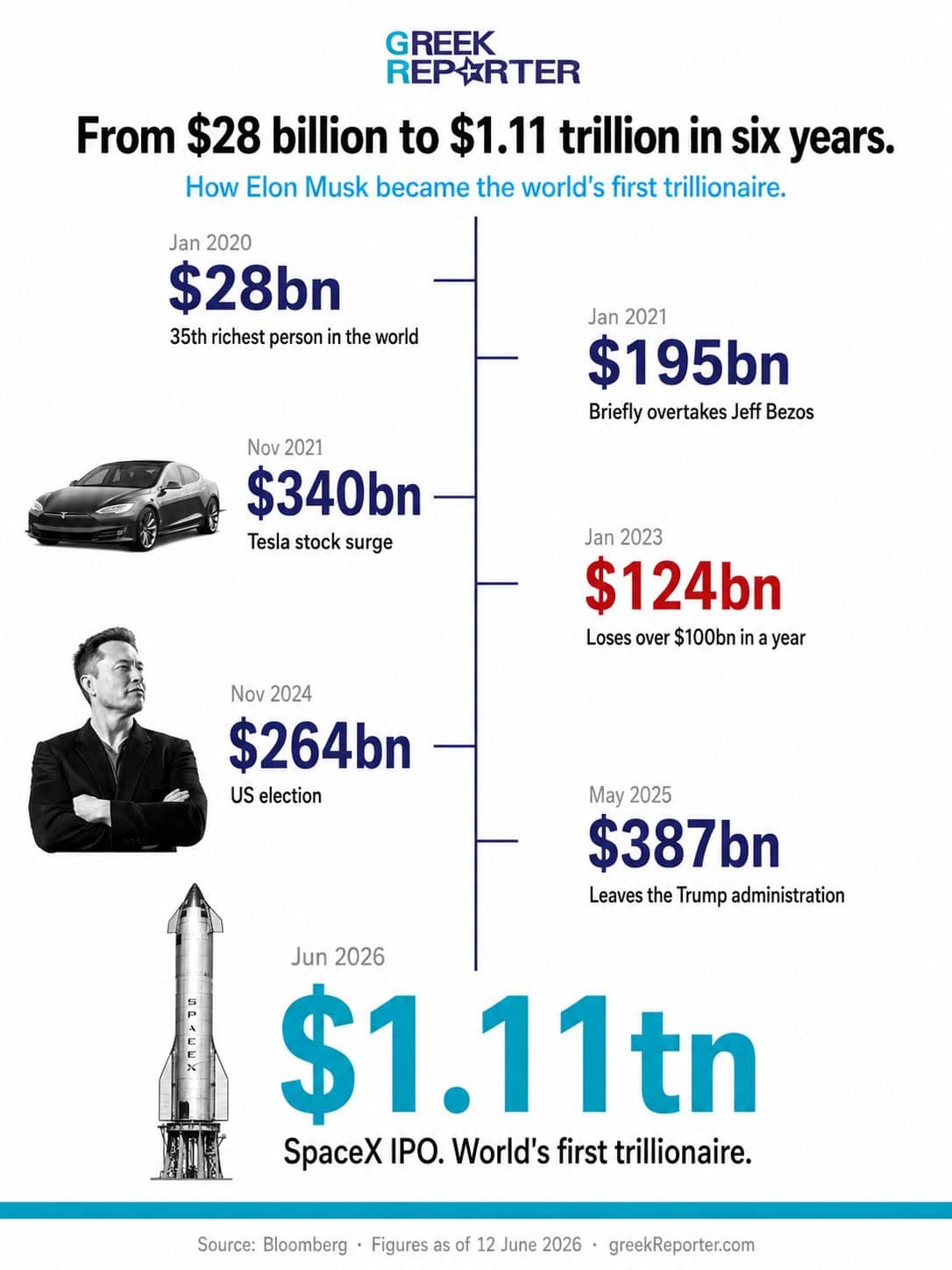
Musk journey to world's first trillionaire
Musk journey to world’s first trillionaire. Credit: GR Archive

He also holds stakes in The Boring Company and Neuralink. He is nearly four times wealthier than Google co-founder Larry Page and more than five times richer than Meta’s Mark Zuckerberg.

SpaceX used a fixed price of $135 with no range for investors to consider, closing orders two days before trading. Demand was four times the available supply. The company sought $75 billion but may have attracted up to $250 billion in interest.

Sen. Elizabeth Warren asked the Securities and Exchange Commission to delay the listing over concerns about potentially misleading accounting.

SpaceX burns cash while employees strike it rich

SpaceX reported revenue of $18.7 billion last year against an operating loss of $4.3 billion. For comparison, Meta posted more than $200 billion in revenue with net income above $60 billion. Musk controls about 85% of SpaceX voting shares, a level analysts say adds risk to the stock.

More than 4,400 current and former employees are expected to become millionaires, with about 400 set for $100 million or more each. SpaceX shares are expected to enter index funds faster than most newly public companies, potentially giving retirement savers indirect exposure.

OpenAI and Anthropic have also filed to go public this year at valuations near $1 trillion each. Gabriel Zucman, a French economist who studies extreme wealth, warned that the AI boom is concentrating capital rapidly and said there is a fundamental tension between extreme wealth and a functioning democracy.
  •  

DNA From 2,300-Year-Old Etruscan Grape Seeds Reveals Origins of Modern Wine

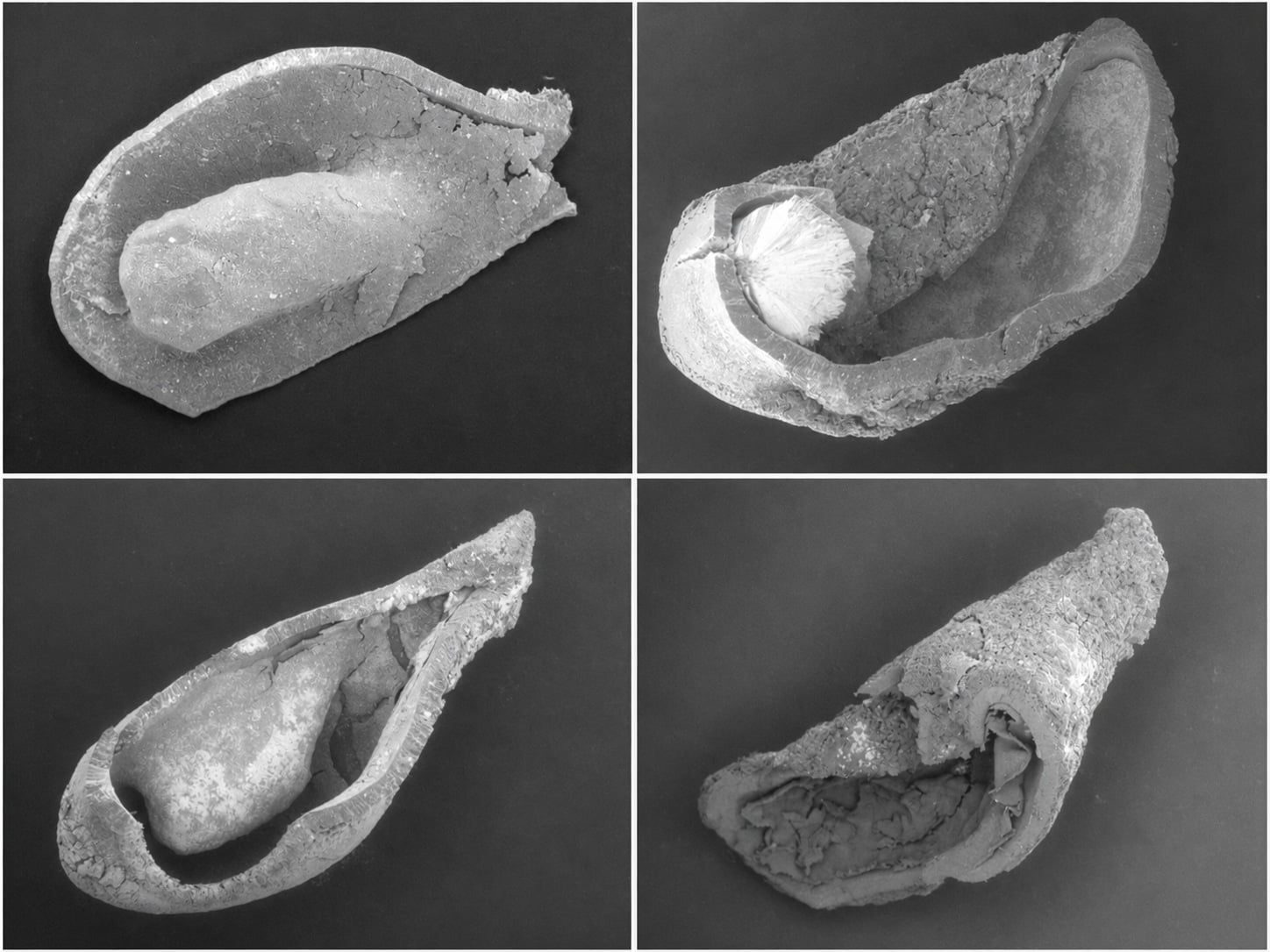
Analysis of grape seeds from ancient wells in Tuscany
Analysis of grape seeds from ancient wells in Tuscany. Credit: Oya Inanli / CC BY 4.0

Researchers have used ancient DNA from grape seeds to trace the origins of wine-making traditions that still shape modern viticulture, finding a direct genetic thread connecting an Etruscan settlement in Italy to wine regions across Europe today.

Oya Inanli of the University of York led a team that studied 80 waterlogged grape seeds from two wells at Cetamura del Chianti, a site in Tuscany dating to around 300 BC.

The seeds span the Etruscan and Roman periods up to roughly 1200 CE. The study was published in the Journal of Archaeological Science.

More than a quarter of the seeds belonged to a single variety, identical in genetics, and maintained without change for at least 362 years. Direct radiocarbon dating confirmed this variety was present from the Etruscan period through Roman occupation.

Researchers identified it as a clonal lineage, meaning winemakers repeatedly propagated the same vine without allowing it to reproduce sexually. This practice remains common among winemakers today.

One grape variety survived unchanged for over three centuries

The DNA of the dominant variety also pointed to a significant discovery. Genetic markers associated with berry color showed a 92 percent likelihood that the clonal variety produced white grapes.

A new study decodes ancient grape DNA, tracing a single wine variety through over 362 years and connecting Roman-era viticulture to modern European winemaking traditions. pic.twitter.com/mRRzkTyCuF

— Tom Marvolo Riddle (@tom_riddle2025) June 12, 2026

This makes Cetamura del Chianti one of the earliest known sites with genetic evidence for white wine production in the pre-Roman Mediterranean. Two other seeds showed markers linked to dark berries, suggesting red wine was also part of life at the settlement.

Researchers found genetic links stretching well beyond Tuscany. A Cetamura seed closely matched a grape seed recovered from a first-century Roman farm in Mont Ferrier, France. This points to the Romans moving specific vine varieties deliberately across their empire.

A separate Cetamura seed from the transitional Etruscan-Roman period showed a sibling-level genetic relationship with a modern Hungarian variety called “Baratcsuha szurke.” That variety belongs to a broader family of old European grapes, including a vine in Slovenia said to be more than 400 years old.

Ancient grape DNA traces modern wine’s origins across Europe

The team applied multiple methods, including ancient DNA analysis, near-infrared spectroscopy, geometric morphometrics, and radiocarbon dating.

Seeds from deeper layers of the wells preserved more genetic material, pointing to stable, waterlogged conditions as a key factor in DNA survival.

The research provides concrete evidence that agricultural traditions of the Etruscans and Romans laid the groundwork for wine culture across Europe.

  •  
❌