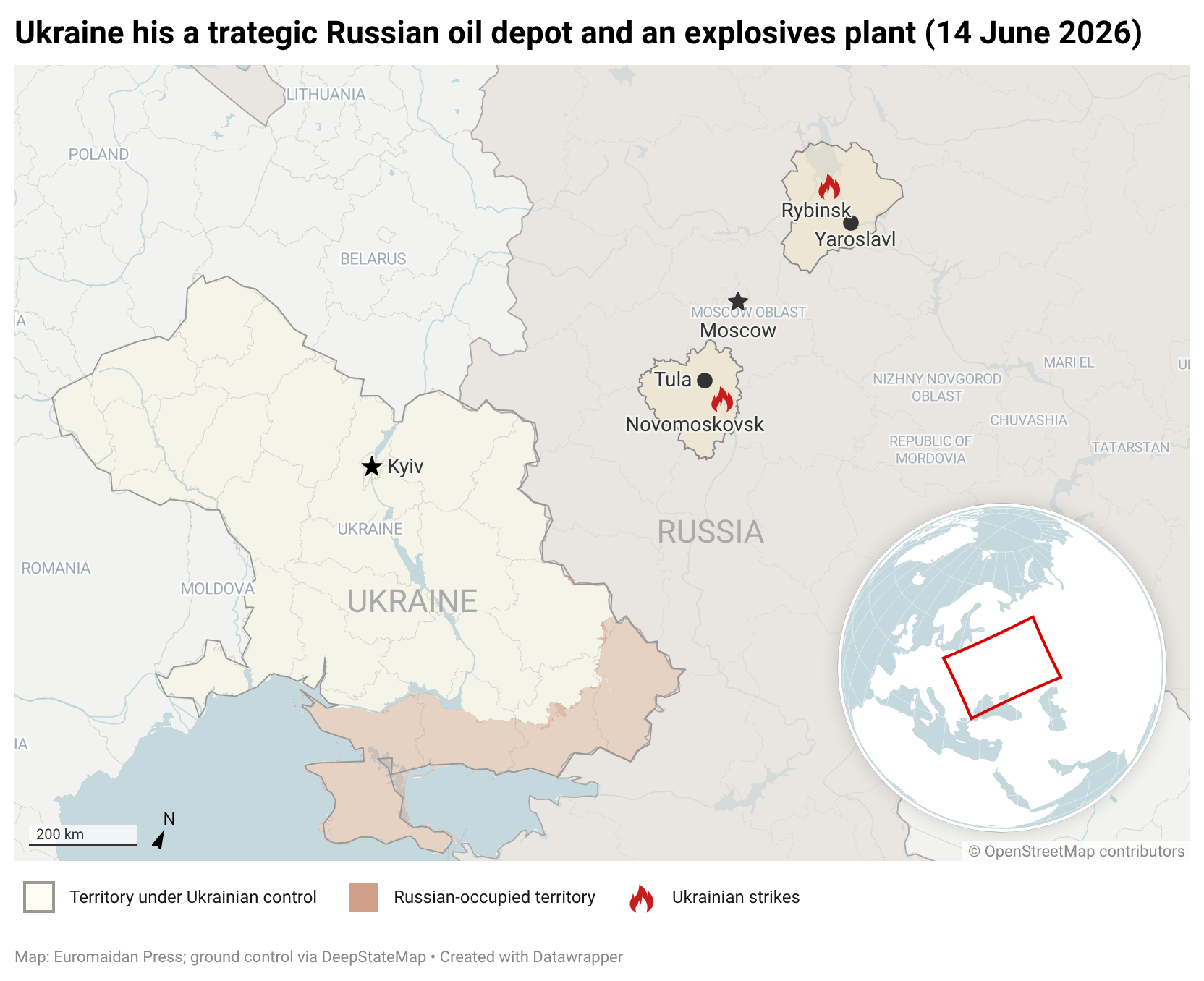
Ukraine's Special Operations Forces (SSO) reported conducting a joint sabotage operation with a Russian underground resistance movement against an oil pumping station in Yaroslavl Oblast that feeds crude toward Russia's Baltic export terminal, SSO announced on 14 June. The military called it the second coordinated action with the partisan group in one week. Euromaidan Press cannot independently verify the reported damage.
Such sabotage operations are in line with Ukraine's deep-strike campaign, which has systematically targeted Russian oil refineries, depots, pumping stations, and pipeline infrastructure, driving Russian oil production to its lowest level in a year. Combined with the Logistics Lockdown middle-strike campaign targeting Russian supply routes in the occupied territories — including fuel trucks — the effort has already triggered a gasoline crisis across more than two dozen Russian regions and six occupied Ukrainian areas.
SSO and Black Spark report joint operation on Palkino station
SSO saidit conducted "special actions" on the Palkino oil pumping station in Myshkinsky district, Yaroslavl Oblast, in coordination with the Russian underground resistance movement Chornaya Iskra (Black Spark). The Special Operations Forces reported that operators struck "key elements of the enemy's oil transport infrastructure."
Palkino is a village in Myshkinsky district, Yaroslavl Oblast, about 40 km southwest of Rybinsk, where Ukrainian drones set a Rosrezerv oil depot ablaze last night.
Russian underground movement Chernaya Iskra confirmed its participation and called the station "a very important facility."
"With exports, of course, they'll have to wait. Here in Russia itself, the Hunger Games for gasoline are starting — what exports?" the group wrote.
SSO said this was the second joint operation with the partisan movement this week. On 12 June, SOF and Chernaya Iskra struck the TANECO refinery in Tatarstan, SOF stated. That strike was previously reported by Euromaidan Press as part of a broader overnight raid confirmed by Ukraine's General Staff.
Explore further
Ukrainian drones torch Russia’s strategic wartime fuel reserves in Rybinsk and explosives-linked chemical plant in Tula Oblast
The Palkino pumping station is part of the Surgut-Polotsk trunk oil pipeline. The station receives crude oil from Siberia and delivers it to refineries and export terminals. After the Baltic Pipeline System was commissioned, the station became part of Transneft-Baltika and a key link in the logistics chain supporting Russian crude exports through the port of Primorsk in Leningrad Oblast.
Striking oil transport infrastructure reduces Russia's capacity to export energy resources and cuts the revenues funding the war against Ukraine, SOF stated.
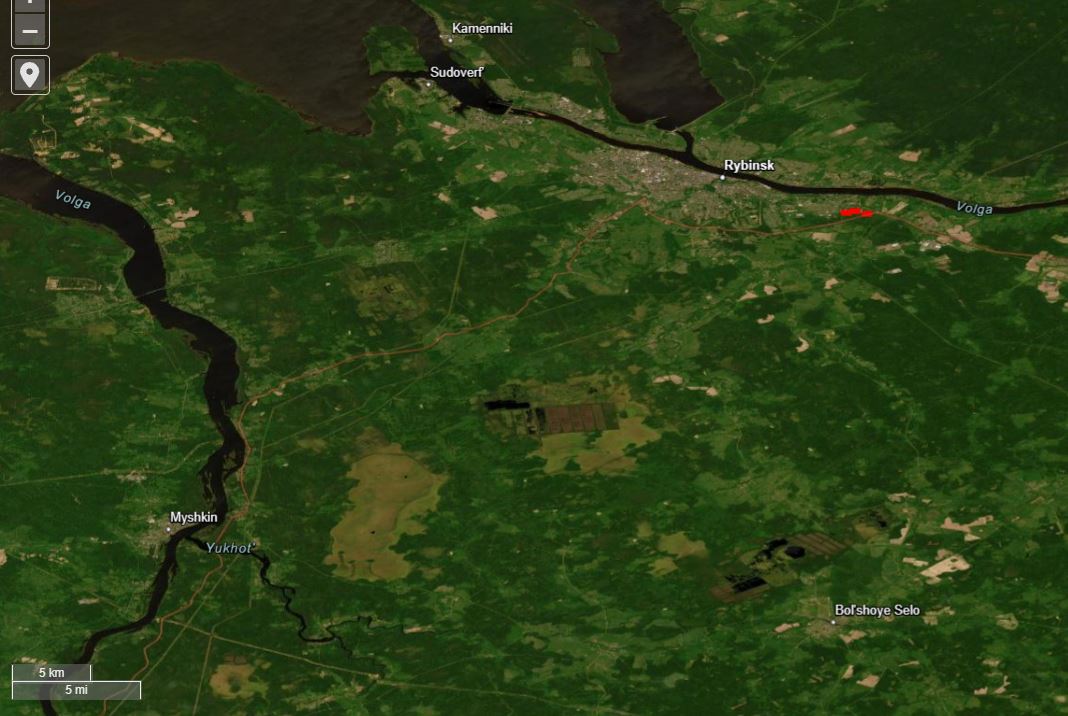
NASA FIRMS fire detection map of the Rybinsk-Myshkin area in Yaroslavl Oblast, Russia, showing active fire markers (red) at the Rosrezerv oil depot near Rybinsk but no thermal anomalies near Myshkin where the Palkino pumping station is located, 14 June 2026. Source: NASA FIRMS
Euromaidan Press cannot independently verify the report or confirm damage at the Palkino site at this time. NASA's FIRMS thermal monitoring system shows fires continuing at the Rybinsk Rosrezerv oil depot in the same Yaroslavl Oblast after the overnight drone strike on 14 June, but registers no fires in the area of Myshkino over the past month, where Palkino is located. This may mean that any damage caused didn't trigger large fires.
Ukraine's Defense Forces struck two targets deep inside Russia that sustain the country's war machine overnight on 14 June, hitting a strategic state fuel reserve depot and a chemical plant linked to explosives production, monitoring Telegram channels reported. The operation triggered air alerts across 28 Russian regions and flight restrictions at six airports. President Zelenskyy confirmed the strikes, calling them "long-range sanctions" against Russia's refusal to end the war.
Ukraine's systematic drone campaign against Russian fuel infrastructure and military-industrial facilities has drained an estimated $7 billion from Russia's war economy in January-May and contributed to a gasoline crisis that has now spread to more than two dozen Russian regions and six occupied Ukrainian areas.
Rosrezerv fuel depot ablaze in Rybinsk
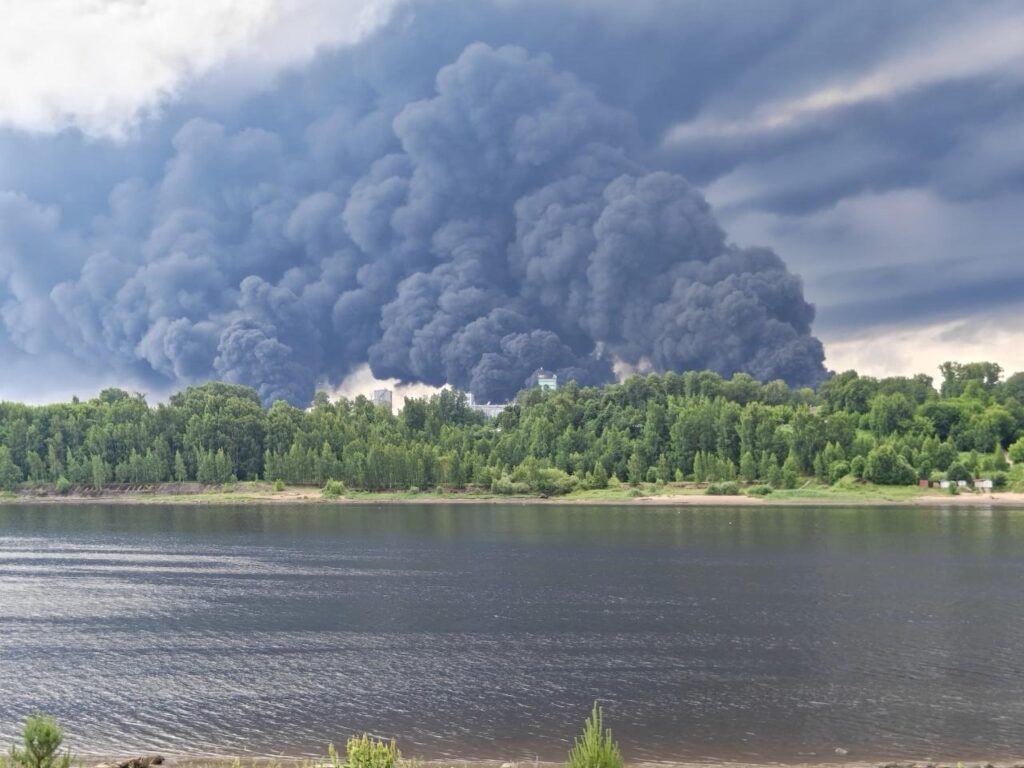
Ukrainian strike drones hit the Kombinat Temp oil depot in the Kopayevo settlement of Rybinsk, Yaroslavl Oblast, in the early hours of 14 June, Ukrainian Telegram channel Exilenova+ reported. Russian news Telegram channel Astra confirmed the target. A massive fire broke out at the facility, sending a thick column of black smoke over the city.
Ukrainian "Liutyi" drones are methodically working their way through fuel storage tanks in Yaroslavl Oblast, Russia
Yaroslavl sits over 1,000 kilometers from the Ukrainian border. The fuel stored there will not reach the front line Exilenova Plus pic.twitter.com/PLLjDSkktz
The Kombinat Temp is a Federal Government Custodial Institution operated by Rosrezerv, Russia's Federal Agency for State Reserves. The depot stores untouchable strategic fuel and petroleum product reserves designated for use during wartime, large-scale crises, and national emergencies. Unlike commercial fuel depots, this facility guards reserves that Russia's military depends on as a last-resort supply, Militarnyi noted.
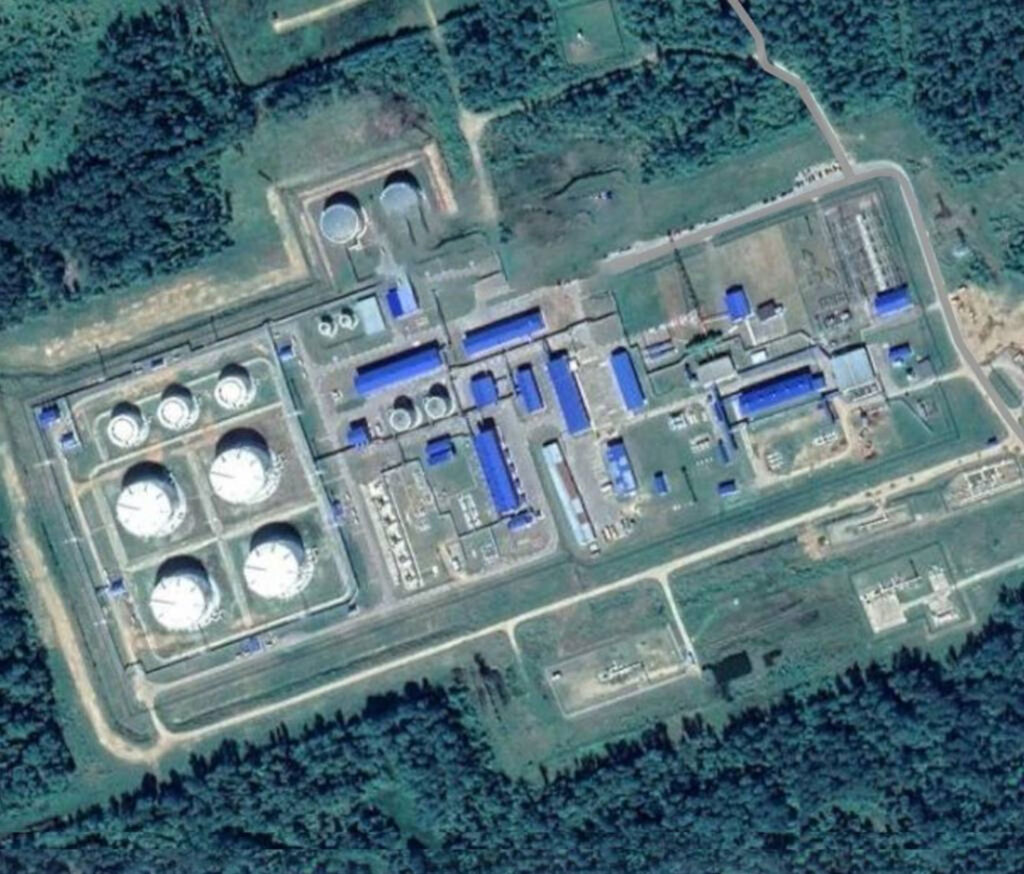
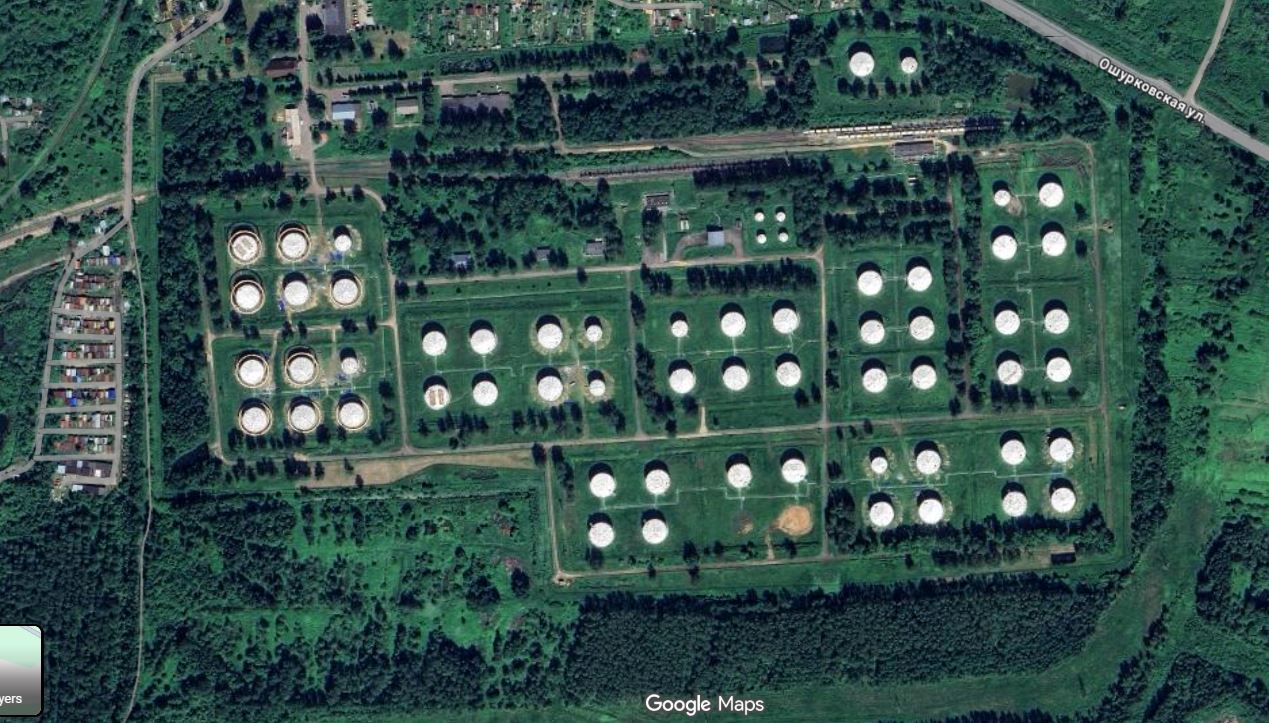
Satellite view of the Rosrezerv Kombinat Temp oil depot in Kopayevo, Rybinsk, Russia, showing dozens of fuel storage tanks at the facility before the attack. Source: Google Maps
The site holds 61 storage tanks of various types, including large ones with a capacity of 5,000 cubic meters each. Rybinsk sits within the Volga River system and has rail connections, making the depot a key logistics hub for fuel storage and distribution across Russia's northeastern regions. The depot is located more than 700 km from the Ukrainian state border.
Astra's OSINT analysis identified the target as the Kombinat Temp. Dense smoke continued rising over the city at dawn.
Footage published after the attack showed a Liutyi-type drone striking the already-burning plant. After the fire took hold, oily droplets began falling across Rybinsk, Exilenova+ reported and shared photos. The phenomenon mirrors what happened in Perm in late April after drones torched a Transneft pumping station, and in Tuapse when an oil refinery and its depot burned.
The fire at Rybinsk wouldn't go out — and then the rain turned to oil. After a Ukrainian drone strike set the ROsrezerv's oil depot burning in Russia's Yaroslavl Oblast, oily droplets began falling over the city.
Ukrainian drones also struck the Azot chemical plant in Novomoskovsk, Tula Oblast, roughly 350 km from the Ukrainian border. Exilenova+ first reported the attack around 02:40. Tula Oblast Governor Dmitry Milyayev claimed a fire broke out "at one of Novomoskovsk's industrial enterprises during the repulsion of a Ukrainian drone attack," without naming the Azot plant and framing it as caused by falling drone debris.
Explore further
Ukraine confirms strikes on two Tatarstan refineries and rocket-fuel rubber plant in Tolyatti
NASA's FIRMS thermal monitoring system detected an anomalous heat signature directly at the Azot facility at 03:09. Local residents filmed a large fire on the plant's grounds at dawn, contradicting the governor's attempt to minimize the strike's impact.
Astra's separate OSINT analysis found that eyewitness video of an explosion in Novomoskovsk probably showed air defense activity, while a separate Astra report confirmed the fire at the Azot chemical combine.
The Azot plant in Novomoskovsk is one of Russia's largest chemical enterprises. The combine is capable of producing chemical components necessary for manufacturing explosives, Militarnyi reported. The facility sits at roughly 350 km from the Ukrainian border.
An explosion struck the Novomoskovsk chemical plant "Azot" in Tula Oblast, Russia, triggering a fire at the facility
Zelenskyy confirms strikes, 28 regions under air alerts
President Zelenskyy wrote on Telegram on the morning of 14 June:
"There are good results from our warriors in applying long-range sanctions on important objects on the territory of Russia and temporarily occupied territories of Ukraine."
He specified that the Security Service of Ukraine (SBU) forces struck an oil facility in Yaroslavl Oblast, "more than 700 kilometers from our state border," which was significant for the reserve of the aggressor state. Army forces hit targets in Tula Oblast, specifically the Azot enterprise "on whose operations the capacity to produce explosives depends," Zelenskyy said.
Six Russian airports restricted air traffic during the operation, and air alerts sounded across 28 Russian regions from the previous evening, according to the President. Ukrainian forces also hit Russian military logistics on temporarily occupied Ukrainian territory, he said.
"Ukraine is fulfilling its plan of long-range sanctions against Russia and designated tasks regarding midstrikes in response to Russia's refusal to end this war," Zelenskyy wrote.
He added that Kyiv had offered Moscow "all possible negotiation formats," but the response was "only the continuation of aggression and attempts to expand it."
"Logically, the war returns to where it came from," the President concluded.
Explore further
Russia’s oil production falls for sixth straight month as Ukrainian drone strikes hit storage and transport
Previous attacks on both targets
Ukrainian drones hit the same Kombinat Temp depot on 31 December 2025, triggering a large fire that destroyed several fuel tanks. SBU sources called it part of a campaign to cut Russia's petroleum supply chains.
Ukraine also struck a separate Rosrezerv facility, the Kristall depot in Engels, Saratov Oblast, on 14 November 2025. That depot stores aviation fuel for Russia's strategic bomber base.
The Azot plant in Novomoskovsk has been attacked multiple times. Drones previously hit the facility on 26 May 2026. Other chemical plants in Russia's explosives supply chain have also been targeted, including KuibyshevAzot in Tolyatti on 11 March 2026 and Tolyattiazot on 19 December 2025.

 Login
Login