Astronomers have discovered a powerful galactic wind in the merging galaxy system CRISTAL-02. The outflow is removing star-forming gas faster than it can be replenished, providing the first direct...
Fifty years from now, academic treatises will be written about how the world was taken in by the climate madness of a pseudo-scientific doomsday cult, writes Princeton physicist Professor William Happer.
Photosynthesis does not always result in wood growth, a key factor in carbon dioxide sequestration
Trees may not be able to store as much planet-heating carbon as hoped, a study suggests, with researchers finding photosynthesis does not always lead to wood growth.
Scientists studied 137 sites across the US and found trees stopped growing months before the point in the year at which photosynthesis stopped.
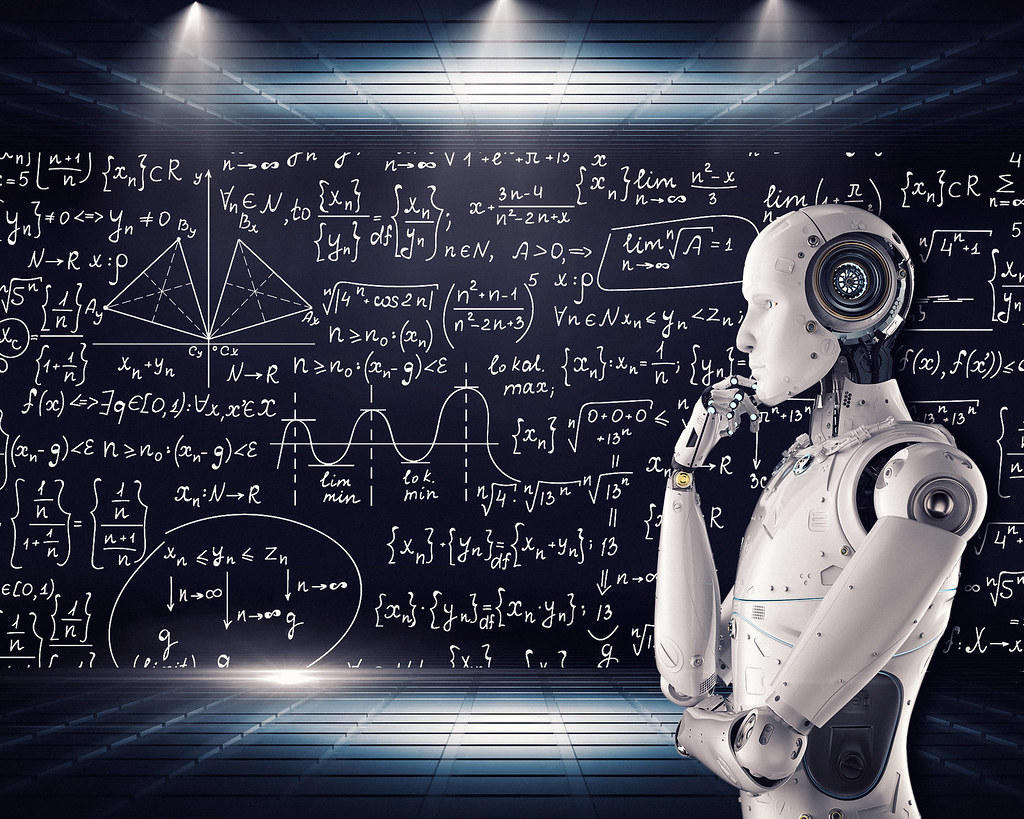
“Artificial Intelligence Machine Learning” by mikemacmarketing. Credit: Flickr/ CC BY 2.0.
As artificial intelligence becomes more integrated into the workplace, many employees worry that machines could replace them. Workplace experts say that fear is understandable. But they also say humans still have skills that AI cannot easily match. Those strengths include empathy, relationship-building, critical thinking, ethical judgment, and the ability to make decisions in uncertain situations.
Human skills keep their value
Maria Flynn, president and CEO of Jobs for the Future, said the skills most resistant to AI are the ones most closely tied to human behavior.
Those include building trust, resolving conflict, motivating others, and making ethical decisions, she said. Flynn’s organization calls them “durable skills” because they keep their value through economic shifts, new technology, and labor market disruption.
Employers are looking for these skills in many fields, including technical roles such as IT support, Flynn said. They want workers who can communicate clearly, take initiative, and lead when needed.
Empathy remains hard to automate
Empathy remains one of the clearest examples. Humans can read tone, body language, and emotion in ways AI still struggles to understand. Those skills matter in jobs that depend on care, trust, and sensitivity.
Marco Iansiti, a professor of business administration at Harvard Business School, said he saw that during a hospital stay. Nurses, he said, offered more than routine care. They gave comfort, built trust, and created a human connection.
As AI changes the workplace, experts say the most valuable skills may still be the most human ones.
Empathy, critical thinking, relationship-building and ethical judgment could help workers stay relevant as companies adopt more AI tools. pic.twitter.com/dhcZ1RcmPA
— Tom Marvolo Riddle (@tom_riddle2025) June 12, 2026
AI may still help in hospitals, he said. It can take over paperwork and other routine tasks. That could give nurses more time to focus on patients.
Relationships still matter at work
Relationships also remain difficult to automate. Salespeople, managers, and client-facing workers often rely on years of trust and personal knowledge. A client who has worked with the same person for years may not transfer that trust to an AI system, Iansiti said.
Human connection also matters when conflict arises. Flynn said people are still needed to manage expectations, calm tensions, and help teams move forward.
Colleen Adler, a director analyst in Gartner’s human resources practice, said managers and co-workers still shape how employees feel at work. AI may assist with tasks, but it does not yet match the tone of human connection, she said.
Workers need critical thinking
Critical thinking is another skill gaining importance. AI systems can produce quick answers, but they can also make mistakes.
Amalia Kaufman, a course developer and instructor at the University of California, Irvine Division of Continuing Education, said workers need subject knowledge to judge AI output. They must know when information is wrong and check facts before using it.
A study published in Science also found that AI chatbots were more likely than humans to flatter users and validate their feelings. That makes human judgment even more important.
Ethical judgment requires oversight
Experts say ethical judgment may be harder for AI to copy. Iansiti said AI can appear to understand conscience because it has read about ethics. But it lacks emotion, lived experience, or responsibility.
That matters in high-stakes decisions, including hiring or the use of military force. Guardrails can help guide AI systems, Iansiti said, but human oversight remains necessary.
AI can process large amounts of data. But experts say people still bring context, experience, and judgment to gray areas where there is no clear answer.
As AI changes work, Flynn said, employees should be able to identify and explain the human skills they bring. Those skills may help workers remain valuable in a future shaped by machines.
Technique that examines fragments of foetal DNA in mother’s bloodstream could limit need for invasive screening, according to researchers
A new maternal blood test that can detect thousands of serious genetic conditions in the developing foetus could limit the need for invasive screening during pregnancy, according to scientists.
The test, to be described at the European Society for Human Genetics conference in Gothenburg on Saturday, relies on detecting tiny fragments of a foetus’s DNA that circulate in the mother’s bloodstream during pregnancy. Using advanced sequencing techniques, scientists were able to identify a very high proportion of genetic conditions, such as cystic fibrosis, that are currently only reliably diagnosed using amniocentesis or other invasive tests.

 Login
Login