Normal view

The Friday File: Apple; OpenAI; SFR

12 June 2026 at 12:43

Mobile World Live brings you our top three picks of the week as Apple reset its AI ambitions at WWDC, OpenAI edged closer to a stock market debut and French operators agreed a €20.4 billion deal to carve-up SFR.

Apple lands Siri AI at WWDC as Cook takes a bow

What happened: During its annual WWDC event, Apple reset its AI strategy, unveiled a revamped AI-powered Siri and spotlighted new child-safety controls as Tim Cook delivered his final keynote as CEO.

Why it matters: Apple SVP of software Craig Federighi said, “truly helpful AI must be centred around you and your needs”, positioning privacy, personal context and deeper app integration as core pillars of the AI-enhanced Siri. The launch gives Apple a chance to overwrite a damaging run of Siri AI delays described internally as “ugly and embarrassing”. Ben Wood, chief analyst at CCS Insight, said “Apple had to address its shortcomings in AI, and WWDC provided some answers”, but added the company must deliver “a meaningfully better everyday experience, not just parity with rivals”. He noted many features will already be familiar to Android and third-party AI app users, adding iPhone users are “more likely to upgrade for better battery life, an improved camera or a bigger screen rather than to get AI”. However, challenges have already emerged. The AI-upgraded Siri and Apple Intelligence features have already been delayed indefinitely in the European Union (EU) over competition laws and blocked in China over local AI regulations.

On child safety, Wood called Apple’s push “a welcome and timely move” as concerns about online harm grow among regulators but said “stronger cross-industry safeguards need to be built into operating systems at a deeper platform level”. Cook’s farewell added weight to the event as he declared the iPhone will “continue to be the centre of people’s digital lives”, adding, “the best is still ahead”.

OpenAI lines up stock market debut

What happened: OpenAI confidentially filed paperwork for a US IPO, becoming the latest AI company to move towards a listing as the sector’s biggest players race to raise fresh funds.

Why it matters: The ChatGPT-maker stated it had submitted a draft registration statement to the US Securities and Exchange Commission (SEC), adding, “we expect it to leak so we’re just announcing it”. It did not disclose the size, price or timing of the listing and cautioned a debut may not be imminent “because there are things we want to do that are likely easier as a private company”. OpenAI explained the decision involves “a complicated set of trade-offs”, but the filing gives it “the option to go public sooner if that ends up being best”. Reuters reported the company is targeting a valuation of up to $1 trillion, with a debut possible as early as September. The filing puts OpenAI into a crowded and expensive AI listings race; rival Anthropic confidentially filed for its own US IPO last week, while SpaceX launched a blockbuster listing. Aviva Investors’ head of multi-asset Sunil Krishnan told the BBC all firms all have a “vast need for cash” as “no one wants to be last” in a space where access to capital could prove crucial as companies fund AI chips, infrastructure and model training. Harrison Rolfes, senior research analyst at PitchBook, argued OpenAI’s $1 trillion listing is “a bet on a company that has never been profitable, in a market it is currently losing, with a cost structure it cannot change for at least another year”. He added this is “all while racing a direct competitor through the same SEC process in the same quarter.” Rolfes concluded: “There is no scenario where OpenAI pricing after a profitable Anthropic favours OpenAI.”

Bouygues, Orange, Free agree €20B SFR carve up

What happened: Bouygues Telecom, Free-Iliad Group and Orange signed a memorandum of understanding with Altice France to acquire and carve up SFR in a deal valuing the operator at €20.4 billion, setting the stage for a major reset of France’s telecoms market.

Why it matters: Under terms outlined in April, Bouygues will take 42% of SFR’s assets, Free-Iliad 31% and Orange 27%. SFR’s consumer mobile and fixed broadband operations will be divided between the three operators, while Bouygues will take control of the B2B unit. Completion is targeted for H2 2027, subject to regulatory clearance. Kester Mann, director, consumer and connectivity at CCS Insight, noted the move marks the biggest potential shake-up in French telecoms since Iliad entered the mobile market in 2012, cutting the number of major operators from four to three and reshaping competition. He said the agreement appears “a successful outcome for all parties” as Bouygues, Orange and Iliad all gain “important new assets in their pursuit of greater scale”, while removing a key rival will “reduce the competitive intensity of the market”. However, the biggest challenge will be to regulators show the deal will deliver “positive outcomes to the French market”. He noted that while that would once have been “a herculean task”, recent approvals in the UK and Spain suggest Europe’s stance on consolidation is softening.

The post The Friday File: Apple; OpenAI; SFR appeared first on Mobile World Live.
The Friday File: Apple; OpenAI; SFR

12 June 2026 at 11:58

Mobile World Live brings you our top three picks of the week as Apple reset its AI ambitions at WWDC, OpenAI edged closer to a stock market debut and French operators agreed a €20.4 billion deal to carve-up SFR.

Apple lands Siri AI at WWDC as Cook takes a bow

What happened: During its annual WWDC event, Apple reset its AI strategy, unveiled a revamped AI-powered Siri and spotlighted new child-safety controls as Tim Cook delivered his final keynote as CEO.

Why it matters: Apple SVP of software Craig Federighi said, “truly helpful AI must be centred around you and your needs”, positioning privacy, personal context and deeper app integration as core pillars of the AI-enhanced Siri. The launch gives Apple a chance to overwrite a damaging run of Siri AI delays described internally as “ugly and embarrassing”. Ben Wood, chief analyst at CCS Insight, said “Apple had to address its shortcomings in AI, and WWDC provided some answers”, but added the company must deliver “a meaningfully better everyday experience, not just parity with rivals”. He noted many features will already be familiar to Android and third-party AI app users, adding iPhone users are “more likely to upgrade for better battery life, an improved camera or a bigger screen rather than to get AI”. However, challenges have already emerged. The AI-upgraded Siri and Apple Intelligence features have already been delayed indefinitely in the European Union (EU) over competition laws and blocked in China over local AI regulations.

On child safety, Wood called Apple’s push “a welcome and timely move” as concerns about online harm grow among regulators but said “stronger cross-industry safeguards need to be built into operating systems at a deeper platform level”. Cook’s farewell added weight to the event as he declared the iPhone will “continue to be the centre of people’s digital lives”, adding, “the best is still ahead”.

OpenAI lines up stock market debut

What happened: OpenAI confidentially filed paperwork for a US IPO, becoming the latest AI company to move towards a listing as the sector’s biggest players race to raise fresh funds.

Why it matters: The ChatGPT-maker stated it had submitted a draft registration statement to the US Securities and Exchange Commission (SEC), adding, “we expect it to leak so we’re just announcing it”. It did not disclose the size, price or timing of the listing and cautioned a debut may not be imminent “because there are things we want to do that are likely easier as a private company”. OpenAI explained the decision involves “a complicated set of trade-offs”, but the filing gives it “the option to go public sooner if that ends up being best”. Reuters reported the company is targeting a valuation of up to $1 trillion, with a debut possible as early as September. The filing puts OpenAI into a crowded and expensive AI listings race; rival Anthropic confidentially filed for its own US IPO last week, while SpaceX launched a blockbuster listing. Aviva Investors’ head of multi-asset Sunil Krishnan told the BBC all firms all have a “vast need for cash” as “no one wants to be last” in a space where access to capital could prove crucial as companies fund AI chips, infrastructure and model training. Harrison Rolfes, senior research analyst at PitchBook, argued OpenAI’s $1 trillion listing is “a bet on a company that has never been profitable, in a market it is currently losing, with a cost structure it cannot change for at least another year”. He added this is “all while racing a direct competitor through the same SEC process in the same quarter.” Rolfes concluded: “There is no scenario where OpenAI pricing after a profitable Anthropic favours OpenAI.”

Bouygues, Orange, Free agree €20B SFR carve up

What happened: Bouygues Telecom, Free-Iliad Group and Orange signed a memorandum of understanding with Altice France to acquire and carve up SFR in a deal valuing the operator at €20.4 billion, setting the stage for a major reset of France’s telecoms market.

Why it matters: Under terms outlined in April, Bouygues will take 42% of SFR’s assets, Free-Iliad 31% and Orange 27%. SFR’s consumer mobile and fixed broadband operations will be divided between the three operators, while Bouygues will take control of the B2B unit. Completion is targeted for H2 2027, subject to regulatory clearance. Kester Mann, director, consumer and connectivity at CCS Insight, noted the move marks the biggest potential shake-up in French telecoms since Iliad entered the mobile market in 2012, cutting the number of major operators from four to three and reshaping competition. He said the agreement appears “a successful outcome for all parties” as Bouygues, Orange and Iliad all gain “important new assets in their pursuit of greater scale”, while removing a key rival will “reduce the competitive intensity of the market”. However, the biggest challenge will be to regulators show the deal will deliver “positive outcomes to the French market”. He noted that while that would once have been “a herculean task”, recent approvals in the UK and Spain suggest Europe’s stance on consolidation is softening.

The post The Friday File: Apple; OpenAI; SFR appeared first on Mobile World Live.

Siri no se va a convertir en tu "novia de IA" por mucho que lo intentes

12 June 2026 at 09:57

Frente a estudios como el publicado por la Universidad de Stanford que hablan de la complacencia de asistentes de IA como ChatGPT, Apple ha decidido tomar el camino opuesto. La compañía de Cupertino busca alejar a Siri de los personalismos para consolidarla como un canal puro de ayuda y soporte ante cualquier necesidad del usuario.

Atrás queda la idea de las novias hechas con IA que trató de impulsar Elon Musk a través de su asistente Grok. En su lugar, la tecnológica que presidirá Tim Cook hasta septiembre ha querido desarrollar un sistema enfocado en ser una herramienta útil y no un confidente emocional, sin importar el tono de la interacción.

Esta filosofía se ha materializado en la reciente WWDC26, la conferencia anual para desarrolladores, donde Apple mostró al mundo las capacidades de la nueva Siri AI. El asistente no solo resolverá tareas cotidianas como recordar una receta o identificar a protagonistas de imágenes, sino que asumirá un rol proactivo y tomará el control del dispositivo para redactar correos electrónicos o reprogramar citas en el calendario de forma automatizada.

Siri AI quiere ser más útil que simpática

Tras los recientes anuncios en Cupertino, la presencia de la cúpula directiva de Apple en los medios de comunicación se ha multiplicado. Una de las citas más destacadas fue la intervención de Craig Federighi y Greg Joswiak en el pódcast Mostly Human, conducido por la periodista Laurie Segall.

Durante la entrevista, ambos ejecutivos dejaron claro que el objetivo prioritario de la nueva Siri AI es desmarcarse de cualquier tipo de empatía artificial entre el humano y la máquina. Con este enfoque, la compañía busca distanciar a su asistente de ese viejo cliché de la cultura pop —retratado con humor en personajes como Rajesh Koothrappali en The Big Bang Theory— en el que el usuario termina desarrollando un apego emocional o romántico hacia su asistente virtual.

Desarrollo enfocado a la integración invisible

Federighi, jefe de ingeniería de software de Apple, destacó que el desarrollo del asistente se ha planteado desde un prisma alejado de la adulación con la que otros modelos buscan estrechar la relación con el usuario. Al ser preguntado sobre si Siri AI podría terminar convertida en una suerte de pareja virtual, el directivo se mostró tajante al afirmar que esta rechazará cualquier interacción romántica. En su lugar, recordará al usuario todos aquellos aspectos en los que puede ser de utilidad y todo lo que puede ayudarle "a aprender sobre el mundo".

"Si intentas entablar una relación romántica con Siri, ella no está dispuesta a eso. Siri no está interesada en absoluto"
Craig Federighi, jefe de ingeniería de software de Apple, en el espacio Mostly Human

Por su parte, Greg Joswiak, jefe de marketing de Apple, señaló que lograr una integración invisible y natural del asistente está por encima del simple hecho de sumarse a una moda tecnológica. Con ello, el directivo quiso poner de manifiesto que el verdadero valor de la inteligencia artificial reside en su utilidad real y diaria: "No hacemos IA por el simple hecho de hacer IA. La cuestión es: ¿cómo mejora la IA todo? Y eso hace que nuestros productos y nuestras funciones sean mejores".

Con esta declaración de intenciones por parte de dos de los hombres fuertes de Apple, la compañía refleja que su apuesta se orienta a conseguir que Siri AI brinde una alta eficiencia e integración natural en las tareas cotidianas, en lugar de ofrecer a los usuarios un confidente cuya simulación de emociones humanas pueda llevar a engaño.

© Difoosion

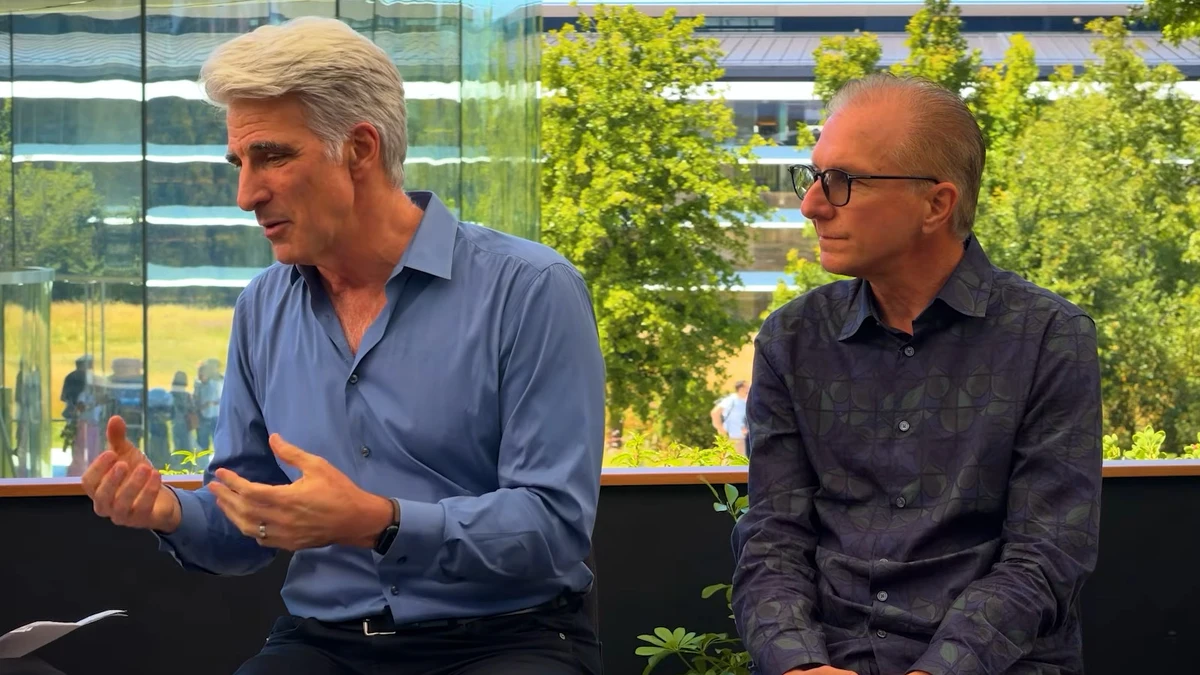
Craig Federighi y Greg Joswiak, directivos de Apple, en el espacio de información tecnológica Mostly Human - YouTube

Anillos inteligentes: ¿pueden sustituir al smartwatch?

12 June 2026 at 04:30

Durante años, el smartwatch ha sido el rey indiscutible de los wearables. Pero una categoría de producto más discreta —los anillos inteligentes— ha empezado a ganar terreno. Y no se debe solo a una cuestión estética: con cada nueva generación de estos dispositivos aumentan sus capacidades para medir parámetros relacionados con la salud y la actividad, y algunos ya prometen lo mismo que un reloj, pero sin pantalla. La pregunta es inevitable: ¿puede un anillo sustituir realmente a un smartwatch?

Seguir leyendo

© Ekaterina Goncharova (Getty Images)

Una persona usando un anillo inteligente.
❌