
Normal view

Cannabis Use Among Teens in Greece Hits 25-Year Record

12 June 2026 at 13:47
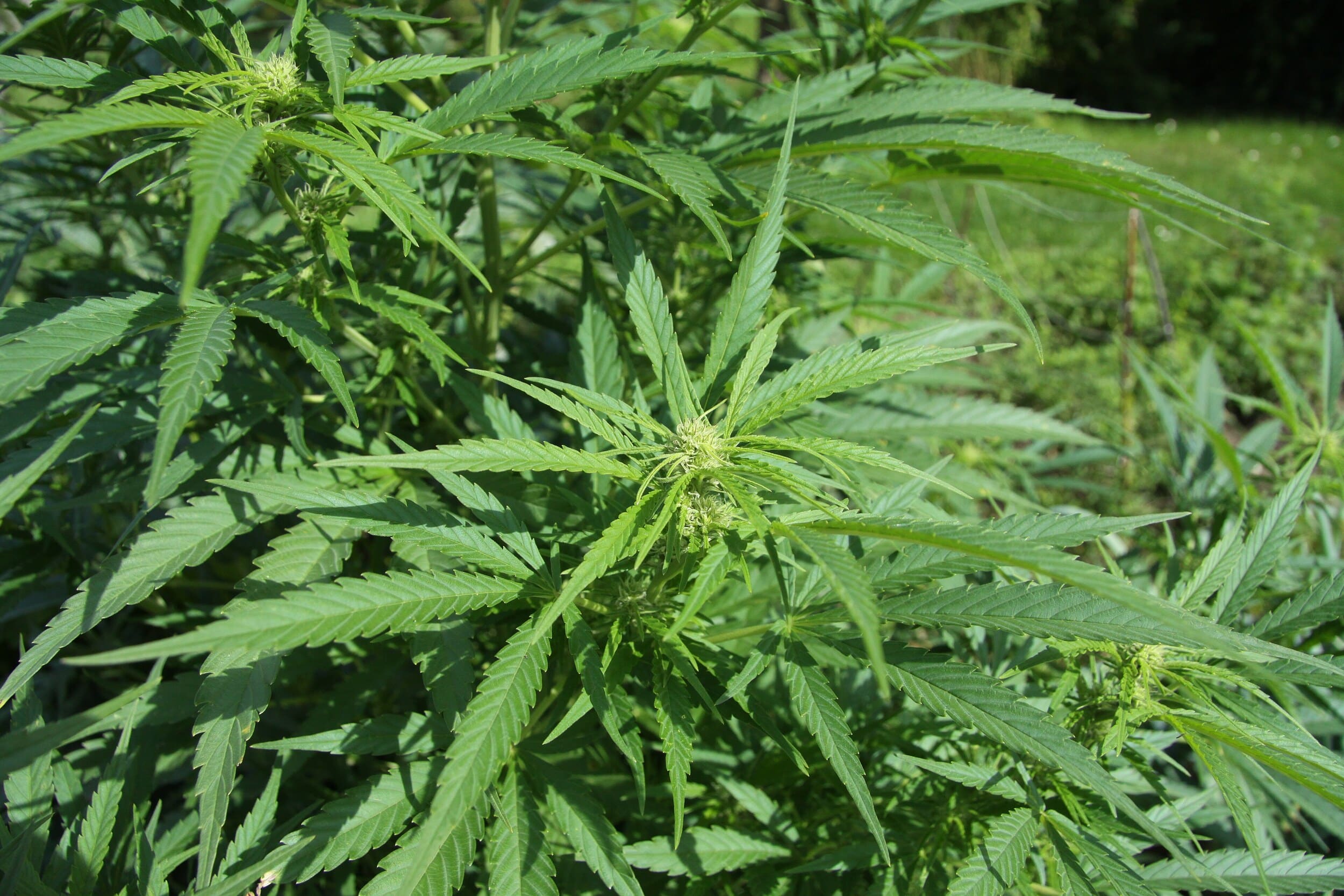
Cannabis plants
Cannabis use among teens has reached a 25-year record, while cocaine use is rising sharply across Greece. Credit: Wikimedia Commons / Chmee2 / CC BY 3

Cannabis use among teens in Greece has reached its highest level in 25 years, while cocaine and other stimulants are gaining ground across the country, according to the European Drug Report 2026 by the European Union Drugs Agency (EUDA), presented on June 9, 2026.

The report shows a shifting drug landscape in Greece. Cannabis remains the most common illegal substance, cocaine use continues to rise, and opioids, mainly heroin, still account for most overdose deaths.

According to the findings, 11.5 percent of 16-year-old students in Greece have used cannabis. The rate stood at 9.4 percent in 2019. The latest figure marks the highest level recorded in the past quarter century.

Cannabis use rises among teens in Greece

Cannabis use in Greece is increasing among adolescents, and those entering treatment programs more frequently report it as their substance of choice. In 2024, 28.8 percent of people in drug rehabilitation programs revealed that they predominately used cannabis. This was even higher among those seeking treatment for the first time.

The number of people entering treatment for cannabis use has risen by 32 percent compared with a decade ago. Such a trend implies that cannabis has become more deeply entrenched in Greek society among users. The report also notes that the types of cannabis products available in the Greek market appear to be expanding.

New synthetic and semi-synthetic cannabinoids raise concern

Greek authorities are also tracking the spread of synthetic and semi-synthetic cannabinoids, which now show a measurable presence in the domestic drug market. Semi-synthetic cannabinoids ranked as the second most commonly reported substance among people in Greece with recent drug use who participated in the 2024 European Web Survey on Drugs.

The Greek Poison Center first recorded cases linked to semi-synthetic cannabinoids in 2023, when it reported 34 intoxication incidents associated with HHC use. In 2024 and 2025, the center recorded 66 and 52 cases, respectively, involving THCP, H4-CBD, and HHC.

Data from Greece’s Early Warning System, operated by EKTEPN, shows that authorities detected eight new semi-synthetic and synthetic cannabinoids in the country for the first time in 2025. They had detected ten such substances in 2024.

Opioids remain leading cause of overdose deaths

Opioids continue to pose one of the most serious drug-related health risks in Greece. According to ELSTAT data cited in the report, opioids or other unspecified narcotic substances, mostly heroin, were involved in 72.9 percent of the 194 overdose deaths recorded in Greece in 2023.

Across Europe, opioids remain the leading cause of fatal overdoses, often in combination with other substances. The EUDA report also highlights increasing concern over new synthetic opioids, including nitazenes and orphines, which have appeared in Europe’s Early Warning System.

Greece differs from many other European countries because opioids remain the most frequently reported main substance among people entering treatment. In 2024, they accounted for 38.4 percent of treatment entrants. However, their dominance has weakened. The number of people entering treatment for opioid use in Greece has fallen by 51 percent compared with ten years ago. Among first-time treatment entrants, only 18 percent reported opioids as their main substance. These figures point to a broader change in Greece’s drug-use profile, as cannabis and cocaine now play a larger role in treatment demand.

Cocaine becomes increasingly visible in Greece

Cocaine remains the second most widely used illegal substance in Europe after cannabis among people entering treatment for the first time, according to the report. Cocaine-related harm is also increasing, while some European cities and marginalized communities are reporting more frequent crack cocaine use.

In Greece, cocaine and other stimulants now have a significant presence in drug-use patterns. Powder cocaine ranked as the most frequently reported substance after cannabinoids among people in Greece with recent drug use who participated in the 2024 European Web Survey on Drugs.

In 2024, 29.4 percent of people entering treatment reported cocaine and other stimulants as their main substance of use. This figure alarmingly approaches that for cannabis and marks a major increase compared with previous years. The number of people entering treatment for cocaine or other stimulant use has increased by 106 percent compared with five years ago and by 256 percent in comparison to a decade ago.

Attica records stronger cocaine indicators than other regions

People entering treatment report cocaine and other stimulants as their main substance of use more often in the Greater Athens (Attica) area than in Thessaloniki or other regions of Greece. Wastewater analysis in the region by the Laboratory of Analytical Chemistry at the National and Kapodistrian University of Athens shows a further sharp increase in cocaine presence in 2025. Researchers measure the trend through benzoylecgonine, cocaine’s main metabolite.

The estimated average daily quantity per 1,000 people rose by 64 percent compared with 2024. It also stood 211 percent higher than five years earlier. These figures suggest a significant shift in drug-use patterns, at least in the Athens metropolitan area.

Greece remains a cocaine entry and transit point as cannabis use among teens rises

Cocaine availability remains high in Greece despite a drop in the total quantity seized in 2024 in comparison to 2023. At the same time, authorities recorded a higher number of cocaine seizures. Continued flows through shipping containers from Latin American countries confirm Greece’s role as an entry point, transit hub, and final destination for significant quantities of cocaine.

The wider European picture described by the EUDA indicates a more complex and risky drug environment. People who use drugs now face exposure to a broader range of psychoactive substances, often with high potency or purity. New products, mixtures, and combinations are also becoming more prevalent.

The Modern Greek Philosopher Who Chose Death

12 June 2026 at 08:48

Dimitris Liantinis, the Greek professor and philosopher who chose his own death.
Dimitris Liantinis, the Greek professor and philosopher who chose his own death. Credit: Liantinis.org
Dimitris Liantinis was a Greek philosopher and professor who believed that ancient Greeks were so preoccupied with the idea of death that it formed the basis of their entire culture. He then disappeared very mysteriously, with some positing that he committed suicide.

Dimitris Liantinis’ early life

Dimitris Liantinis was a professor of the School of Philosophy at the University of Athens, where he taught a class in the philosophy of education and the teaching of Greek language and literature. He also authored nine books, all written in Greek and focused on philosophy and education.

His last name at birth was Nikolakakos, but he changed it to Liantinis to honor his place of birth, the village of Liantina in the prefecture of Laconia.

He completed his high school education in Laconia and, in 1966, graduated from the Department of Literature of the School of Philosophy at the University of Athens. He taught literature at secondary education level from 1968 to 1970 and from 1973 to 1975.

From 1970 to 1972, Liantinis was in Munich, Germany, learning and studying the native language. At the same time, he worked there as a teacher of classical literature at the private Greek high school Otto Geselschaft.

In 1975, he embarked on graduate studies in the School of Philosophy at the University of Athens and was appointed a teaching assistant at the Laboratory of Education. He got his PhD in 1978 with honors. The subject of his thesis was: “The presence of Hellenic spirit in the Duino elegies by Rainer Maria Rilke.”

As a professor, he gave many training seminars and lectures to teachers of secondary education level in Greece.

The Greek professor’s philosophical views

Liantinis’ ideas were strongly influenced by the philosophy of ancient Greece, as well as the ideals of the Romantic movement and the works of Friedrich Nietzsche. The professor made several references to the scientific progress of his time, particularly in the area of cosmology, and he made efforts to formulate a connection between that and the existence and nature of God.

He wrote at great length about education, and some of his work focused on what he considered to be the moral and intellectual decline of modern Greeks compared to their ancestors.

To further solidify his position, Liantinis devoted large parts of his body of work to defining exactly what the real value of ancient Greece was, as well as the actual worldview that they held. He argued against the notion that ancient Greece, although ahead of its time for most of antiquity and possibly the Middle Ages, was eventually superseded by the advancements of Renaissance Europe.

In contrast, he believed that the Greeks possessed a complete culture, a kind of super-set for all Western cultures, past and present. As an example, in his book Gemma, he argued that “the Greeks did not need psychoanalysis because they had tragedy.”

This period of intellectual magnificence was short-lived, and Liantinis wrote that “it would be a sign of honesty if the Greeks were to stop philosophizing right after Aristotle.”

He added that today, Greeks are completely unknown as “for the Europeans, we, the ‘New-Greeks,’ are but a faceless bunch, something of a Balko-Turkish Arab. We are the Orthodox with the Russian-like writing and the domes on our village houses.”

Death was also central to the professor’s work and, as he claimed, that of the ancient Greeks. He refuted the idea that ancient Greece was a culture of playful joyfulness and argued that the Greeks had instead presented us with a world of infinite melancholy, a proposition that is consistent with that of Nietzsche, whom he greatly admired.

Their philosophy was a study of death, according to Liantinis, and their conclusions were absolute and hard to accept since they saw death as a final end with no afterlife or moral rewards for the life lived on earth.

The Greek professor’s views on death

Liantinis believed that death as a topic occupied the ancients to such a degree that one could see their whole culture arising from the radical views they held on the subject.

The professor believed the ancient Greeks saw death as an unchanging cosmic law and did not associate whatever afterlife they had conceived with a system of divine punishment or reward like the Abrahamic religions. Although individual myths, such as that of Sisyphus who was condemned to eternal punishment in the realms of Hades, did exist, they were largely exceptions to the rule and never developed into a proper system of beliefs on life after death.

In one of his lectures,[5] Liantinis said Homer describes a scene where the hero, before engaging him in battle, says to his opponent, “The race of men is related to that of leaves, as we momentarily stand fresh on the tree branch, then quickly surrender to the wind and rain.” The lyric poet Pindar also questions in his works: “What are we [men] but dreams of shadows.”

Liantinis’ strange disappearance

On June 1, 1998, Liantinis disappeared, leaving a letter for his daughter, Diotima, where he revealed his decision to vanish on his own free will after lifelong consideration and preparation.

Liantinis’ disappearance evoked many speculations from the public, with some believing he had taken his own life in protest against what he saw as the lack of values in modern Greek society.

Seven years after the professor’s death, Panagiotis Nikolakakos, his cousin, showed Diotima to the crypt where her father lay in the area of the Greek mountain Taygetos. Nikolakakos had been instructed to do this by the late professor before his departure.

Several thorough forensic tests and analyses proved the skeleton in the crypt to be that of Liantinis, but the exact date and cause of his death remain unknown since no lethal substance was detected.

Despite his will stating that his bones should remain on Taygetos, he was finally buried at the cemetery of Kechries near the city of Corinth.

In his last letter to his daughter, he wrote: “My last act has the meaning of protest for the evil that we, the adults, prepare for the innocent new generations that are coming. We live our life eating their flesh. A very bad evil. My unhappiness for this crime kills me.”

❌